3 April 2025- The National Director of Public Prosecutions (NDPP), advocate Shamila Batohi, has requested a report, from the Eastern Cape Director of Public Prosecutions (DPP), Barry Madolo, on the judgement delivered by Judge Irma Schoeman of the Eastern Cape Local Division of the High Court sitting in Gqeberha on 2 April 2025. The judgment relates to a trial that lasted for over eight years from 2017, wherein Nigerian televangelist, Timothy Omotoso and two others, faced several charges of rape, human trafficking and sexual assault.
The Judge raised concerns about the conduct of the prosecution in her finding the trio not guilty of all the charges preferred against them.
Batohi said they will carefully study the judgment when it is made available to the parties. She said in the meantime, she has expressed her serious concerns about adverse findings made by the judge against the prosecution team, relating to the manner in which the prosecution was conducted.
“The NDPP has called for a transcript of the proceedings and will consider it in order to determine whether the criticism of the prosecution team is warranted. Depending on the outcome of this process, the NDPP, together with the DPP in Eastern Cape, will decide on appropriate action.
“The DPP in Eastern Cape has in the meantime indicated that the team will study the judgement and decide on whether to bring an application to appeal the judgement,” said Bathohi.
She said National Prosecuting Authority (NPA) has demonstrated its commitment to dealing effectively with Gender-Based Violence (GBV) and sexual offences. Batohi said the NPA has a world-class special unit called the Sexual Offences and Community Affairs (SOCA) Unit, which is dedicated to dealing with sexual violence and related cases.
“The NDPP appreciates the public outrage expressed by many in response to the judgment in view of its devastating impact on the victims in this case and the fight against the scourge of GBV in the country.
“The NDPP is proud of the NPA’s track record in providing victim-centred and professional support to victims of gender-based violence, including through the national rollout of Thuthuzela Care Centres (TCCs) that for the past eight years have provided specialised support in almost 280 000 matters (or 34,600 matters per year),” said Batohi.
She said this recent judgement represents a travesty of justice that they cannot accept. Batohi sais the NDPP awaits the report from the DPP in Eastern Cape and will consider the next steps to ensure that this tragic outcome is dealt with swiftly and appropriately, based on the facts and the legal dimensions relevant to the judgement.
Setshwantsho: Banna ba le babedi b aba latofadiwang ka polao
Ka BAKANG MOKOTO
3 Moranang 2025- Kgetsi ya polao kgatlhanong le banna ba le babedi ba kwa motseng wa Matlhako 2, gaufi le Pudimoe, e buseditswe morago go fitlha 10 Moranang 2025.
Balatofadiwa, Phemelo Maine (40) ga mmogo le Okemetse Phatlhanyane (27), ba latofadiwa ka go bolaya Boingotlo Makaota (16). Go begwa fa setopo sa ga Makaota, se bonwe kwa lebitleng le le seng boteng kwa nageng kwa motseng wa Matlhako 2.
Go ya ka moagisani, one a utlwa segajaja sa lekgarebe mo bosigong jwa Labone kwa ntlung ya ga Maine. Go begwa fa moagisani o, gape a tlhalositse fa a ne a bona Maine ga mmogo le ditsala tsa gagwe ba kgorometsa kereibaye e go bontshang fa ene e pegile sengwe mo teng mo mosong wa Labotlhano.
Sebueledi sa sepodisi mo Bokone Bophirima, Brigadier Sabata Mokgwabone are: “Sepodisi se ile sa tswa letsholo, mme seo se ile sa lebisa kwa go epololweng ga setopo sa ga Makaota.
“Go begwa fa setopo seo, sene se phuthetswe ka kobo, mme moswi one a supiwa ke ba lelapa la gagwe. Dipatlisiso di shupa fa setopo sa ga Makaota, se ne se na le dintho mo tlhogong, mo diropeng ga mmogo le mo maotong.”
Mokgwabone are dipatlisiso di ile tsa bolodiwa kwa lelapeng la ga Maine, mme diaparo tsa moswi di ile tsa fitlhelwa teng. Mokgwabone are, Maine o tshwerwe ka Lamatlhatso morago ga go ineele kwa sepodising.
“Monna o, o ile a isiwa kwa sepodisi ke morwa rragwe, mme one a tshwarwa. Sepodisi se ile sa botsolotsa Phatlhanyane o bonweng a tsamaya le Maine fa a ne a kgorometsa kereibaye, mme le ene o ile a lelelwa ke ditshipi,” Mokgwabone wa tlhalosa.
Mokomishinara wa Sepodisi wa nama o sa tshwere mo Bokone Bophirima, Major General Patrick Asaneng, o kgadile ka bogale tiragalo e. Asaneng are polao eo ya go tlhorontshiwa ga bong e kabo e efogilwe fa baagi ba ne ba le malala-a-laotswe.
Kgabagare, Maine o ile a ipona molato mabapi le ditatofatso tsotlhe kgatlhanong le ene, mme o solofetswe go ka nguna-nguna seo le mmueledi wa puso. Phatlhanyane ene o setse a inkeme fela ka gore a neelwe beile, mme kopo ya gagwe e ka rediwa fa kgetsi e boela kgotlhatshekelo.
3 April 2025– Five accused briefly appeared in the Koster Magistrate’s Court on charges of extortion at the construction site, intimidation, malicious damage to property and kidnapping. The accused, Andrew Matane (42), Blasius Makati (49), Chapel Mahlasela (50), Thabo Frederick (50) and Lazarus Mazaleni (54), were arrested after an investigation conducted subsequent to Provincial Organised Crime receiving an extortion complaint in March 2025, a South African National Roads Agency Limited (SANRAL) contractor appointed to reconstruct the road between N4 and Koster.
The North West police spokesperson, Captain Mpho Manyoba said the accused allegedly disrupted the construction and intimidated the contractor, project managers and employees, after their bids for appointment as sub-contractors did not succeed. Manyoba said they allegedly intimidated and forced construction officials to stay in a meeting, despite responding to issues they were called to clarify.
“Additionally, the accused allegedly mobilised members of the community to disrupt and stop the project, leading to the closure of the site. In a positive response to a serious concern of extortion, a multidisciplinary team consisting of the Provincial Organised Crime, Anti-Gang Unit and Rustenburg Public Order Police (POP) arrested five suspects on 1 April 2025, in Koster.
“During the release of the Provincial Third Quarter Crime Statistics, the acting North West Police Commissioner, Major General Patrick Asaneng, in response to the concerns of the North West Premier, Lazarus Mokgosi, and the Provincial Executive, sent out a strong message that those who commit acts of extortion and protests that often target contractors and critical infrastructure will be hunted down, arrested and be prosecuted,” she said.
Manyoba further said this arrest is just one of many to follow. She added that the case was postponed to 7 April 2025, for a bail application and all accused remain in custody.
3 April 2025– Five accused briefly appeared in the Koster Magistrate’s Court on charges of extortion at the construction site, intimidation, malicious damage to property and kidnapping. The accused, Andrew Matane (42), Blasius Makati (49), Chapel Mahlasela (50), Thabo Frederick (50) and Lazarus Mazaleni (54), were arrested after an investigation conducted subsequent to Provincial Organised Crime receiving an extortion complaint in March 2025, a South African National Roads Agency Limited (SANRAL) contractor appointed to reconstruct the road between N4 and Koster.
The North West police spokesperson, Captain Mpho Manyoba said the accused allegedly disrupted the construction and intimidated the contractor, project managers and employees, after their bids for appointment as sub-contractors did not succeed. Manyoba said they allegedly intimidated and forced construction officials to stay in a meeting, despite responding to issues they were called to clarify.
“Additionally, the accused allegedly mobilised members of the community to disrupt and stop the project, leading to the closure of the site. In a positive response to a serious concern of extortion, a multidisciplinary team consisting of the Provincial Organised Crime, Anti-Gang Unit and Rustenburg Public Order Police (POP) arrested five suspects on 1 April 2025, in Koster.
“During the release of the Provincial Third Quarter Crime Statistics, the acting North West Police Commissioner, Major General Patrick Asaneng, in response to the concerns of the North West Premier, Lazarus Mokgosi, and the Provincial Executive, sent out a strong message that those who commit acts of extortion and protests that often target contractors and critical infrastructure will be hunted down, arrested and be prosecuted,” she said.
Manyoba further said this arrest is just one of many to follow. She added that the case was postponed to 7 April 2025, for a bail application and all accused remain in custody.
3 March 2025- The Republic of South Africa (RSA) president, Cyril Ramaphosa said his government convened a landmark National Water and Sanitation Indaba last week, to develop a clear plan for resolving challenges in the sector. Ramaphosa said the Indaba brought together delegates representing national and local government, water boards, catchment management entities, the South African Local Government Association, scientific experts, innovators and the private sector.
He further said the recommendations emanating from the Indaba give cause for great optimism. Ramaphosa added that a number of the suggestions and solutions are focused, evidence-based and accompanied by clear delivery timelines.
“As the suggested solutions are implemented, we will chart a new course for the management of this most critical of resources. The Government of National Unity (GNU), has prioritised achieving a secure and reliable water supply to sustain communities and support economic growth.
“Delegates were tasked with developing a sustainable turnaround plan that harnesses the momentum of the structural reform process initiated under the sixth administration,” he said.
Ramaphosa said these include reinstating the drop water quality monitoring system, significantly improving the turnaround time for processing water use license applications, and a Raw Water Pricing Strategy. He said the establishment of a National Water Resource Infrastructure Agency is one of the most significant reforms in the sector to date.
“The agency will be responsible for developing and managing national water infrastructure, and will mobilise financing for water infrastructure. Water infrastructure build is currently on an upward trajectory.
“The Infrastructure Fund has to date secured R23 billion for seven large water infrastructure projects including Phase 2 of the Lesotho Highlands Water Project, the Polihali Dam, and the Ntabelanga Dam on the uMzimvubu River,” said Ramaphosa.
He said the Indaba resolved that there should be deeper collaboration between the Water Partnerships Office and the private sector to mobilise financing over the next three years. Ramaphosa said a number of innovative financing models are being explored, including Green and Blue Bonds.
“A resolution was also taken to forge more non-commercial water provision partnerships with industrial sectors. A successful model of this kind is the Olifants Management Model project in Limpopo in partnership with mining houses.
“Water delivery implementation models and processes will be subject to rigorous review. By way of example, the process for the appointment of capable Water Service Providers will be standardised, and capacity assessments will be introduced for water boards,” he said.
Ramaphosa said a large percentage of South Africa’s purified water is being lost to leaks from municipal distribution systems. He said Water Services Authorities will have to develop mitigation programmes that include adequate budgets for maintenance, reducing leaks, closing illegal water connections and strengthening metering, billing and revenue collection.
Demand management is an imperative
“Government will roll out an extensive public awareness campaign to encourage people and businesses to use water sparingly. The crackdown on corruption and organised crime in the sector is being intensified.
“A National Water and Sanitation Anti-Corruption Forum will be set up in collaboration with the Special Investigating Unit. A number of SIU investigations into allegations of fraud and corruption at several water boards have already been completed, and have resulted in resignations, dismissals, and criminal charges,” said Ramaphosa.
He said in line with the resolutions taken at the Indaba, Water Service Authorities have to develop water infrastructure security plans to combat vandalism and theft of infrastructure within six months. Ramaphosa said the Indaba also resolved that communities should be more actively involved in the protection of our country’s water infrastructure. Ramaphosa said one of the promising proposals that will be considered is setting up water committees in communities.
“The overwhelming consensus at the Water and Sanitation Indaba was that all efforts need to be made to support municipal authorities to fulfil their service delivery mandate.
“Minimum competency regulations for water service providers will be developed, and municipalities will have to urgently fill key technical positions,” he said.
Ramaphosa said it was further resolved that mechanisms should be urgently developed to capacitate municipalities to utilise their Municipal Infrastructure Grant and Urban Settlements Development Grant for infrastructure upkeep. He said the resolutions taken by the Water and Sanitation Indaba, once successfully implemented, will help us turn the tide in our ongoing efforts to improve service delivery and build a capable, ethical, developmental state.
As the old adage goes, water is life
“A well-functioning, efficient water and sanitation sector isn’t just a constitutional imperative and a driver of development. It also instils business and investor confidence that in turn spurs economic growth and job creation.
“Working together as all spheres of government, business, communities and civil society, it is within our means to give effect to the constitutional right to access clean water and sufficient sanitation, and to achieve the water security our country needs,” said Ramaphosa.
3 April 2025- The Minister of Social Development, Nokuzola Sisisi Tolashe, who is also a Member of Parliament (MP) said, the government, through her department, takes great pride in co-hosting the landmark gathering, the 2nd Biennial Africa Children’s Summit in collaboration with the Nelson Mandela Children’s Fund (Nelson Mandela Children’s Fund).
Tolashe expressed her gratitude to the CEO, the board and management of the Nelson Mandela Children’s Fund, for successfully bringing the 2nd Biennial Africa Children’s Summit to South Africa. She said this is part of a series of activities for the Presidency of the Group of 20 (G20), which will culminate in the G20 Leaders’ Summit in November 2025.
“As you are aware, we are presiding over G20 as South Africa for the first time. As such, we seek to use its G20 Presidency to bring the developmental priorities of the African Continent and the Global.
“As social sector cluster, we thought there is no better way to do this and to honour Madiba’s life and legacy than to amplify the collective voice of Africa’s children under the theme: Seen, Heard and Engaged in Education,” she said.
Tolashe further said on an occasion such as this, the words of the first President of the democratic South Africa, President Nelson Rolihlahla Mandela, at the launch of the Nelson Mandela Children’s Fund, profoundly resonates with them today as they prepare to host the Africa Children’s Summit. She added that, on that occasion, Mandela said: “There can be no keener revelation of a society’s soul than the way in which it treats its children.”
“It is worth mentioning that it was during the Presidency of Mandela that the South African government ratified the United Nations Convention on the Rights of the Child (commonly known as the CRC), the first legally binding international convention to confirm the human rights of all children across the globe.
“The CRC is a human rights convention that sets out the civil, political, economic, social, health and cultural rights of children. It was the first international convention that the newly-elected democratic government ratified on the 16th June 1996,” said Tolashe.
She said five years later on 7 January 2000, South Africa ratified the African Charter on the Rights and Welfare of the Child (ACRWC), a broad regional instrument that sets out rights for children in Africa, commonly known as the African Children’s Charter. Tolashe said since ratifying both the CRC and the African Children’s Charter, and guided by the Constitution, especially Section 28 of the Bill of Rights, South Africa has focused on realising children’s rights and fulfilling our obligations.
“Central to both the CRC and the African Children’s Charter is the principle that governments must always act in the best interests of the child and that every child has the fundamental right to life, survival and development.
“They have the right to protection from violence, abuse or neglect, an education that enables children to fulfil their potential, be raised by, or have a relationship with, both parents, even if they are separated,” she said.
Tolashe said children should be allowed to express their opinions and be listened to, have their privacy protected and their lives not subject to excessive interference. She said the main objectives of the Summit are to promote child-centred dialogue and advocacy, empower children as agents of change, ensure inclusive and equitable participation and provide evidence-based policy recommendations.
“This includes strengthening collaboration across sectors and regions on the continent, reviewing and advancing progress and raising awareness and mobilising for national and regional action.
“Child participation is a fundamental right of children through which their other rights can be realised. The obligations on society through the state to protect, respect and promote the right of children to participate in decisions that affect them are espoused by both the CRC and the African Children’s Charter,” said Tolashe.
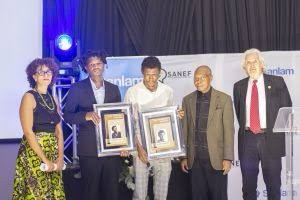
Picture: Some of award winners during the event/Generic
By BAKANG MOKOTO
3 April 2025- The National Press Club (NPC) has announced Lebone Litho Printers as its gold table sponsor for the 2024 Newsmaker of the Year awards. The generous sponsorship comes as a welcome addition to the existing support the NPC received from North West University (NWU), as the main sponsor, further elevating the awards and event’s prestige and stature.
The CEO of Lebone Litho Printers, Keith Michael said they firmly believe in the transformative influence of a free and dynamic press in shaping democracy and ensuring accountability among our leaders. Michael said this is why they take great pride in their support of the National Press Club awards, which commend the exceptional efforts of journalists, who fearlessly pursue the truth and report it objectively.
“By acknowledging the bravery and dedication of these individuals, we aim to motivate and empower a future wave of journalists to carry on this vital mission,” he said.
The NPC acting Chairperson, Antoinette Slabbert said the Newsmaker of the Year Awards is a celebration of the remarkable achievements and contributions of journalists, who have exhibited exceptional skill, courage, and dedication in their field. Slabbert said the sponsorship by Lebone Litho is a shot in the arm for their Newsmaker of the Year awards and comes as they are bracing themselves for this year’s event that promises to take these august awards to a new level of excellence.
“The sponsorship will significantly enhance the prize money allocated to various categories for this annual award to be hosted on 25 April 2025, at the CSIR.
“The support from Lebone Litho Printers aligns with the National Press Club’s mission to honour outstanding professionals in the journalism and communications industry with the Spokesperson of the Year expected to be announced at the event,” she said.
Slabbert further said with the collaboration and support from esteemed sponsors like Lebone Litho Printers and the main sponsor, North West University (NWU), this year’s event is set to be an extraordinary celebration.
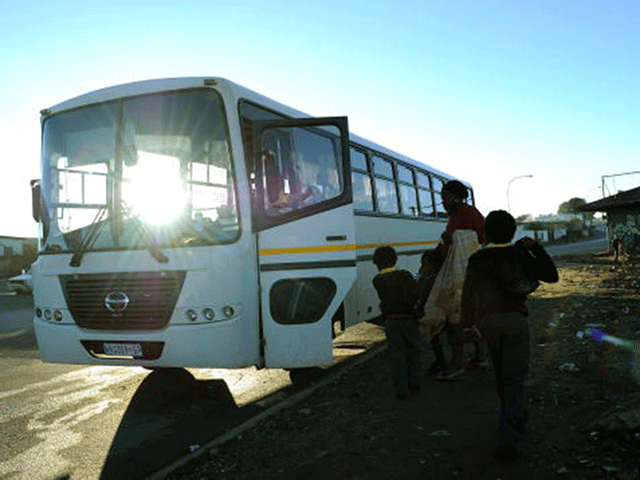
Picture: One of the scholar transport buses stuck while ferrying learners to school
By KEDIBONE MOLAETSI
3 April 2025- The SANSBOCNW said it wishes to inform all stakeholders and the community of the North West that, the North West Scholar Transport is facing an unprecedented crisis. The SANSBOCNW said, despite previous communications, the non-payment issue persists and the situation has worsened.
The SANSBOCNW provincial secretary, Washington Ntozini said they have engaged with the North West Department of Community Safety and Transport Management (COSATMA) leadership and management, the Office of the Premier, and the Portfolio Committee on Community Safety and Transport Management. Ntozini said the department acknowledged a budget shortfall and committed to making payments for outstanding scholar transport services through a virement budget of R53 million before the financial system closed.
“However, despite this commitment, the financial system closed without payment, leaving operators with no choice, but to halt services. Most operators remain unpaid from December 2024 to March 2025. Buses were not serviced or maintained during the December 2024 school holidays due to non-payment.
“During the January 2025, school reopening, most operators managed to render services under difficult financial constraints after COSATMA committed to resolving the non-payment issue. However, operators faced harassment from law enforcement, including heavy traffic fines and operating license fines delayed by the Provincial Regulatory Entity under COSATMA,” he said.
Ntozini further said the SANSBOCNW is disappointed that department officials issued fault penalties during the Human Rights Commission hearing, duplicating law enforcement actions and claiming to enforce SLA conditions, while ignoring the department’s violation of the same conditions by failing to pay operators within 30 days. He said scholar transport crisis requires urgent intervention.
“Operators cannot render services when schools reopen on 8 April 2025, due to lack of funds for diesel, unmaintained buses, and unpaid drivers. Most operators face financial constraints and bankruptcy.
“We have reason to believe that the department’s management plan is to frustrate current operators, causing them to fail and replacing them with outside operators from the panel. This crisis is unprecedented and operators have never gone on strike before,” said Ntonzi.
He said all operators are invited to attend an urgent meeting on 4 April 2025, in Mahikeng (venue and time to be communicated).
3 April 2025- Five innovative media startups from Nigeria, Kenya, Tanzania, and Zimbabwe have received funding to launch climate justice media projects through the inaugural Green Media Accelerator (GMA) bootcamp.
LThe bootcamp brought together young content creators, journalists, civic rights defenders, and environmental experts to explore the role of media in addressing climate change. Participants engaged in thought-provoking discussions on storytelling as a tool for advocacy, showcasing creative formats such as animation, stop-motion films, long-form documentaries, and public theatre.
The goal was to amplify marginalised voices and drive meaningful climate action through compelling narratives.
Beyond supporting individual startups, the initiative also backed two major media hubs — Uganda’s Media Challenge Initiative and Kenya’s Buni Media. These organisations will spearhead the Fake News Fighters program, designed to combat the rise of climate disinformation and ensure accurate environmental reporting reaches audiences across East Africa.
Key themes explored during the bootcamp included the just energy transition, community empowerment, environmental justice, and corporate accountability. Discussions focused on advocating for renewable energy solutions, supporting grassroots climate activism, addressing the disproportionate impact of environmental degradation on marginalized communities, and holding oil companies accountable for environmental damage, particularly in regions like the Niger Delta.
Picture: Magamba Network’s Samm Farai Monro
Jean Mujati, Program Manager at Fojo Institute, highlighted the urgency of these efforts, recalling how reports of Mount Kenya’s rapidly melting glaciers overshadowed the excitement of the bootcamp’s success.
“Now, more than ever, we must support journalists in telling climate stories from every possible angle,” she stated.
Samm Farai Monro, Creative Director at Magamba Network, expressed admiration for the young media entrepreneurs, emphasising their role in pushing for an African renewable energy revolution.
“We were blown away by their pitches. These startups are telling the stories that need to be heard,” he said.
Dinesh Balliah, Director of the Wits Centre for Journalism, stressed the need for sustained investment in climate storytelling. “The commitment we’ve seen here is remarkable. We need funders, broadcasters, and stakeholders to support the growth of Africa’s media startup sector,” she noted.
The Green Media Accelerator represents more than just a funding initiative—it is a movement to reshape climate narratives through community-driven journalism. By nurturing emerging media talent and fostering collaboration, the initiative aims to create a future where informed and engaged citizens drive meaningful environmental change.
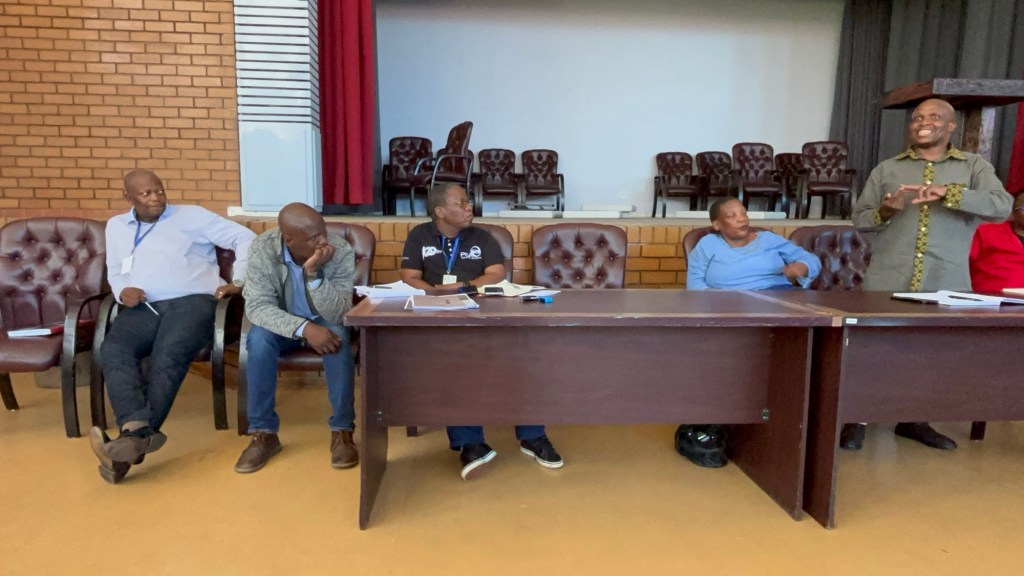
Picture: The North West MEC for Agriculture and Rural Development, Madoda Sambatha during consultative engagement at Taung Agricultural College
By OBAKENG MAJE
3 April 2025- Torture, victimisation, intimidation and sexual advances towards students are some of allegations levelled against the Taung Agricultural College management and lecturers during a heartbreaking meeting with the North West MEC for Agriculture and Rural Development, Madoda Sambatha on Wednesday.
Students alleged that some lecturers and college employees have subjected them to emotional, physical and psychological abuse and when they raise these challenges they are persecuted. One of the victims of bullying at the college, Remofilwe Mooketsi, said she was allegedly bullied and reported it to the management but nothing was done.
“I nearly committed suicide because the person who bullied me was protected by the college management. I reported this matter to Mr Malala, who laughed at me and asked what he must do.
“It is sad because even one of my friends was hospitalised due to depression endured from the college management. We hope Sambatha will address all our challenges, including water shortages,” she said.
The college Student Representative Council (SRC) president, Obakeng Modise said the hostels are in a dire situation. Modise said the ablution facilities are not in good condition and there is also a lack of tissues.
“The walls are peeling off, doors are broken and the drainage system is not properly working. There are allegations that some lecturers are making sexual advances to students and when they are rejected they threaten to make them suffer academically.
“There is only one working washing machine for 156 students. There is also no hot water because the geysers are not working. During the rainy season, the hostels are flooding,” he said.
Modise also alleged that, college employee, Vuyisiwe Mziwakhe would call their parents and snitch on them when they embarked on strike.
Mziwakhe was also accused of taking bribes from students and requesting them to buy her vouchers.
The North West MEC for Agriculture and Rural Development, Madoda Sambatha said everything that students raised as a problem, must be attended to. Sambatha said nobody has a right to call parents of students to intimidate them simply because they are protesting.
“When we resolve challenges, at the point of our resolution components dealing with speciality, the college must never be allowed to go down as an institution. They must focus on these elements that are clustered under abuse.
“Either is a psychological, verbal, physical, emotional or sexual abuse. All these components are going to be investigated properly. I will appoint an investigator because I want to go deeper and get the facts unravelled,” he said.
Sambatha further said he will then decide what actions he takes against perpetrators. He added that they cannot have students admitted in a college and lecturers see them as potential girlfriends.
“If they are attracted to them, they must talk to them, but if they are rejected, they must not use their positions to abuse students. We will never allow that to happen. From today, those who spoke out will not be intimidated or persecuted.
“I want to see if the management will continue to torture them. After investigation, students will still be protected from the abuse of management and I am going to ensure that,” said Sambatha.
He said the student representatives and college management must categorise the interventions accordingly and there should be a revitalisation of infrastructure in both Potchefstroom and Taung Agricultural Colleges. Sambatha said there is no budget allocated for college infrastructure from the North West Provincial Government, but only a grant from the national government.
“The challenge of a grant is that it keeps on reducing. I want both colleges to have enterprise development components, production and sale so that they can generate revenue.
“That money should not go to the provincial reserves, but to the improvement of the sale of infrastructure in the colleges,” said Sambatha.
Economic Freedom Fighters (EFF) Member of Provincial Parliament (MPL), Justice Dabampe said: “The issues that were raised today show that the government is unable to take care of its people, worse its future leaders. The government is unable to address all the infrastructural problems and the management behaviour towards students.
“These complaints were raised a few years ago. So, there will fully a blown investigations regarding sexual harassment, abuse of students by management allegations.”
Dabampe said the outcome of the investigations should reveal the rot that is already there and actions should be taken against perpetrators. He said what concerns them is that students are still bathing with cold water because geysers are not working.
“Actually, the infrastructure at the college has collapsed. On Monday, we expect an action plan from college management, department and student representatives. We are hopeful that all these challenges will be addressed within three months.
“The North West Department of Public Works and Roads is also coming on board to address serious sewerage and drainage systems challenges,” said Dabampe.
The ANCYL Regional Task Team member in the Dr Ruth Segomotsi Mompati region, Poloko Totong said the students contacted them regarding their challenges at the college that date back to five years. Totong said five years ago, they also engaged the former North West MEC for Agriculture and Rural Development, Dr Desbo Mohono, with the very same issues such as water shortages, shortage of resources for practical purposes.
“You will find that students are studying dairy, but there are no dairy cows at the college. They are also studying poultry, but there are no chickens at the college.
“So, those are burning issues that need to be addressed accordingly. What is very disappointing is that Mohono who is an ANC member did not address these issues, but we hope that the current MEC, Madoda Sambatha will do that,” he said.
Totong said Sambatha has made commitments and they will hold him accountable to that. He said there is victimisation, intimidation and there are cases that the students have reported against college management.
“According to the students, there are voice recordings where college management and lecturers ill-treat them. So, as ANCYL, we are going to make follow ups,” he said.







 The Guardian