ANC in North West succumb to ANCWL’s pressure as Tswaing Local Municipality mayor, Norah Mahlangu returns to work  


By OBAKENG MAJE

17 February 2025- The ANC in North West has succumbed to the ANCWL’s pressure as suspended Tswaing Local Municipality mayor, Norah Mahlangu returns to work. The ANC in North West, suspended Mahlangu after she was seen in a scandalous nude video that went viral, where she was found to be in a compromising position.

In the video, Mahlangu was seen taking off her bra and tights and playing with her punani. The video was immensely shared across various social media platforms.

This prompted the ANC in the province to put Mahlangu on a month-long suspension for putting the party into disrepute.

However, the ANCWL Provincial Task Team (PTT) in North West came out guns blazing in defence of suspended Mahlangu. The ANCWL PTT coordinator, Nombuyiselo Adoons said they will not leave this matter lying down.

Adoons said Mhlangu is a victim here and she cannot be victimised.

“We wish to express our deepest concern regarding the recent victimization of Mahlangu, who found herself at the centre of a distressing situation following the unauthorized leaking of her private, intimate video by individuals once considered close friends.

“Such conduct is a blatant violation of her privacy and dignity, and constitutes a serious infringement on her rights. It is disheartening that, despite being the clear victim in this matter, Mahlangu has been instructed to take a special leave,” she said.

Adoons said they believe this decision not only undermines her position as mayor, but also perpetuates a harmful culture wherein victims of privacy violations are punished rather than supported. She said Mahlangu has already demonstrated good faith and accountability by submitting an apology to the ANC and to the community of Tswaing and the province.

“We call upon the ANC to treat this letter with the gravity it deserves and to recognise that Mahlangu’s actions and statements illustrate her commitment to the party and the community she serves.

“We therefore demand that the ANC withdraw its letter calling for Mahlangu’s special leave with immediate effect. We urge the organisation to stand firmly by its commitment to protect and empower women and to uphold the rights and dignity of its members,” said Adoons.

She said the leaking of private material without consent is a criminal act and must be addressed as such. Adoons said victims should be supported, not further traumatised through administrative or disciplinary measures.

“We stand in solidarity with Mahlangu and call on all relevant authorities and party structures to take decisive steps against the perpetrators.

“We further request that the ANC institute clear protocols to support members, who fall victim to such invasions of privacy, ensuring that survivors are not isolated or re-victimised,” she said.

Now, the ANC provincial secretary, Louis Diremelo said: “They are pleased to announce the return of Mahlangu to her position as the mayor of Tswaing Local Municipality following her special leave. We welcome her back with open arms after an unfortunate mishap and look forward to her continued leadership and dedication to the community.

“Mahlangu has been a steadfast advocate for the residents of Tswaing, demonstrating unwavering commitment to service delivery, community engagement, and local development. Her return comes at a crucial time as the municipality faces various challenges that require experienced and compassionate leadership.”

Diremelo further said the ANC is confident that Mahlangu’s leadership will bring renewed energy and focus to the municipality and they encourage all residents to support her in her efforts to improve the lives of the people of Tswaing. He added that they also extend their gratitude to the acting leadership during her absence for their service and dedication to the municipality.

“The ANC remains committed to ensuring that our municipalities are responsive and accountable to the communities they serve,” said Diremelo.


taungdailynews@gmail.com

NWU students shut down university over delayed NSFAS allowance


By OBAKENG MAJE

17 March 2025- The students at North West University (Mafikeng campus), said they will intensify their protest, until the management heeds their call. On Monday, the students blocked the entrance during a protest as they demanded food and 50% book allowance amongst others.

According to the Chairperson of Economic Freedom Fighters Student Command (EFFSC) at the NWU, Lesego Sekgabetlele, the remaining food and book allowance was supposed to be disbursed on 28 February 2025, but nothing happened. Sekgabetlele said the day came and passed by without any communication from the management.

“So, we realised that they did not take us seriously hence we went to the streets in demonstration. The strike will continue until what is due to us is paid in full. It is difficult without that 50% book allowance because it is for necessities needed during teaching and learning processes.

“We are requested to buy laptops and some books for other modules. However, if you do not have that money as a student, then you are going to suffer. We do have students who come from disadvantaged backgrounds and they are heavily reliant on these funds,” he said.

Meanwhile, the NWU’s Communication Manager (Mafikeng campus), Oscar Mosiane said: “As the university, we had a consultative engagement with various stakeholders, including Economic Freedom Fighters (EFF) Student Command and South African Students Congress (SASCO), to map way forward regarding the challenges raised by students. However, the issue is about non-payment of food and 50% book allowance amongst others by NSFAS.

“So, we have also engaged NSFAS and they promised to make some payments for the first batch starting from 1pm today until Friday. We have 394 students that still need to receive the money. However, we have an initiative as the university to give meals to those who are in need until this matter is resolved.”

taungdailynews@gmail.com

The country mourns the death of Rosemary Mangope


By BAKANG MOKOTO

17 March 2025- The North West Premier, Lazarus Kagiso Mokgosi has on behalf of the North West Provincial Government (NWPG), expressed sadness at the passing of MmaKgosi Rosemary Mangope of Bahurutshe Boo-Manyaane at Motswedi village in Lehurutshe, Zeerust. Rosemary is the wife of Kgosi Kwena Mangope, who is also the leader of Action SA in the North West Provincial Legislature (NWPL).

The Action SA president, Herman Mashaba said in a statement that, it is with profound sadness that they announce the passing of the beloved Rosemary Nishebo Mangope, the Queen of Bahurutshe boo Manyane, who departed this life on Saturday following a battle with cancer. Masahaba said Nishebo, as she was affectionately known, was not only a loyal and trusted member of the political party, but also a beacon of hope and progress in community development across South Africa.

“Mmakgosi’s remarkable legacy spans decades of selfless dedication to service and upliftment communities. A highly educated leader, she held multiple degrees including a BA in Social Science, Honours in Sociology, and an MA Social Science from the then University of Bophuthatswana, now the North West University (NWU).

“Her passion for education saw her obtaining a Post Graduate Diploma in Rural Development from the Indira Gandhi Open University in New Delhi. Amongst some of her remarkable achievements was founding the Mmabana Arts Cultural Centres that have produced numerous prominent South African artists,” he said.

Mashaba further said throughout Nishebo’s career, she held several prestigious positions, including Chief Director at the Department of Sports Arts and Culture, Divisional Executive at the Development Bank of Southern Africa, and CEO of the Arts Council until her retirement in April 2022. He added that, up until her passing, Mmaarona Mmakgosi remained committed to community development projects through her signature initiatives including Ikanye & Moito Projects.

“Her campaigns embodied her philosophy of self-reliance and empowerment, captured in the saying “Mphe mphe o a lapisa, motho o kgonwa ke sa gagwe” (Believe in yourself, believe in your own strength). We have lost several very dear people in Action SA over the relatively short period of our existence as a party.

“All of them are a great loss to us and to South Africa, mindful of their contribution to our political journey. To my family – especially to Connie, my dear wife, Ntshebo was a lot more than a colleague, but a friend,” said Mashaba.

He said they are deeply saddened by her passing and they hold her husband and their dear friend, Kgosi Kwena Mangope, close to their hearts. Mashaba said Nishebo’s passing is another big loss to the country.

“Nishebo is survived by her two children, two grandchildren and her husband, Kgosi Kwena Mangope, the leader of the Bahurutshe Boo Manyana Traditional Community. Action SA calls upon all South Africans to keep Kgosi Kwena Mangope and the entire Mangope family in their thoughts and prayers during this difficult time.

“Her warm personality, infectious energy, and dedication to community service will be sorely missed by all who knew her. Funeral arrangements will be announced in due course,” he said.

Mokgosi said an academic in her own right, MmaKgosi Mangope was an astute administrator who left an indelible mark in the country’s Arts and Culture fraternity as well as youth development.

“In relation to the latter, she was the founder of the Mmabana Arts Foundation centred on giving opportunities to young people in rural and periphery communities to excel in arts and sports.

“A life-long commitment which produced globally recognised stars in music, dramatic arts and gymnastics among others,” he said.

taungdailynews@gmail.com


Illicit cigarettes worth R5.4m seized


By KEDIBONE MOLAETSI

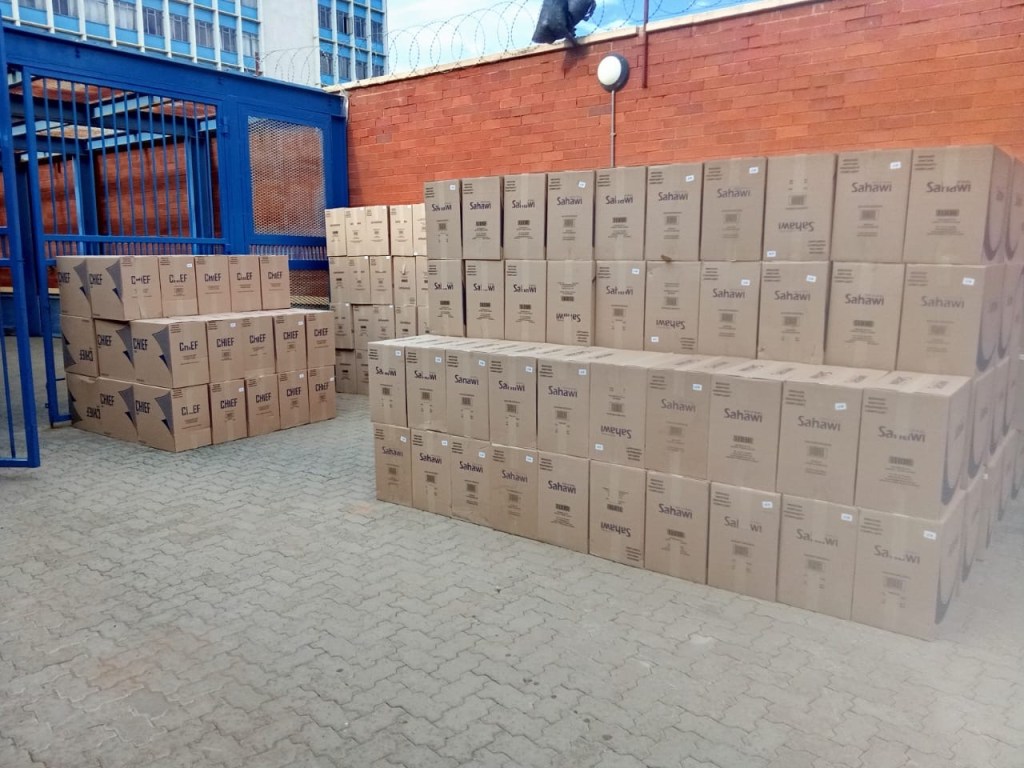
17 March 2025- The police in Northern Cape seized alleged illicit cigarettes worth R5.4 million. This comes after Kimberley SAPS Public Order Policing unit and Platoon 5 members, followed up on information of a truck allegedly transporting illicit goods.

The Northern Cape police spokesperson, Lieutenant Colonel Sergio Kock said after conducting patrols on the N12 road in the vicinity of Shell Ultra City garage in Kimberley. Kock said subsequently, the police stopped the truck fitting the description on 14 March 2025, and seized alleged illicit cigarettes valued at approximately R5.4 million.

“On 14 March 2025 at approximately 14:25 the truck was spotted at a petrol station with two male security officials. Police searched the vehicle and discovered the boxes of illicit cigarettes and confiscated the Isuzu truck as it was allegedly utilized in the commission of crime.

“No arrests have been effected, however the police are investigating an enquiry into the matter. The police are urging the community to continue being the   ears and eyes of the police and report criminal activities via the SAPS Crime Stop number 08600 10111 or utilize the MySaps app. All information will be treated confidentially and the investigation continues,” he said.

taungdailynews@gmail.com

217 suspects arrested for various crimes during Operation Shanela


By REGINALD KANYANE

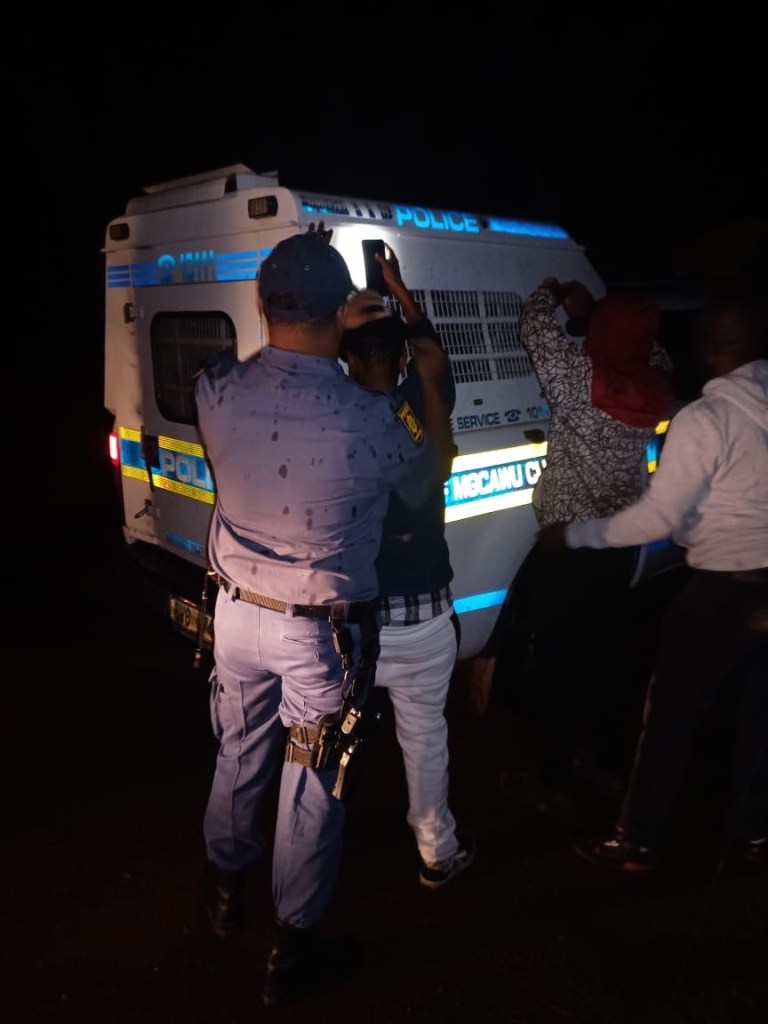
17 March 2025- More than 200 suspects were arrested for various crimes across five districts during Operation Shanela. The multi-disciplinary teams inspected numerous liquor outlets for compliance pertaining to their licence conditions.

The Northern Cape police spokesperson, Lieutenant Colonel Sergio Kock said through 524 high visibility vehicle and 1812 patrols and stop and search actions, 3443 vehicles and 7609 persons were stopped and searched at various vehicle check points (VCPs) and roadblocks conducted across the province. Kock said suspects were arrested for an array of crimes, including illegal dealing in liquor, burglaries at residential and business premises, malicious damage to property, stock theft, assaults, robberies, dealing in drugs, and possession of dangerous weapons.

“The police executed numerous actions, which also included the tracing of wanted suspects, compliance inspections conducted at second-hand dealers, liquor premises as well as formal and informal businesses, farms, scrapyards.

“During this period, schools were visited in support of the safer schools’ programme and various community engagements were held involving the Community Policing Forum (CPF), and other community policing structures,” he said.

Kock said during the weekly execution of the operation police confiscated counterfeit goods, dangerous weapons, firearms and ammunition, alcoholic beverages, drugs and cash. He said Operation Shanela is constantly continuing to tighten its grip on crime in the province by securing the arrest of 217 suspects throughout the five districts from 10 until 16 March 2025.

Meanwhile, the Northern Cape Police Commissioner, Lieutenant General Koliswa Otola, also actively participated in operations in Kimberley on 14 March 2025. Otola applauded all the force levels in conjunction with other departments in the execution of the operations.

“We thank the public for their continuous efforts in the fight against crime. To strengthen the CPF involvement in all the districts, provincial management handed over four vehicles to district CPFs in an effort to enhance service delivery and strengthen the partnership between SAPS and the community.

“SAPS will leave no one behind in its collective efforts to curb and eradicate crime,” he said.

taungdailynews@gmail.com

Monna o tlhagelela kwa kgotlhatshekelo morago ga magatwe a go tlhapa lekgarebe ka thipa


Ka OBAKENG MAJE

17 Mopitlwe 2025- Monna wa kwa Ranstad, mono Taung, o solofetswe go rotola matlho mo pele ga magistrata wa Taung mo letsatsing la gompieno. Se se tla morago ga ditatofatsa tsa go tlhabakaka Kegomoditswe Mphahlele ka thipa.

Go begwa fa tirago e, ele ya beke e fetileng teng kwa motseng wa Ranstad.

taungdailynews@gmail.com

Kgetsi ya polao ya kwa Lokgabeng e buseditswe morago


Ka BAKANG MOKOTO

17 Mopitlwe 2025- Kgetsi ya polao kgatlhanong le lekawana la kwa motseng wa Lokgabeng, gaufi le Taung, e buseditswe morago ke kgotlhatshekelo ya Taung go fitlha 14 Motsheganong 2025. Simon Molale (22), yo a latofadiwang ka go tlhaba le go bolaya lekgarebe la gagwe, Tshepiso Medichane (21), o kwa ntlo-lefitshwana morago ga go ganelwa ka beile ke kgotlha-tshekelo ya Taung mo nakong e e fetileng.

Go begwa fa Molale a ne a tlhaba Medichane le go mo bolaya, mme one a tshaba kwa lefelong la tiragalo morago ga go bona batho.

Fela, go begwa fa ba lelapa la gagwe ba ne ba mo tshwara le go mo isa kwa seteisheneng sa sepodisi sa Taung di ura morago ga tiragalo e. Go begwa fa Molale a lekile go tsaya botshelo jwa gagwe pele ga ba lelapa la gagwe ba ka mo neela sepodisi ka motsi o.

Molale o ile a amogelwa kwa bookelo jwa selegae jwa Taung morago ga magatwe a gore o ile a itlhaba ka thipa.

Kgabagare, sebueledi sa sepodisi mo sedikeng sa Dr Ruth Segomotsi Mompati, Warrant Officer Tryphosa van Rooyen are Molale one a tshwarwa le go latofadiwa ka polao ya ga Medichane.

“Ke nnete molatofadiwa mo kgetsing e ya polao o tshwerwe. Molatofadiwa one a isiwa kwa seteisheneng sa sepodisi ke ba lelapa la gagwe.

“One a na le dikgobalo, mme o ile a amogelwa kwa bookelong jwa selegae. Molatofadiwa o lebagane le kgetsi ya polao, mme thipa e e dirisitsweng go bolaya moswi ene ya fitlhelwa kwa lefelong la tiragalo.”

Go fitlha ga jaana, bosekisi bo tlhalositse fa bo setse bo emetse dipholo tsa diteko tsa thipa e go begwang fa Molale a e dirisitse go bolaya Medichane, mme dipatlisiso mo kgetsing di a tswelela.

taungdailynews@gmail.com

First-of-its-kind hunting study sheds light on hunters’ perspective


By BERTIE JACOBS

17 March 2025- • Hunters, especially international hunters, believe that they benefit local communities.

• International hunters spend up to four times more per visit than local hunters.

• International hunters perceive their impact to be greater than local hunters.

• The perspective of the local community is still missing.

The target is in his sights. In his mind, the buck’s meat is already processed. He pulls the trigger gently and the shot rings loudly, echoing across the South African bush. For the hunter, it was an exhilarating experience, one he shares with thousands of hunters every year. But what does hunting tourism really mean for the local communities that live alongside it?

A recent study by North-West University’s (NWU) Tourism Research in Economics, Environs and Society (TREES) research unit examines this controversial and often misunderstood industry from an unusual angle: through the eyes of the hunters themselves. This first-of-its-kind study was conducted by Prof Peet van der Merwe and Prof Elmarie Slabbert and published in the journal Development Southern Africa under the title The (ir)relevance of hunting tourism to rural communities: A hunter’s perspective.

The findings are provocative: hunters believe they are not just participating in a recreational activity, but actively shaping the economies, infrastructures, and social dynamics of South Africa’s rural communities. Whether or not local communities share this perception remains an open question.

Hunting tourism is big business in South Africa. Each year, thousands of international and local hunters descend on game farms and reserves, spending large sums of money on guides, lodging and permits. International hunters visiting South Africa’s shores are mainly from the United States and stay an average of ten nights per trip, compared to just three or four nights for their South African counterparts.

The difference in spending is stark, with foreign hunters investing up to four times more per visit. Their financial footprint extends beyond the confines of hunting lodges, spilling over into local communities in the form of employment, service contracts and donations. According to the study, nearly a third of international hunters donate meat from their kills to local communities, and a quarter contribute to schools and public projects.

But is this enough to call it a lifeline for rural South Africa?

The study’s authors argue that hunting tourism does not exist in a vacuum, but sits at the intersection of economic survival, conservation policy and cultural preservation. More than 30% of South Africa’s population lives in rural areas, where unemployment and poverty are widespread. Here, hunting tourism is a rare source of formal employment. Game farms and lodges create jobs for trackers, lodge staff, cooks, and artisans, providing opportunities where few alternatives exist.

Hunters see themselves as the driving force behind this development. Their presence, they argue, leads to improvements in infrastructure, better maintained roads and increased security in the areas where they hunt. They claim that crime decreases in hunting zones and that local pride in traditional cultural practices – such as sustainable wildlife management – flourishes under the influx of revenue. However, these claims remain largely untested from the perspective of the communities themselves.

For all its perceived benefits, hunting tourism is a polarising issue. Its critics argue that it prioritises short-term economic gain over long-term sustainability. Research outside South Africa, notably in Namibia and Botswana, has found that banning hunting tourism can lead to job losses and increased poaching as communities lose a legal means of profiting from wildlife. The South African study echoes these concerns: hunters overwhelmingly see themselves as allies in conservation, directly funding anti-poaching initiatives and wildlife management efforts. Yet conservationists remain divided over whether hunting and biodiversity conservation can truly coexist in the long run.

The NWU study categorised the impact of hunting tourism into three main factors: prosperity, empowerment and revitalisation. Economic benefits ranked highest, with hunters citing job creation, income generation and improved living standards as their top contributions. “Revitalisation”– the idea that hunting tourism physically transforms rural areas through development – came last. Even among the hunters surveyed, expectations of direct infrastructure improvements remained modest.

There was, however, a clear divide between foreign and domestic hunters. International visitors were far more likely to see themselves as key players in community development. They highlighted their financial contributions, their role in maintaining game farms and their support for local projects. South African hunters, while recognising the economic benefits, were less inclined to see their role as transformative. This may be because they are local hunters and do not fully recognise their contribution. It’s similar to people living by the coast not appreciating the ocean as much as people who visit the coast on holiday.

There is a simple reason for this. One of the findings of the study is that, although hunters are viewed as a collective, international hunters and local hunters have different perspectives on some of the impacts. The study showed that international hunting tourists perceive their impacts to be more significant than their domestic counterparts. Their spending may also influence their perceptions, as they spend three to four times more per hunt than domestic hunters. However, there are fewer international hunting tourists than local hunting tourists in South Africa; the impact of local hunting tourists is more important because they are more numerous. Local hunters should therefore be made more aware of their impact on communities. In simple terms, local hunters hunt more, which dilutes their own perceptions of their impact on local communities. They think less about the impact of their contributions.

The study suggests that South Africa’s hunting tourism model offers a potential blueprint for balancing conservation and rural development, but it also underscores how little is known about the actual on-the-ground effects. The voices missing from the conversation are those of local communities themselves. Do they see the same economic and social benefits as hunters? Are they benefiting equitably, or are the gains concentrated among landowners and tourism operators?

The study calls for further research, particularly from the perspective of those most affected. Until then, the debate about the place of hunting tourism in rural South Africa remains unresolved. But one thing is clear: for the hunters who return year after year, their impact is measured not just in the animals they hunt, but in the communities, they believe they are uplifting.

Source: www.nwu.ac.za

taungdailynews@gmail.com

Department of Tourism strengthen its ties with China


By KEDIBONE MOLAETSI

17 March 2025- The Deputy Minister of Tourism, Maggie Makhotso Sotyu said the Republic of South Africa and the People of Republic of China have a special bond that ties them together. Sotyu said the Chinese community’s history with South Africa dates back to the 1800s and is considered as an integral part of the society, and contributes significantly to the cultural and economic landscape.

She further said the prestige gathering they had is not only a reflection of the strong ties between Africa and China, but also a recognition of the vital role that women play in shaping industries, particularly in tourism. Sotyu added that the tourism sector remains a powerful driver of economic growth, job creation, and cultural exchange.

“However, for it to reach its full potential, we must ensure that women, who make up the majority of the tourism workforce, are given equal opportunities to lead, innovate, and thrive.

“In South Africa, we are committed to fostering gender equity within tourism, and I am proud to highlight several key initiatives that align with the vision of tourism,” she said.

Sotyu said Tourism is more than just showcasing landmarks. She said it is about storytelling, authenticity, and cultural exchange.

“Through our Cultural Immersion Programme for South African Tourist Guides, we are equipping our guides with skills and knowledge to create meaningful experiences for Chinese visitors, ensuring they gain a deeper understanding of our diverse heritage.

“This initiative strengthens our commitment to service excellence and ensures that tourists leave with not only beautiful memories but also a rich appreciation of our history and traditions,” said Sotyu.

She said it is important to inform the public that the implementation of the cultural Immersion programme for South African tourist guides and departmental officials in China took place in October 2024. Sotyu said given the growing significance of the Chinese Market to global tourism, her department identified Mandarin Language proficiency as a strategic opportunity for tourist guides.

“The department has taken steps to enhance the skills of South African tourist guides by implementing the Mandarin Language Programme. Since its inception, in 2019, to date, a number of guides have successfully passed the Hanyu Shuipin Kaoshi (HSK) exams at level 1 as part of phase1) and 2 as part of phase 2 respectively, reaching a proficiency that allows them to offer tours in Mandarin.

“A total of 22 tourist guides were recommended for phase 3 to visit China last October. I am sure that you would agree when I say this was a wonderful initiative that will ensure that South African tour guides can better meet the needs of Chinese tourists and provide them with memorable experiences,” she said.

Sotyu said to further encourage Chinese visitors to visit the shores, the South African government announced a ground-breaking Trusted Tour Operator Scheme which significantly eases the process and allows for a seamless visa application process for Chinese travellers and tour operators.

She said this scheme is truly a massive win for the tourism and business events sector.

“The Department of Tourism uses the new visa initiatives as enablers to grow tourism arrivals to South Africa which will in turn drive inclusive economic growth and job creation.

“It is also crucial to recognise the women in the tourism sector who face unique challenges, from access to funding and training to leadership opportunities. And it is for this reason that the Department of Tourism projects are designed to provide skills development, mentorship, and financial support to women entrepreneurs in the industry,” said Sotyu.

taungdailynews@gmail.com

Desmond Tutu’s killer sentenced to 15 years imprisonment


By REGINALD KANYANE

17 March 2025- A man (29) who killed Desmond Tutu (25), sentenced to 15 years imprisonment by the Klerksdorp Regional Court. It transpired during the trial that, Tutu was with his two friends on Sunday evening, 27 February 2022, at Kanana Township, in Orkney, when the accused, Papa Madule, emerged from the nearby tavern.

The North West police spokesperson, Brigadier Sabata Mokgwabone said Madule asked Tutu if he was a member of the SVK gang. Mokgwabone said although the victim replied that he was not, the accused stabbed him in the chest with a knife and then ran away.

“The police and paramedics were summoned to the scene, where the victim was declared dead. A case of murder was registered and taken by the Provincial Anti-Gang Unit for investigation, which resulted in Madule’s arrest on 3 March 2022.

“The accused was later granted R5000 bail. Following a series of court appearances, Madule was found guilty and sentenced to 15 years. The court further declared the accused unfit to possess a firearm in terms of Section 103 of the Firearms Control Act, 2000,” he said.

Meanwhile, the acting North West Police Commissioner, Major General Patrick Asaneng, commended the Investigating Officer, Warrant Officer Benett Tyukatha, and the state prosecutor, advocate Cassius Mona, for working together with other stakeholders to ensure that the accused was convicted. Asaneng further stated that the sentence will serve as a warning that gangsterism and related criminality will be dealt with effectively.

taungdailynews@gmail.com