Picture: Sporadic fires ravaged farms in Danielskuil/Facebook
By KEDIBONE MOLAETSI
The sporadic wildfires that ravaged farms near R385 road in Danielskuil were extinguished. The Northern Cape police spokesperson, Lieutenant Col, Sergio Kock said the Postmasburg SAPS, Traffic Department, Fire Department and all other relevant role players assisted with raging fires.
“The fires were sporadic and caused heavy clouds of smoke on the roads. That made the visibility dangerous for motorists driving in the direction of Koopmansfontein, Danielskuil, Lime Acres, and Postmasburg.
Motorists were urged to use alternative routes for their own safety as the situation was becoming dangerous, especially during the night,” said Kock.
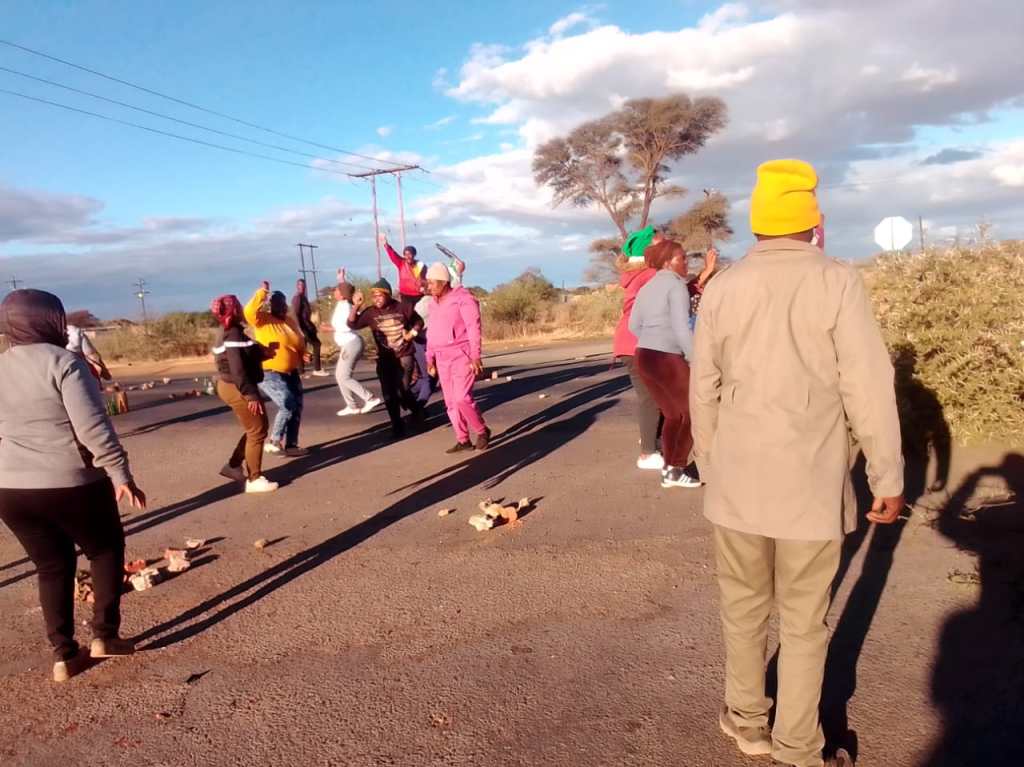
Setshwantsho: Baagi ba Itireleng ba tswetse tsela ya N18
Ka OBAKENG MAJE
Baagi ba motse wa Itireleng gaufi le Taung, ba tswetse tsela ya N18 e golaganyang Taung le Hartswater mo letsatsing la gompieno. Gape, go begwa fa baagi ba, ba letse ba tshwere molekgotlha wa bone wa ANC, Ntesang Montewa motshwara-kananyo.
Seno se tla morago ga gore, ba kae fa ba na le dingwaga-ngwaga ba ikuela go masepala go ba agela tsela ya pavement ya dikilometara dile 2.5 go tswa kwa motseng wa bone go golaganya tsela-kgolo ya N18.
Mongwe wa baeteledipele wa baagi, Itumeleng Pholo are, ba shupa mayara wa masepala o mogolwane wa Taung, Tumisang Gaoraelwe ka monwana. Go ya ka Pholo, Gaoraelwe o tsweletse go ba dukolosa sekhi, mme ebile o gana le go kopana le bone.
“Ka 2021, re ile ra kopana le masepala mme o ile wa netefatsa fa tsela e e kopanyang motse wa rona le tsela-kgolo ya N18, e wela mo tlase ga bone. Motsamaisi wa maloba wa masepala, Katlego Gabanakgosi, o ile a dira lekwalo le le shupang fa tsela eo, ele ya masepala mme one a kaya fa council e ncha fa e tsena, e tla dira ka natla gore tsela e agiwe.
“Fela, seo ga sa direga, mme mo ngwaneng o o fetileng, Gaoraelwe one a raya baagi are, mo bekeng ya ntlha ya Phatwe 2023, tsela eo e tlile go ka berekiwa. Fela, go ile ga nna le tshalelo-morago ya tshwetso ya council mme tshwetso eo ene ya tswa ka Sedimonthole 2022. Jaanong, morago ga moo, re ne ra tshepisiwa fa tsela eo e tlile go berekiwa,” Pholo wa tlhalosa.
Pholo are, ene ya re fa tsela e tshwanetswe e agiwa, Gaoraelwe one a ya kwa le kwa ntle le go ba naya ntlha. Pholo are, Gaoraelwe o reile baagi are go na le madi a kanang ka R10 million a betsweng thoko go ka aga tsela eo go tswa kwa Investment Account.
“Jaanong, la bofelo ga gwa feleletsa go ntse jalo. Re ile ra tswelela jalo go ka leka go kopana le Gaoraelwe, mme one a sia-sia. Ka Imbizo e ene ele kwa motseng wa Leshobo, ga ya feleletsa e atlegile, gonne baagi ba ne ba eme ka maoto ba batla tsela. Fela, modulasetulo wa matlole kwa masepaleng, Mika Moeti, one a raya baagi are, ba tlile go arabela dipotso tsa bone pele ga di ura dile 24 di feta. Fela, seo ga sa direga mme ene ya re ka Imbizo ya kwa Extension 7, Gaoraelwe one a dumalana le baagi gore o tla dira letsatsi gore a tle go kopana le baagi ba Itireleng,” Pholo wa tlhalosa.
Pholo are, seo ga sa direga, mme ba ne ba feleletsa ba kwadile makwalo le go dira di petition le go di romela kwa masepaleng. Are, fela seo ga sa thusa gonne Gaoraelwe one a se iponagatse.
“Jaanong, maabane re ne re tshwere kopano ya Community Based Plan (CPB). Baagi ba ile ba feleletsa ba tshwere molekgotlha wa ANC, Ntesang Montewa motshwara-kananyo gonne ba ne ba batla mayara. O ile a leka go letsetsa Gaoraelwe, mmusa-kgotlha, Grace Moipolai, ga mmogo le modulasetulo wa komiti ya mafaratlhatlha, Itumeleng Maribe mme ga a ba bona.
“Jaanong, mayara one a kaile fa a tlile go kopana le rona mo letsatsing la gompieno, fela ga bonagala gape. O ile a bolelela bangwe gore ene ka nosi o tshaba go tla go kopana le baagi, gonne a belaela gore ba tla mo tlhasela,” Pholo wa tlhalosa.
Pholo gape are, go na le dipego tsa gore go ne go beetswe thoko madi a kanang ka R6 million go ka aga tsela e, mme madi ao a nyeletse fela.
Kgabagare, sebueledi sa masepala, Ricky Oliphant ga arabela dipotsi tsa bobega-kgang.
Picture: A canal where a body was found by police/Generic
By BAKANG MOKOTO
The police in Upington are requesting the assistance of the public in identifying the body of a man who was found in a canal near Raaswater on 21 September 2023.
The Northern Cape police spokesperson in ZF Mgcawu District, Sgt Omphile Masegela said the deceased is a coloured man estimated between 30 and 40 years of age. Masegela further said the deceased was wearing black track pants, a grey Adidas hoodie, and black All-Star sneakers at the time of his drowning.
“Anyone with information or inquiries can contact the investigating officer, Sergeant Bahedile Nkwadipo on 082 495 4615,” he said.
The Northern Cape has long been characterized by its arid climate and limited water resources. However, in recent years, the province has faced a new challenge – irregular and unpredictable rainfall patterns. This shift in weather patterns raises concerns among local communities, agriculturalists, and environmentalists alike.
The erratic nature of rainfall in the Northern Cape presents a stark reminder of the urgent need for proactive and adaptive measures by the government to address the growing water insecurity in the province.
The heart of the concern lies in rainfall’s critical role in the province’s agricultural sector. Despite its harsh conditions, the Northern Cape has managed to sustain certain agricultural activities due to reliable rainfall during specific seasons.
However, the irregularity in rainfall has disrupted planting and harvesting schedules, leaving farmers in a precarious position. Crop failures and reduced yields have become increasingly common, posing threats to both food security and the livelihoods of those dependent on agriculture. The irregular rainfalls have underscored the vulnerability of the agricultural sector to the impacts of climate change.
The impact of irregular rainfall in the province isn’t limited to agriculture; it has far-reaching effects on the region’s fragile ecosystems. Native flora and fauna have evolved to survive in arid conditions, relying on seasonal rainfall patterns for survival.
Disruptions in these patterns are leading to habitat loss, shifts in plant and animal distributions, and even endangerment of certain species. The delicate balance of the Northern Cape’s unique ecosystem is at stake, and unless the government takes decisive action, irreversible damage will occur.
This irregularity of rainfall also places stress on local communities, particularly those without access to alternative water sources like those in the Namaqualand region. Water scarcity becomes a pressing issue when traditional sources, such as rivers and wells, dry up due to changing rainfall patterns.
Communities that depend on subsistence farming or herding find themselves facing an uncertain future as they struggle to adapt to the evolving climate.
Migration and displacement become real threats as people seek better living conditions elsewhere, exacerbating existing social and economic challenges, which may also threaten the already small population of the province, decreasing even more and the loss of culture in some parts.
In the face of these challenges, it is imperative that the Northern Cape government takes proactive steps to build resilience and adapt to the changing climate. A multifaceted approach is needed, including investment in water infrastructure, improved water management practices, and the promotion of drought-resistant crops.
Local governments, together with national authorities, must collaborate to develop and implement policies that promote sustainable land use, efficient water utilization, and community empowerment.
Furthermore, local government initiatives to raise awareness and educate the public about climate change and its impacts can foster a sense of collective responsibility. Encouraging practices such as rainwater harvesting, efficient irrigation techniques, and sustainable water conservation can contribute to mitigating the effects of irregular rainfall.
The irregular rainfall patterns in the Northern Cape are a stark reminder of the broader challenges posed by climate change. The province’s agricultural productivity, unique ecosystems, and local communities are all at risk. However, by embracing adaptive strategies and fostering a sense of urgency, the Northern Cape has the potential to lead the way in building resilience and addressing the impacts of irregular rainfall.
The time for action is now, and through collaborative efforts, we can ensure a more secure and sustainable future for this remarkable part of South Africa.
Note: (This opinion piece was produced through the Youth Citizen JournalismFellowship, an initiative of the Rural Action for Climate Resilience project, whichis co-funded by the EU and the Heinrich Boll Foundation)
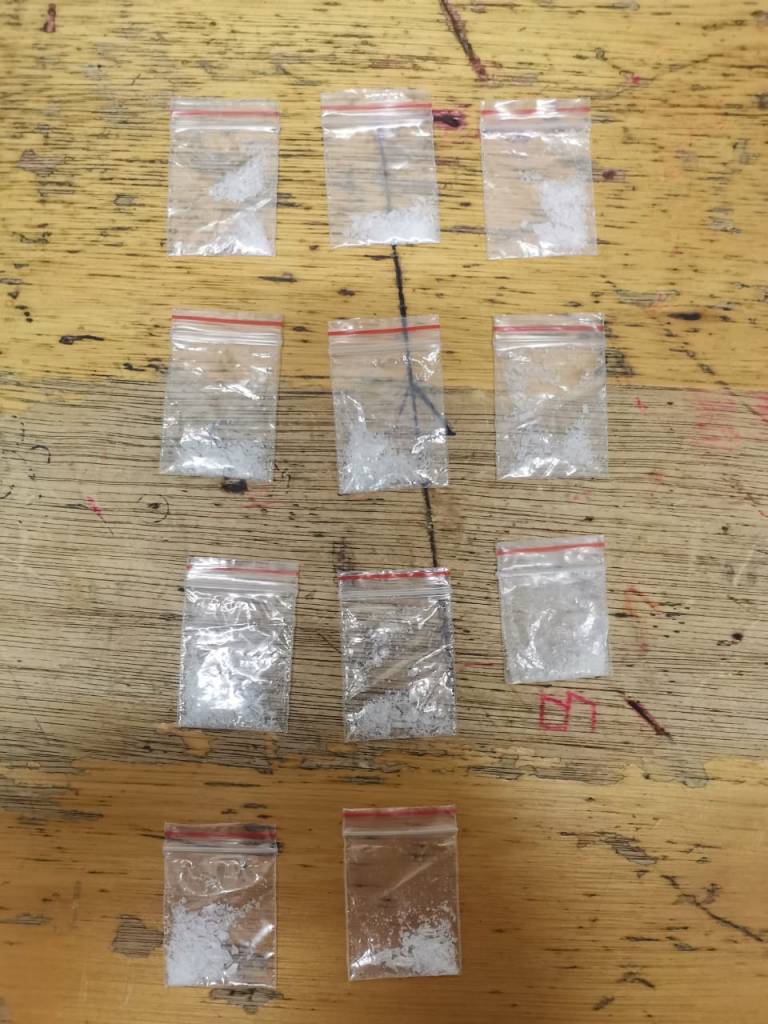
Picture: The drugs that were allegedly found in possession of a man/Supplied
By REGINALD KANYANE
A man has been arrested for being in possession of drugs during Operation Shanela. Northern Cape police spokesperson, Brig Brig Mashay Gamieldien said, on 22 September 2023 at around 12pm, the Lime Acres Police Station Commander, Captain Ricky Daniels accompanied by the Vispol Head, Warrant Officer Ben Eiman and shift members, conducted stop and search actions in the business area of Lime Acres.
“While conducting random searches, Eiman searched two men and found 11 small ziplog bags on one of them containing crystal meth. A man aged 37 was arrested for possession of drugs and will appear in court soon. Operation Shanela continues to squeeze the space for criminals to operate,” said Gamieldien said.
Three suspects were arrested for house-breaking at Danieskuil on Monday. According to the Northern Cape police spokesperson, Brig Mashay Gamieldien, on 24 September 2023 at approximately 2pm, the Lime Acres Vispol Commander, Warrant Officer Ben Eiman, Detective Commander, Warrant Officer Thembelani Booi and Sgt Mzimkhule Dube, continued with crime prevention duties and followed up on information related to a housebreaking case that was reported in Lime Acres.
Gamieldien said whilst busy at the Community Service Centre (CSC), a second complainant reported another housebreaking case.
“The three police officers followed up on leads which led them to Danielskuil. Eiman arrested one man linked to the first case and also found a wallet containing banks and ID cards of the father of the first complainant in the possession of the suspect.
“Upon further searches, the police officials found a black bag containing clothing and shoes allegedly stolen items. The suspect took the policemen to a second premises, where they attempted to sell an Xbox 5 series and also found suspected stolen goods there amounting to R9000,” she said.
Gamieldien further said, that on 25 September 2023, the same three police officials continued their investigation and arrested the third suspect in Danielskuil. She added that, the two of the suspects were positively linked to the first housebreaking case.
“Both complainants positively identified their property. The three men aged 23, 31, and 33 respectively will soon appear in court on charges of housebreaking and theft.
“The public is urged not to buy stolen goods offered to them, as it is an offense to buy it but instead to report it to the police,” said Gamieldien.
Picture: The climate change continues to affect livelihoods/Google
KEAMOGETSWE THOMAS
In the vast and arid landscapes of South Africa’s Northern Cape Province, the climate has long been a defining factor in the lives of its residents and the region’s economic activities. Changing weather patterns and extreme events connected to climate change make crucial infrastructure like roads, buildings, energy grids, and water systems more at risk.
The Namakwa District, known for its beautiful scenery, recently faced a severe flood. This, according to climate experts, highlights the pressing need to adopt infrastructure that can withstand climate challenges.
After the flood in the Namakwa District, speaking to Rural Action for Climate Resilience(RACR) Professor Dallip Das from the University of KwaZulu-Natal’s engineering department and planning sheds light on the connection between climate change and the area’s infrastructure vulnerabilities After a significant flood in the Namakwa District.
Das emphasizes the shifting weather patterns, including increased rainfall, rising temperatures, and intensified storms, which have led to more frequent extreme events.
“Sudden heavy downpours, referred to as cloudbursts, and flash floods have become common, exposing roads, homes, and critical systems to heightened risks. Despite advanced technology, the unpredictability of these events remains a challenge, making planning and response complex,” he told RACR.
According to Dr Andries Kruger, Chief Scientist from the South African Weather Service, the Namakwa District isn’t usually flood-prone, but is more susceptible to droughts or extended dry periods. However, due to irregular rainfall, floods can occur in unusually wet seasons, like the current one.
Kruger also points out long-term climate projections indicating a drier climate in the region. “Over the past 30 years and even earlier, rainfall trends in the far west of the country show a decline,” he said, adding “Yet, it’s not possible to conclude that floods will become less likely from available data. Recent studies reveal that even in parts of South Africa experiencing less rainfall, heavy daily downpours haven’t decreased.”
Urgent Action Agenda: Adapting to Climate Challenges
The implementation gap poses a significant challenge, requiring concerted efforts to transform plans into action. Identifying vulnerable regions, infrastructure, and communities remains imperative.
In developing resilient infrastructure, a dual approach involving prevention and restoration must be adopted. Preventive measures focus on constructing robust infrastructure capable of enduring extreme events, while restoration strategies aim to rejuvenate damaged infrastructure with resilience at the forefront.
In the face of increasing climate uncertainties and extreme events, the paradigm of infrastructure development is evolving from reactive measures to proactive, resilient solutions. Central to this transformation is a resolute focus on prioritizing both resilience and sustainability.
This shift entails not only meticulous planning, design, construction, and maintenance but also active engagement with local communities, tapping into their invaluable insights and experiences to navigate the unpredictability of a changing climate.
Recent incidents, like the impactful flood event, underscore the imperative of a comprehensive approach, considering spatial, engineering, socio-economic, and environmental factors in infrastructure development.
Lessons drawn from these events advocate for the construction of robust roads and other structures using durable materials capable of withstanding nature’s formidable forces.
The urgent call to action is clear. Across regions, infrastructure, and communities, vulnerability is stark. Professor. Das advises, South Africa must strengthen existing structures and restore those damaged. This could mean constructing escape routes or using resilient materials. But this isn’t just physical—it’s about reshaping mindsets. Stakeholders need skills to navigate disasters, while local wisdom boosts adaptability.
Crucially, collaboration is key—uniting governments, organizations, and individuals.
Note: (This article was produced through the Youth Citizen Journalism Fellowship, an initiative of the Rural Action for Climate Resilience project, which is co-funded by the European Union and the Heinrich Boll Foundation)
Picture: The Municipal Manager, Modisenyane Thompson Segapo at Naledi Local Municipality/Facebook
By OBAKENG MAJE
The embattled Naledi Local Municipality in Vryburg said it is going to challenge the North West High Court decision. Last week, the North West High Court sitting in Mahikeng, rendered the appointment of the Municipal Manager, Modisenyane Thompson Segapo as invalid and unlawful.
This comes after some aggrieved employees and councillors, Thabo Appolus, Lerato Setlhake, Lebogang Jacobs and Vuyiswa Morakile launched an application on an urgent basis challenging the appointment of Segapo.
Judge FMM Reid said, the report from the MEC has now been received and the MEC does not support the appointment of Segapo as Municipal Manager. Reid said the report of the MEC is dated 26 April 2023 and titled: “Report on the process of appointing the Municipal Manager at Naledi Local Municipality.”
“The finding of MEC is that the appointment of Segapo as Municipal Manager is not supported because MEC found the procedural and substantive requirements in relation to the appointment of municipal senior managers, submitted as per Regulation 17 (4) not to have been complied with.
“Amongst others, the following issues of non-compliance were highlighted in the MEC’s report. Interviews were conducted 44 days after the screening process, which is 23 days more than the period that is allowed in terms of Regulation 15(1),” he said.
Reid said Regulation 15 (1) which deals with the appointment and conditions of employment of senior managers was not complied with.
He said the screening report attached to the submissions to the MEC was incomplete and there is no letter from the National Department of Cooperative Governance, Human Settlements and Traditional Affairs or evidence from the municipality that the request for security screening and vetting was sent to the National Department of Cooperative Governance, Human Settlements and Traditional Affairs.
“The MIE screening results are dated 1 July 2021, which is prior to the vacancy date of 31 October 2022, and as such irregular. The minutes of the shortlisting process are non-compliant with the requirements in that the minutes attached to the report sent to the MEC did not mention the names of all the shortlisted candidates.
“The minutes only referred to the re-advertisement of the post. The minutes of the interview process are non-compliant in that it does not mention the top three candidates and those recommended to undergo competency assessments. There was no written confirmation attached by the successful candidate that does not hold any political office,” said Reid.
He said the term of the contract as reflected on the letter of appointment is non-compliant as it exceeds the term of the council by four months. Reid said the MEC found that the appointment of Segapo is contrary to the provisions of Section 54 (3)(b) of the Local Government: Municipal Systems Act 2000.
“The MEC concluded that the appointment of Segapo is not supported as Municipal Manager. Correspondence followed between the former acting Municipal Manager, the mayor, the MMC of Finance and Corporate Services, and the Whip of Council in which the above-mentioned irregularities were highlighted.
“No steps were taken to remove Segapo as Municipal Manager, despite his appointment being in conflict with the regulations as highlighted in the report of the MEC. In application of the facts to the law, the appointment of Segapo has to be set aside as it was not done in terms of the legislation and without the MEC’s approval,” he said.
Reid said as far as the setting aside of the meeting dated 10 March 2023 and all resolutions taken in that meeting, this court cannot determine whether the meeting was correctly constituted and mandated.
He said the applicants did not make out a substantive case to grant the relief to have the meeting and the resolutions (save for the appointment of the Municipal Manager) set aside.
“This is the position since there are several factual disputes relating to the mandates, proxy, and other issues which this court is not going to entertain in this urgent application.
“The court dispenses with the Rules relating to forms, services, and time periods as prescribed by the Uniform Rules of this court and directs that the matter be enrolled and heard as an urgent application in terms of Rule 6 (12),” said Reid.
He said the appointment of Segapo as the Municipal Manager from 10 March 2023 is set aside as invalid and unlawful. Reid said the municipality is ordered to advertise the position of the Municipal Manager and commence the recruitment process de novo.
However, the Naledi Local Municipality acting spokesperson, Portia Maphike said: “The court based its decision on the letter of the MEC of COGHSTA, which raised a number of concerns about the process of appointment, and not the candidate’s qualifications, experience, expertise or competency as these were all met.
“The issues raised by the MEC are based on gross mistakes made in the assessment by the Office of the MEC, which mistakes and falsehoods have since been clarified by the only appointing authority – the Municipal Council.”
Maphike said a judgment based on a mistaken assessment cannot be held without rectification, hence the resolution by the only appointing authority, council resolved on 22 September 2023, to appeal this matter at the Supreme Court of Appeal in Bloemfontein.
She said the effect of the appeal process is that it suspends this erroneous judgment. Maphike said in effect, once the appeal is lodged with the SCA, the duly appointed Municipal Manager will return to work to deliver services to the communities as he has competently done.
The recent catastrophic floods in Libya are a stark reminder of the extreme vulnerability of developing economy countries to the effects of an ever-changing climate.
Many other countries on the African continent are just as vulnerable. Despite carrying the least responsibility for global warming, Africa is warming faster than the rest of the world.
I have just returned from the United Nations General Assembly in New York where climate change was a major focus of discussion. There is growing concern that the international community is falling significantly short on meeting the goals contained in the Paris Agreement to combat climate change.
While the nations of the world agreed in Paris in 2015 on urgent actions to limit global temperature rises and mitigate the impact of climate change, the effects of climate change are being increasingly felt with greater ferocity.
Although developed economy countries promised to support developing economies as they transition to low-carbon, climate resilient societies, this support has not been forthcoming at the scale and with the urgency that is needed.
Among other things, wealthy countries have not provided the promised finance that vulnerable countries need to adapt to climate change and to cover the cost of the loss and damage caused by climate disasters.
To galvanise governments, business, financial institutions and civil society towards greater climate action, the UN Secretary-General António Guterres convened a Climate Ambition Summit on the side-lines of the UN General Assembly last week.
By emphasising ‘ambition’, the UN Secretary-General was saying that not nearly enough is being done to tackle climate change and that there is insufficient urgency.
South Africa used the summit to reiterate our long-stated position that developed economy countries must fulfil their obligations and honour their past promises to developing economy countries.
This is not about charity. It is about economic and social justice. Africa’s people are literally paying the price for the industrialisation and development of the countries of the north.
It is also about shared interests because the economic and social havoc caused by climate change will make the world more unstable, less secure and will increase competition for scarce resources like water and food.
As African countries, we cannot be bystanders to our own development. We are putting the necessary measures in place to decarbonise our respective economies while pursuing sustainable development.
The transformation of the energy landscape in Africa is a priority. As African countries we have called on the international community to support efforts to increase the continent’s renewable energy capacity while ensuring energy security for Africa’s people. This needs to take place alongside increased investment in smart, digital and efficient green technologies in carbon-intensive sectors such as transportation, industry and electricity.
As South Africa, we want to use our abundant solar and wind resources to position our country at the forefront of the clean energy transition. Regulatory reforms undertaken by this administration have resulted in a confirmed pipeline of renewable energy projects that are expected to produce in excess of 10 gigawatts of electricity.
We have reaffirmed that the transition to low-carbon economies and societies must be just and inclusive. It must also be appropriate to our national circumstances and development plans.
As the world works to address climate change, we need to avoid measures that, while intended to reduce global warming, simply further increase the vulnerability of developing economies. One of these measures is the European Union’s Carbon Border Adjustment Mechanism, which will increase tariffs on all imports into the EU that are produced through carbon-intensive processes.
This is likely to have a significant impact on South African producers, increase the costs of South African exports into European markets and reduce our economy’s competitiveness.
In my address to the Climate Ambition Summit, I said that trade mechanisms must enable products from Africa to compete on fair and equitable terms. Trade tariffs and non-trade barriers that have an environmental purpose should be the product of multilateral agreements.
As South Africa, we are committed to contributing our fair share to the global climate change effort. The message we took to this year’s UN General Assembly is that the unique circumstances of countries with low levels of development must be taken into account and that developed economy countries must honour their commitments to support climate mitigation and adaptation.
To achieve the Sustainable Development Goals by 2030, unity of purpose and action between countries is vital, as is a common commitment to multilateralism in the global climate change effort.
Ultimately, no country should be forced to choose between climate action and meeting their developmental aspirations.
The Sutherland police are requesting assistance in tracing an elderly woman, Lydia Van Wyk (73) who was reported missing by her daughter on 26 January 2022. Van Wyk, who originates from Calvinia, was last seen at the De Bron Farm near Sutherland, where she was visiting her daughter.
The Northern Cape police spokesperson, Lieutenant Col Sergio Kock said, at the time Van Wyk went missing, she was wearing a brown dress.
“She is 1.5-metre-tall, slender build, has grey hair and speaks Afrikaans. The Sutherland Police, SAPS Search and Rescue team and the community fine combed the mountainous areas and all around Sutherland, but could not find the elderly person.
“The police request anyone with information to call Capt Marius Malan on 082 495 6638. The investigation continues,” said Kock.




 The Guardian