By OBAKENG MAJE
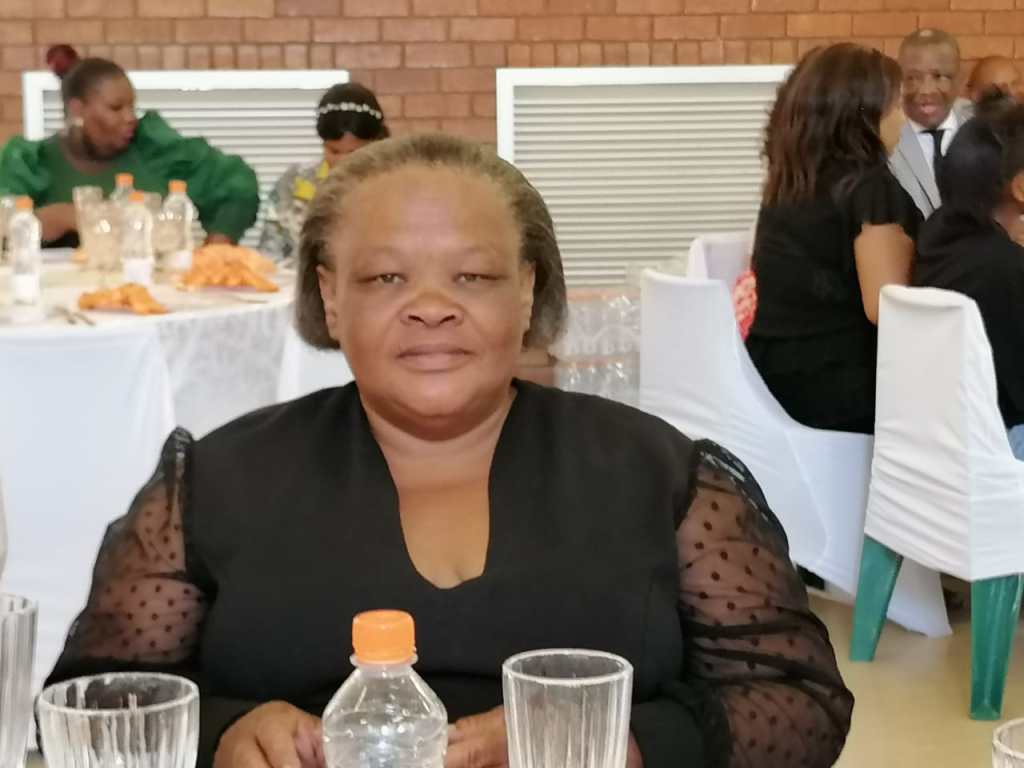
The HIV activist and Community Development Practitioner, Dimakatso Moalusi, who runs the Greater Taung People Living with HIV and Aids organisation (GTPLHAO) said, even though the government has made significant inroads in combating the HIV/AIDS pandemic, more needs to be done to curb the scourge.
Moalusi, who has been living with HIV for more than 23 years said, most men are afraid to go and test for HIV. She said, it is better for people to know their status because that will encourage them to live a healthy life.
“Mostly, men do not want to go and test for HIV. Sometimes they go and test, but refuse to take medication when they are positive. Some of them do not even reveal their status to their partners.
“Unfortunately, they end up infecting other people knowingly. So, we want to discourage that because South Africa and the world does not need new infections anymore,” Moalusi said.
She further encouraged people to work together in quest of having an HIV-free society. Moalusi added that there is a 95-95-95 strategy used as a target since 2022.
“We encourage people to know their status and take their medication when they test positive. Truly, this will boost their immune system and the virus will be suppressed. I also encourage those who go to various universities to go out there and ensure that they do great.
“They should not adopt certain lifestyles, while in tertiary. They should know their reasons to be in various institutions and fly the Taung flag high. I also urge them not to succumb to peer pressure and stop degrading themselves,” said Moalusi.
Meanwhile, the former deputy president, David Mabuza told www.sanews.gov.za said: “We must intensify our programme on prevention by employing every method possible to end this epidemic. For our part as a country, our journey and contribution to the vision of zero new infections, zero discrimination and zero AIDS-related deaths, has been long and difficult.
“The pain of losing someone to AIDS-related illnesses every week in our communities was a common phenomenon. However, we are today acknowledged by UNAIDS and others as a global and continental leader in HIV response.”
Mabuza said, this is precisely because they have adopted and implemented the right and comprehensive policies to respond to this epidemic. He also expressed gratitude for the partnerships and support received, saying the contributions galvanised political leadership, civil society and the private sector into coherent action.
“In particular the United Nations family, the United States Government through its PEPFAR programme and the Global Fund. We wish to thank you for your continued support and emphasise that your support is not in vain.
“Through the South African National AIDS Council, the country has seen the impact of collaborative efforts in moving the response forward. We take pride in the fact that in South Africa, the government remains the main funder of the country’s comprehensive response by contributing close to 80% of the resources,” he said.
Mabuza said, the council counts among its victories the fact that South Africa has the biggest HIV treatment programme in the world, with more than 4.5 million people on life-saving antiretrovirals.
“Our anti-retroviral treatment programme has resulted in an increase in life expectancy of our people and low levels of mother-to-child HIV transmission rates. This means that millions of South Africans who previously had no hope of sustained quality of life, now live longer and are able to contribute to building a South Africa of our dreams,” he said.



 The Guardian