Fair and inclusive trade is important for growth and jobs in SA


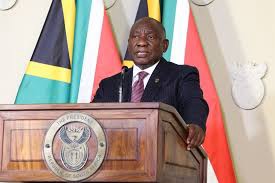
Picture: RSA president, Cyril Ramaphosa

By OBAKENG MAJE

14 April 2025- The president of Republic of South Africa (RSA), Cyril Ramaphosa said trade between nations is a vital part of economic progress. Ramaphosa said that is why as part of the G20 Presidency, South Africa is promoting a trade agenda in which G20 members commit to measures to promote expanded, more inclusive and more sustainable value chains.

He further said he recently came across an inspiring story of a farmer from Elukwatini in Mpumalanga that highlights how deepening G20 trade can support the growth of local industry. Ramaphosa added that, in February 2025, Bongani Thobela, took part in the world’s largest fresh produce trade fair in Germany, a G20 member and the third largest market for South African exports.

“There, he was able to meet potential buyers and has since secured an export license and sent samples of his produce to Germany and China. He was part of an initiative by the Department of Trade, Industry and Competition to support local producers to attend international trade fairs and exhibitions to expose them to international markets.

“This reflects our conviction that greater exports of a more diverse variety of goods and services are essential for the growth of our economy and the creation of more jobs. We are committed to measures that support industrial development and bolster the value of our exports,” he said.

Ramaphosa said at the same time, they are pursuing a trade policy that uses international trade agreements to secure fairer terms, promote market access and facilitate expansion into new markets. He said developing economies such as theirs are vulnerable to volatility in international trade.

“This is particularly the case in the face of unilateral actions and coercive measures that undermine multilateral agreements and the global rules-based trading system.

“We are therefore working in different ways to make our domestic industries more resilient. To bolster the value of our exports we are strengthening the regulatory regime,” said Ramaphosa.

He said, for example, last month, they signed the Plant Health Act into law. Ramaphosa said this will improve domestic biosecurity and ensure there is greater alignment with international export requirements.

“We are intensifying our efforts to diversify destinations for South African goods, products and services. Last year marked a number of ‘firsts’ for South African agricultural exports. We gained access to the Thailand market for apples for the first time in 16 years and exported our first container of avocados to Japan.

“This month, we also gained market access for South African table grapes to the Philippines. We are deepening relations with countries and regions with which we have regional and bilateral trade agreements that provide preferential trade terms,” he said.

Rampahosa said these include the Southern African Customs Union and the Southern African Development Community Free Trade Area. He said they are working to make effective use of the African Continental Free Trade Area (AfCFTA).

“Last year, we commenced trading under the AfCFTA. A shipment of ‘Made in SA’ consumer goods, copper, cement, electrical and pharmaceutical goods and fresh produce left the port of Durban for markets elsewhere on the continent.

“At last month’s European Union-South Africa Summit in Cape Town we signed a trade and investment package worth around R90 billion. This package will support the export of more SA-made products into the EU,” said Ramaphosa.

He said they are increasing investment in domestic industries that contribute to exports. Ramaphosa said the 2025 Budget allocates increased funding to boost manufacturing and agro-processing, as well as for incentive programmes that strengthen local value chains and open access to key international markets.

“As we undertake all these measures, South Africa will continue to advocate for a level playing field in global trade. Trade must remain free, predictable and governed by a rules-based system.

“This is particularly critical for developing economies, many of which remain locked into the lower end of global value chains. South Africa endorses the reform process underway within the World Trade Organisation (WTO) that seeks to address deficiencies in the global trade regime that work against developing economies,” he said.

Ramaphosa said South Africa remains committed to maintaining favourable relations with existing trade partners and to forging new trade relationships. He said as government, business and labour, they will continue to deepen their collaboration as they navigate a global trade environment that has become increasingly complex.

“Our ultimate goal is to secure favourable trade terms that advance our national interest, drive inclusive growth and create jobs for the South African people,” said Ramaphosa.
taungdailynews@gmail.com

Ramaphosa calls of police to practise Batho Pele principles 


By OBAKENG MAJE 

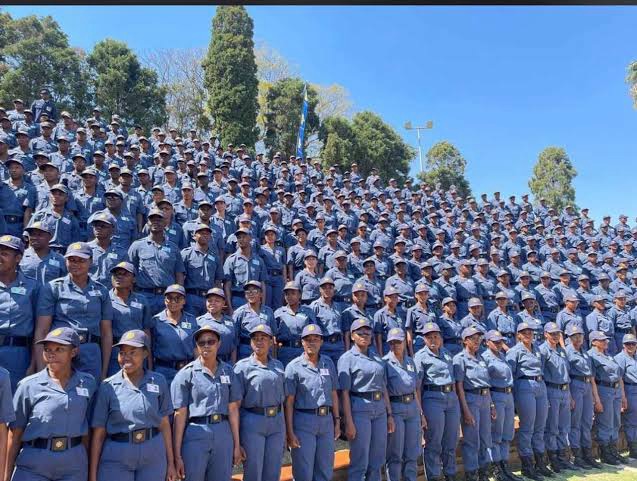
10 April 2025- The president of Republic of South Africa (RSA), Cyril Ramaphosa calls on South African Police Service (SAPS) and other law enforcement agencies to continue to safeguard the nation. Ramaphosa said the nation’s safety and security requires that they are proactive, innovative and solutions-oriented in their approach. 

Ramaphosa further said as a frontline service, the police interface with the communities daily. He added that, as such, the police need to be guided by the Batho Pele principles of high service standards, consultation, equal access to services, and treating citizens with respect, dignity and empathy. 

“The SAPS mission is to investigate and prevent crime and ensure that offenders are brought to justice, to counter threats to community safety and security and importantly, to participate in efforts to address the root causes of crime. 

“Crime is both a cause and a symptom. It is a cause of insecurity and instability in communities. It weakens the social fabric. Crime has a direct impact on the economy,” said Ramaphosa. 

He said it discourages investment, disrupts business activity and leads to increased security costs for companies. Ramaphosa said crime is also a symptom of wider problems in a society. 

“Poverty and inequality, unemployment, lack of opportunity, patriarchy and misogyny, and broken family structures are just some of the issues that contribute to crime and criminality. 

“Addressing crime without understanding its root causes is like a doctor treating a patient for a fever without diagnosing the underlying illness. It is therefore encouraging that this summit has as one of its key objectives adopting a more holistic approach to law-enforcement, encompassing not just the police but the entire policing system,” he said. 

Ramaphosa said it is also encouraging that this summit brings together stakeholders from the safety and security establishment, communities and civil society, business, the interfaith sector, labour and other sectors. He said just as crime is an all-of-society problem, overcoming crime must be an all-of-society effort.

“In doing so, we must marshall our full support behind the hardworking men and women of the South African Police Service. The policing terrain of today is complex and multi-faceted. 

 “The police strive to fulfill their mandate in the context of emerging threats. These threats include transnational organised crime, illegal mining, extortion syndicates, the theft of economic infrastructure, money laundering and terror financing,” said Ramaphosa. 

He said even in this extremely challenging environment, the South African Police Service continues to register successes in fighting crime in its various operations. Ramaphosa said to build on these successes, they need to restore public trust and faith in the police. 

“We need to improve the relationships between the police and the communities they serve. We need to work to improve the morale of SAPS members, many of whom are battling heavy workloads, insufficient resources and outdated systems. 

“Even as the SAPS budget has increased over the past ten years, the reality is that the number of police personnel has been declining while the country’s population has been growing,” he said.

taungdailynews@gmail.com

Reconciliation Day reminds SA of its journey towards nation-building, healing and injustices


By OBAKENG MAJE

16 Dec 2024- The president of Republic of South Africa (RSA), Cyril Ramaphosa said the Day of Reconciliation is an occasion, where the country remembers and celebrates its journey towards nation-building, healing, social justice and forgiveness. Ramaphosa said this day is dedicated to ‘healing historical wounds and forging new futures’.

He further said for much of the history, this day – the 16th of December – stood as a symbol of the wounds of their history. Ramaphosa added that, for some it was a celebration of victory.

“For others, it was a painful reminder of conquest and dispossession. Since the advent of democracy, we have sought to do away with symbols that are divisive.

“We chose to mark the 16th of December as a day of reconciliation. A celebration of our unity in diversity. It gives me great pleasure to commemorate this year’s Reconciliation Day here in Vredendal, the Valley of Peace,” he said.

Ramaphosa said history has no blank pages. He said under the inhumane apartheid system farmworkers bore the brunt of exploitation.

“White commercial farms were built on the labour of slaves and South Africa’s indigenous people. Since the advent of democracy 30 years ago, we have driven a series of legislative changes to advance the rights of farmworkers.

“We have passed a law to prevent the arbitrary eviction of families living on farms. And yet we know that farmworkers and labour tenants are still being evicted in a number of places without being afforded alternate accommodation,” said Ramaphosa.

He said they call on all employers to treat people humanely and ensure that they have decent accommodation. Ramaphosa said they insist that all should ensure that the law is uphold and the rights of all people are protected.

“The working conditions of farmworkers are regulated by the Labour Relations Act. For the first time, minimum wages were set for farmworkers. Now, no farmworkers may be paid below the National Minimum Wage.

“As part of land reform, we have encouraged employment share schemes. This is where workers in agriculture and other sectors can have shares in the companies that they work for,” he said.

Ramaphosa said There have been initiatives in the Matzikama area to implement this approach. He said they must look at how to expand this, so that the people in this area have a greater share of the local economy.

“Fellow South Africans, Reconciliation Day is about advancing reconciliation, justice and nation-building. It promotes social cohesion and healing. The past may be behind us but we are left with its wounds.

“We have deep scars as a reminder of our painful experiences. We cannot heal these historical wounds by forgetting our past. There are things that should be done to heal the wounds of the past,” said Ramaphosa.

He said, but they must also learn from the past. Ramaphosa said they have come a long way as a country of diverse cultures, languages, beliefs and traditions.

“Here in Vredendal, we have a beautiful and diverse community that is an integral part of our rainbow nation. Here, a person can be as proud of their coloured heritage or their Afrikaans language as they are of their South African identity.

“They can be white or African or Indian, speak English or Xhosa or any other language, while being a full and equal member of the South African nation,” he said.

Ramaphosa said history records the great acts of political activism by the people of this province. He said coloured people were not spared the brutality of slavery, dispossession and segregation.

“The apartheid regime tried to divide us and turn us against one another, but they did not succeed. Through democracy, we have worked to restore the dignity of all who suffered under apartheid, including coloured people.

“Our national Coat of Arms pays tribute to the Khoi and San. The human figures are depicted in an attitude of greeting, symbolising unity. This represents a sense of belonging to the nation and to a collective humanity,” said Ramaphosa.

taungdailynews@gmail.com

‘All children must be allowed a caring, nurturing childhood’


By BAKANG MOKOTO

4 November 2024- The president of Republic of South Africa (RSA), Cyril Ramaphosa said on Saturday, the country observed National Children’s Day when they take stock of the progress they have made in advancing the rights of South Africa’s children. Ramaphosa said they celebrate this day on the first Saturday of November, which is the month in which the Convention on the Rights of the Child was adopted by the United Nations in 1989.

He further said the Convention was the first international treaty ratified by our newly democratic government in 1994 in recognition of the centrality of children’s rights to our national development. Ramphosa added that the Convention requires all countries to advance the social, economic, political and cultural rights of children.

“The Convention asserts that every child has a right to survival, development, protection, participation, identity, health, education, non-discrimination, privacy and freedom of expression. These rights are also aimed at creating a safe and nurturing environment for all children, allowing them to grow and thrive.

“The adoption of the Convention by the democratic South Africa was a critical step towards addressing the legacy of our past. Colonialism and apartheid ruined the prospects of millions of black children, who were the youngest victims of deprivation, discrimination and exclusion,” he said.

Ramaphosa said by the end of apartheid, the mortality rate for black children was six times higher than that of white children. He said these disparities reflected everywhere else, from living conditions and access to basic services, to access to social care and services, to education.

“Since 1994, we have registered considerable gains in giving effect to the provisions of the Convention, which are mirrored in our constitution. Successive democratic administrations have established laws and policies to develop the potential of South Africa’s children.

“To ensure children’s right to survival, we have implemented free primary health care for children under six, free basic services to poor families and child support grants. The school nutrition programme has made a significant difference in improving the educational and health outcomes for millions of children from indigent families,” said Ramaphosa.

He said to advance the right of children to protection from abuse, neglect and exploitation, they have passed laws outlawing child labour, corporal punishment and child marriages. Ramaphosa said they also have a prescribed minimum sentencing regime for cases involving the sexual abuse of children.

“During the sixth democratic administration, we strengthened the legal regime to expand the definition of sexual offences against children, improve our capacity to combat child trafficking, and introduce more stringent conditions for the registration of sex offenders.

“One of the areas in which we have made the most progress in implementing the UN Convention on the Rights of the Child is in the right to education. As the UN Children’s Fund has noted: “Since 1994 South Africa has made great strides in realising the right to education, rapidly building an efficient, accessible and quality education system for children and adolescents,” he said.

taungdailynews@gmail.com

Ramaphosa congratulates Russian president Vladimir Putin on chairing a successful BRICS Summit


By REGINALD KANYANE

24 October 2024- The President of Republic of South Africa (RSA), Cyril Ramaphosa congratulated the Russian Federation and President, Vladimir Putin on chairing a successful BRICS Summit, as well as leading them all on adopting an excellent declaration. Ramaphosa said the BRICS Outreach and BRICS Plus engagements are important platforms for developing strong ties among countries from the Greater Global South and emerging markets.

He further said they should use these platforms to foster meaningful engagement. Ramaphosa added they should use the BRICS platform to contribute to the social, economic and cultural development of their people.

“We welcome the Russian initiatives that are aimed at strengthening a number of BRICS countries through the various networks aimed at improving the future of BRICS countries’ transport networks and connectivity under the theme: ‘Innovation and Digitalisation of Transport’.

“This will help us find ways to integrate and deepen our inter-connectedness in new and imaginative ways. Work has already begun in this regard through initiatives like the International North-South Transport Corridor, which is a multimodal transportation corridor established from St Petersburg to Mumbai,” he said.

Ramaphosa said this corridor is an opportunity for this region to unlock new trade flows and trade routes in an increasingly multipolar world. He said on the African continent, the African Continental Free Trade Area will unlock opportunities for trade and investment for local and global businesses.

“It will create a number of opportunities that will lead to an integrated and connected continent. The Single African Air Transport Market is another flagship project of the African Union Agenda 2063.

“This is an initiative of the African Union to create a single unified air transport market in Africa to support the continent’s economic integration. For BRICS and friends of BRICS, we need to use these projects to further connect the greater Global South,” said Ramaphosa.

He said the promotion of greater regional connectivity and trade facilitation can only succeed in an environment of peace and stability. Ramaphosa said South Africa is concerned about the military aggression by Israel against the people of Gaza, which they have characterised as genocide.

“This genocide led South Africa to approach the International Court of Justice with a view to stopping the killing of innocent women and children in Gaza. We believe the world cannot sit by and watch the suffering.

“The world cannot afford a region-wide escalation of the conflict. South Africa has been unwavering in advocating for a two state solution that would see an independent Palestinian state along the borders set out in 1967, with East Jerusalem as its capital,” he said.

Ramaphosa said this would be in line with UN resolutions, international law and internationally agreed parameters. He said they call on the international community and the UN Security Council in particular to address the spiralling conflict.

“On our own continent, Sudan enters its second year of horrific conflict and devastation. This is another conflict the world seems to have forgotten about. The protracted conflicts in the Sahel and Great Lakes regions in Africa persist.

“We must find lasting solutions to all these conflicts. We must remain committed to the peaceful resolution of all disputes through negotiation and inclusive dialogue. We must safeguard the ability of states to pursue independent foreign policy,” said Ramaphosa.

He said they must safeguard the multilateral system, because it is the cornerstone of international relations, and foster an environment of peace and development. Ramaphosa said existing global institutional mechanisms need to be both strengthened and reformed to play a constructive role in international peace and security.

“We cannot allow conflicts to continue in perpetuity. We need to find paths to peace. In our quest for a more interconnected, just and prosperous world, we have the ability to foster an environment of peace through a focus on sustainable development.

“We must continue to support nations and peoples who seek to end the cycle of conflict and choose the path of peace,” said Ramaphosa.

taungdailynews@gmail.com

‘We must work to ensure that better prospects await the Class of 2024’


By OBAKENG MAJE

21 October 2024- The president of Republic of South Africa (RSA), Cyril Ramaphosa said he wishes all Grade 12 learners well at this challenging and exciting time. Ramphosa said today was the start of the National Senior Certificate (NSC) exams.

He further said just over 880 000 candidates sat for this year’s matric exams. Ramaphosa added that these exams are the culmination of many years of hard work, perseverance and resilience, often in the face of difficult odds.

“The Class of 2024 entered Grade 8 at the height of the COVID-19 pandemic and have had to receive considerable learning support to overcome the resultant gaps in their learning. As a nation, we are proud of the learners who will be rewriting the matric exam this year, having taken advantage of the Department of Basic Education’s Second Chance Programme.

“Your determination to improve your academic prospects does you credit. It is a life lesson on the importance of not giving up.

Over the past few weeks, learners have been engrossed in study,” he said.

Ramaphosa said they have taken up opportunities for extra lessons, doing revision with their educators and attending the many learner support programmes being run by the provincial departments of education. He said providing learners with the necessary resources to enable them to achieve quality pass rates is a collaborative effort between the Department of Basic Education, provincial education authorities, school governing bodies and families of learners.

“I commend our nation’s educators for their commitment to our matriculants as they reach the end of their secondary school journey. At the annual National Teaching Awards ceremony earlier this month, I spoke of teachers as being like devoted gardeners, whose attention, guidance and encouragement nurtures our nation.

“The successes that the Class of 2024 will undoubtedly achieve will be in no small part due to the efforts of our country’s devoted teachers. All the necessary systems are in place to ensure the exam period goes smoothly,” said Ramaphosa.

He said the Department of Basic Education and the qualification standards authority Umalusi, have been hard at work auditing the more than 9,200 exam centres, appointing and vetting exam markers and approving question papers. Ramaphosa said these include adapted question papers for learners with special needs.

“The department has put stringent conditions in place to minimise the potential for question paper leaks, fraud and cheating. Additional invigilators have been appointed, some examination centres will employ CCTV and security has been stepped up at exam venues to minimise disruptions.

“I want to thank all the matric exam candidates across the country who have signed the NSC Examination Code of Conduct. This commits them to academic honesty during the exam. The annual matric exam period is a period to reflect on the scale of the efforts to absorb these young people into economic activity once they have attained the results they have worked so hard for,” he said.

taungdailynews@gmail.com

Presidency welcome UNESCO inscription of Human Rights Liberation and Reconciliation: Nelson Mandela Legacy Sites


By REGINALD KANYANE

The president of Republic of South Africa (RSA), Cyril Ramaphosa has welcomed the latest inscription of the South African human rights and liberation struggle sites in the prestigious list of UNESCO’S World Heritage Sites. The inscription follows the 46th session of the UNESCO World Heritage Committee in New Delhi, India held from the 21 – 31 of July 2024.

Ramaphosa spokesperson, Vincent Magwenya said inscribed sites termed as The Human Rights, Liberation and Reconciliation: Nelson Mandela Legacy Sites, which is a serial property, comprises of 14 components that are located in four provinces and seven municipalities across South Africa are, the Union Buildings, Constitution Hill, Liliesleaf, Sharpeville (comprising three component parts), Walter Sisulu Square, 16 June 1976: The Streets of Orlando West, University of Fort Hare and ZK Mathews House (Comprising two component parts), Mqhekezweni, Waaihoek and Ohlange.

“Collectively, this serial property demonstrates the events and ideas that served as the core of South Africa’s liberation struggle, which continue to inspire humanity and the embrace of reconciliation, a quarter century later.

“The 14 components exemplify strong memories and beliefs in the triumph of human rights, liberation and reconciliation. The UNESCO World Heritage Committee further inscribed three Middle Stone Age sites as recognition of South Africa’s significant contribution to the understanding of the origins of modern human behaviour,” he said.

Magwenya further said the second South African serial site inscribed is The Emergence of Modern Human Behaviour: The Pleistocene Occupation Sites of South Africa. He added that the sites are located in the Western Cape Province and KwaZulu-Natal.

“The three sites are Diepkloof Rock Shelter close to Elands Bay, Western Cape, Pinnacle Point Site Complex in Mossel Bay, Western Cape, Sibhudu Cave in KwaDukuza, KwaZulu-Natal. The inscription of these two serial properties, increases South Africa’s list of World Heritage Sites to 12.

“The two newly inscribed properties join the Robben Island, Vredefort Dome, Richtersveld Cultural and Botanical Landscape, Cape Floral Region Protected Areas, Mapungubwe Cultural Landscape and iSimangaliso Wetland Park,” said Magwenya.

He said this includes the Barberton Makhonjwa Mountains, Cradle of Humankind /Fossil Hominid Sites of South Africa, Maluti Drakensberg Park and The Khomani Cultural Landscape. Magwenya said the Union Buildings joins global sites like the Kremlin, Kasubi Tombs, Mosi oa Thunya, Taj Mahal, The Vatican and others onto the World Heritage List.  

“On behalf of the government and the people of South Africa, the presidency wishes to express its heartfelt gratitude to the members of the 46th session committee for the honour bestowed to the country, its history and rich legacy.

“The presidency also acknowledges the members of the Africa Group and most importantly, the African World Heritage Fund, which is an intergovernmental organisation created in 2006 by the African Union and UNESCO to address challenges faced by the African State Parties in the implementation of the 1972 World Heritage Convention, specifically the underrepresentation of African sites on the World Heritage List and the insufficient conservation and management of these sites,” he said.

Magwenya said the fund is hosted by the Government of South Africa on behalf of the African continent. He said the presidency would like to recognise the Department of Sport, Arts and Culture team that worked tirelessly for months preparing this nomination and the contribution of the provinces of KwaZulu-Natal and Western Cape.

“The presidency calls on all South Africans, spheres of Government, management authorities and heritage stakeholders to work in a co-ordinated manner to ensure that these precious treasures of humanity are safeguarded and optimally deployed to meaningfully contribute to sustainable development in communities and further entrench the values of human rights, freedom, peace and reconciliation,” he said.

taungdailynews@gmail.com

Ramaphosa mourns the deaths of four SANDF members 


By BAKANG MOKOTO 

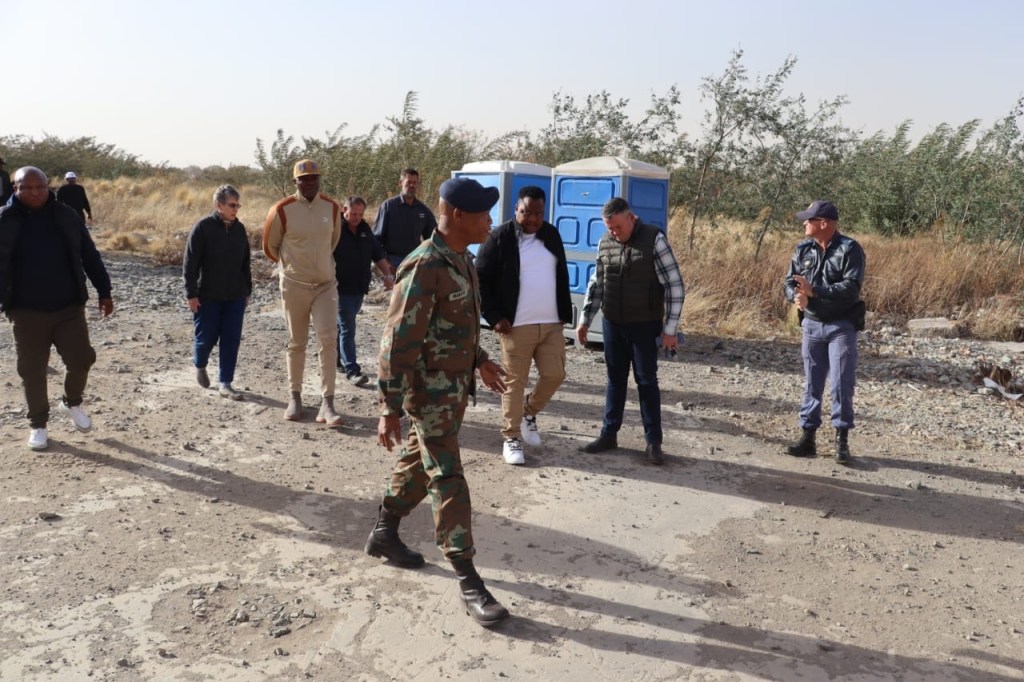
The president of Republic of South Africa (RSA), Cyril Ramaphosa mourns the deaths of four South African National Defence Force (SANDF) soldiers. These SANDF members were on duty as part of Operation Vala Umgodi – an operation that deals with illegal mining activities. 

According to the SANDF spokesperson, Siphiwe Dlamini, the deceased were deployed on a 24-hour shift at Shaft 3 (a dormant mining shaft) in Orkney, near the disused Harry Oppenheimer Stadium, which has been a hot spot for illegal mining. Dlamini said they were found inside a container structure, which was used as a guard house for those on 24-hours duty on 6 July 2024.

“They were found upon opening the doors of the container, when the next shift was taking over the following day. The police were called in and upon inspection of the scene, all four had died with their rifles on them and their personal items still with them. The district surgeon was called to the scene and examined the bodies and confirmed no injuries.

“A team from the Pretoria FSL Chemistry Unit, also attended the scene and preliminary findings are that the death of the soldiers could have been caused by carbon monoxide poisoning from a possible fire made by them during the cold night inside the container,” he said.

Dlamini further said the bodies of the deceased were ferried to the Klerksdorp State mortuary for further investigation and post-mortem. He added that the names of the deceased will be announced once the families have been informed.

“All processes and formalities have been completed followed with the announcement of the funeral arrangements. The Minister of Defence and Military Veterans, Angie Motshekga, Deputy Minister of Defence and Military Veterans, Bantu Holomisa and Deputy Minister of Military Veterans, Richard Mkhungo, together with the acting Secretary for Defence, Dr Thobekile Gamede and the Chief of the South African National Defence Force (SANDF), General Rudzani Maphwanya sent their condolences to the families of the deceased and the entire defence family,” said Dlamini.

He said an inquest has been opened by the police following the deaths.

Meanwhile, Ramaphosa said: “I am deeply saddened by the deaths of the deceased who passed away overnight on 5 July 2024, while on duty to combat illegal mining. As Commander-in-Chief of the SANDF, I offer my condolences to the families of the victims, as well as to their commanders and colleagues. 

“My thoughts are with the team of soldiers who discovered their deceased colleagues in a container. While police are investigating the matter, the deceased troops, who showed no injuries and were fully kitted and armed, are believed by the police and the SANDF to have died from carbon monoxide poisoning resulting from a fire they made to keep warm.”

taungdailynews@gmail.com


Ramaphosa announces New National Executive


By OBAKENG MAJE

The President of Republic of South Africa (RSA), Cyril Ramaphosa has an impact unced his new Cabinet. Ramaphosa said just over a month ago, the people of South Africa voted in a watershed election.

He further said in casting their votes, the people made it clear that they expect political parties to work together to deliver on a mandate of transformation, growth and renewal.

Ramaphosa added that to give effect to this mandate, it was agreed that a Government of National Unity, which brings together parties from across the political spectrum, should be formed.

“This Government of National Unity would be bound by certain fundamental principles and would undertake a basic minimum programme of priorities. Following discussions over the course of the last few weeks, a total of eleven parties have elected to work together in government and in Parliament.

“These are the African National Congress, Democratic Alliance, Patriotic Alliance, Inkatha Freedom Party, Good Party, Pan Africanist Congress of Azania, Freedom Front Plus, United Democratic Movement, Al Jama-ah, Rise Mzansi and the United Africans Transformation. The partnership between the GNU parties is guided by a Statement of Intent, which outlines fundamental principles and a minimum programme of priorities,” he said.

Ramaphosa said all the parties have made a commitment to respect the constitution and to promote a accountable and transparent governance, evidence-based policy and decision-making, the professionalisation of the public service, integrity and good governance.

He said incoming government will prioritise rapid, inclusive and sustainable economic growth and the creation of a more just society by tackling poverty and inequality.

“The establishment of the Government of National Unity in its current form is unprecedented in the history of our democracy. We have had to consider how to form the new government in a manner that advances the national interest, that gives due consideration to the outcome of the election and that makes use of the respective capabilities within each of the parties.

“We have had to consider not only the immediate needs of the country. We have also had to consider the stability, effectiveness and durability of the government we are establishing. It is true that some South Africans have expressed concern about the length of time it has taken to form a government,” said Ramphosa.

He has merged the ministries of Electricity and Energy. Ramaphosa also separated the ministry of Mineral and Petroleum Resources.

“The Deputy President is Paul Mashatile. The Minister of Agriculture is John Steenhuisen. The Deputy Minister of Agriculture is Rosemary Nokuzola Capa. The Minister of Land Reform and Rural Development is Mzwanele Nyhontso. The Deputy Minister of Land Reform and Rural Development is Chupu Stanley Mathabatha.

“The Minister of Basic Education is Siviwe Gwarube. The Deputy Minister of Basic Education is Reginah Mhaule. The Minister of Communications and Digital Technologies is Solly Malatsi. The Deputy Minister of Communications and Digital Technologies is Mondli Gungubele” said Ramaphosa.

He appointed Velinkosi Hlabisa as the Minister of Cooperative Governance and Traditional Affairs. Ramphosa said the Deputy Ministers of Cooperative Governance and Traditional Affairs are Dickson Masemola and Zolile Burns‐Ncamashe.

“The Minister of Defence and Military Veterans is Angie Motshekga. The Deputy Ministers of Defence and Military Veterans are Bantu Holomisa and Richard Mkhungo. The Minister of Electricity and Energy is Kgosientsho Ramokgopa.

“The Deputy Minister of Electricity and Energy is Samantha Graham. The Minister of Science, Technology and Innovation is Blade Nzimande. The Deputy Minister of Science, Technology and Innovation is Nomalungelo Gina. The Minister of Employment and Labour is Nomakhosazana Meth,” he said.

Ramaphosa said the Deputy Ministers of Employment and Labour are Jomo Sibiya and Phumzile Mgcina. He has appointed Enoch Godongwana as the Minister of Finance. He said the Deputy Ministers of Finance are David Masondo and Ashor Sarupen.

“The Minister of Forestry, Fisheries and the Environment is Dion George. The Deputy Ministers of Forestry, Fisheries and the Environment are Narend Singh and Bernice Swarts. The Minister of Health is Aaron Motsoaledi. The Deputy Minister of Health is Joe Phaahla.

“The Minister of Higher Education is Nobuhle Nkabane. The Deputy Ministers of Higher Education are Buti Manamela and Mimmy Gondwe. The Minister of Home Affairs is Leon Schreiber. The Deputy Minister of Home Affairs is Njabulo Nzuza” said Ramaphosa.

He announced Mmamoloko Kubayi as the Minister of Human Settlements and Tandi Mahambehlala as her deputy. Ramaphosa appointed Ronald Lamola as the Minister of International Relations and Cooperation.

“The Deputy Ministers of International Relations and Cooperation are Alvin Botes and Tandi Moraka. The Minister of Justice and Constitutional Development is Thembi Nkadimeng. The Deputy Minister of Justice and Constitutional Development is Andries Nel. The Minister of Mineral and Petroleum Resources is Gwede Mantashe.

“The Deputy Minister of Mineral and Petroleum Resources is Judith Nemadzinga‐Tshabalala. The Minister of Planning, Monitoring and Evaluation is Maropene Ramokgopa. The Deputy Minister of Planning, Monitoring and Evaluation is Seiso Mohai. The Minister of Police is Senzo Mchunu,” he said.

Ramaphosa said the Deputy Ministers of Police are Polly Boshielo and Cassel Mathale. He said the Minister in the Presidency is Khumbudzo Ntshavheni.

“The Deputy Ministers in the Presidency are Nonceba Mhlauli and Kenneth Morolong. The Minister of Public Service and Administration is Mzamo Buthelezi. The Deputy Minister of Public Service and Administration is Pinky Kekana. The Minister of Public Works and Infrastructure is Dean Macpherson.

“The Deputy Minister of Public Works and Infrastructure is Sihle Zikalala. The Minister of Small Business Development is Stella Ndabeni-Abrahams. The Deputy Minister of Small Business Development is Jane Sithole. The Minister of Social Development is Sisisi Tolashe” said Ramaphosa.

He said the Deputy Minister of Social Development is Ganief Hendricks. Ramaphosa appointed Gayton McKenzie as the Minister of Sport, Arts and Culture and Peace Mabe as the Deputy Minister of Sport, Arts and Culture.

“The Minister of Tourism is Patricia De Lille. The Deputy Minister of Tourism is Maggie Sotyu. The Minister of Trade, Industry and Competition is Parks Tau. The Deputy Ministers of Trade, Industry and Competition are Zuko Godlimpi and Andrew Whitfield. The Minister of Transport is Barbara Creecy.

“The Deputy Minister of Transport is Mkhuleko Hlengwa. The Minister of Water and Sanitation is Pemmy Majodina. The Deputy Ministers of Water and Sanitation are David Mahlobo and Isaac Seitlholo. The Minister of Women, Youth and Persons with Disabilities is Sindisiwe Chikunga. The Deputy Minister of Women, Youth and Persons with Disabilities is Mmapaseka Steve Letsike,” he said.

Ramaphosa has appointed Pieter Groenewald as the Minister of Correctional Services and Lindiwe Ntshalintshali as the Deputy Minister of Correctional Services. He said these men and women we have appointed to the executive are drawn from all corners of our country.

“They reflect the diversity of our nation. They have a responsibility to work together to serve the people as a whole. None of the members of the National Executive has been appointed to serve the interests of a particular constituency, a particular party or a particular section of society. Collectively and individually, they are responsible to the people of South Africa.

“In the spirit of partnership and collaboration, the incoming government will work together with other formations to convene a National Dialogue. Through this National Dialogue, all parties, civil society groups, labour, business and other stakeholders will be invited to work together to address the critical challenges facing the nation. We call on all South Africans to participate in the National Dialogue and to give their support to this Government of National Unity as it begins its work,” said Ramaphosa.

He said as the leaders of political parties, as Ministers and Deputy Ministers, as public representatives, they understand and accept the responsibility that they bear. Ramaphosa said they have all been called upon to serve the people of this country, and they will do so to the utmost of their ability.

taungdailynews@gmail.com

Ramaphosa appoints acting Minister of Agriculture, Land Reform and Rural Development


Picture: RSA president, Cyril Ramaphosa

By OBAKENG MAJE

The president of Republic of South Africa (RSA), Cyril Ramaphosa has in terms of Section 98 of the Constitution, appointed Minister of Water Affairs and Sanitation Senzo Mchunu as the acting Minister of Agriculture, Land Reform and Rural Development.

Ramaphosa spokesperson, Vincent Magwenya said the appointment will take effect immediately.

“This follows the election by the National Assembly of Minister of Agriculture, Land Reform and Rural Development, Thoko Didiza as Speaker of the National Assembly,” he said.

taungdailynews@gmail.com