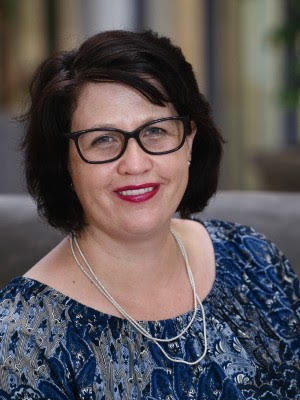
Picture: Prof Liezl van Dyk/Supplied
By KEDIBONE MOLAETSI
27 August 2025- The NWU’s Faculty of Engineering and Executive Dean, Prof Liezl van Dyk said the North West province of South Africa is sitting on bedrock of riches. Van Dyk said from platinum to chrome, vanadium to gold, the region is among the most mineral-endowed in the world.
She further said yet its communities remain scarred by poverty and unemployment, relics of a resource economy too often divorced from local benefit. Van Dyk added that for a province where mines dominate both the landscape and livelihoods, the need to convert mineral wealth into long-term skills, jobs and technological leadership is a necessity.
“The North West University (NWU) believes it has found part of the answer, a new School of Mines and Mining Engineering. We frame the initiative as both a provincial obligation and a national necessity.
“The NWU School of Mines and Mining Engineering project aligns four strategic priorities. First is our commitment to serving our community and province through relevant meaningful, high-impact engagement,” she said.
Van Dyk said second is to strengthen the faculties of Engineering, and Natural and Agricultural Sciences in areas where they are already leaders, such as minerals beneficiation, environmental and geospatial sciences, and professional programmes in industrial, mechatronic, electromechanical and minerals engineering. She said thirdly is their commitment to contributing to much-needed science, technology, engineering and mathematics (STEM) skills in South Africa.
“And finally to advance the NWU’s drive towards internationalisation. Through this initiative, we are building strong partnerships with universities across the world, including institutions in Arizona, Chile, Peru, Sweden, Austria, and Australia.
“This is no abstract plan. The first tangible fruits have already appeared: online postgraduate diplomas in Sustainability and Mining began enrolling students in 2025,” said Dyk.
She said by 2027, an undergraduate BSc specialisation in Sustainable Mining will follow. Dyk said in Rustenburg, at the heart of the platinum belt, NWU researchers are already embedded in continuing education and industry projects.
“Parts of our plan are already running: The first students for the new online Post Graduate Diploma Programmes in Sustainability and Mining registered in 2025.
“An undergraduate BSc specialisation in Sustainable Mining will run from 2027. In Rustenburg specifically, we are already engaged in research and continuing education. While several projects are active, our goal is to establish a physical office in Rustenburg by 2026,” she said.
Dyk said the second phase, planned for 2029, will see the establishment of an expanded facility. She said from here, they will offer block classes and hands-on training in engineering, science, business programmes that will serve the mining sector and related industries.
“The ambition stretches further. As phase 3, our ultimate vision for 2032 onward is a Rustenburg satellite campus from where professional engineering programmes, including mining engineering, will be presented.
“The establishment of a satellite campus is a complex process that is dependent on the conclusion of several internal and external processes,” said Dyk.
She said in this regard, the first steps are in progress, which is the development of a comprehensive business case study that accounts, among others, for a market and socio-economic perspective, infrastructure and architectural planning as well as academic programme viability. Dyk said the finalisation of the third phase will be concluded after the confirmation of the necessary higher education governance processes.
“South Africa’s mining industry has long been a paradox. It is globally competitive, technologically sophisticated, yet plagued by labour disputes, environmental damage and uneven social dividends.
“By anchoring education and research within mining communities themselves, the NWU hopes to tilt the balance. The aim is not merely to train engineers but to seed innovation in minerals beneficiation, sustainability, and community upliftment,” she said.
Dyk said if the plan holds, a generation of graduates will emerge equipped not just to work in mines, but to redefine them. She said for a province where unemployment hovers stubbornly high, that could be as valuable as the platinum beneath its soil.
 The Guardian