By OBAKENG MAJE
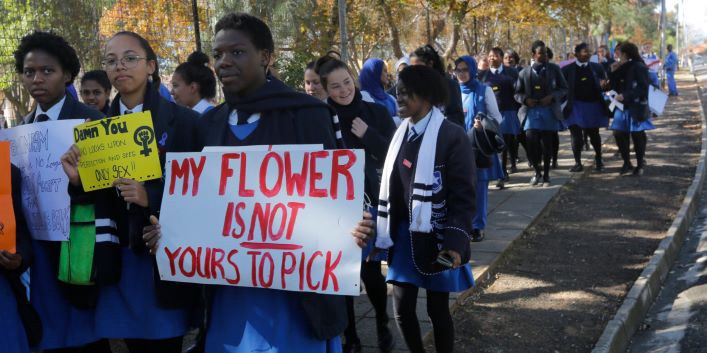
19 November 2025- The North West Department of Education said it will not tolerate any sexual misconduct in schools. The department said sexual offence and statutory rape are completely not tolerated and thus far, out of 3900 fully vetted teachers, only four cases were identified and disciplinary process has begun, where precautionary letters are issued and awaiting responses to finalise disciplinary process.
The North West Department of Education spokesperson, Vuyo Mantshule said 16 000 teachers have submitted waiting for outcome certificates, while 12 000 teachers are in the process to submit required documents to finalize vetting. Manthsule said for 2024/25 financial year, five employees were dismissed for sexual offence and one dismissed for statutory rape.
“We continue to be vigilant and ensure that we continue with advocacy programmes and involvement of stakeholders to encourage everyone to report such cases and even going further to assess our learners that such doesn’t happen at home nor within the community. We are confident that in partnership with all stakeholders a long lasting solution would be found to protect the interest of our learners.
“The Department of Basic Education (DBE) has provided guidance to deal with sexual offence and statutory rape. The DBE and Department of Social Development has recently appeared before a joint Committee to update Parliament on what strategy departments are putting in place to prevent such occurrence,” he said.
Mantshule further said this emphasizes the collaboration between all sectors of the departments and civil society.
Meanwhile, the Portfolio Committee on Basic Education calls for stronger laws and coordination to curb sexual misconduct in schools. The committee called for an urgent and coordinated review of legislation and efforts to address the continued challenge of sexual misconduct relating to educators and learners.
The Chairperson of the Committee, Joy Maimela said: “The Education Labour Relations Council (ELRC) and the South African Council for Educators (SACE), briefed the committee on their roles and functions in addressing sexual misconduct and harassment in schools. This included the number of cases handled relating to educator misconduct, consequence management, programmes for the professional development of educators and the submission of registers for sexual offenders.
“Committee members heard that between 2018/19 and 2024/25 the ELRC recorded 469 cases of sexual misconduct involving educators. Of the 211 awards issued between 2021/22 and 2025/26, 176 educators were found guilty and 35 not guilty. The guilty findings were reported to the Department of Social Development and SACE for further processing. Upon receiving reports of misconduct and outcomes, SACE determines whether educators should be struck off the register.”
Maimela added SACE confirmed to the committee members that before issuing or renewing teaching certificates, it conducts rigorous vetting through criminal record and child protection databases, in partnership with the departments of Justice and Constitutional Development (DOJ and CD) and of Social Development. She said members also heard that SACE annually vets over 50 000 registration applications against the National Register of Sexual Offenders on behalf of teachers with their consent.
“However, due to the Department of Justice’s manual submission system, internal capacity and delays, SACE often registers applicants without feedback on their clearance certificate, with a signed declaration that they were never convicted of any sexual offences. Members were informed that proposed amendments to the SACE Act will strengthen re-registration and pre-screening processes.
“The committee noted and welcomed the presentation. Members called for a coordinated legislative response across the education and justice systems to protect learners from sexual abuse and other forms of exploitation. Members were particularly concerned about parents who withdrew complaints against educators and allegations of bribery or intimidation,” said Maimela.
She said while members appreciated the fears of secondary trauma to learner victims, they urged that the state, as the final custodian of children’s welfare, must push through with investigations and prosecutions even without parental consent. Maimela said some members also argued that interference with child abuse cases should be criminalised.
“Another concern flagged was that educators implicated in sexual misconduct often reappear elsewhere in the education system. Members expressed strong sentiments that these educators should be permanently barred from teaching. Regarding learner pregnancies in schools, members said that this warrants automatic investigation as it will help identify statutory rape cases.
“Members also enquired about case backlogs, reporting inconsistencies and the low number of cases finalised relative to the scale of the problem. They called for accountability with evidence of arrests, prosecutions and convictions. In this regard, the committee proposed a centralised national database to monitor educator misconduct, case outcomes and compliance with reporting duties,” she said.
Maimela said the ultimate measure of success lies in the justice delivered for victims and the prevention of future abuse.
“We must accept that the problem is more complex and because it involves Gender-Based Violence (GBV) and sexual misconduct, it affects our children directly. We must do everything in our power to prevent it. And if it does happen, we must ensure that justice is attained. The committee will submit written questions to both SACE and the ELRC for further clarification.
“We need to look closely at the legislative gaps. With all the laws in place, with all the councils and advocacy, why are we still here? The state is the ultimate custodian of children’s welfare, and their interests must always come first. The committee would continue to exercise its oversight role, as this is part of Parliament’s broader responsibility to protect the rights of children in education settings,” she said.
 The Guardian