By BAKANG MOKOTO
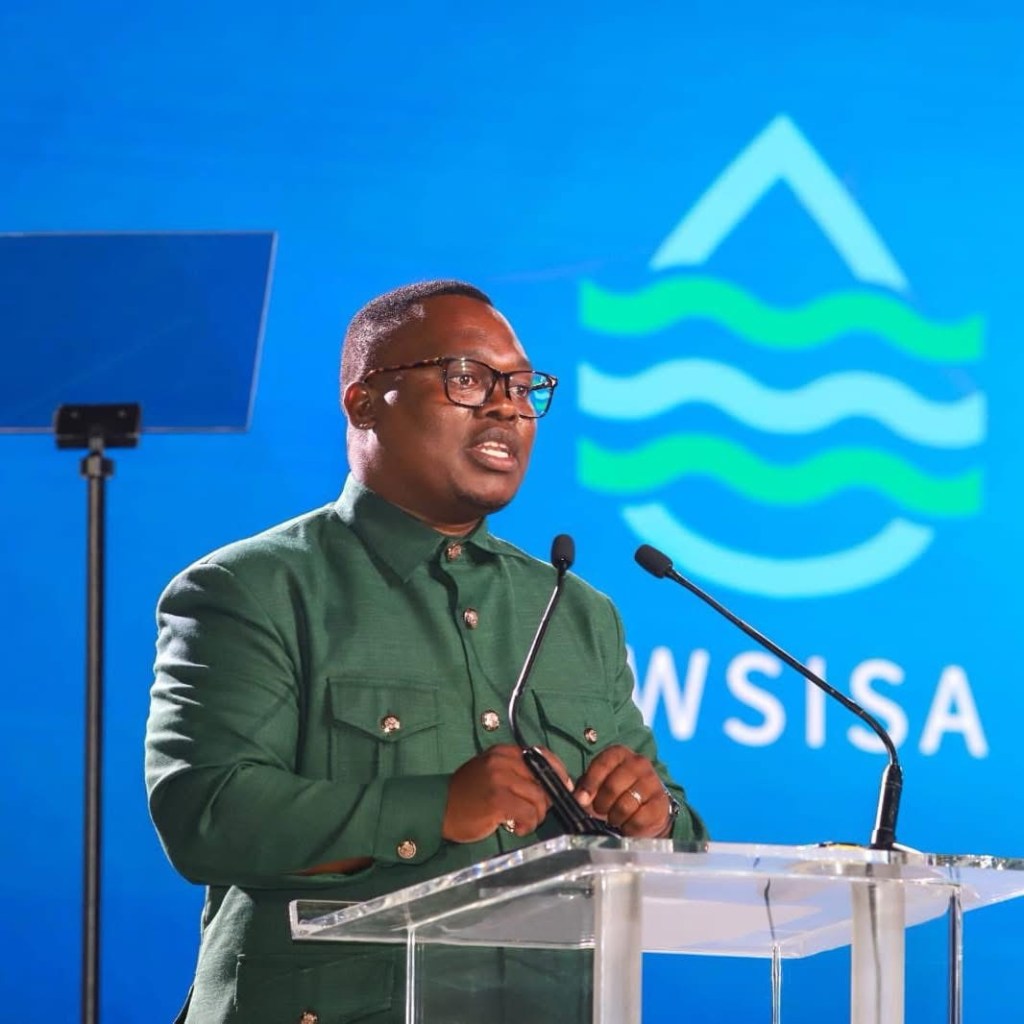
12 November 2025- The Deputy Minister of Department of Water and Sanitation, Sello Seitlholo together with the executive mayor of Ngaka Modiri Molema District Municipality, Khumalo Molefe and the MMC of Infrastructure Development at Ratlou Local Municipality, Thabo Motlapele, met and deliberated on the solutions on sanitation challenges at the RDP Section of Setlagole village, near Atamelang in North West, as well as the incomplete bulk water supply scheme that has been stalled for the last ten years.
Seitlholo said South Africa observes Sanitation Month, introduced by the Department of Water and Sanitation (DWS) from 15 October (Global Hand Washing Day) to 19 November (World Toilet Day) to break the taboo of talking about sanitation and to also raise awareness of the consequences of lack of sanitation, which includes the increase of makeshift toilets at households that do not have access to dignified sanitation and an increase to open defecation.
He further said World Toilet Day seeks to raise awareness of the 3.4 billion people living without access to safe toilets globally and to accelerate action to tackle the global sanitation crisis and to achieve United Nations Sustainable Development Goal 6 (SDG 6), which is focused on water and sanitation for all, by 2030. Seitlholo added that the DWS is committed to ensure access to proper sanitation and to bring awareness on the need for appropriate, dignified, and safe sanitation.
“This is in line with the Department’s approved Water and Sanitation Norms and Standards, which stipulates that a municipality designated as a Water Services Authority (WSA) should provide basic sanitation services to all consumers or potential consumers in its jurisdictional area inclusive of people residing on private owned land as guided by the Water and Sanitation policy on privately owned land of 2023.
“The standard of basic sanitation services includes a provision of a toilet with a functional hand washing facility in the yard, which is safe and reliable, environmentally sound and easy to clean, provide privacy and protection against weather, well-ventilated and keep smells to minimum as well providing for an effective and acceptable sanitation technology,” he said.
Seitlholo said the standards also require the municipality to ensure proper waste water treatment and faecal sludge management including a safe faecal sludge emptying, transportation, treatment and the disposal or beneficial use method. He said, however, this is a different case at some of the households in Setlagole RDP Section, that are faced with the challenge of full pit latrines that have not been serviced or emptied by the municipality since the construction of the houses in 2015.
“This status quo poses a serious health risk for the community and needs an urgent intervention by all three spheres of government. We have therefore called for an audit of functional and non-functional toilets in Setlagole village to ensure that the department, jointly with Ratlou Local Municipality and Ngaka Modiri District Municipality, brings the solution to address the problem of pit latrines that are at full capacity.
“This situation not only poses a great environmental and health risk for the community, but it also causes a risk to young children and livestock that can fall into these pits that are left opened and just covered with a zinc sheet. Some of the households have resorted to build their own alternative pit toilets in their yards because the ones provided by the government are at full capacity and cannot be utilised anymore,” said Seitlholo.
He said this is quite a challenge and they are calling for both the municipalities with support from the Department of Water and Sanitation, to implement the faecal sludge management system that will ensure that the sanitation services provided to these members of the community comply with the norms and standards of provision of basic sanitation services, as dictated by the Water and Sanitation Act 108 of 1997.
Molefe has acknowledged the challenge of full pit latrines in RDP Section in Setlagole village, which was mainly caused by a lack of maintenance of the toilets by the local municipality after they were handed over ten years ago.
“Our expectation was that the local municipality will maintain the toilets when they are full, but this has not been happening. There was indeed a vacuum to service the toilets once they were full, but with the intervention of the Department of Water and Sanitation, I have issued a directive to have experts that will provide support to Ratlou Local municipality to provide services to address this challenge,” he said.
Meanwhile, in the North West, approximately 72.7% of households had access to basic sanitation with 49% of households using a waterborne sanitation system connected to waste water treatment works. There is however 51% of households that still use on-site sanitation, a system where waste is managed on the property where it’s generated, such as with pit latrines or septic tanks.
 The Guardian