Picture: Former Cabinet Minister, the late Nathi Mthethwa
By KEDIBONE MOLAETSI
1 October 2025- The National Assembly (NA) speaker, Thoko Didiza and the Chairperson of the National Council of Provinces (NCOP), Refilwe Mtshweni-Tsipane, have expressed profound sadness at the passing of former Cabinet Minister and long-serving Member of Parliament (MP), Nkosinathi Mthethwa. The NA said Mthethwa, who was serving as South Africa’s Ambassador to France, passed away yesterday in Paris, France.
Didiza further said Mthethwa’s passing is a great loss not only to his family, friends and comrades, but also to the country he dedicated his life to serving. She added that as a committed youth leader during the struggle for liberation, Mthethwa carried his passion for justice and empowerment into the democratic era, where he played a pivotal role as part of the second term of Parliament.
“Over nearly three decades, he served the nation with distinction as Chairperson of the Portfolio Committee on Minerals and Energy, Chief Whip of the ANC, Minister of Police, and Minister of Arts and Culture, later Sport, Arts and Culture.
“Throughout his career, he embodied the values of accountability, humility and service. His tireless efforts to uplift young people, promote cultural identity, and strengthen democratic institutions will remain his enduring legacy,” said Didiza.
Mtshweni-Tsipane shared the same sentiments. She said parliament extends its deepest condolences to Mthethwa’s wife, children, extended family, colleagues, comrades and the African National Congress (ANC).
“May his soul rest in peace,” said Mtshweni-Tsipane.
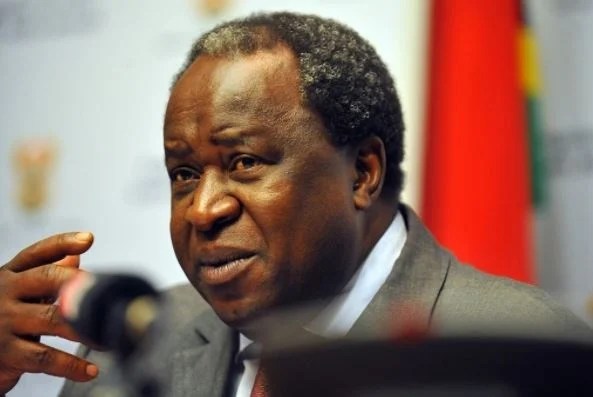
13 October 2024 – Heartfelt condolence messages continued to pour in after the passing of the former Minister of Finance, Tito Mboweni (65). Mboweni died in hospital in Johannesburg on Saturday night after a short illness.
The Presiding Officers of Parliament, National Assembly (NA) speaker, Thoko Didiza and the Chairperson of National Council of Provinces (NCOP), Refilwe Mtshweni-Tsipane, expressed their heartfelt condolences on the passing of Mboweni. Didiza said he was a distinguished and versatile people’s servant, who dedicated his life, passion and vast expertise to the service of the people of South Africa.
“Mboweni’s activism spanned both the struggle for freedom and the consolidation of democracy in our country. As a dedicated anti-apartheid activist, he passionately fought for justice, equality, and the
liberation of all South Africans, laying the groundwork for the democratic values he later championed in public service.
“After the dawn of democracy, he became the first Minister of Labour under the cabinet of President Nelson Mandela. In this role, he was instrumental in shaping South Africa’s labour policies during a critical time of transition, ensuring that the rights and dignity of workers were protected and enshrined in the new democratic order,” she said.
Didiza further said as one of the first generation of members of the first post-apartheid Parliament, Mboweni contributed to the establishment of laws and policies aimed at dismantling the legacy of apartheid and building a more inclusive and just society.
She added that as the first Black Governor of the South African Reserve Bank in 1999, his tenure was marked by visionary leadership and transformation.
Meanwhile, the Chairperson of National Council of Provinces (NCOP), Refilwe Mtshweni-Tsipane said although his stewardship of the Bank came during a turbulent period for the rand, his astute management ensured South Africa’s resilience in the face of global and local challenges.
She said under Mboweni’s guidance, the Reserve Bank was not only a guardian of economic stability, but also a symbol of transformation and progress.
“Mboweni’s legacy will forever be remembered for his unwavering commitment to building a better South Africa. He was a patriot who believed in the potential of this nation, and his work has left an indelible mark on the country’s democratic and economic institutions.
“We extend our deepest sympathies to his family, friends and comrades in the African National Congress (ANC). May his memory serve as a source of inspiration to us all, as we continue the work of building the South Africa he so tirelessly championed,” said Mtshweni-Tsipane.
Picture: The Chairperson of NCOP, Mtshweni-Tsipane
By KEDIBONE MOLAETSI
13 October 2024 – The leader of Parliament’s delegation to the Inter-Parliamentary Union (IPU), Refilwe Mtshweni-Tsipane, has called on Parliaments to use legislation to prioritise the prevention, elimination and responses to all forms of technology-facilitated Gender-Based Violence and Discrimination.
Mtshweni-Tsipane, the Chairperson of the National Council of Provinces (NCOP), made the call in Geneva, Switzerland, this morning during the IPU Forum for Women Parliamentarians’ discussion on a draft resolution for the IPU Standing Committee on Democracy and Human Rights titled: “The impact of artificial intelligence on democracy, human rights and the rule of law.”
She said the world continues to grapple with a significant gender equality problem, and the emergence of artificial intelligence systems holds the potential to perpetrate and exacerbate this issue. Mtshweni-Tsipane further said of particular concern is technology-facilitated Gender-Based Violence (GBV), a rapidly spreading problem that evolves with each new technological advancement.
“This poses serious challenges to digital governance and creates a persistent lag in adopting laws and policies to tackle this issue effectively. The legislation should include guidelines on enhanced content moderation, accessible and effective reporting systems and the establishment of content removal processes compliant with international human rights laws.
“A 2024 United Nations report based on a survey encompassing women journalists from 125 countries revealed that 73% of those women had fallen victim to online violence in the course of their work,” she said.
Mtshweni-Tsipane added that this serves as a reminder that the impact of technology-facilitated GBV is pervasive and affects individuals across diverse professions and regions. She said as legislatures, it is their responsibility to confront this pressing issue.
“We must take proactive measures to address the use of artificial intelligence in perpetuating GBV and ensure that our laws and policies effectively keep pace with these evolving challenges.
“So, we urge Parliaments to enact legislation prohibiting the distribution of non-consensual, explicit images and providing the cost to the victims,” said Mtshweni-Tsipane.
Meanwhile, the 149th IPU Assembly is held under the theme: “Harnessing science, technology, and innovation (STI) for a more peaceful and sustainable future.” This is the first time a delegation of the 7th Parliament has attended the IPU Assembly, a decision-making body where parliamentarians from 180 national member Parliaments adopt resolutions.
The IPU is the global organisation of national parliaments. What began in 1889 as a small group of parliamentarians, dedicated to promoting peace through parliamentary diplomacy and dialogue, has since grown into a truly global organisation with 180 members and 15 associate members.
The IPU facilitates parliamentary diplomacy and empowers parliaments and parliamentarians to promote peace, democracy and sustainable development around the world.
17 September 2024 – Members of Parliament (MPs) were sworn in as members of the Pan-African Parliament (PAP) yesterday. The four members, Refilwe Mtshweni-Tsipane, Mdumiseni Ntuli, Duduzile Zuma-Sambudla, and Vuyani Pambo, were appointed by both Houses of Parliament to serve as members of the continental legislative body.
The National Assembly spokesperson, Moloto Mothapo said they were sworn in yesterday morning during the sitting of the Pan-African Parliament Committees and other PAP organs currently underway in Midrand, Johannesburg. Mothapo said the PAP is a legislative organ of the African Union (AU) as set out by the Treaty Establishing the African Economic Community (Abuja Treaty).
“It provides a platform for people from all African states to be involved in discussions and decision-making on the problems and challenges facing the continent, including matters pertaining to respect for human rights, the consolidation of democratic institutions and the culture of democracy, as well as the promotion of good governance and the rule of law.
“The PAP also promotes, among other things, the coordination and harmonisation of policies, measures, programmes, and activities of the Regional Economic Communities and the parliamentary fora on the continent,” he said.
Mothapo further said during yesterday’s plenary session, the members received presentations on various topics affecting the continent’s development, such as peace and security, climate change, and the poor implementation of Agenda 2063.



 The Guardian