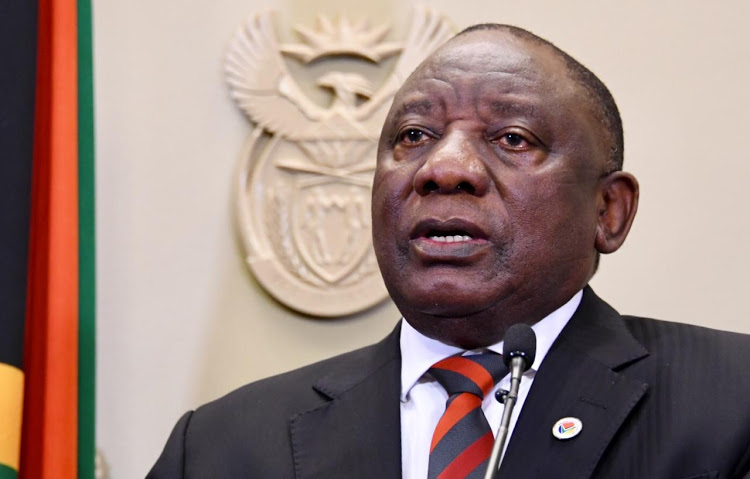
Ramaphosa: ‘No sale of alcohol for off-site consumption during Easter Holidays’


By OBAKENG MAJE

South Africans are happy after the country did not get tighter lockdown restrictions for the Easter holidays. Instead, President Cyril Ramaphosa has relaxed some of the regulations across where he addressed the nation in a ‘family meeting’ last night.

Ramaphosa said over the last few days, they have sought the advice of experts and consulted with representatives of provincial and local government and traditional leaders on what measures should be put in place over the coming long weekend to prevent a new outbreak of infections.

“We have considered several factors, including presentations by the religious community on precautionary measures they have put in place for the anticipated gatherings. Given the relatively low transmission levels, we have decided to keep the country on coronavirus Alert Level 1.

“However, due to the specific circumstances of this period, we need to make a few adjustments. Some of the measures that will remain unchanged are the curfew is maintained from midnight to 4am, public recreational spaces such as beaches, parks and dams will remain open,” he said.

Ramaphosa further said, however, this will continue to be subject to strict health protocols, such as social distancing, mask-wearing. Even though he increased the number of attendees in religious gathering to 250 for indoors and 500 outdoors, Ramaphosa said funerals remain restricted to a maximum of 100 people and with a two-hour limit on services.

“Where the venue is too small to accommodate these numbers with appropriate social distancing, then no more than 50 percent of the capacity of the venue may be used. Congregants should not gather outside their usual places of worship, and people must go home and not sleepover after services.

“Interprovincial travel will still be permitted, however, I urge all South Africans to limit their travel as much as possible and to observe all the necessary health protocols if they cannot avoid travelling,” said Ramaphosa.

On the other side, Ramaphosa might have left some revellers irritated after he announced that the sale of alcohol for off-site consumption will be prohibited this coming Friday, Saturday, Sunday, and Monday. He added that on-site sales at restaurants, shebeens, and bars will be allowed, according to licensing conditions, up until 11pm.

“Given the role of alcohol in fuelling reckless behaviour, we will put in place some restrictions over the Easter weekend. The Easter weekend is a time of spiritual significance, and attending religious services is important to millions of people. In recent weeks, we have held consultations with faith communities to find mutually beneficial solutions to the challenges of managing large crowds at religious services.

“I want to express my gratitude to the leadership of the faith community who have engaged positively with us as a government. There is a common appreciation that we must do all we can to support our people to exercise their religious freedom and keep our country safe. With respect to other gatherings, these will also be restricted to a maximum number of 250 people indoors and 500 outdoors,” he said.

Ramphosa said they continue to urge all South Africans to avoid gatherings if they are in a vulnerable group, such as the elderly and those with co-morbidities. He said they also urge that gatherings should take place in outdoor venues, which are significantly safer than gathering indoors.

“In just a few days, the country will begin the annual Easter break. For many, this will be a welcome moment to pause and rest, whether from work or from our studies, and from the pressures of the last months.

“Many of us have made plans for the upcoming long weekend. Some of us will be heading out of town, others will be visiting friends and family. Many of us will be attending gatherings and celebrations and for millions of people, this is also a time of religious observance,” he said.

Ramaphosa further said while the rate of transmission remains stable, they cannot let our guard down. He added that this is a time when caution is needed more than ever.

“The reality is that greater movement of people, interprovincial travel, greater use of public transit and gatherings present a great risk of an increase in infections. We will review these measures on the size of gatherings within the next 15 days based on an assessment on the state of the pandemic and the extent of compliance with health protocols.

“We continue to follow the principle that restrictions should not be more severe than is necessary to contain the spread of the virus. We continue to be guided by data on the epidemiological situation and by expert advice and wide consultations with social partners,” he said.
taungdailynews@gmail.com

‘We have lost champions of the preservation of our heritage’


By CYRIL RAMAPHOSA

In the last few months, we have had to bid a sad farewell to two of our country’s most respected traditional monarchs.

This week, the Zulu people will lay to rest His Majesty King Goodwill Zwelithini ka Bhekuzulu who reigned for half a century. In January, the Bapedi people buried Kgoshikgolo Thulare Thulare III, who passed away less than a year after his inauguration.

With their passing, we have lost champions of the preservation of our heritage, and revered custodians of the histories of their respective peoples.

At the same time, they were vital players in rural development, and were committed to driving programmes to uplift the material conditions of their people.

With the advent of democracy in 1994, it was a priority of the new government to restore the integrity and legitimacy of traditional leadership in line with indigenous law and customs and subject to the Constitution of the Republic.

The institution of traditional leadership continues to play an important role in the lives of millions of people around our country, especially in rural areas. Traditional leaders support and drive development in their communities.

Last week, I had the opportunity to participate in the debate on the opening of the National House of Traditional Leaders, which was concerned with the most pressing issues currently facing the country.

What was particularly refreshing about the robust engagement was that traditional leadership has a keen appreciation of the difficult economic conditions facing our country, and want to be part of addressing the many challenges of underdevelopment and poverty in their areas.

I have consistently said that our economic recovery in the wake of the coronavirus pandemic must be inclusive, and that nobody must be left behind.

The success of the Economic Reconstruction and Recovery Plan rests on forging strong partnerships between not just government, business and labour, but also with traditional leadership and other societal formations.

A constant refrain from participants in the debate last week was that they do not want to be dependent on handouts or for their communities to perpetually look to government for financial assistance.

They want to be provided with the necessary support, training and enabling environment to allow rural communities to be self-sufficient.

They want to bridge the urban-rural divide in access to government services and private sector resources.

What they would like to see is for rural areas to become centres of economic activity, industry and employment opportunity. This mirrors the aspirations of the District Development Model, which was launched in 2019.

Traditional leaders are well positioned to ensure that district plans are informed by and respond to the real needs of communities and that they reflect the lived reality in rural areas.

Just as the District Development Model supports localised programmes that focus on the needs, strengths and opportunities in specific areas, traditional leaders have pioneered their own approach to local economic development.

They have developed the InvestRural Masterplan, which was launched in North West last month. It is greatly encouraging that traditional leaders have rallied behind the plan and want to work with local authorities to ensure it is a success.

During the debate in the National House of Traditional Leaders it was proposed that a major success factor for the InvestRural programme is that traditional structures are trained, strengthened and capacitated.

A number of participants outlined economic plans that are already in advanced stages of development. These range from agricultural projects to bioprospecting to renewable energy.

What was evident is that the institution of traditional leadership understands that professionalisation is necessary for rural businesses in the form of SMMEs and cooperatives to become part of the mainstream economy.

The traditional leaders who spoke presented their vision of ‘developmental monarchs’, who see themselves as not just custodians of heritage but also as drivers of economic prosperity and progress. They have identified several projects and economic opportunities that will create jobs and improve livelihoods in rural areas.

Traditional leaders have also expressed their willingness to play an active part in the land reform process. Since 2018, traditional leaders have made around 1,500,000 hectares of communal land available for development, and it is hoped this will increase in future.

To develop a coordinated and sustainable strategy, we have agreed to hold a Presidential Land Summit in the next year. This will discuss pressing issues around land reform and its impact on communal land, much of which is located in rural areas.

The tone of the debate in the National House was a fitting reflection of a climate in which economic recovery is foremost among our considerations. At the same time it was a promising signal that traditional leaders appreciate their role in being part of the national recovery effort through being proactive and innovative.

The most fitting legacy of great leaders is that the seeds of development they sow during their tenure grow into mighty trees that protect and shelter their communities for posterity.

As we work together as a country to rebuild our economy, we will continue to count on the support of the institution of traditional leadership, which is an inextricable part of our past, our present and our future.

taungdailynews@gmail.com

Rampahosa wishes all Grade 12s well in their final examinations


By REGINALD KANYANE

More than a million candidates will sit for the examinations starting on Thursday. South African President, Cyril Ramaphosa said congratulated the provincial and national departments of Basic Education for their sterling preparation to ensure things proceed smoothly.

Ramaphosa said these include the independent and public auditing of examination centres, finding extra venues to accommodate the large number of candidates, and the development of protocols to ensure compliance by candidates and officials with COVID-19 regulations.

“The Class of 2020 has had to endure conditions their predecessors never had to confront. They had to adapt in real time not just to finish the curriculum but to catch up with the learning hours lost. Though some had access to online learning platforms and other resources, many had to struggle with access to learning material and teaching.

“They had to endure the mental strain of social isolation, and for many months were cut off from friends and their teachers. They were not able to participate in sporting, recreational and leisure activities that are so essential to a well-rounded life and that relieve the stresses of prolonged study,” he said.

Ramaphosa added that, despite having the odds stacked against them, learners are determined to present for this exam that is the pinnacle of their schooling. He further said it has been equally difficult for educators.

“Despite the risk posed by the virus and resource challenges inside our schools, the majority of our teachers heeded the call to return to school to salvage what was left of the academic year. They presented for work every day to support our matriculants.

“They put in the extra hours to get our learners over the finish line, making the most of the resources they had to ensure learning continued. It is the culmination of twelve years of schooling and a gruelling final year of preparation. For many this is an exciting moment, but one that is also fraught with anxiety,” said Ramaphosa.

He said this year’s exam will be written under unprecedented conditions has the country is in the midst of a global pandemic. Ramaphosa added that the nationwide lockdown that had to be imposed in March to contain the spread of the coronavirus caused immense disruption to everyday life and cost valuable hours of learning and study.

“To accommodate the disruptions the June Senior Certificate exams were postponed and will now be written together with the National Senior Certificate. This makes this combined examination the largest public exam ever administered in South Africa.

“I salute our educators who have been there for their students when they were needed most. They have given so much, personally and professionally. They put our learners first and in doing so affirmed once more that our teachers are among our finest public servants,” said Ramaphosa.

He said this pandemic has brought the nation together in ways not experienced before, and this was demonstrated in the matriculation examination preparations. Ramphosa said many businesses played a supportive role, assisting with the provision of technology like tablets to schools and assisting to resource school multimedia centres.

“Mobile network operators established e-school platforms during the lockdown carrying free learning content, including subject content for matriculants. University graduates set up tutoring platforms online, making much needed supplementary learning support available for free.

“The SABC and other TV providers have carried catch-up lessons for matric learners through the Department of Basic Education’s Woza Matrics Programme, enabling learners to prepare for the examinations,” he said.

Ramphosa also applauded parents, families and communities for showing immensely support to young people’s path to the matric exam. He said despite all the challenges this year has brought, he call on the Class of 2020 to summon their great reserves of courage and strength in this, the final push.

“To the Class of 2020, I wish you the very best. You have overcome difficulties that would test the resolve of even the most experienced and hardened adults. At your tender age, there are so many demands upon you. There are the pressures of rigorous study, the pressure to excel and to achieve the results you need to study further. And yet you have come this far.

“When you enter the exam room in the days ahead, you will be carrying not just your own hopes for success and those of your families. You will also carry the hopes of us, the South African people. We are immensely proud of you and wish you the very best of luck,” he said.

taungdailynews@gmail.com

Will Ramaphosa’s Economic Recovery Plan be enough to rescue SA from economic trouble?


By BAKANG MOKOTO

South African National Civic Organisation (SANCO) in the North West has appealed for the Post Covid-19 Economic Recovery Plan to extricate the overwhelming majority of women in rural areas who are afflicted by poverty, unemployment and underdevelopment.

This comes ahead of the much-anticipated speech by the Republic of South Africa (RSA) President, Cyril Ramaphosa who is expected to outline his Economic Recovery Plan strategy to the nation at 2pm.

Sanco provincial chairperson, Paul Sebegoe said: “Rural women must be placed at the centre of every development programme targeting rural communities if poverty, unemployment and underdevelopment are to be addressed.

“Women are one of the central pillars of development therefore their needs and rights must be addressed if poor communities are to prosper and grow. Rural women need support to help them adapt to commercialisation, globalisation, climate change as well as new technologies and migration patterns that are impacting on subsistence farming.”

He added that communities would benefit socially and economically when women have access to land, water, education, training, financial services and strong organisations because the empowerment of women and equality are fundamental in reducing poverty, hunger and malnutrition.

Sebegoe further said the contribution of women and the possibilities of mobilising their unutilised labour for economic development are generally overlooked.

“A fitting tribute to Dr Vuyokazi Feliciity Mahlati who selflessly championed the interests of rural women as well transformation in the agriculture including agro processing sector would be to ensure that land expropriation reverses the legacy of land dispossession and gives effect to the vision of the 1954 Women’s Charter,” he underscored.

Meanwhile, Ramaphosa is expected to address the nation at 2pm amid South Africa’s economic trouble. He is expected to announce a range of measures that would initiate to set the country on a new path of growth, employment and transformation amid COVID-19 pandemic.

Ramaphosa is also expected to take the country into his confidence and take decisive steps to rebuild investor confidence too. However, as corruption has rear its ugly head, much is expected from him to come up with ways to end corruption and state capture, restore good governance at state owned enterprises and strengthen critical public institutions.

taungdailynews@gmail.com

Ramaphosa to visit troubled North West town after ANC election win


Fikile Mbalula says the ANC will send President Cyril Ramaphosa to Mamusa to thank its residents for their loyal support and as part of its path to 'self correction'.Fikile Mbalula says the ANC will send President Cyril Ramaphosa to Mamusa to thank its residents for their loyal support and as part of its path to ‘self correction’.

Image: IHSAAN HAFFEJEE

The ANC has promised to send President Cyril Ramaphosa to the troubled Mamusa local municipality in the North West despite retaining power in Wednesday’s by-elections.

Party elections head Fikile Mbalula announced on Thursday that after consultation with secretary-general Ace Magashule, the president would be deployed “to thank the people of Mamusa”.

In addition, a programme would immediately be rolled out “that will answer to mismanagement of the municipality and accelerate service delivery as a form of reward for the loyalty and support we have received from our people”.

The entire council of Mamusa was dissolved last year due to dysfunction and corruption, but the ANC has nevertheless remained in charge, retaining eight of the nine wards.

Mbalula said the decision to dissolve the Mamusa council and seek a fresh mandate from the electorate was a practical demonstration of the ANC’s renewed vigilance to deal decisively with “populist tendencies that undermine service delivery”.

“We took this hard decision prepared to risk losing power in order to serve people better and do what is right,” he said.

But despite the electoral victory, Mbalula said the party was not in celebration mode. “We understand the message of the voters to place service delivery above all else. To this extent, in our continued January 8 celebrations rolling out programmes to provinces, we intend to answer to the request of the people of Mamusa for the president of the ANC to come to their region and to the North West province.”

Mbalula said this was part of the party’s path to self correction and the ANC committed to put the people of Mamusa first before individual and self-serving interests.

“The infighting among our own councillors effectively undermines service delivery and distracted the municipality from focusing on critical issues such as growing the revenue and improving the lives of people.

“We have learnt the hard lessons about the vigilance needed to stop lawlessness, greed and selfishness taking root,” he explained.

Expressing confidence in the incoming council, Mbalula said the ANC would govern decisively and focus on service delivery.

“Councillors will focus on critical issues like water, scarcity of water, sanitation, potholes and general service delivery, which is what people vote for.”

Source: http://www.sowetan.co.za