By OBAKENG MAJE
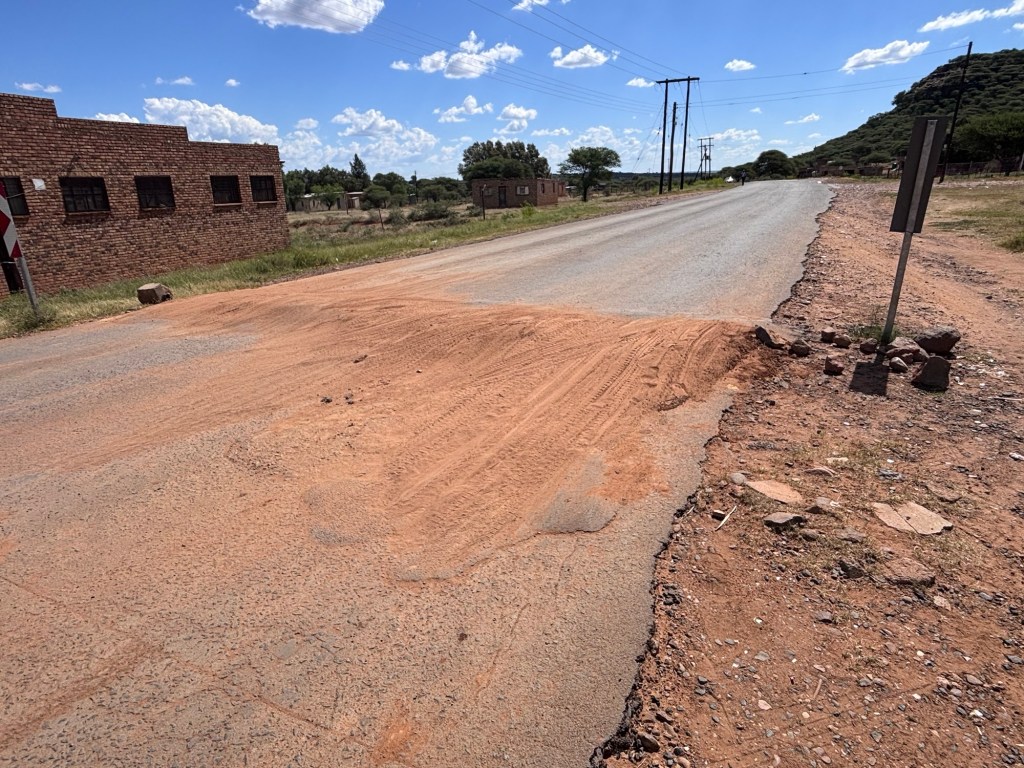
23 January 2026- Piqued residents of Ranstad village, near Taung have constructed impromptu speed humps on R372 road. The road that links Manthe village and Taung Central Business District (CBD) passes through their area.
The residents said they have created makeshift speed humps out of rubble due to reckless driving from some motorists. One of the community members who refused to be named due to reprisal alleged that speeding vehicles passing through their residential area are endangering the lives of their children.
“On 11 January 2026, a vehicle knocked down three children aged 11, 12 and 15. Unfortunately, a girl (11) died on the scene while other two children were ferried to hospital with injuries. So, we decided to construct makeshift speed humps to reduce accidents and fatalities.
“This road passes through the residential area and some drivers do not acknowledge that. They do not drive with caution even though children use the same road. Even though there are speed humps on the road, they are not big enough to tempt drivers to reduce speed.”
Meanwhile, the North West Department of Public Works and Roads acting spokesperson, Mmakgori Tong said they are aware of makeshift speed humps constructed by residents. Tong said in South Africa, it is illegal for community members to construct speed humps (or any traffic-calming measures) on public roads on their own.
“Public roads fall under the authority of the relevant municipality or provincial department and any alterations must be approved, designed, and installed by that authority. Speed humps are classified as traffic control devices under the National Road Traffic Act and related regulations.
“Only the road authority may approve their placement, design and construction. Unauthorised speed humps can be dangerous, may not meet engineering standards and can expose individuals or community groups to legal liability if accidents or vehicle damage occur,” she said.
Tong further said to follow legal steps, communities are urged to submit a formal request or petition to the municipality or the department. She added that they should ask for a traffic assessment (often based on speed, accident history, pedestrian risk, schools, etc.).
“Work with councillors or ward committees to motivate the need.
Some municipalities allow community-funded speed humps — but only after approval and installation by (or under supervision of) the department or the municipality.
“The department will engage with the relevant municipality and community stakeholders to address the matter. The department will also work to raise awareness of the correct processes for requesting traffic-calming measures and to prevent unauthorised interventions on public roads,” said Tong.
She said it is important to note that the department had previously installed speed humps on part of the road referred to. Tong said the department’s plan is to revive these speed humps at the beginning of the next financial year.
“The department will conduct awareness initiatives to educate communities on lawful and appropriate channels for addressing service delivery and safety concerns. This will include community engagements, collaboration with ward councillors and municipal structures, and the dissemination of information on how to request interventions such as traffic-calming measures.
“The aim is to empower communities to raise concerns effectively and lawfully, while discouraging actions that may be unsafe or unlawful,” she concluded.
 The Guardian