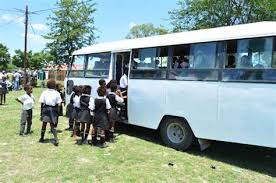
Picture: Scholar Transport in North West/Generic
By REGINALD KANYANE
28 January 2026- Following the South African Human Rights Council’s (SAHRC) report on systematic challenges within Scholar Transport, the South African National Small Bus Operator Council (SANSBOC) in the North West, has committed to work together with the government in finding and implementing urgent solutions towards effective delivery of the service. On 28 January 2026, SANSBOC met with the North West MEC for Community Safety and Transport Management, Wessels Morweng, as well as senior management of the department to make a commitment towards improving scholar transport in the province.
The SANSBOC chairperson, Final Kgodumo said as part of their submission to the department, they reflected on the key findings within the SAHRC report and these include amongst others routine use of unroadworthy vehicles, unsafe vehicle and frequent breakdowns, overcrowding leading to increased risks and exhaustion. Kgodumo said this includes systematic failures emanating from lack of contract management and enforcement, violation of the constitutional rights of learners to basic education, as well as the impact of transportation challenges on routine school attendance.

“SANSBOC wants to highlight that it takes these matters and many others as raised in the report seriously. The council undertakes to respond to all aspects that implicate its members and others that seek to improve the industry.
“However, the council would also like to indicate that it has in the past raised similar problems as in the SAHRC report in relation to the defects in the management of scholar transport in the province. The council believes that the report has now brought to light many issues and calls on all stakeholders responsible to roll up sleeves towards radical change in the service,” he said.
Kgodumo further said noting its wider reach of at least 80% of public scholar transport offering countrywide, SANSBOC pledges to make an effort towards delivery of quality service and protecting the basic right of education to learners. He added that as an immediate response to the findings thereof, SANSBOC in North West has escalated the report to its national office.
Kgodumo said together with the mother body, the council is currently putting measures in place. He said SANSBOC National Research and Business Advisory unit is in the process of compiling a detailed response to the report.
“The unit will also develop a discussion paper where all provinces will make proposals towards improving the scholar transport service. Plans are afoot to train operators on Learner Transport Operations, Policy Compliance and duty of care.
“The council also plans to put in place an industry self-regulation protocol which will require operators to meet certain requirements before they can be certified to operate and the council will be rolling out a training programme for Leaner Transport Drivers, which will include Basic First Aid, Fire Fighting, Evacuation Procedures, Managing Learner in transit, Understanding Human Factors and Hazard perception Testing,” said Kgodumo.
He said SANSBOC welcomes the SAHRC report and believes the directives proposed as well as the reforms tabled in the discussion with the department of COSATMA will go a long way in the improvements within the sector. Kgodumo said the council acknowledges that many as many other stakeholders come on board, more measures will be brought forward, and some changes can only be achieved in the long term.
“On delayed payments, the department has indicated that it is still engaging with Provincial Treasury for more financial aid towards payment of operators. Feedback in this regard is expected from the Provincial Treasury within 7 days.
“SANSBOC has urged the department to intervene urgently as persistent lack of payment is frustrating operators and this might affect scholar transport services and learners. SANSBOC also wishes to commend Morweng for his acknowledgement of the Council as one of the key stakeholders in advancing scholar transport in the province,” he said.
 The Guardian