Tourism unveils a smart visitor information centre


By AGISANANG SCUFF

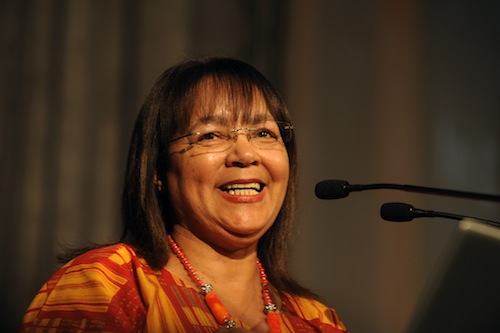
19 November 2025- Minister of Tourism, Patricia de Lille today launched a Smart Tourism Visitor Information Centre (VIC) at the OR Tambo International Airport, marking a significant milestone in the tourism sector’s effort towards digital transformation, innovation, and inclusive development. De Lille said the Smart Tourism Visitor Information Centre is an interactive, paperless destination marketing centre that offers real-time information on the diverse tourism, culture and heritage offerings that span across all nine South African provinces.

She further said situated at the international arrivals’ precinct of the OR Tambo International Airport, travellers who arrive in South Africa will immediately be greeted by the enthralling displays of South Africa’s culture and nature offerings on the Smart Tourism VIC’s screens and a reminder to explore the beautiful country responsibly. De Lille added that the centre’s inclusive design encourages physical accessibility for all visitors, including those with special access needs.

“I am proud to officially unveil the Smart Visitors Information Centre that is designed to fundamentally transform how visitors experience South Africa from the moment they arrive. Tourism is one of the sectors with the greatest potential to create jobs, support small businesses and drive inclusive economic growth.

“To unlock this potential, we must modernise, innovate, and compete on the global stage. That is exactly what today represents. As the world adapts to technological advancements, it is clear that the future of travel is technology-based,” she said.

De Lille said the Smart Tourism VIC is one of the numbers of initiatives that the sector plans to implement to position South Africa as a smart destination that provides solutions for tourism enterprises, whilst responding to the needs of travellers in real-time. She said Tourism’s Smart VIC boasts a new automated tourism complaints management system.

“Travellers will be able to lodge their tourism-related complaints digitally at the centre, marking an efficient transition away from manual processing. The centre will be manned by six information officers who can assist travellers in filing the information and documentation related to their complaint at the VIC.

“This Smart VIC is an investment in our future. In the long term, we are developing a smart visitor app that will integrate seamlessly with the centre, offering digital navigation, curated itineraries, transport options, and province-by-province tourism content,” said de Lille.

She said this will ensure that visitors carry South Africa in their pocket, throughout their stay. De Lille said beyond its functionality as a resource of information for tourists, the Smart Tourism VIC will provide much needed ICT support to tourism businesses, especially those in remote areas such as villages, small towns and dorpies.

CEO of Tourism Business Council of South Africa (TBCSA), Tshifhiwa Tshivhengwa said: “The ICT solutions offered by the centre will enable tourism businesses to tailor their products, services, and experiences to the needs of consumers, whilst being marketed at the VIC.

“This Smart VIC will connect communities and small businesses to travellers, whilst promoting transformation in the tourism sector. We are happy to be part of this initiative, and we look forward to more digital VIC being rolled out across the country.”

Tshivhengwa said in the long term, a Smart Tourism App will be created to ensure that visitors have a holistic digital experience while visiting the VIC. He said the APP will allow users to gain access to useful content and information about various monuments around provinces, an audio guide in several languages, multiple videos and a rich photo gallery.

“Partnerships between government and the private sector are essential in driving the advancement of the tourism sector, and in assuring South Africa’s competitiveness globally. Tourism Growth Partnership Plan seeks to strategically align government, the private sector, and sector stakeholders to stimulate tourism growth, create jobs, and boost the economy through collaboration over the next five years,” said Tshivhengwa.
taungdailynews@gmail.com

Minister of Tourism, Patricia de Lille conducts site visits to various Guesthouses


Picture: The Minister of Tourism, Patricia de Lille

By KEDIBONE MOLAETSI

Minister of Tourism, Patricia de Lille conducted site visits to two tourism establishments that are beneficiaries of the Department of Tourism’s Green Tourism Incentive Programme (GTIP). De Lille said her visit to the Timosha Guest House and The View Guest House in Ekurhuleni was part of outreach activities.

She further said they inspected the solar PV installations at these establishments, which were funded by the Department’s GTIP. De Lille added that the GTIP was developed by the Department of Tourism in collaboration with the Industrial Development Corporation (IDC) to respond to the escalation of electricity prices, coupled with energy supply challenges, load shedding and general water scarcity which pose a significant risk to the future growth potential and sustainability of the tourism sector.

“The GTIP offers partial grant funding on the cost of retrofitting tourism facilities with energy and water efficiency equipment and systems based on the outcome of a resource efficiency audit. Phase 1 of the application process involves a resource efficiency audit, the cost of which is fully covered under the programme.

“This is followed by Phase 2, where an applicant can apply for funding support (50% to 90% grant funding up to R1 million) on the cost of installing relevant technologies and equipment recommended during Phase 1. The IDC, as the Department’s implementation partner for the GTIP receives all GTIP applications and administers the programme on behalf of the Department,” she said.

De Lille said efficiency solutions supported under the GTIP may include, the renewable energy generating systems e.g. solar, wind, etc. She said including energy efficient equipment and lighting e.g. solar water heaters, gas stoves, Heating, Ventilation and air conditioning (HVAC) systems, Light-emitting diode (LED) lights, etc.

“Water efficient appliances and systems e.g. washing machines, low-flow/ aerated taps, etc.; and water sourcing systems e.g. rainwater harvesting and greywater recycling. The department has opened nine application windows between the inception of the GTIP in November 2017 and June 2024. A 10th application window was recently opened on 2 September 2024, and will remain open for applications until 28 February 2025.

“Eligible tourism businesses are encouraged to apply for funding from the GTIP to install energy and water saving technologies at their establishments. Since the start of the GTIP, 216 applications have been approved at a total grant value of over R140 million,” said de Lille.

She said provincial distribution of the 216 GTIP approvals shows domination by the Eastern Cape (53), Western Cape (48) and Gauteng (34) followed by Limpopo (22), KwaZulu-Natal (20) and North West (15), while Mpumalanga (12), Northern Cape and Free State represent 8 and 4 approvals respectively. De Lille visited two of the sites, where GTIP projects have been completed.

“The Timosha Guest House is a three-star graded establishment located in Kempton Park in Gauteng. The establishment is 100% black woman-owned. Following the application assessment for GTIP funding, the programme covered the full costs of the energy and water audit to determine the appropriate energy and water saving opportunities at the establishment while at the same time highlighting carbon footprint reduction and financial viability of this project.

“The Timosha Guest House qualified for grant funding of 90% of the implementation cost (equivalent to R730 323) to implement the proposed energy and water saving interventions. In line with the GTIP’s mandate of promoting energy efficiency within the tourism sector, GTIP funding is also expected to assist the establishment in reducing its energy consumption as well as its associated cost,” she said.

De Lille said the installation was completed in February 2024 and a savings verification will be conducted to determine the impact of the installations over time. She said it is however expected that the establishment will make significant savings due to the solar PV installations which were made possible through the GTIP funding.

“The second property was the View Guest House, located in Thembisa in Gauteng. The establishment is also 100% black woman-owned and is classified as a level one contributor according to the tourism B-BBEE scorecard. The GTIP covered the full costs of the energy and water audit to determine the appropriate energy and water saving opportunities at the establishment while at the same time highlighting carbon footprint reduction and financial viability of this project,” said de Lille.

taungdailynews@gmail.com

‘Tourism is a key economic sector’ 


By REGINALD KANYANE 

Minister of Tourism, Patricia de Lille said the sector is often overlooked as a key economic sector, yet it is a significant contributor and driver of economic growth and job creation. De Lille said as they commence the 7thadministration, their mission is to elevate the profile of tourism by supporting efforts to grow the sector and demonstrating this growth and the sector’s impact on the economy and communities.

She further said as articulated by President Cyril Ramaphosa in the Opening of Parliament Address, the cabinet has defined the three priority areas for government for the next 5 years. De Lille added that the cabinet will develop a Medium-Term Development Plan, which will translate these priorities into a detailed plan and interventions that the government will implement over the next five years.

“The Government of National Unity (GNU) has resolved to dedicate the next five years to actions that will advance three strategic priorities such as driving inclusive growth and job creation, reduce poverty and tackle the high cost of living and build a capable, ethical and developmental state.

“We have placed inclusive economic growth at the centre of the work of the GNU and at the top of the national agenda. Those are the three priorities for the government and all departments, entities and sectors must make a contribution to achieving these priorities within the next five years,” she said.

De Lille said her department is currently working on finalising their five-year plan, which will align to the GNU priorities, the National Development Plan(NDP), the Tourism Sector Master Plan and the National Tourism Sector Strategy. She said the NDP states that Tourism is one of the fastest growing economic sectors and there is an opportunity to increase employment in this sector

“As part of our plan, our target will be to increase arrivals to 15 million by 2030, as stated in the NDP. We have just finalised a 2-day departmental Lekgotla together with SA Tourism, where we have made an assessment of where we are now.

“The next part of the plan is to map where we want to go and how we will get to the 15 million arrivals by 2030. We have an opportunity now to design the future of tourism for the next 5 to 10 years and it is not going to be business as usual.

“We have to drive urgency in the implementation of our plans for us to succeed in reaching our targets. These action plans will be implemented together with the private sector inclusive of the whole tourism value chain,” said de Lille. 

taungdailynews@gmail.com