Picture: The Chairperson of the Portfolio Committee on Communications and Digital Technologies, Khusela Diko,
By KEDIBONE MOLAETSI
4 September 2025 – The Chairperson of the Portfolio Committee on Communications and Digital Technologies, Khusela Diko, will deliver a keynote address this morning at the Digital Content Creators Colloquium (DCCC) in Bloemfontein, Free State.
The DCCC is a three-day event which started on Wednesday, 2 September 2025, and it is organised through a partnership between several stakeholders, including the Free State Premier’s Office, Vodacom and the Central University of Technology, among others.
Diko will deliver her keynote address under the topic: Digital transition and regulation in South Africa. The keynote address will be delivered at Performing Arts Centre of the Free State (PACOFS), 12 First Avenue, Bloemfontein on 4 September 2025 at 9:10am.
Picture. Minister of Communications and Digital Technologies, Solly Malatsi
By KEDIBONE MOLAETSI
7 April 2025 –The Chairperson of the Portfolio Committee on Communications and Digital Technologies, Khusela Diko, has expressed serious concern at what appear to be attempts by Minister Solly Malatsi, to erode state capacity and thwart South Africa’s transformation laws. On 4 April 2025, Malatsi appeared in parliament to respond to questions for written reply from the State Information Technology Agency (SITA).
Khusela further said in his responses, Malatsi indicated that he was in the process of gazetting regulations that, in effect, would devolve powers from SITA to departments in a quest for what he calls “efficiency and cost savings”. She added that, while this intention demonstrates an appreciation of the challenges experienced by SITA’s client departments, the proposed regulations serve no purpose other than to worsen existing fragmentation, duplication and lack of integration in government services.
“Further, the proposed regulations clearly run afoul of both the letter and spirit of the SITA Act. The Act, as amended, prescribes that SITA’s purpose is to “provide information technology, information systems and related services to, or on behalf of, participating departments and regarding these services, act as an agent of the South African Government.
“Section 7(3) of the Act directs that “every department must, subject to subsection (4), procure all information technology goods or services through the Agency.” Nothing in the Act gives the Minister authority to circumvent legislation and devolve to departments functions allocated to SITA,” said Diko.
She said at a time when the country is still recovering from a period in which the capacity of the state was all but hollowed out, Malatsi should be seeking a return to that unfortunate trajectory should alarm them all. Diko said SITA was established with the express intention of achieving efficiencies and cost-effectiveness, so the Minister should be occupied with strengthening this critical agency, not crippling it.
“The service delivery challenges at SITA are not insurmountable. They require effective leadership prepared to put in the work, like many other Ministers, to rebuild and strengthen existing state institutions,” said Ms Diko.
“The critical programme of digitalisation of the state requires a strong SITA that coordinates and ensures standardisation and interoperability, an objective not currently being met,” she said.
Diko said devolving functions to departments merely multiplies the problem across silos, resulting in further duplication, fragmentation and lack of coherence in quest for a digitally transformed public service. She said the Portfolio Committee has announced its intention to hold an inquiry into SITA during the coming parliamentary term.
“The aim is to find viable and sustainable solutions to the challenges facing SITA, an exercise the Minister did not see fit to concern himself with, instead seeking to cut corners and circumvent the law.
“The Minister has also undertaken to launch another offensive against South Africa’s transformation laws governing his portfolio by seeking to bypass the Electronic Communications Act to appease recalcitrant business interests,” said Diko.
She said in a recent article in the media, the Minister announced his intention to issue a policy directive on the role of equity equivalent programmes in the ICT sector as a mechanism to accelerate broadband access. Diko said once again, Malatsi is seeking to cut corners and erode hard-won transformation goals.
“The Electronic Communications Act explicitly states in Section 9(2)(b) that the percentage of equity ownership to be held by historically disadvantaged groups must not be less than 30% for any potential licensee seeking to operate in the telecommunications, broadcasting or postal sectors in South Africa.
“Malatsi should know that when it comes to transformation in the ICT sector, the law is clear on compliance and that cutting corners and circumvention is not an option – least of all to appease business interests,” she said.
Diko said it appears these proposed directives and regulations are an attempt to undermine empowerment legislation by stealth and, should this be found to be the case, they will be fiercely opposed. She said the Portfolio Committee is on record affirming its support for the government’s efforts to attract investment and meet the National Development Plan (NDP) target of universal coverage by 2030.
“These imperatives must and can be achieved within the laws governing the country. To this end, the Chairperson has congratulated mobile network operator MTN and their partner Lynk Global for successfully conducting Africa’s first satellite-to-phone voice call in the North West.
“These initiatives underscore the importance of fast-tracking South Africa’s satellite programme and that there is no need for overreliance and obsession with a single satellite provider,” said Diko.
She said several other satellite providers have indicated keen interest in entering the South African market and in compliance with our laws. Diko said the Minister is urged to follow the proper channels if amendments to the law are sought, as any attempt to subvert the country’s hard-fought-for and won transformative laws will be resisted.
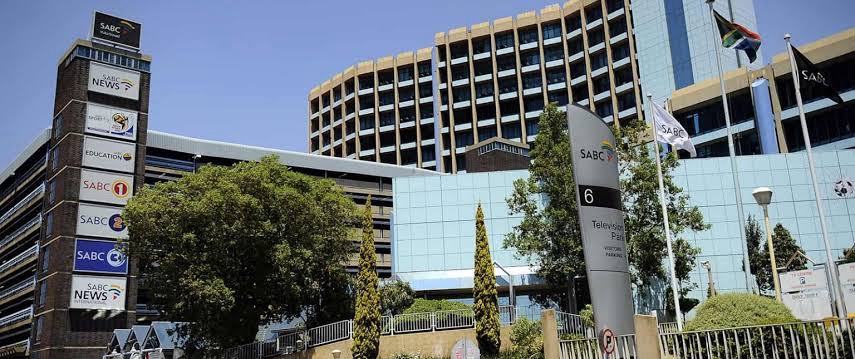
Picture: SABC offices in Auckland park, Johannesburg
By BAKANG MOKOTO
23 December 2024- The Chairperson of the Portfolio Committee on Communications and Digital Technologies, Khusela Diko, has unequivocally condemned Minister Solly Malatsi’s challenge on the Speaker of the National Assembly over the withdrawal of the SABC Bill from Parliament as reported by the Sunday Times on 22 December 2024.
Diko is of the view that this action is not only unwarranted in its spirited pursuit to unilaterally withdraw the Bill, but is also unconstitutional. She said the committee has never accepted the withdrawal of the Bill by the Minister, it has instead sought clarity from the Executive on the Minister’s authority for the unilateral withdrawal of the Bill before Parliament.
“The committee has reiterated that Bills before Parliament from the Executive do not belong to individual Ministers but to the Cabinet as a whole. Malatsi’s attempts to dismiss constitutional procedure as mere “convention” or a “gentlemen’s agreement” is not just incorrect—it is a dangerous misrepresentation of the law.
“The constitution, to which all members of the cabinet are bound, explicitly states in Section 85(2) that Executive authority is vested in the President, who exercises such authority together with other members of cabinet to, amongst others, prepare and initiate legislation,” said Diko.
She further said the Rules of the National Assembly do not take precedence over the constitution. Diko added that, as such, no single Minister, including Malatsi, has today or ever had the authority or power to unilaterally introduce or withdraw Bills in Parliament without the consent of the Cabinet.
“Earlier on, the committee welcomed the necessary clarification and corrective instruction provided to the Minister by the Deputy President and Leader of Government Business in this regard.
“The Minister should fully comprehend the limits of his powers, especially in relation to law-making, the role of the Cabinet, and that of the Leader of Government Business,” said Diko.
She said similarly, where necessary, clarification should also be provided to the Minister on the distinction between Private Members’ Bills, to which a Member of the Executive is not entitled, and Bills piloted by the Executive.
Diko said the Speaker of the National Assembly is the leader of a separate arm of the State -the Legislature- which acts as the guardian of the democracy, and stands firm against any attempts to undermine its authority and procedures.
“Cabinet members are expected to respect this role by ensuring that the authority of the Office of the Speaker is not undermined through frivolous challenges which disregard not only established protocols on engagement between the Speaker and the Executive but also the doctrine of separation of powers.
“For our part as the committee, the amendment of the SABC Bill will be among the first orders of business in the new year,” she said.
Diko said while Malatsi has raised some valid concerns regarding the powers to be accorded to the Minister to appoint board members of the proposed commercial subsidiary of the SABC, his other objection regarding the absence of a funding model in the current version of the Bill is unfounded, flimsy and inconsequential.
She said they trust that when the Minister takes the opportunity to present the department’s responses to the committee, he will also concede that, unless the SABC Bill is a Money Bill, Ministers cannot legislate a funding model from the fiscus.
“To this end, we urge the Minister to cease dilly dallying on this point and to act with urgency in developing the funding model, which the SABC Bill provides a legislative framework for and which the SABC desperately needs.
“We noted and welcomed the invaluable inputs received from civil society organisations and other stakeholders, saying that their inputs will be thoroughly considered and addressed in the committee’s deliberations and reflected in the final legislation presented to the National Assembly for consideration,” said Diko.
She said, lastly, the doors of the committee shall remain open for constructive engagement with the Minister.


 The Guardian