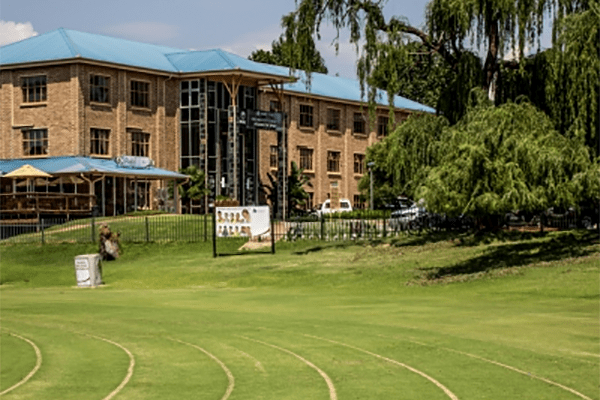
Picture: NWU’s Potchefstroom facilities
By PHENYO MOKGOTHU
30 January 2026- While Europe is in the icy grip of winter, athletes are sharpening their form in Potchefstroom, drawn by the altitude, climate and a high-performance sport hub that has quietly become a base for Olympic gold medallists. Members of the Netherlands’ Olympic gold-winning 4x400m mixed relay team, including Femke Bol, Lieke Klaver and Isaya Klein Ikkink, are among the international athletes currently training at the North West University’s (NWU’s) High-Performance Institute (HPI).
Senior Lecturer and Sport Scientist at the NWU’ School for Human Movement Sciences, Dr Adele Broodryk said the group is using the integrated facility as a pre-season camp ahead of the 2026 athletics season, combining training venues, recovery services and athlete support in one precinct. Broodryk said historically, elite visitors to Potchefstroom have included legendary figures such as Gabriela Szabo of Romania, an Olympic champion in the 5000m and Olympic bronze medallist in the 1500m, Kelly Holmes of Great Britain, an Olympic gold and bronze medallist in middle-distance running and Jan Železný of the Czech Republic, a triple Olympic javelin champion (1992, 1996 and 2000).
“All these stars trained in Potchefstroom during their careers as part of their preparations in optimal conditions abroad. In addition to these historic athletics engagements, the institute continues to host notable international trainees, such as Indian javelin thrower DP Manu, who has utilised the NWU facilities for focused training.
“Potchefstroom’s sporting profile on the world stage was further enhanced during the 2010 FIFA World Cup, when the Spain national football team, who went on to win the tournament, chose the city as their base camp for training and preparation, taking advantage of the altitude and excellent amenities provided by the university’s sports village and high performance centre,” she said.
Broodryk further said beyond infrastructure, Potchefstroom’s elevation of about 1350 metres above sea level remains central to its appeal for elite conditioning. She added that moderate altitude environments create physiological conditions that enhance endurance and performance without compromising training quality.
“At altitude, the body experiences reduced oxygen availability, known as hypoxia, which triggers key adaptations. This includes increased red blood cell production, improved oxygen transport and better muscle efficiency in aerobic metabolism. These changes allow athletes to return to sea-level competition with stronger endurance capacity, faster recovery and the ability to sustain higher intensities.
“Potchefstroom, while not considered a high-altitude zone, offers what I describe as an optimal training threshold. At around 1350 metres, oxygen pressure is reduced enough to stimulate adaptation without being so extreme that athletes struggle to maintain speed, power and intensity,” said Broodryk.
She said at very high altitudes, training quality often drops. Broodryk said here, athletes gain the benefits of hypoxic exposure while still performing high-intensity sessions.
 The Guardian