By BERTIE JACOBS
14 May 2025- They might be small and largely inconspicuous, but ants are becoming big business for a growing market of enthusiasts. In April, Kenyan authorities intercepted two Belgian teenagers, a Vietnamese national, and a local accomplice as they attempted to smuggle 5 400 live queen ants out of the country.
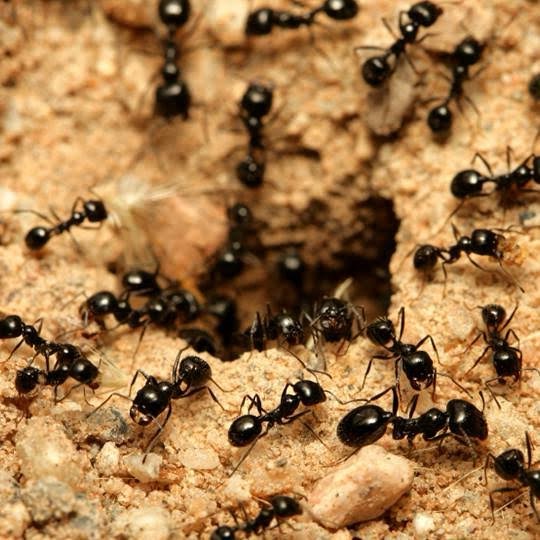
Their illicit cargo, consisting mainly of the Messor cephalotes species, was carefully packed into over 2 200 modified test tubes and syringes all designed to keep the ants alive during their journey to European terrariums. The Kenya Wildlife Service (KWS) estimated the collection’s local value at approximately 1.2 million Kenyan shillings, though European collectors might have paid as much as one million US dollars for the entire haul – a clear indication that the ant trade is becoming a lucrative target for smugglers.
This marks another troubling shift in the world of wildlife crime. According to Prof Henk Bouwman from the Unit for Environmental Sciences and Management at North West University (NWU) in South Africa, such trafficking poses a significant threat to local ecosystems unprepared for the arrival of foreign species.
“The smuggling of ants is not a good thing. The smuggling of any animal to places, where they do not occur naturally is quite troublesome. Ants are a fantastic group of animals to study and to look at. There are 12 000 to 15 000 known species and we estimate that there might be more than double that.
“They are really incredible and occur in almost any habitat from deep underground to right at the top of trees in rainforest. Those in rainforest for instance, are so well adapted that if they fall out of the tree, they can actually steer themselves back towards a trunk of the tree and do not fall all the way down to the ground,” said Bouwman.
He further said ants do not have to climb back up. Bouwman added that this illustrates the adaptability of ants to different conditions.
“When they end up in places where there is no resistance from plants or animals to these ants, which is not their fault, of course then it can have tremendous consequences for the ecology and even economy of that region.
“It is really bad to have people doing this kind of thing. As traditional smuggling targets like elephants and rhinos come under increased protection, traffickers are turning their attention to smaller, less conspicuous species,” said Bouwman.
He said for conservationists, this is a stark reminder that preserving Africa’s natural heritage must include not only its largest residents, but also its smallest.
 The Guardian