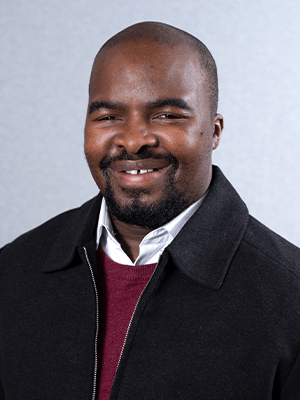
Picture: NWU political analyst and academic, Dr Snyman Motloung/Supplied
By REGINALD KANYANE
5 March 2025- South Africa is at a breaking point, says North West University (NWU) political analyst and academic, Dr Snyman Motloung. According to Motloung, the political landscape is shifting, economic pressures are mounting, and trust in government is waning.
He further said he has spent years studying the nation’s fractures: how power is won, wielded, and too often squandered. Motloung added that his research spans electoral behaviour, constitutionalism, and the politics of water, an issue he argues is central to the country’s long-term stability.
In a candid and unflinching conversation, Motloung dissects the nation’s biggest challenges, from coalition politics to economic distress, and presents a stark choice: reform or decline. His research is deeply rooted in interpretive qualitative methods, focusing on electoral behaviour and political development.
“My latest work has explored topics as diverse as the fragile state of constitutionalism, the impact of the 2024 elections on women in politics, and the often-fraught relationship between Members of Parliament (MPs) and their constituencies. My most recent publication in 2025, explores the impact of a lack of mentorship on the career progression of young black women, while his latest studies examine the politics of water in South Africa – an area he believes is critical to the country’s long-term stability.
“At the heart of my research is the fusion of classical political theory with contemporary policy issues. Understanding how governance works – or doesn’t work – is central to ensuring that democratic institutions serve the people,” said Motloung.
He said the most immediate political and economic challenge facing South Africa is the consolidation of its democracy in an era of coalition governance. Motloung said the country’s political landscape is shifting, with weakened opposition parties and a polarised civil society.
“The fragmentation has stifled efforts at national unity, he argues, and created space for interest groups such as AfriForum to push parochial agendas. Perhaps even more concerning is the growing loss of trust in government. People no longer believe in the political process. Declining voter turnout is a symptom of deeper discontent. If government performance does not improve and politicians cannot demonstrate that they are working in the public interest, the erosion of trust will accelerate.
“Beyond politics, economic distress is exacerbating instability. The soaring cost of living has placed even middle-class households under strain. Service backlogs are growing because many residents cannot afford municipal charges. This forces people to seek private alternatives, doubling their financial burden,” he said.
Motloung said then there is corruption, an entrenched force that breeds a “society of contempt”. He said from government tenders subverted for personal gain to the theft of electricity and water, these systemic failures weaken state legitimacy.
“Even residents who can afford municipal rates are refusing to pay. On the global stage, South Africa faces an increasingly polarised geopolitical environment. I believe the country must exercise assertive non-alignment, while safeguarding its sovereignty.
“BRICS offers South Africa a vital platform to challenge arrogant foreign policy practices,” he says. But while the country must maintain its partnerships, it cannot afford to neglect African geopolitics. South Africa must take its role on the continent seriously,” he argued.
 The Guardian