2 Sedimonthole 2024- Sepodisi kwa Christiana, se batlisisa kgetsi ya morago ga loso. Se se tla morago ga gore setopo sa monna o sa itsiweng se bonwe kwa nageng.
Go begwa fa setopo sa monna o sa itsiweng, se bonwe gaufi le mafulo a leruo kwa nageng kwa motse-setoropong wa Utlwanang, gaufi le Christiana mo letsatsing la maabane.
Sebueledi sa sepodisi mo sedikeng sa Dr Ruth Segomotsi Mompati, Sarasanta Tryphosa van Rooyen are: “Sepodisi se ile sa bilediwa kwa lefelong la tiragalo. Go fitlha ga jaana, moswi ga itsiwe.
“Ga gona matshwao ape a bontshang fa monna o a bolailwe. Fela, ga se re itse gore loso le ka tswa le bakilwe ke eng. Seo se tla itsiwe morago ga diteko tsa loso.”
Picture: The North West MEC for Community Safety and Transport Management, Wessels Morweng
By KEDIBONE MOLAETSI
2 December 2024- The North West MEC for Community Safety and Transport Management, Wessels Morweng has noted a preliminary ruling by the Gauteng High Court in Pretoria.
Morweng said the ruling follows an urgent application filed by a group referring to itself as Mining Affected Communities United in Action.
In the case filed on 30 November 2024, Morweng has been cited as first respondent.
“I have indicated that the department will comply with the court ruling. The department’s legal team is studying the judgement, but has hastened to indicate that they are intending to oppose the ruling.
“The next hearing is on 5 December 2024,” he said.
2 December 2024- Two-time defending champions Johannesburg were untroubled on the opening day of the SPAR National Netball Championships, hosted by the City of Johannesburg on Monday.
The home side comfortably won both of their two opening matches. Their first encounter was against eThekwini, a side new to the A section after competing in the B division last year. The KZN team battled to keep up with the defending champions who, despite some inaccurate shooting, managed to claim a 69-35 victory.
It was then on to a Jukskei Derby against Tshwane. Some may have expected a closer match between the two, but the Johannesburg side raced to a 21-9 lead by the end of the first quarter and never looked back.
Tshwane did improve during the course of the match and even won the final quarter by one goal, but that first-quarter deficit was just too large to make up, with Johannesburg ultimately winning 63-42.
Johannesburg coach and former SPAR Proteas captain, Dr Elsjé Jordaan said afterwards she was happier with her side’s second match of the day.
“I’m pretty pleased. I think we were better in the second game on rounding off – working so hard, punishing them and then getting the reward. The calmer the shooters are when they receive the ball, the more accurate they become.
“But it is challenging – it is quite hot out there and it’s physical so it’s about running legs and running players. As soon as you think a player is settling, you realise you need to make a change,” she said.
Jordaan said whoever is going to win this will be the team that manages their team the best. She further said in terms of consistency, they are still not where they want to be, but she thinks overall a good first day for them.
Tshwane coach Erin Burger explained that several players were unavailable for the side, but she believes the team will improve as the tournament progresses. They claimed a 48-42 victory over the South African under-21 side, who are also competing in the A section, before their loss to Johannesburg.
“It’s a new team and I think they’ve got a lot to give. It’s just to get the combinations to settle and to settle in under pressure.
“I think as the tournament goes, we’ll get stronger as a team as they get to know each other under pressure on court,” added Burger.
Burger agreed with Jordaan’s sentiments regarding the heat.
“This is still the start, it’s a long week. The heat is going to play a big role. I think the changes you make as a coach, how the bench comes on court, is going to play such a big role later,” she said.
Meanwhile, apart from Johannesburg, the other teams to retain a clean sheet with two victories on the opening day were Cape Town, who beat Ekurhuleni 57-45 and Dr Kenneth Kaunda 51-47 and Cape Winelands, who were thrilled with their 51-46 victory over last year’s runner-up Mangaung after beating Nelson Mandela Bay 56-24 in their opener.
1 December 2024- Four men who killed a well-known Egyptian Business Manager, Khalil Lofty Ghazy, sentenced to 25 years by the Northern Cape High Court sitting in Springbok. On 1 February 2021, Ditiro Brooks (28), Rapaleng Brooks (27), Kgagamatso Mokoding (42), and Ohentse Bless (30), from Kuruman, executed a well-orchestrated robbery.
The National Prosecuting Authority (NPA) regional spokesperson, Mojalefa Senokoatsane said, armed with firearms, they confronted Ghazy, robbing him of R122 500 before fatally shooting him. Senokoatsane said the perpetrators fled the scene in a rented white German Sedan, heading toward Okiep, a settlement near Springbok.
“They hid in the tavern of one of the accused, the late Thamsanqa Khauma. Swift action by the police led to their arrest. The stolen money was recovered and the firearms were found in the vehicle’s boot.
“The fourth accused, Ohentse Bless, was apprehended at a roadblock in Kathu, 40km from Kuruman. The court denied them bail and they remained in custody until sentencing” he said.
Senokoatsane further said the accused persons received 25 years for murder under Section 51(1) of Act 105 of 1997. He added that 18 years for robbery with aggravating circumstances under Section 51(2) of Act 105 of 1997.
“They were also sentenced to 5 years each for unlawful possession of firearms and ammunition. The sentences for robbery, firearm, and ammunition charges, will run concurrently with the murder sentence.
“This results in an effective 30 years of direct imprisonment,” said Senokoatsane.
Meanwhile, Deputy Director of Public Prosecutions (DDPP), advocate Johannes Cloete, led the state’s case. The trial showcased meticulous investigative work, including detailed tracking of the accused’s movements across three provinces using advanced technological tools.
Cloete said evidence from CCTV footage, including video of the robbery and murder. He said testimonies from numerous witnesses, including the victim’s friend and countryman, who shared the devastating impact of the crime on Ghazy’s family in Egypt.
In aggravation of sentencing, Cloete emphasized the premeditated nature of the crime, highlighting the accused’s callousness and disregard for human life.
“The court found no mitigating circumstances to warrant a reduced sentence, agreeing with the State’s plea for a stringent penalty. The NPA remains steadfast in ensuring justice for victims and advocating for harsher sentences for violent crimes that threaten community safety,” he said.
1 December 2024- A man (20) from Maruping village, near Kuruman was sentenced to 20 years by the Kuruman Regional Court for rape. This comes after Kamogelo Kopang rape a woman (22).
According to the National Prosecuting Authority (NPA) regional spokesperson in Northern Cape, Mojalefa Senokoatsane, on 10 April 2022, the victim was on her way to work when the accused stopped and requested R2 from her, which she told him she did not have. Senokoatsane said the victim offered the accused R10 as he had begun to search her.
“It was at this point that, Kopang informed the victim that he was no longer interested in her money, but she should assist him with something else. He then began to push the victim into an abandoned house, where he had non-consensual sexual intercourse with her more than once.
“After her ordeal, the victim went to the police station after reporting the incident at home. The accused was traced and arrested by the police and charged with rape,” he said.
Senokoatsane further said during the trial, the prosecutor, Kekeletso Lekota, argued that the court should sentence the accused to the maximum sentence applicable for such an offence as Kopang had shown no remorse for his action. He added that the court also heard how the rape had affected the victim and how she no longer trust people as a result of what had happened to her.
“The court found the accused guilty and sentenced him to 20 years imprisonment. The court also declared the accused unfit to possess a firearm and his name will be entered in the National Register for Sex Offenders.
“The NPA believes that women should be allowed to enjoy their constitutional freedoms and perpetrators will be brought to book when they infringe on the rights of vulnerable persons in society,” said Senokoatsane.
Teaser: SPONSORED: The Economic Reconstruction and Recovery Plan (ERRP) is here to empower MSMEs with the support and resources they need to flourish
The South African government is dedicated to uplifting micro, small, and medium enterprises (MSMEs) as a cornerstone of economic recovery and growth. With a focus on inclusivity and sustainability, the Economic Reconstruction and Recovery Plan (ERRP) introduces a suite of programs tailored to empower small businesses and co-operatives across the country.
In an exclusive interview with SAnews, Government Communication and Information System (GCIS) Acting Director-General (Acting DG), Nomonde Mnukwa, emphasised the deliberate steps the government has taken to foster the development of MSMEs, and the wide range of programs and initiatives aimed at empowering small businesses, co-operatives and informal enterprises.
She highlighted that the government’s support for small businesses is rooted in their significant contribution to the economy and the livelihoods of citizens.
The National Development Plan places the responsibility of creating 90% of new jobs in the workforce in South Africa on the MSMEs.
“Government is very deliberate about providing targeted support to small businesses, including co-operatives, micro-enterprises, and informal businesses because we know that they are a major source of employment and a key contributor to inclusive growth”.
“MSMEs not only help put food on the table for many households but, when they grow, they also create jobs, helping to reduce unemployment,” she explained.
Recognising the success of many economies around the world that thrive on robust MSME sectors, Mnukwa said the government has taken a similar approach by establishing a dedicated Department of Small Business Development.
She added that the government’s commitment extends beyond national programs, with provincial and municipal structures playing a key role in ensuring that MSMEs receive the necessary support to incubate growth and sustain themselves.
“Provincial departments bridge a gap by assisting MSMEs in areas not reached by national programs. Additionally, local municipalities have established Local Economic Development units to offer financial aid and guidance at a community level.
“The three spheres of government work together to ensure comprehensive coverage, extending their reach to support as many small businesses as possible across the country,” she said.
The government’s MSMEs strategy, the National Integrated Small Enterprise Development Framework (NISED), is also designed to address inequalities. The 6th Parliament also passed the National Small Enterprise Amendment Bill which was signed into law by the President to advocate for the interests of small enterprises.
“There are special programs specifically aimed at previously disadvantaged groups, as well as businesses operating in rural or township areas, to tackle both unemployment and inequality,” she said.
Financial and non-financial support
Mnukwa highlighted key funding mechanisms available to MSMEs through the Department of Small Business Development.
The non-financial support includes capacity building, training, and assistance with business plans.
Financial support is provided through various funding models, including grants, blended finance (a mix of grants and loans), and low-interest loans with favourable rates compared to ordinary banks.
In addition to these broad initiatives, there are sector-specific programs, such as the Small Enterprise and Manufacturing Program, which funds working capital and equipment for manufacturing enterprises, and the Spaza-Shop Support Programme targeted at township and rural entrepreneurs who own spaza shops, general dealers or grocery stores.
There is also the Amavulandlela Funding Scheme grant which offers an opportunity for South Africans with disabilities to enter the mainstream economy and build qualifying entrepreneurial enterprises. The grant provides credit facilities that range from a minimum of R50 000 to a maximum of R15 million.
“Each of these programs has different qualifying criteria, so it’s essential for applicants to check the specific requirements. However, at the informal level, such as in informal settlements, there are fewer requirements. Entrepreneurs don’t need to be registered with SARS [South African Revenue Service] or have a business bank account: if they have a valid ID, a personal bank account, and a trading certificate from the municipality, they can qualify.
“This is based on the recognition that many of us were raised by mothers who supported us by selling vegetables or ‘amagwinya’ [vetkoek] on the streets, contributing significantly to the economy,” Mnukwa said.
Youth and women empowerment
The Acting DG also stressed the importance of empowering the youth and women within the MSME space.
The National Youth Development Agency – located in the Presidency – plays a pivotal role in supporting young entrepreneurs by offering both financial support and training to equip them with the skills to manage their businesses effectively.
In addition, the SheTrades program provides vital support to women-owned businesses, enabling them to access both domestic and international markets. The program assists women entrepreneurs with certifications, product listings at major retailers like Clicks, Dis-Chem, and Pick n Pay, and opens doors to new trading opportunities. Agricultural and rural enterprise support
Mnukwa highlighted the work being done in collaboration with the Department of Agriculture, Land Reform, and Rural Development to support smallholder farmers and rural enterprises.
These efforts provide farmers with equipment, training, and market linkages, contributing to the broader goal of building an inclusive economy. She added that the government’s large-scale land restitution and redistribution program is also making headway, with 24% of South Africa’s farmland now owned by black farmers.
The comprehensive support for small businesses, Mnukwa emphasised, is not limited to financial aid but includes extensive training, mentorship, and market access initiatives. “The government is deliberate in ensuring that small businesses, especially those from disadvantaged communities, have access to the tools they need to grow and succeed,” she said.
There is also the National Rural Youth Service Corps programme which targets unemployed rural youth aged between 18 and 25 in possession of Grade 12 as part of the rural economy transformation strategy.
“The programme develops the skills of targeted participants through various skills development initiatives in partnership with other public and private sector institutions.
“It exposes participants to different skills fields which focus on instilling a culture of discipline, patriotism, community service as well as technical and vocational skills that equip participants with skills in construction, agriculture, household profiling, welding and records management amongst others,” she said.
Through these varied programs and a strong focus on inclusivity, Mnukwa said the government aims to ensure that MSMEs continue to drive South Africa’s economic growth and create jobs, helping to reduce unemployment and address long-standing inequalities. – SAnews.gov.za
This content was shared by a third-party client.
SPONSORED: The South African government is prioritising support for micro, small, and medium enterprises (MSMEs) through the Economic Reconstruction and Recovery Plan (ERRP). Here’s how they’re driving economic growth: #Government #MSMEs #ERRP #SmallBusinessOwners.
Picture: Mamusa Local Municipality mayor, Seitebaleng Chelechele and other dignitaries/Facebook
By BAKANG MOKOTO
29 November 2024- The Mamusa Local Municipality mayor, Seitebaleng Chelechele said they will intensify their tuck shops registration and food safety awareness campaigns. Chelechele said on 27 November 2024, the municipality’s Local Economic Development and Tourism (LEDT) Office, in collaboration with the Department of Cooperative Governance and Traditional Affairs (CDW unit), held a successful meeting with local tuck shop owners and their landlords at the Multi-Purpose Centre.
“The purpose of the meeting was to engage the invitees on several important topics aligned to the directives from the President of the Republic of South Africa, which are regulations for opening and running a compliant business within the small enterprise sector.
“This includes the processes for acquiring small business licenses, the importance of displaying a letter of acceptance in tuck shops and ensuring tuck shops have compliant building structures,” she said.
Chelechele further said the prohibition of using rat poison (Galephirimi) in tuck shops was also part of the agenda. She added that they also discussed the prohibition of keeping pets inside tuck shops.
“The prohibition of sleeping inside the tuck shops. Other stakeholders such as District Health Inspectors, the South African Police Service (SAPS) and Community Development Workers (CDWs), were in attendance. The meeting was well-attended, with participants raising compelling concerns and providing valuable feedback to officials.
“Additionally, the LEDT Manager, Oagile Kgadiete, committed to convening another meeting sooner than later to further engage with stakeholders on various matters, including the start of tuck shops registrations,” said Chelechele.
She urged tuck shop owners and their landlords to comply and adhere to the government regulations that govern the tuck shop business sector. Chelechele said they will soon release by-laws that regulate the tuck shop business.
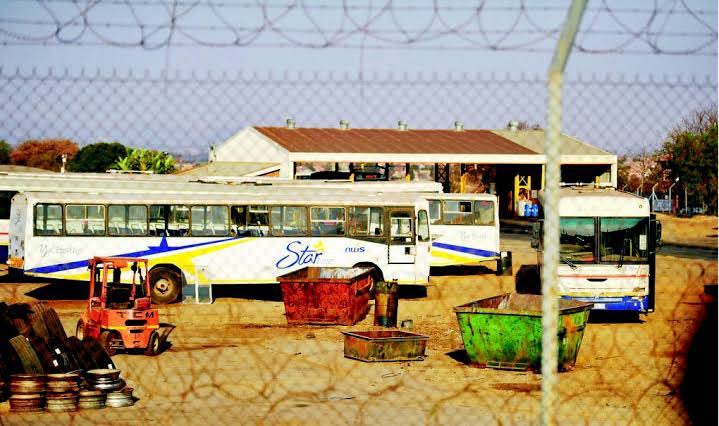
29 November 2024- The Head of the Department at North West Department of Community Safety and Transport Management, Dr Hans Kekana accompanied by Chief Director for Corporate Services, Dr Ntlhopeng Dikobe, had a meeting with the management of North West Transport Investment (NTI).
The meeting sought to plan a way forward on turning the NTI around following financial challenges experienced by this government owned entity.
This follows the removal of the Business Rescue Practitioner (BRP) by the Gauteng High Court on Thursday, the 21st of November 2024.
The North West Department of Community Safety and Transport Management spokesperson, Charles Matlou said through its legal team, the department had filed for the removal of the BRP citing the failure to submit and publish the business rescue plan within the stipulated frame as guided by the business rescue processes.
“On several occasions during the period of the BRP, the department has had to intervene to ensure that employees are being paid by this entity that renders passenger transport services in the eastern part of Bojanala and also operates subsided routes in Gauteng Province,” he said.
29 November 2024 – African champions Banyana Banyana arrived in a hot and humid Montego Bay, Jamaica, on Tuesday night after a gruelling 21 hours of travelling from South Africa.
The Sasol-sponsored South African Senior Women’s National Team travelled to the island of “Jamrock” where they will play their last two international friendly matches of the year against the Reggae Girlz, as they continue to prepare for next year’s CAF African Women’s Cup of Nations.
Jamaica, who are currently ranked at 42 according to the FIFA list, will host the 50th-ranked South Africans in matches to be played in Montego Bay on 29 November, and on 2 December 2024.
The two countries have only ever met on one occasion, when they drew 1-1 in an international friendly match in 2019.
29 November 2024- The North West Department of Human Settlements has allegedly approached the Development Bank of Southern Africa (DBSA), to secure a R74.3 billion loan to fund a mega city project. The mega city project is expected to be constructed through the government’s entity, North West Housing Corporation (NWHC).
However, the Democratic Alliance (DA) in North West said the proposed R74.3 billion mega city project has been politicised to respond exclusively to the failures of successive ANC-led provincial governments.
DA North West spokesperson on Cooperative Governance, Human Settlements and Traditional Affairs, Chris Steyl said they have received responses from the NWHC on questions posed during a meeting of the Portfolio Committee on Cooperative Governance, Human Settlements and Traditional Affairs (COGHSTA) held on 12 November 2024, in which they raised serious concerns with the proposal to secure a R74.3 billion loan from the DBSA to fund a mega city project.
Steyl said the NWHC does not have the mandate to build mega and/or smart cities and is largely responsible to address homelessness and develop social housing assistance within the province.
“However, NWHC CEO, Sello Mogodiri, indicated that President Cyril Ramaphosa announced the government’s position to build mega cities in his 2019 State of the Nation Address. This position was then supported by former COGHSTA, MEC Mmoloki Cwaile in 2021.
“This was followed by several pronouncements since by the former North West Premier, Bushy Maape, former acting Premier, Nono Maloyi, current Premier, Lazarus Mokgosi and the current COGHSTA MEC, Gaoage Molapisi, without any objections,” he said.
Steyl further said ‘this is a lie’ since the DA is on record in the North West Provincial Legislature raising their objections against this vanity project. He added that, but more concerning than Mogodiri’s attempt to justify a mandate to build a mega city on political pronouncements rather than the NWHC Act, shows that the entity is being abused to drive a blatant ANC political agenda.
“Mogodiri indicated in his response that the entity’s former namesake, the Bophuthatswana Housing Corporation, built the townships of Tlhabane, Selosesha, Mothotlung and Pudumong, but since the dawn of democracy, successive provincial governments have failed to build a single mega city and that the “status quo cannot continue.
“He further goes on to say that the housing service delivery problem is being used to deliberately de-campaign the current government. This response confirms the politicisation of this project,” said Steyl.
He said as they have seen with mega projects like Kusile and Medupi, these projects are fraught with corruption and abused to funnel billions of rands to line the pockets of ANC cadres. Steyl said the R74 billion DBSA loan is set to follow the same path should they fail to put a stop to this project and redirect government’s priorities to sensible programmes that address the immediate needs of residents.
“Before any attempt can be made to establish a new city in the North West, this government must first address the current 300 000-unit housing backlog.
“In any case, a mega city is typically a city with a population of more than 10 million residents, according to the United Nations Department of Economic and Social Affairs (UN DESA) definition, which is 6 million people more than the population of the North West,” he said.
Meanwhile, the NWHC CEO, Sello Mogodiri said: “The NWHC is leading the way in smart and mega cities development. The corporation is proud to be at the forefront of implementing the smart and mega cities initiative in the North West. With 11 mixed human settlements underway, including a 10,000-bed student accommodation, NWHC is committed to transforming urban spaces.
“These developments are designed to provide sustainable, affordable, and modern housing solutions, catering to diverse needs while promoting economic growth and community well-being.”










 The Guardian