Picture: Five suspects nabbed for illegal mining/Supplied
By OBAKENG MAJE
24 April 2025- Five suspects were arrested for illegal mining by the Northern Cape multi-disciplinary teams during the ongoing efforts to combat illegal mining. The Operation Vala Umgodi was executed in the Namakwa District on 24 April 2025. The police allegedly received a tip-off regarding a group of people allegedly engaged in illegal mining activities in Buffelsrivier, Komaggas.
The Northern Cape police spokesperson, Sergeant Timothy Sam said the identified location was approached and the suspects aged between 33 and 47 years-old, were apprehended, while allegedly engaging in illicit mining activities.
“An unpolished diamond, several mining implements, including bags containing suspected diamond-bearing gravel and sieves were confiscated. The arrested suspects are scheduled to appear in court soon.
“If you See something, SAY something. Report illegal mining to SAPS Crime Stop 08600 10111 or via the MySAPS App,” he said.
24 April 2025- Accelerated Service Delivery Programme – Thuntsha Lerole Reloaded will this Friday, be rolled out at JB Marks Local Municipality, where basic services will be rendered to residents of Ikageng Township in Potchefstroom and Tshing Township, in Ventersdorp amongst others.
The North West Provincial Government spokesperson, Brian Setswambung said communities will receive on-site services at the OR Tambo Community Hall, located in Extension 7 in Ikageng Township, where a Community Feedback session will be held. Setswambung said some of the services to be provided on the day include the official handing over of Bongi G Poultry Project in Lindequesdrift, along with the distribution of fertilizers to 40 beneficiaries.
“Two Non-Profit Organisations, Bambanani Youth Project and Lesego Old Age Service Club will also be handed over with cheques valued at R900 000 and R84 000 respectively.
“A total of 109 title deeds will be handed over to beneficiaries across the local municipality, while integrated outreach Primary Health Care services will be intensified onsite,” he said.
Setswambung further said the roll out of Thuntsha Lerole Reloaded activities will be led by the North West Premier, Lazarus Mokgosi, who will be accompanied by Members of Executive Council (MECs), as well as the local and district mayors.
Picture: The police divers retrieved the body of Maluleka/Supplied
By KEDIBONE MOLAETSI
24 April 2025- A multidisciplinary intelligence driven operation involving the Provincial Anti-Gang Unit, Organised Crime Unit, Provincial Detectives, Directorate of Priority Crime Investigation (DPCI), Klerksdorp Tactical Response Team (TRT) led to the arrest of suspects who were linked to kidnapping and robbery of Hasani Daniel Maluleka (62) in Wilkoppies, Klerksdorp.
The suspects have now been charged with murder after they led the police to a dam in the outskirts of Orkney, where the body of Maluleka was dumped after being killed.
The North West police spokesperson, Brigadier Sabata Mokgwabone said Julia Kolobi (47), Mcdonald Tsolo (39), Bongani Rampai (43), Thabo Motlatsi (50) and Kagiso Wageng (37), briefly appeared in the Klerksdorp Magistrate’s Court on 22 April 2025, facing charges of kidnapping, house robbery and murder. Mokgwabone said they will remain in custody until 30 April 2025, for legal representation and a bail application.
“The group’s arrests came after a team was activated after Maluleka’s former girlfriend failed to reach him on his cell phone on 11 April 2025. Preliminary investigations established that Maluleka’s Mercedes Benz and Toyota Hilux vehicles were missing and that the house had been ransacked.
“It came to light during investigations that a substantial amount of money was withdrawn from Maluleka’s bank account. The team’s efforts led to the arrest of Kolobi at Extension 10, Jouberton Township on 13 April 2025. The other four suspects were arrested in Sebokeng Township, in Gauteng Province and Kanana Township, near Orkney between 19 and 20 April 2025,” he said.
Mokgwabone further said upon effecting the arrests, the team confiscated Volkswagen Tiguan and Golf vehicles, which are believed to have been used in the commission of the crimes. He added that the team recovered Maluleka’ vehicles’ keys, a laptop and unlicensed 9mm firearm with ammunition.
“In addition, the team recovered the victim’s Mercedes Benz in Evaton Township. Subsequent investigations led to the retrieval of Maluleka’s body from Schoonspruit River, near Orkney on Monday morning, 21 April 2025, by North West Police Divers.
“Investigations into the matter continue,” said Mokgwabone.
Meanwhile, the acting North West Police Commissioner, Major General Patrick Asaneng, has commended the team for working tirelessly for days to make sure that these opportunistic, heartless criminals, including the organizing girlfriend, are put behind bars. Asaneng said this crime is yet a tragic reminder and indication of the moral depravity and gratuitous violence afflicting the society.
“It is unfathomable that a law-abiding person who had worked so hard for years was brutally killed by greedy murderers when he was about to enjoy his retirement. This murder, including one that happened in Hartbeespoortdam, points to the emergence of a pattern of crimes, where unsuspecting men are lured by ladies or women who are working with criminal male partners.
“These modern day Jezebels must be warned that they will be found no matter what and will face the full might of the law,” he said.
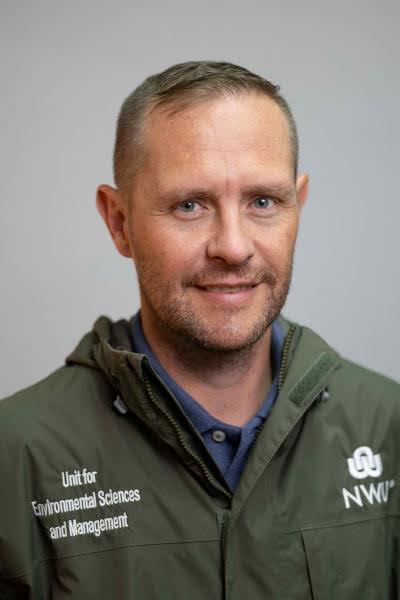
Picture: Professor Wynand Malherbe from the North West University’s (NWU’s) Water Research Group in the Unit for Environmental Sciences and Management/Supplied
By REGINALD KANYANE
24 April 2025- While the release of weevils into the hyacinth-infested waters of the Hartbeespoort Dam is a welcome development, these insects alone cannot be expected to permanently solve the dam’s pollution problem. Professor Wynand Malherbe from the North West University’s (NWU’s) Water Research Group in the Unit for Environmental Sciences and Management said the use of weevils must be part of an integrated plan to resolve the issue.
“They can help treat the symptoms of the problem, but they won’t address the root cause – which is nutrient-rich inflows and poor water quality in the catchments of Hartbeespoort Dam.
“Weevils can help combat the rapid spread of water hyacinth, but that reinvasion will reoccur if the underlying causes are not addressed,” said Malherbe.
He further said on the one hand, the use of weevils is part of a scientifically backed method of restoring ecological balance without the use of chemicals. Malherbe added that research from the Centre for Biological Control at Rhodes University has shown limited risk to the ecosystem.
“On the other hand, biological control of this kind is not without its challenges. These weevils are unable to survive the region’s cold winters, which naturally limits their population and prevents uncontrolled spread.
“They also take time to become effective and their performance is affected by environmental conditions such as water quality, temperature and pollution, making outcomes difficult to predict from year to year,” said Malherbe.
He said biological control works best when combined with mechanical removal and in some cases, the use of selective herbicides. Malherbe said it is a very effective method to control water hyacinth in the long run, but it will never fully eradicate the problem.
“Ongoing management and coordination are essential. Water hyacinth will return in the new season, so continuous efforts and monitoring are essential.
“Without proper oversight, there’s also a small risk that the biological agents could impact indigenous systems, especially if mismanaged,” said Malherbe.
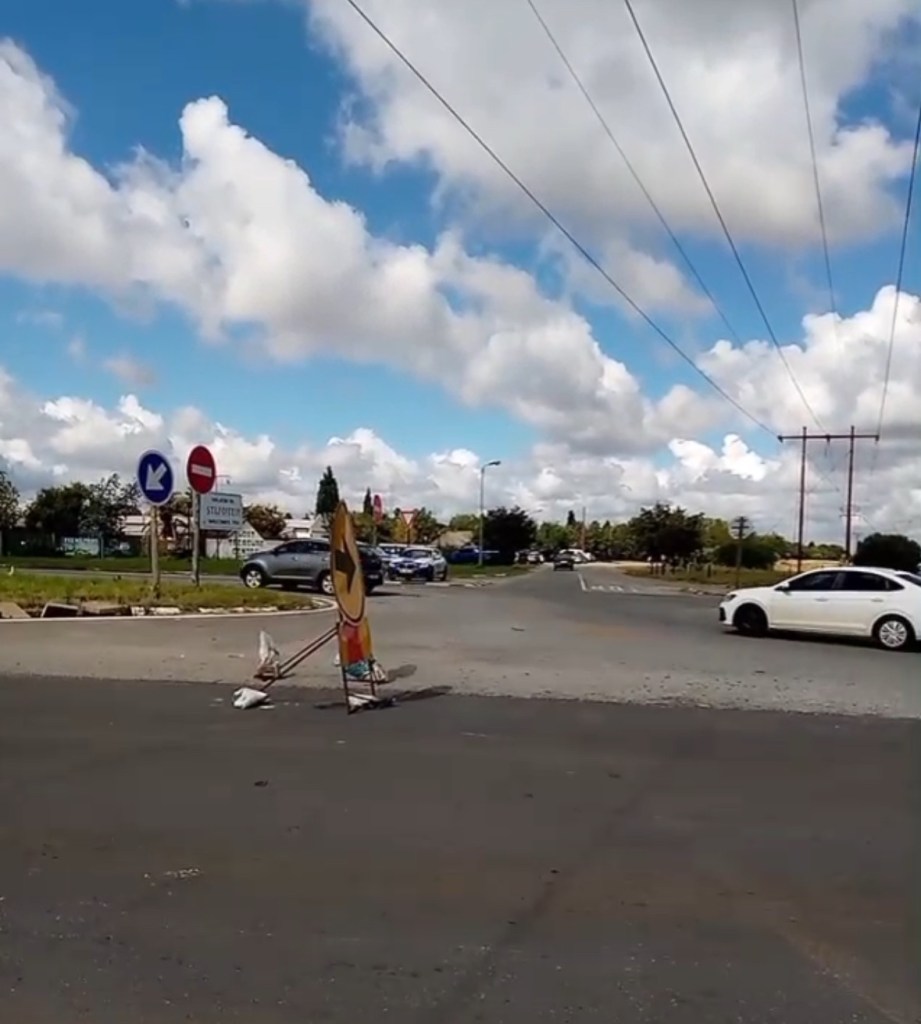
24 Moranang 2025- Lefapha la Tshireletsego ya Baagi, ga mmogo le Tsamaiso ya Dipalangwa le tsibosa bakgweetsi ba dijanaga fa ntsela-fefo ya N12 go tswa kwa Klerksdorp go ya kwa Potchefstroom, e tswetswe ka bontlhabongwe. Se se tla morago ga dipula tse di maatla.
Sebueledi sa Lefapha la Tshireletso ya Baagi ga mmogo le Tsamaiso ya Dipalangwa, Charles Matlou are go begwa fa metsi a le mantsi a tletse kwa tseleng eo, mme e sa tsamaege. Matlou are batlhakela ba pharakano ba teng ko tseleng eo go ela maemo tlhoko.
“Go fitlha ga jaana, batlhankela bao, ba butse tsela mohama ele go netefatsa fa dijanaga di efoga metsi ao. Badirisi ba tsela ba kopiwa go nna le tirisano-mmogo,” Matlou wa tlhalosa.
24 April 2025- The North West Department of Health said Postpartum Depression (PPD) is a serious mental health condition that affects new mothers, often leading to emotional distress and in severe cases, harmful behaviours. The department was responding to a media inquiry sent by The Guardian Newspaper (formerly known as Taung DailyNews), after a woman allegedly killed her newborn baby in Khibitswane village, near Taung a few weeks ago.
According to the allegations, a woman who is mentally-ill, threw her baby in a canal after experiencing Postpartum Depression (PPD). This sent shivers up the spines of many as they alleged that they know the woman as stable and not mentally-ill.
However, the North West Department of Health spokesperson, Lucas Mothibedi said, while the majority of mothers experience mild “baby blues”, PPD is more intense and can last for months, if untreated. Mothibedi said mothers experiencing PPD can take several steps to manage their condition.
“Seek professional help and consulting a healthcare provider for therapy or medication can be crucial. Build a support system by talking to family, friends, or support groups because that can help alleviate feelings of isolation.
“Prioritize self-care by engaging in activities that promote relaxation, such as exercise, meditation, and proper sleep. This can improve mental well-being,” he said.
Mothibedi further said communicating openly by expressing emotions and concerns to trusted individuals can reduce stress too. He added that relatives play a vital role in supporting mothers with PPD.
“They can offer emotional support by listening without being judgmental and providing reassurance that can help mothers feel understood. Help with daily tasks by assisting with childcare, household chores, and meal preparation can also reduce stress,” said Mothibedi.
He encourages those affected to find professional help. Mothibedi said if symptoms persist, gently encourage seeking medical assistance.
“Be aware of symptoms and intervene, if the mother exhibits signs of severe distress. Persistent sadness or mood swings are symptoms of PPD. PPD symptoms vary in severity and may include persistent sadness or mood swings, excessive crying, difficulty bonding with the baby.
“This includes withdrawal from family and friends. Loss of appetite or overeating. Sleep disturbances (insomnia or excessive sleep). Intense irritability or anger. Feelings of worthlessness or guilt and thoughts of self-harm or harming the baby,” he said.
Mothibedi said there is limited publicly available data on the number of PPD cases handled across healthcare centres in North West, South Africa, for the 2024/2025 financial year. He said, however, studies indicate that PPD is a significant concern, with prevalence rates ranging from 3.8% to 69.9%, depending on various factors.
“PPD is not rare—it affects approximately 1 in 7 women globally. In South Africa, the prevalence is estimated to be around 30.6%, making it a significant public health issue.
“PPD requires urgent attention and intervention to prevent tragic incidents. Raising awareness, providing accessible mental health services, and fostering community support can help mitigate its impact,” said Mothibedi.
Picture: Learners participating in Under 15 School Tournament/Generic
24 April 2025 – The South African U15 Boys and Girls teams that will represent the country at the CAF African Schools Football Championship this month were given a special send-off at the Jabulile Secondary School in Orange Farm, Johannesburg, on Thursday. The tournament was staged in Accra, Ghana, from 21 – 26 April 2025 and the South African teams travelled to the West African country on 19 April 2025.
The send-off function was attended by representatives from the Department of Sports, Arts and Culture, the Department of Basic Education, Gauteng and Free State Provincial government officials, the South African Football Association (SAFA) and SAFA Schools Football.
SAFA President Dr Danny Jordaan wished the teams well ahead of the tournament and reiterated that schools remain the basic basis of all South African football teams.
“We start there in the schools. We wish the players, technical teams and officials well ahead of this assignment in Accra and they have our support,” said Jordaan.
Meanwhile, the SAFA CEO Lydia Monyepao thanked Jabulile Secondary School for hosting the send-off function and said she hoped the event inspires the learners in the school to elevate to greatness and rise to the South African U17, U20, U23, Banyana Banyana and Bafana Bafana teams.
“We thank the Gauteng Provincial Government for their unwavering support in our various football activities, the Department of Sport, Arts & Culture and the Department of Education. Without your support we would not have access to the pool of talented players in our various schools, and also ensure that they participate in sport.
“Sport, in particular football, changed my life. It teaches life skills, values and builds lifelong camaraderie. Let’s remember that the late President Tata Nelson Mandela said, ‘Sport has the power to change the world. It has the power to inspire. It has the power to unite people in a way that little else does,” said Monyepao.
U15 girls coach Ntombifuthi Khumalo said: “It is challenging because we are the champions and we have to defend the cup. What I did as a coach and my technical team, and the support from the Department of Sport, Arts & Culture, the Department of Education and the Federation SAFA is to give a chance to a child who deserves it, who has the talent to be a part of this team.”
The U15 Boys’ team will be looking to make history by lifting their first continental trophy.
SA U15 Boys coach Selekedi Mogale: “It will be history for them and it will be very exciting, it will be a good benchmark for South African football, although it’s not the end or the beginning of their journey. The U15 level gives us this great opportunity to play against other countries at continental level. But we all know that if we can carry through the results right up to Bafana Bafana, it will be such an honour and great pride.”
24 April 2025 – The Portfolio Committee on Public Service and Administration on Wednesday expressed concern over government investment in training and upskilling public servants, with little visible improvement in services and performance. The committee received a briefing on the Department of Public Service and Administration and its entities, including the Public Service Commission (PSC), the National School of Government (NSG), the Government Employee Medical Scheme (GEMS) and the Centre for Public Service Innovation’s annual performance plans for 2025/26 and strategic plans for 2025 – 2030.
The Chairperson of the Committee, Jan de Villiers said government departments submit these plans to parliamentary committees to ensure accountability, transparency and effective resource management. De Villiers said this enables committees to scrutinise departments’ performance and spending and hold them accountable to the public.
“During the State of the Nation Address (SONA), the President reaffirmed the government’s commitment to the seventh administration’s priorities, including building a capable, ethical, and developmental state and strengthening the role of the PSC.
“The committee learnt that the department’s priorities in these plans align with the government’s efforts to professionalise the public service, focusing on digital transformation and building public trust by addressing corruption and inefficiencies, among other objectives,” he said.
De Villiers further said among the department’s top policy priorities are improving government credibility through effective discipline management and the speedy resolution of suspensions, enforcing lifestyle audits, and modernising service delivery systems using e-government. He added that, however, several committee members expressed concerns about ethics and the prolonged disciplinary processes in the public service.
“They questioned whether lifestyle audits and disciplinary investigations translate into accountability. Members believe finalising disciplinary cases still takes too long, eroding public trust.
“The department acknowledged the delays in finalising disciplinary cases. It informed members that a new national database system for disciplinary cases is underway, which will help identify and reduce bottlenecks and financial losses due to prolonged suspensions,” said de Villers.
He said members also interrogated the implementation of the professionalisation framework and sought assurance that the department is monitoring compliance across departments. De Villiers said several members questioned the effectiveness of public sector training, especially training provided by the NSG and ongoing professionalisation efforts.
“The committee questioned the return on investment in training and upskilling, given the limited visible impact on service delivery or employee accountability, particularly in light of the high number of disciplinary cases across the public sector.
“Members emphasised the need for more effective mechanisms to measure the impact and improvement in performance following these training programmes. Responding to these concerns, the department explained that PSC reports inform training interventions, especially in building an ethical and professional public service,” he said.
In addition, de Villiers said some committee members highlighted career progression issues in the public sector, noting the frustrations of public servants with extensive workplace experience but no formal qualifications, who are often overlooked for promotion. He said the committee wanted to know how the NSG can support recognition of prior learning, especially for older employees with substantial experience.
“Moreover, the committee called on the NSG to centrally coordinate tracking education levels, upskilling and productivity in the public service. Members also enquired about the impact of ethics training, specifically its role in reducing corruption and enhancing governance and performance.
“Questioning the performance bonus system, some members suggested this may be vulnerable to abuse and patronage, especially in senior management. They emphasised the importance of performance incentives tied to actual service delivery outcomes,” said de Villiers.
He said reflecting on digital modernisation efforts, several members highlighted citizens’ frustrations with the lack of digital access to government services and requested clear timelines for implementing digital platforms. De Villiers said members were also interested in how the department and Centre for Public Service Innovation would support the digital transformation of frontline services, particularly in under-resourced rural areas.
“On the human resources front, the committee highlighted senior management vacancies as a risk to institutional stability and continuity. Members sought more details on how the vacancies affect departments’ abilities to implement reforms and execute their mandates.
“The department acknowledged the long timelines in filling vacancies, especially senior positions, and committed to working with the Presidency to accelerate hiring processes, particularly for funded posts. Members heard that a tool is being developed to monitor delays and ensure timely appointments,” he said.
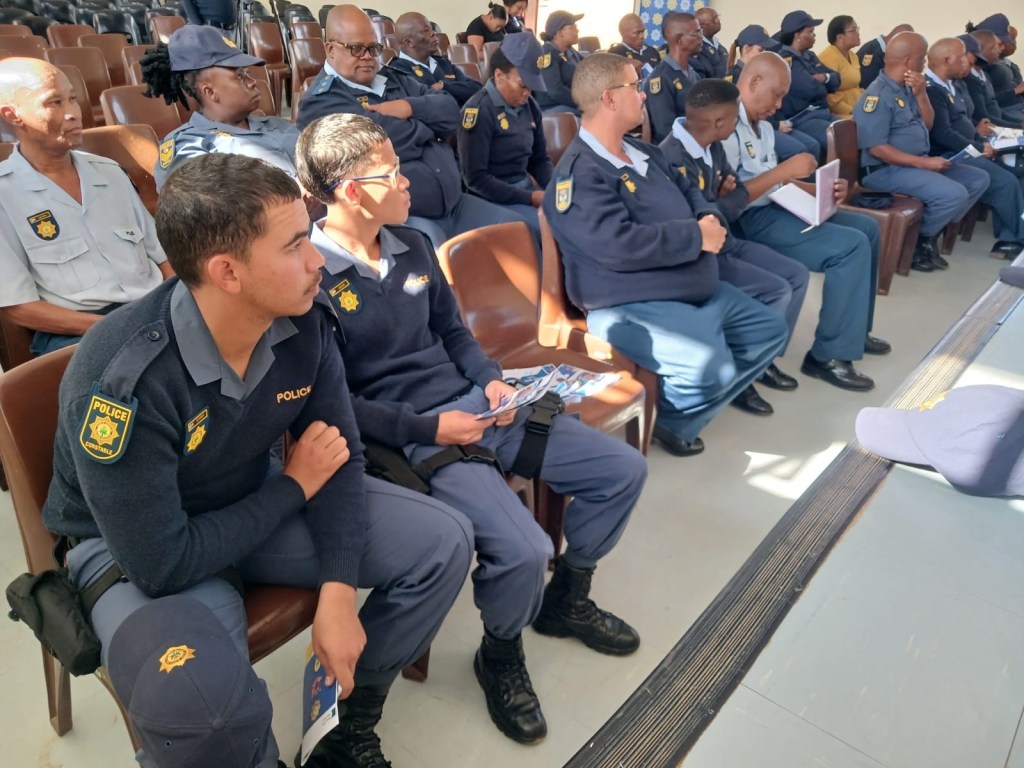
Picture: The SAPS members during Walk-about event/Supplied
By KEDIBONE MOLAETSI
24 April 2025- Aiming to strengthen policing endeavours, Major General Johnny Besnaar, the Deputy Provincial Commissioner for Policing in the Northern Cape, led a walk-about under the theme: “Collectively We Can Accelerate Action for Gender Equality” in Bothitong, near Kuruman on 23 April 2025.
The Northern Cape police spokesperson,
Sergeant Molefi Shemane said accompanying him were Brigadier Irene Kopeledi, Provincial Head of Proactive Policing, Brigadier Amicus Alberts, Provincial Head of the Firearms, Liquor and Second-Hand Goods (FLASH) component and Brigadier Kenneth Baloyi, the Acting District Commissioner for John Taolo Gaetsewe District.
Shemane said senior officers and station commanders within the John Taolo Gaetsewe (JTG) District were also in attendance.
“Besnaar and his delegation were welcomed by Brigadier Baloyi, followed by the reading SAPS Code of Conduct by Constable Burt-Leigh De Koker. The day’s activities and objectives of the engagement were outlined by Kopeledi.
“Alberts delivered key inputs during the session. In his keynote address, Besnaar officially launched Phase One of the walk-about, issuing a clear directive to station commanders to serve their communities with integrity,” he said.
Shemane further said he also addressed the prevailing crime trends in the district and emphasized the importance of strategic policing and community engagement. He added that Baloyi shared closing remarks after which the programme was concluded with acknowledgements rendered by Nkunika.
“The Deputy Provincial Commissioner for Policing will embark on similar visits to the remaining districts clearly outlining expectations and formulating a way forward to effectively and efficiently address crime prevention in the Northern Cape,” said Shemane.
24 April 2025 – South African Football Association (SAFA) Chief Medical Officer Dr Thulani Ngwenya is heading to this year’s FIFA Beach Soccer World Cup, and the FIFA Club World Cup. Ngwenya often lends his vast experience to FIFA, CAF, COSAFA and many other tournaments on the globe and he has been once again asked by the world football governing body to avail himself to both events this year.
The Beach Soccer World Cup will be held in Seychelles from 26 April – 12 May 2025, while Charlotte in the United States of America will host the Club World Cup from 17 June – 1 July 2025.
SAFA President, Dr Danny Jordaan said Ngwenya remains a huge representative of SAFA and continues to fly the flag of the association.
“I am extremely honoured and highly privileged to be appointed to these prestigious tournaments. It is the global stage and one can only be humbled by such appointments.
“I am forever grateful to SAFA for giving me an opportunity to serve football when I was very young about a decade ago. I am extremely humbled by FIFA’s continued recognition,” said Ngwenya.
Meanwhile, the SAFA Chief Medical Officer recently completed the FIFA Emergency Medical Course last month. The course took place in Rabat, Morocco, and it touched on very important aspects of Football Emergencies like Sudden Cardiac Arrest, Concussion, Heat Stroke, and many other Trauma incidences found in Football.
He also represented the country at the 2024 Olympic Games in Paris. Among his many other highlights, the respected medical official was appointed as the Doping Control Officer for the FIFA World Cup in Qatar in 2022. He was also appointed by FIFA as a Doping Control Officer for the FIFA Under-20 World Cup in Argentina in 2023.
Ngwenya also served in the same position during the Africa Cup of Nations in Cameroon in 2022, and at last year’s continental tournament in Côte d’Ivoire, where Bafana Bafana won the bronze medal. He is also a CAF Medical Commission Member.






 The Guardian