SA ‘not as Mandela said it would be’


Nelson-Mandela%E2%80%99s-Top-Five-Contributions-to-Humanity
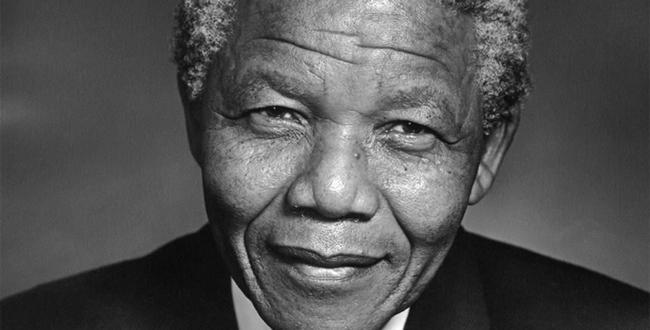
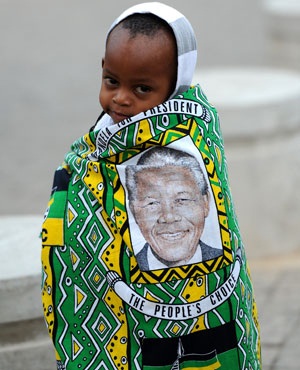
Johannesburg – Almost two decades later South Africa is not the country former president Nelson Mandela, who died on Thursday, said it would become, Human Rights Watch said on Friday.

“Inequality and poverty remain rife, the education and health sectors are inadequate, and South Africa remains divided by racial separation and deep economic inequality,” Human Rights Watch executive director Kenneth Roth said in a statement.

“Mandela led South Africa out of darkness and brutality… The country’s next generation of leaders would do well to live up to his high standards and fervent commitment to human rights.”

Roth said Mandela fought bravely for basic human rights.

“Mandela’s life epitomised the fight for freedom, equality, and justice, all core human rights ideals.”

President Jacob Zuma announced that Mandela died on Thursday night at his Houghton, Johannesburg, home surrounded by family. He was 95.

Zuma said flags around the country would be flown at half-mast from Friday until after Mandela’s funeral.

– SAPA

Some fearful, awake to life without Mandela


75f98638e7e04ddc9aa59117cb860ff9
Johannesburg – South Africans woke on Friday to a future without Nelson Mandela, and some said they feared the anti-apartheid hero’s death could leave their country vulnerable again to racial and social tensions that he did so much to pacify.

As dawn broke and commuters headed to work in the capital, Pretoria, the commercial hub, Johannesburg, and Cape Town in the south, many were still in shock at the passing of a man who was a global symbol of reconciliation and peaceful co-existence.

South Africans heard President Jacob Zuma tell them late on Thursday that the former president and Nobel Peace Prize laureate passed away peacefully at his Johannesburg home in the company of his family after a long illness.

Despite reassurances from leaders and public figures that Mandela’s passing, while sorrowful, would not halt South Africa’s advance away from its bitter apartheid past, some still expressed a sense of unease about the physical absence of a man famed as a peacemaker.

“It’s not going to be good, hey! I think it’s going to become a more racist country. People will turn on each other and chase foreigners away,” said Sharon Qubeka, aged 28, a secretary from Tembisa township as she headed to work in Johannesburg.

“Mandela was the only one who kept things together,” she said.

Growing protests

An avalanche of tributes continued to pour in on Friday for Mandela, who had been ailing for nearly a year with a recurring lung illness dating back to the 27 years he spent in apartheid jails, including the notorious Robben Island penal colony.

US President Barack Obama and British Prime Minister David Cameron were among world leaders and dignitaries who paid fulsome tribute to Mandela as a moral giant and exemplary beacon for the world.

American talk show host Oprah Winfrey added her voice to the tributes, saying Mandela “will always be my hero”.

“His life was a gift to us all,” she said in a statement.

But for South Africa, the loss of its most beloved leader comes at a time when the nation, which basked in global goodwill after apartheid ended, has been experiencing bloody labour unrest, growing protests against poor services, poverty, crime and unemployment and corruption scandals tainting Zuma’s rule.

Many saw today’s South Africa – the African continent’s biggest economy but also one of the world’s most unequal – still distant from being the “Rainbow Nation” ideal of social peace and shared prosperity that Mandela had proclaimed on his triumphant release from prison in 1990.

“I feel like I lost my father, someone who would look out for me. Already as a black person with no connections you are disadvantaged,” said Joseph Nkosi, aged 36, a security guard from Alexandra township in Johannesburg.

Referring to Mandela by his clan name, he added: “Now without Madiba I feel like I don’t have a chance. The rich will get richer and simply forget about us. The poor don’t matter to them. Look at our politicians, they are nothing like Madiba”.

Flags flew at half mast across the country and Zuma has announced a full state funeral for South Africa’s first black president, who emerged from prison to help guide the country through bloodshed and turmoil to democracy.

‘Life will carry on’

Just hours after the news of Mandela’s death, one of his veteran anti-apartheid comrades, former Archbishop of Cape Town Desmond Tutu, sought to assuage fears that the revered statesman’s absence could revive some of the violent ghosts of apartheid.

“To suggest that South Africa might go up in flames – as some have predicted – is to discredit South Africans and Madiba’s legacy,” Tutu said in a reassuring statement.

“The sun will rise tomorrow, and the next day and the next … It may not appear as bright as yesterday, but life will carry on,” Tutu said.

Zuma and his ruling African National Congress face presidential and legislative elections next year which are expected to reveal widespread discontent among voters about persisting poverty and unemployment two decades after the end of apartheid.

But the former liberation movement is expected to maintain its dominance over South African politics, despite the absence of one of its most towering figures.

“It is painful losing him but the ANC is going to stay strong and be dominant. The party is powerful and will stay in power,” said office worker Tumi Matshidiso, aged 27.

Mark Rosenberg, Senior Africa Analyst at the Eurasia Group, said that while Mandela’s death might give the ANC a sympathy-driven boost for elections due next year, it would hurt the party in the long term.

He saw Mandela’s absence “sapping the party’s historical legitimacy and encouraging rejection by voters who believe the ANC has failed to deliver on its economic promises and become mired in corruption”.

“In short, Mandela’s death will further de-couple the ANC from the liberation struggle on which it still bases much of its legitimacy,” Rosenberg said in a briefing note.

Although Zuma’s initial announcement of Zuma’s death left the country hushed, later a crowd gathered overnight outside Mandela’s old house in Vilakazi Street, Soweto, to sing songs in his praise.

“Mandela you brought us peace” was one of the songs.

Democratic model for Africa

Mandela rose from rural obscurity to challenge the might of white minority rule – a struggle that gave the 20th century one of its most respected and loved figures.

He was among the first to advocate armed resistance to apartheid in 1960 but was quick to preach reconciliation and forgiveness when the country’s white minority began easing its grip on power 30 years later.

He was elected president in landmark all-race elections in 1994 after helping to steer the racially divided country towards reconciliation and away from civil war.

“His greatest legacy is that we are basically at peace with each other,” FW de Klerk, the white Afrikaner president who released Mandela in 1990, told the BBC in an interview.

Mandela was awarded the Nobel Peace Prize in 1993, an honour he shared with de Klerk.

In 1999, Mandela handed over power to younger leaders better equipped to manage a modern economy – a rare voluntary departure from power cited as an example to African leaders.

This made him an exception on a continent with a bloody history of long-serving autocrats and violent coups.

In retirement, Mandela shifted his energies to battling South Africa’s Aids crisis, a struggle that became personal when he lost his only surviving son to the disease in 2005.

Mandela’s last major appearance on the global stage came in 2010 when he attended the championship match of the soccer World Cup hosted by South Africa.-Reuter
UN chief calls Mandela ‘a giant for justice’


a href=”https://taungdailynews.com/wp-content/uploads/2013/12/72aec6955c464300861a012b2a15f9b51.jpg”>72aec6955c464300861a012b2a15f9b5
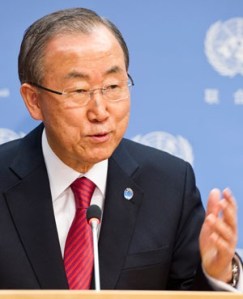
United Nations – UN Secretary-General Ban Ki-moon says Nelson Mandela was “a giant for justice” whose “selfless struggle for human dignity, equality and freedom” inspired many people around the world.

“No one did more in our time to advance the values and aspirations of the United Nations,” Ban told reporters soon after Mandela’s death was announced on Thursday.

Ban said he was deeply touched when he met Mandela at his residence in South Africa in February 2009.

“When I thanked him for his life’s work, he insisted the credit belonged to others,” Ban said. “I will never forget his selflessness and deep sense of shared purpose.”

The UN Security Council interrupted a meeting on the tribunals for former Yugoslavia and Rwanda and stood for a minute in silent tribute to Mandela.

‘Power to transform’

Argentina’s UN Ambassador Maria Cristina Perceval, who had been speaking, called Mandela “a man who gave hope to the entire world”.

“Good men and women, men such as Mandela resisted and taught us to resist fear … to resist oblivion,” she said.

The Security Council said in a statement later that “Mandela will forever be remembered as someone who gave up so much of his life in the struggle for freedom, so that millions could have a brighter future”.

The UN General Assembly in 2009 adopted a resolution declaring Nelson Mandela International Day, the first ever international day in honour of an individual. It is celebrated every year on July 18, his birthday.

“The members of the Security Council consider this to be a reflection of the magnitude of Nelson Mandela’s contribution to freedom and justice,” the council said.

“Nelson Mandela day is a celebration of the idea that each individual has the power to transform the world, and the ability to make an impact, just as Nelson Mandela did himself.”
-SAPA

SA to host U20 Women’s World Cup in 2016


Image

South Africa has been awarded the right to host the 2016 FIFA Under 20 Women’s World Cup.


This follows a two-day meeting by the FIFA Executive Committee in Costa do Sauipe, Bahia near San Salvador in Brazil.


The announcement was made on Thursday, 05 December 2013.


Details of South Africa’s hosting of the U20 football showpiece will be revealed at a later stage.


“This is good news indeed for us as an Association and for the entire country. We are quite delighted with the news from FIFA. This clearly shows that the successful hosting of the 2010 FIFA World Cup has given South Africa strong credentials at FIFA and makes this country an almost automatic choice in the hosting of major events,” said SAFA President Dr Danny Jordaan from Brazil where he is attending the Brazil 2014 FIFA World Cup draw which will take place on Friday, 6 December.


”The hosting of the FIFA U20 World Cup is a tremendous boost for women’s football in South Africa and shows the high regard that FIFA holds our country.”


The FIFA U20 Women’s World Cup is a precursor to the FIFA Women’s World Cup.


Canada is hosting both the FIFA 2014 Women’s World Cup and the FIFA 2015 U20 Women’s World Cup.


”Hosting the 2016 FIFA U20 Women’s World Cup event has now put South Africa in an advantageous position to host the 2019 FIFA Women’s World Cup. We are confident that when the bidding opens we will be in a stronger position,” added Dr Jordaan.


The news comes on the day that the South African U20 Women’s National Team departed for Tanzania for the second round first leg qualifier of the 2014 FIFA U20 World Cup.


”Our U20 Women’s National Team is currently in Tanzania and with only two teams going to the World Cup we are confident that they will do well to qualify for the 2014 event where they will have gained a lot of experience before hosting the world in 2016. This is part of our strategy to build women’s football. The U20 team will be Banyana Banyana in 2019 and this will have give them good grounding for the 2019 World Cup,” concluded Dr Jordaan.


Contrary to certain media reports, South Africa did not bid to host the 2017 Under FIFA World Cup.


Here are other hosting decisions taken by the FIFA Executive Committee.


•    FIFA U-17 Women‘s World Cup 2016:                                 Jordan 


•    FIFA U-20 Women‘s World Cup 2016:                South Africa 


•    FIFA U-17 World Cup 2017:                                     India 


•    FIFA U-20 World Cup 2017:                                     Korea Republic 


•    FIFA Congress 2016:                                                   Mexico City, Mexico 


•    FIFA Congress 2017:                                                   Kuala Lumpur, Malaysia 


The next meeting of the FIFA Executive Committee will be held at the Home of FIFA in Zurich in March 2014.


Archbishop Makgoba releases Mandela prayer


Image

Johannesburg – Cape Town Archbishop Thabo Makgoba has released a prayer for former president Nelson Mandela, who died on Thursday, the Anglican Church of Southern Africa said.


“Go forth, revolutionary and loving soul, on your journey out of this world, in the name of God, who created you, suffered with you and liberated you.


“Go home Madiba, you have selflessly done all that is good, noble and honourable for God’s people.


“We will continue where you have left off, the Lord being our helper,” Makgoba’s prayer read.


President Jacob Zuma announced his death on the public broadcaster just before midnight.


“He passed on peacefully in the company of his family around 20:50 on 5 December. He is now resting, he is now at peace. Our nation has lost its greatest son.”


“Fellow South Africans, Nelson Mandela brought us together and it is together that we bid him farewell.”


SAPA

Nelson Mandela dies


Image

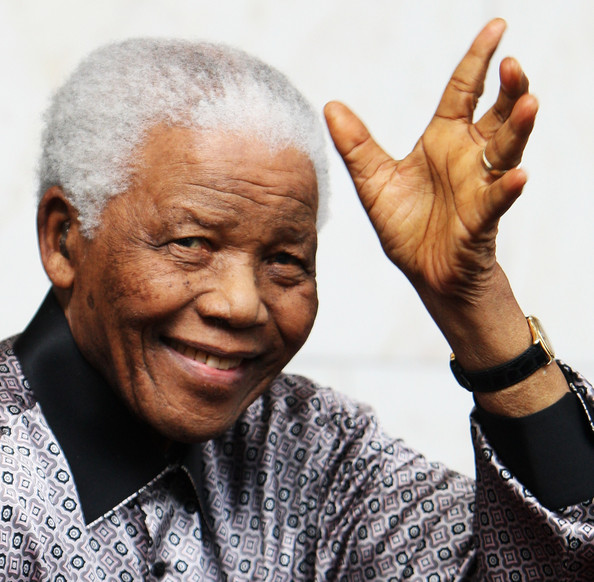
Johannesburg – Nelson Mandela, the revered icon of the anti-apartheid struggle and one of the towering political figures of the 20th century, has died aged 95.


Mandela, who was elected South Africa’s first black president after spending nearly three decades in prison, had been receiving treatment for a lung infection at his Johannesburg home since September, after three months in hospital in a critical state.


His condition deteriorated and he died following complications from the lung infection, with his family by his side.


Announcement


The news was announced by a clearly emotional President Jacob Zuma live on television, who said Mandela had “departed” and was at peace.


“Our nation has lost its greatest son,” said Zuma.


“What made Nelson Mandela great is precisely what made him human,” he said.


Mandela, once a boxer, had a long history of lung problems after contracting tuberculosis while in jail on Robben Island.


His extraordinary life story, quirky sense of humour and lack of bitterness towards his former oppressors ensured global appeal for the charismatic leader.


Once considered a terrorist by the United States and Britain for his support of violence against the apartheid regime, at the time of his death he was an almost unimpeachable moral icon.


The Nobel Peace Prize winner spent 27 years behind bars before being freed in 1990 to lead the African National Congress (ANC) in negotiations with the white minority rulers which culminated in the first multi-racial elections in 1994.


A victorious Mandela served a single term as president before taking up a new role as a roving elder statesman and leading Aids campaigner before finally retiring from public life in 2004.


 “When he emerged from prison people discovered that he was all the things they had hoped for and more,” fellow Nobel Peace laureate Archbishop Desmond Tutu once said.


“He is by far the most admired and revered statesperson in the world and one of the greatest human beings to walk this earth.”


From prisoner to global peace icon


He was a global cause celebre during the long apartheid years, and popular pressure led world leaders to tighten sanctions imposed on the apartheid regime.


In 1988 at a concert in Wembley stadium in London, tens of thousands sang “Free Nelson Mandela” as millions more watched on their television sets across the world.


Born in July 1918 in the southeastern Transkei region, Mandela carved out a career as a lawyer in Johannesburg in parallel with his political activism.


He became commander-in-chief of Umkhonto we Sizwe (Spear of the Nation), the armed wing of the by now-banned ANC, in 1961, and the following year underwent military training in Algeria and Ethiopia.


While underground back home in South Africa, Mandela was captured by police in 1962 and sentenced to five years in prison.


He was then charged with sabotage and sentenced in 1964 to life in prison at the Rivonia trial, named after a Johannesburg suburb where a number of ANC leaders were arrested.


He used the court hearing to deliver a speech that was to become the manifesto of the anti-apartheid movement.


“During my lifetime, I have dedicated myself to this struggle of the African people. I have fought against white domination and I have fought against black domination. I have cherished the ideal of a democratic and free society.


“It is an ideal for which I am prepared to die.”


He was first sent to prison on Robben Island, where he spent 18 years before being transferred in 1982 to Pollsmoor prison in Cape Town and later to Victor Verster prison in nearby Paarl.


When he was finally released on 11 February 1990, walking out of prison with his fist raised alongside his then-wife Winnie.


Ex-prisoner 46664 was entrusted with the task of negotiating the path to democracy with president FW de Klerk.


Mandela and de Klerk were jointly awarded the Nobel Peace Prize in 1993 for their role in the ending of apartheid.


After the ANC won the first multi-racial elections, Mandela went out of his way to assuage the fears of the white minority, declaring his intention to establish “a rainbow nation at peace with itself and the world.”


Critics said his five-year presidency was marred by corruption and rising levels of crime. But his successors, Thabo Mbeki and Jacob Zuma, have never enjoyed anywhere near the same levels of respect or affection.


At our best, ‘we’d like to be him’: Clinton


In retirement, he focused his efforts on mediating conflicts, most notably in Burundi, as well as trying to raise awareness and abolish the taboos surrounding Aids, which claimed the life of his son Makgatho.


His divorce from second wife Winnie was finalised in 1996.


He found new love in retirement with Graca Machel, the widow of the late Mozambican president Samora Machel, whom he married on his 80th birthday.


In one of his last foreign policy interventions, he issued a searing rebuke of George W Bush on the eve of the US invasion of Iraq in 2003, calling him “a president who has no foresight, who cannot think properly, is now wanting to plunge the world into a holocaust”.


Bush’s predecessor Bill Clinton perhaps had a higher opinion of Mandela.


“Every time Nelson Mandela walks in a room we all feel a little bigger, we all want to stand up, we all want to cheer, because we’d like to be him on our best day,” he said.


Mandela is survived by three daughters, 18 grandchildren, nine great-grandchildren and three step-grandchildren. He had four step-children through his marriage to Machel.


His death has left his family divided over his wealth. Some of his children and grandchildren are locked in a legal feud with his close friends over alleged irregularities in his two companies.


– Friends, colleagues, comrades and family of Nelson Mandela are invited to share their memories and tributes, and to light a candle for him, on his profile at Remembered.co.za.


AFP

Dikwena join a fight against substance abuse


Image

Rustenburg- Platinum Stars football players will on Friday join government in a bid to raise awareness about the plight of substance abuse among young people, especially of school going age. 


“The campaign will commence with a motorcade and a march to Rustenburg long distance taxi rank involving law enforcement officers, Royal Bafokeng Administration, youth, ex-drug addicts and community members” departmental spokesperson vuyi ngesi said.


North West Department of Social Development substance abuse coordinator Mfana Tsotetsi said the campaign involves many stakeholders including San Park, Bojanala Drug Action Committee, governments departments, Rustenburg Local municipality and the local taxi association members.


Details of the campaign:-


Date: 06 December 2013


Venue: Rustenburg  Taxi Terminus-TDN

Follow us on Twitter@Taung_DailyNews or @IceT_

North West initiates rescued from bogus school


Image

By Obakeng Maje

Madibogo-North West police confirmed that 10 boys from Setlagole village and Madibogo were allegedly kidnapped and taken to initiation school.


According to Sabc radio, two boys aged 16 and 17 respectively were allegedly rescued after their families laid a charge.


North West police colonel Emelda Setlhako said were from Setlagole and Madibogo village, near Mahikeng.-TDN

Follow us on Twitter@Taung_DailyNews or @IceT_

Kwaito singer Brickz to spend Christmas behind bars


images
By Obakeng Maje
Roodepoort-A case of a Kwaito music star Charles “Brickz” Ndlovu was postponed today.

U’underpant fame singer appeared briefly before Roodepoort Magistrate Court on Thursday.

Brickz was arrested a month ago after he allegedly raped his niece at his house in Honeydew.

The atrocity allegedly took place back in March and it was reported only seven months later.

The Judge postponed the case until 09 December 2014.

Brickz did not spent more than five minutes in the dock.

He was wearing a grey trouser and sky blue shirt and looked relaxed.

Kwaito star supporters were disgruntled and left the court in silence.

Most of them were wearing t-shirt depicted with singer’s face on it with a message “Ube strong malome”.

Some of Brickz supporters were swearing at journalists and wanted to cause a scene outside the court.

Brickz lawyer said nothing much as the case postponed.

A kwaito star will spend festive season behind bars.-TDN
Follow us on Twitter@Taung_DailyNews or @IceT_

Vilakazi Goal Downs Swallows


47c2d7e06c09e3d51cc4a50d96b543d2110
Absa Premiership

Full Time: Moroka Swallows 0-1 Bidvest Wits

Date: 4 December 2013

Venue: Dobsonville Stadium

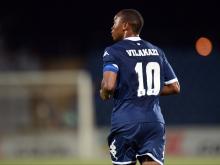
A single goal from Bidvest Wits captain, Sibusiso Vilakazi, saw the Clever Boys beat Moroka Swallows 1-0 in an Absa Premiership match at the Dobsonville Stadium on Wednesday.

The opening 45 minutes saw the home side controlling the possession stakes, but they were unable take advantage of their dominance and instead entered the half time break a goal down.
For more http://www.soccerladuma.co.za