Picture: North West MEC for Community Safety and Transport Management, Wessels Morweng
By OBAKENG MAJE
11 February 2026- The defiant North West MEC for Community Safety and Transport Management, Wessels Morweng said given all the challenges of scholar transport, he is looking at legal provisions that will allow his department to cancel the contract and restart it where due diligence will be done to ensure operators are compliant. Morweng who briefed the media at North West Department of Community Safety and Transport Management Offices in Mahikeng today, said they will call the media to announce that eventuality soon as they have completed all internal processes to terminate the current scholar transport contract.
Morweng’s media briefing comes after the South African Human Rights Commission (SAHRC) launched an investigative inquiry regarding systemic scholar transport challenges at the North West Community Safety and Transport Management.
“In February 2025, the department received an invitation from the SAHRC to participate in their enquiry on the challenges facing scholar transport in the province. We engaged the Commission and gave reports required as well as answering all questions both verbal and written.
“On 19 January 2026, the Commission released a report which highlighted findings and remedial action directives. Let me start by first noting the report and commit that the department will abide by the findings and comply with all directives of the SAHRC,” he said.
Morweng further said he however hastened to indicate that some of the findings as highlighted in the report have already been identified by the department and corrective measures were being implemented even before the SAHRC began with the hearings. He added that the corrective measures they are referring to are taken immediately, especially where the safety of the learner is at risk.
“For instance, there was a tragic incident in July 2024 at Khunotswane village, outside Zeerust, where a learner from Motsaalore Secondary School unfortunately passed on. In this incident, it is alleged that several learners jumped out of a moving bus as the driver was driving recklessly.
“The operator whose bus was roadworthy was terminated immediately and the new operator was appointed. Another incident where a learner lost life involving a subsidised scholar transport occurred in Dr Ruth Segomotsi Mompati District bringing the number to two in the last two years,” said Morweng.
He said the scholar transport contract began in January 2024 with 449 operators. Morweng said over the period of exactly two years, they have terminated 90 operators for a variety of Service Level Agreement (SLA) contraventions.
“These contraventions include inconsistent service, abandoning the route, unroadworthy vehicles or any recklessness that may harm or put learner safety at risk. So far, we have terminated 31 operators in Bojanala, 23 in Ngaka Modiri Molema, 22 in Dr Ruth Segomotsi Mompati District and 14 in Dr Kenneth Kaunda District.
“We have as at August 2024, began a process of appointing a panel of operators as part of our troubleshooting measures. The panel has since been appointed in April 2025 and comprises 44 operators,” he said.
Morweng said these are operators who are already in the system and can be called at a short notice to transport learners in case an operator abandons the route or for whatever reason that may lead to learners not being transported. He said there are several causes that exacerbate the scholar transport challenges.
“These include new unplanned informal settlements creating a new need to transport learners who previously would not have needed transportation. The other challenge which is a causal factor to the one above is the budget shortfall.
“This results in depletion of the budget leading to starting a new financial year with accruals of the previous year. We have put measures in place such as establishing a War Room chaired by the HOD and comprising members from our department and the Department of Education,” said Morweng.
He said they meet regularly and are able to identify challenges and attend to them immediately. Morweng said they also have established a monitoring team to ensure that operators are in compliance with the prescripts of the SLA.
“To ensure that buses are roadworthy, we inspect the buses after every six months to ensure they are not putting learners’ safety at risk. Our traffic officers are also monitoring the buses and impounding them if need be, that is if they are not in compliance with both the National Land Transport Act and Road Traffic Act.
“We have engaged the Provincial Treasury to increase the scholar transport budget which currently stands at R 460 million. To ensure the service of scholar transport routes, we need at least R610 million to avoid beginning a new financial crisis with accumulations,” he said.
Morweng said their regular engagements with the Department of Education also helps with forward planning in the case of rationalised schools.
10 February 2026- The Chairperson of the Portfolio Committee on Basic Education, Joy Maimela has welcomed the decision to expel learners from Milnerton High School in the Western Cape, following a disciplinary process related to serious misconduct. Maimela said the committee supports decisive action on the part of schools and the Western Cape Education Department (WCED) to uphold discipline, protect learners and staff and ensure that schools remain safe spaces for teaching and learning.
“While every learner has the right to education, this right must be exercised in a manner that respects the rights and safety of others. Serious misconduct cannot be tolerated, and appropriate disciplinary measures are necessary to maintain order and protect the school community.
“Video footage of the bullying, which has sparked national outrage, depicts the learner being physically and verbally attacked by a group of boys while others stand by – some of them cheering on the perpetrators,” she said.
Maimela further said the incident reportedly occurred on 16 October 2025, shortly after classes ended, and allegedly involved members of the school’s first-team rugby squad. She also urged schools across the country to strengthen discipline frameworks, codes of conduct and preventative programmes to address misconduct early and to promote a culture of respect and accountability among learners.
“We want to emphasise the importance of preventative programmes, including awareness campaigns, peer mediation, counselling services and values-based education initiatives, to address misconduct at an early stage.
“Fostering a culture of respect, accountability and responsible behaviour among learners is critical to creating safe and conducive learning environments that support teaching, learning and the holistic development of every child,” added Maimela.
She said the Portfolio Committee will continue to exercise oversight to monitor and ensure that disciplinary processes are fair, consistent and aligned with national policy, while prioritising the safety and well-being of all learners and educators.
10 February2026- The police in Taung request community assistance in locating Obakeng Motebe (70). The police said Motebe was last seen on 30 January 2026 at 5pm inside his residence at Tlapeng village.
The Dr Ruth Segomotsi Mompati District police spokesperson, Warrant Officer Tryphosa van Rooyen said a search commenced around the area without any positive results. Van Rooyen said Motebe does not have a left eye and no clothing description was available.
“The police request anyone who may have any information regarding the whereabouts of Motebe to contact the investigating officer Warrant Officer Tshipo on 0824692284,” she said.
Picture: All Blacks players during a rugby game/Generic
By KEDIBONE MOLAETSI
10 February 2026- The 2026 All Blacks tour could deliver a major economic boost – not just rugby glory – if South Africa capitalises on sport tourism properly. Sport tourism already generates billions for South Africa, yet remains one of the country’s most underused economic opportunities.
According to Prof Esmarie Myburgh from the research unit Tourism Research in Economics, Environs and Society (TREES) at the North West University (NWU) said major sporting events don’t just fill stadiums, they fill hotels, restaurants and local economies across the country. Myburgh said better infrastructure, coordinated support and strategic planning could turn sport tourism into a powerful driver of inclusive economic growth.
“When the final whistle blows on The Greatest Rivalry Tour, the real winner could be South Africa’s tourism sector, if it plays its cards right.
“It’s been 30 years since the New Zealand All Blacks last toured South Africa for a traditional rugby test series, but 2026 will see the old foes meet for three tests in the Republic and one abroad. For rugby fans at home and in the Land of the Long White Cloud, The Greatest Rivalry Tour – which includes provincial matches between the All Blacks and the Stormers, Sharks, Bulls and Lions – is the stuff dreams are made of,” she said.
Myburgh further said they are not alone. She added that the formal and informal South African tourism sectors are starry-eyed at the potential revenue The Greatest Rivalry Tour can add to their pockets.
“Sport tourism is big business. However, South Africa historically underutilises sport tourism, and this tour is a strategic opportunity to right that wrong.
“The United Nations World Tourism Organisation highlights that sport tourism is expected to grow by an estimated 17.5% between 2023 and 2030, and already accounts for approximately 10% of global expenditure. He added that sports tourism can address several challenges in South Africa’s leisure tourism sector, particularly by reducing seasonality and spreading tourism benefits more evenly.
“Unlike traditional leisure tourism, which is often concentrated in peak periods and major destinations, sport events can take place throughout the year and often in smaller towns, creating valuable economic activity”, said Myburgh.
She said according to a report by South African Tourism titled Sport Tourism Insights, South Africa hosted 878 local and 122 international sporting events across all codes, attracting 12.34 million attendees and generating over R8.11 billion in spending, illustrating the scale of this opportunity. Myburgh said school sport events also create a notable tourism footprint by attracting local travel and raising awareness of destinations and attractions across the country.
“Internationally, sport tourism is a strong driver of destination branding. High-profile events linked to world-class teams like the Springboks receive global media coverage that positions South Africa as a capable and attractive host destination, often reaching new markets.
“We note that sport tourism does not only generate one-off visits, and that sport tourists who attend or participate in events are often motivated to return to South Africa for leisure travel with family or friends,” said Myburgh.
She said the tourism therefore often acts as a gateway that broadens the tourism economy beyond the initial event visit. Myburgh said from an economic perspective, sport tourism generates spending across accommodation, transport, food, retail and attractions.
“Major events have strong direct impacts, but even smaller events can stimulate local economies while supporting jobs and small businesses.
“The social role of sport tourism should also not be underestimated. It brings people together across cultural and social divides, fosters national pride and contributes to social cohesion in ways few other tourism products can,” she said.
Myburgh said advantage is that many sport tourism events make use of existing infrastructure and tourism facilities, although here South Africa needs to polish its shoes.
“However, many facilities have not been adequately maintained, which limits their appeal. Existing infrastructure, including World Cup stadiums, should be better utilised to support a stronger and more sustainable sport tourism offering.
“Despite these benefits, challenges remain. Not all sports codes have brands as strong as rugby, and economic impacts are highly dependent on team performance and support,” she said.
Myburgh said government support also remains uneven, with a strong focus on large-scale events and well-established provinces, leaving other regions behind. She said infrastructure, safety, grassroots sport development and inconsistent economic impact measurement further constrain growth.
“Overall, sport tourism remains one of South Africa’s most promising yet underutilised tourism opportunities. With improved infrastructure, balanced support and stronger collaboration, it has significant potential to drive inclusive economic growth, nation-building and long-term destination competitiveness,” said Myburgh.
10 February 2026- Despite facing several obstacles farming on communal land, a 36-year-old producer of Lichtenburg, was announced Grain SA’s New Era Commercial Farmer of 2025 in October.
Botlhale Jacob Tshabalala is being described by his mentors as eager to learn and with a strong will to succeed. It is precisely these qualities that have seen him go from strength to strength since taking up farming in 2013.
Qualified, but jobless
He was born in Itsoseng and the family relocated to Lichtenburg when he was nine years old. Botlhale obtained matric at Hoërskool Lichtenburg in 2009 and completed a course in fitting and turning after which he applied for apprenticeships at several mines in the area.
His numerous attempts were to no avail. By this time his father, David, had been leasing communal land at Driehoek near Lichtenburg where he produced maize and farmed with Brahman cattle.
Unemployed, his father invited Botlhale to join him on the farm. ‘He bought me production inputs for 15 ha in a year that was severely dry. I didn’t even break even on that land,’ Botlhale recalls. However, he did not let that deter him.
His father had a business in town where Botlhale worked for a salary, which he used the following year to buy his own inputs and try his hand at farming again.
He explains his motivation to persevere: ‘I don’t know how to explain it, but I enjoy farming. I don’t want to work for anyone else, but myself. I want to grow my own legacy for my children. It is difficult, but I’m determined to farm and I don’t want to do anything else.’
Asking for help
Armed with the limited farming knowledge he had acquired from his father, Botlhale then decided to reach out to other producers who could mentor him.
He approached Heinrich Krüger, former chairman of NWK’s board of directors. ‘I went to school with his son, Hansie, and decided to ask him for advice. He didn’t hesitate to share his knowledge. ‘One year he even donated a boom sprayer to me for free as he saw I had been struggling with weed control. Another person who helped me is Marco van Rensburg. All of these guys were very open and helped me a lot.’
In 2016 he became a member of Itsoseng’s study group of which Du Toit van der Westhuizen (Grain SA’s regional development manager of the Phahama Grain Phakama office in North West) was the study leader. Botlhale became a member of Grain SA in 2018.
He also credits David Whitfield, a mentor at Nedbank, for advising him on his Brahman herd.
By 2020 Botlhale wanted to expand and approached NWK for a production loan. ‘I lacked certain documents, but NWK explained its requirements. I returned the following year with all the relevant information and I was granted the loan.’
Once a client of NWK, Botlhale also became a member of the company’s Developing Farmer Project, under the mentorship of the former manager of the project, Leonard Thaphathi. ‘That guy! He believed in me from the start. He has played a big part in my success. I still miss his presence, but I’m fortunate to now get the same support from Klaston (Sefiti) at NWK.’
He also credits Lourie Rootman (area representative of Midchem) for advising him on the optimal use of chemical inputs.
When accepting his award as the Grain SA/Absa/John Deere Financial New Era Commercial Farmer of the Year, on 2 October at Nampo Park near Bothaville, Botlhale thanked NWK as his financier.
He speaks with great gratitude, not only about the individuals who have mentored him throughout his journey, but also institutions like Grain SA, Absa, Nedbank as well as Kgodiso Development Fund which have assisted him.
Botlhale Jacob Tshabalala, the 2025 Grain SA/Absa/John Deere Financial New Era Commercial Farmer of the Year at
Grain SA’s Farmer of the Year function in 2025.
Photo: Grain SA
The difficulties of farming on communal land
Botlhale dreams of being a successful Brahman stud breeder. ‘I have a fully fledged commercial Brahman herd and want to join the (Brahman SA) Society to become a stud breeder.
‘My father had been farming with Brahman cattle for years, and I fell in love with them. I saw red Brahmans at the farm of Chris Badenhorst – a farmer whom we usually buy our bulls from – and suggested to my father that we switch from the white Brahman to the red one, which I find more beautiful.’
However, this dream is unlikely to come true as long as Botlhale farms on communal land. ‘There is no fencing, so animal invasion from other herds is a big issue. I also cannot keep my bulls separate to let them rest or apply selection criteria as I’d like,’ he explains.
In 2014, 26 of his cows, of which many were pregnant, were stolen and never recovered. “Crop theft is another issue, and the crops also get damaged from animals walking freely there. I must hire individuals to guard my maize at an additional expense.’
Botlhale cannot plant on the communal land before the other farmers do, as it would increase the chances of animal invasion and crop theft. ‘Even if I prepare my lands on time, I have to wait for my neighbours so that we can plant around the same time. Therefore, I’m often delayed in my operations.’
He says he has applied twice to lease state-owned land, but without success. ‘I don’t know why my applications have been denied, since the department (North West Department of Land Reform and Rural Development) never gives feedback.’
He is now buying as many NWK shares as he can with the hopes of presenting it as collateral for a loan to buy his own farm one day.
Botlhale added that North West’s Department of Agriculture and Rural Development had donated seed and diesel for the new planting season to him and fellow communal farmers. However, the diesel was apparently mixed with paraffin and unsuitable for use.
Frank Lesenyego, spokesman for North West’s Department of Land Reform and Rural Development, on enquiry confirmed that Botlhale had applied for two farms in 2019 and 2020, and added that there is simply not enough land available for all applicants with the desire to farm.
‘Due to the high volume of applications for land allocation the department receives, it is not always possible to revert to each applicant who had applied. We can confirm that the demand for land allocation far surpasses the need for land for agricultural purposes. The department continues to acquire land on an annual basis and the applicant should look for advertised farms on the departmental website for future consideration.’
NWK Arena also enquired about the alleged substandard fuel that had been given to communal farmers. Another spokesperson for the North West Department of Agriculture and Rural Development, Emelda Setlhako, said that these allegations were under internal investigation.
Louis Olivier (Senwes Lichtenburg John Deere) handed over the keys of a brand-new John Deere 5075E to Bothlale. On the left is Sibusiso Mabuza, CEO of Phahama Grain Phakama.
‘Climate is what we expect, weather is what we get’
As with many other farms in the area, Botlhale was subjected to a severe drought in 2023. ‘In 2024, I consequently planted only 185 ha of sunflower and adjusted my planting dates according to the different fields and their potential.
‘I’ve never had such a perfect emergence of sunflower! The stand was as high as 45 000 and I increased fertiliser to 150 kg/ha.’ Alas, the heavy rains later in the season resulted in much lower yields than Botlhale had anticipated. ‘I was supposed to average 2 t/ha and above, but on most fields I harvested as little as 600 kg/ha. It was devastating!’
By early November 2025, Driehoek had received good rains and Botlhale was optimistic that the upcoming season would be a good one. ‘I am aiming to plant 150 ha of maize and 50 ha sunflower.’ He usually plants small white beans too, but was reluctant to do so in a wet year when it would be more susceptible to rust.
‘Farmers can’t complain. We must adapt, have resilience as well as faith and pray.’
Take baby steps to expand
Although Botlhale is eager to acquire his own land and expand his farming operation, he believes in doing it in small increments. ‘NWK’s Developing Farmer Project taught me the ‘low hectare, high yield’ method, whereby you only work what you can manage.
‘If you stay within your capacity, you can better work your lands on time, manage them better and consequently obtain a better yield. Especially with today’s more unpredictable weather conditions, it’s important to expand in smaller increments such as 45 ha, rather than 100 ha.’
Botlhale has acquired his own tractors and implements throughout the years and leases them to farmers in need.
He received a brand-new John Deere 5075E as part of his prize. ‘I am very thankful towards John Deere SA. They have paved the way for me with this donation.’
Fellow contestants and family members celebrate with the winner at Grain SA’s Day of Celebration on 2 October 2025.
Photo: Grain SA
Support is crucial for success
Du Toit describes Botlhale as a loyal member of Grain SA who grabs every opportunity to gather information and learn more. ‘He loves agriculture and is actively involved in his own farming operation and daily tasks on the farm. There are numerous challenges when farming commercially on communal land. He is someone who should have his own land.’
Heinrich added: ‘Jacob is someone with a will to succeed and this is exactly what he’ll do! It is encouraging if someone approaches you for advice and he achieves success by using it.’
Apart from his mentors, Botlhale says his father has played an important role in his success. ‘I have to single out my brother, Thapelo. He works at Afrimat, but whenever he is on leave and supposed to rest, he lends a helping hand on the farm.’
Botlhale also paid tribute to his late mother, Melitah. ‘She was actually disappointed when she learned I wanted to farm fulltime, as she wanted me to rather have a professional job. I think she was scared by farming’s difficulty and the unpredictable weather. However, once I explained to her why I wanted to farm, she gave me her full support and blessings.’
Botlhale is immensely grateful for the unwavering support of his wife, Lerato. They have a son, Samkelo (11) and a seven-month old baby, Yamihle.
10 February 2026- On Friday the Dr Ruth Segomotsi Mompati District Municipality held Phase 5 of the Accelerated Service Delivery Programme, Thuntsha Lerole within the Mamusa Local Municipality. The municipality said the programme brought together various government departments that collaborated to deliver integrated services to the community.
The Mamusa Local Municipality mayor, Seitebaleng Chelechele said the municipality, together with the Department of Public Works, patched potholes in town and graded roads in Extensions 6 and 8. Chelechele said the Department of Agriculture and Rural Development handed over fertilisers, gardening equipment and tools, and distributed seeds to deserving beneficiaries.
“Arts, Sport, Culture and Recreation visited Remmogo ECD Centre to conduct activities on national symbols and handed over sports and recreational equipment to Phaphama Community Care Centre. Dr Ruth Segomotsi Mompati District Municipality, Mamusa Local Municipality, Public Works and Roads, Water and Sanitation, and Human Settlements conducted an oversight visit at Ikgomotseng Primary School.
“The Traffic Department conducted roadblocks, inspections of scholar transport vehicles, and road safety awareness campaigns. Local Economic Development and Tourism, together with Dr RSM District Health Inspectors, conducted inspections and compliance checks of tuck shops,” she said.
Chelechele further said the Department of Home Affairs conducted late birth registration services from 26 January to 29 January. She added that the Department of Social Development identified five beneficiaries for Operation Dignity food parcels.
“The Accelerated Service Delivery Programme continues to demonstrate the government’s commitment to bringing services closer to communities and improving the quality of life for residents,” said Chelechele.
Picture: (SAPS) in Kimberley welcomed Alaya, who has embarked on the longest walkable route on Earth to promote peace across the world/Supplied
By STAFF REPORTER
10 February 2026- On Tuesday, the South African Police Service (SAPS) in Kimberley welcomed Alaya, who has embarked on the longest walkable route on Earth to promote peace across the world. Alaya, originally from the Kingdom of Jordan, was received by members from the Office of the Provincial Commissioner, the Frances Baard District Commissioner’s Office, and Kimberley SAPS.
The Northern Cape police spokesperson, Colonel Cherelle Ehlers said Frances Baard District Commissioner, Major General Charlotte Makgari, accompanied by the Provincial Head of Corporate Communication and Liaison, Brigadier Mashay Gamieldien, officially welcomed him to Kimberley on a wet and cool morning. Ehlers said during a gathering at the Kimberley Big Hole, Makgari commended Alaya for undertaking such an extraordinary journey in support of a noble cause that affects the global community.
“She conveyed her heartfelt admiration for his bravery, dedication, and perseverance, and wished him well for the remainder of his journey. Alaya addressed the men and women in blue, sharing the purpose of his project and inspiring those in attendance through his humility and passion for promoting peace.
“He also emphasised the importance of education and investing in the youth as a foundation for a peaceful future. Alaya commenced his remarkable journey on 1 January 2026 from Cape Agulhas and reached Kimberley after completing approximately 1000 kilometres on foot,” she said.
Ehlers further said he will continue his 23 000km journey through 18 countries over a period of 730 days, with Magadan in Russia as his final destination. She added that the management of the Kimberley Big Hole hosted Alaya and the SAPS delegation on a tour of the Open Mine, where the history of Kimberley and the diamond industry was shared.
“During his stay, Alaya will visit several schools in the Greater Kimberley area to promote the peace initiative and motivate learners on the importance of education. Upon departing the Northern Cape, he will proceed through the North West as his journey continues.
“Members of the public who encounter Alaya along his route are encouraged to join and accompany him in support of this peace initiative,” said Ehlers.
Meanwhile, the Northern Cape Police Commissioner, Lieutenant General Koliswa Otola, wished Alaya well on his journey and reaffirmed SAPS’ support for initiatives that promote peace, unity, and social cohesion. Otola further acknowledged the continued participation and generosity displayed by law enforcement officials in supporting this extraordinary and worthy cause.
Picture: NWU political analyst, Prof André Duvenhage/Supplied
By BAKANG MOKOTO
10 February 2026- The Republic of South Africa (RSA) president, Cyril Ramaphosa will deliver his 2026 State of the Nation Address (SONA) on 12 February 2026, and he will do so in a world starkly different from that of a year ago. Political uncertainty, strained international relations and domestic pressures mean the president is operating in a political climate that is no longer simmering, but rapidly reaching boiling point.
According to the North West University (NWU) political analyst, Prof André Duvenhage said SONA 2026 is likely to reflect domestic tensions and demands, as well as shifting global dynamics, rather than signalling a dramatic policy shift. Duvenhage said before getting to the SONA itself, he would like to sketch a bit of the broader context.
“We are living in dramatically changing times — at the level of local government, nationally in terms of political developments, but especially internationally. I think all of these environments will, in one way or another, be reflected in the SONA.
“At the local level, I expect the president to highlight certain aspects relating to local government. He may possibly announce an election date or offer particular perspectives in that regard. The fact remains that local government — not only within an electoral context but also as a governance focus — will receive considerable attention,” he said.
Duvenhage further said the ANC is very concerned about its declining support and therefore, he expects both the SONA and the subsequent Budget Speech to place particular emphasis on local government, especially service delivery and related issues. He added that at the national level, he thinks the focus will very strongly be on the Government of National Unity (GNU), its performance and perhaps somewhat concealed its lack of performance.
“Much of the recent populist legislation that has been passed or is in progress — such as land expropriation without compensation, the BELA Act, higher education matters and National Health Insurance — will likely be presented in a positive light.
“The president will attempt to ‘sell’ these developments to South Africans and highlight achievements in particular ways. Naturally, he is unlikely to focus on failures or limited successes, but I do not think that should necessarily dominate our interpretation of the address,” said Duvenhage.
He said internationally, he expects the government to adopt a stance that leans towards Russia, China, Iran, Venezuela and Cuba, which implies a fairly strong anti-American posture. Duvenhage said the relations between the United States and South Africa have clearly deteriorated significantly.
“One can think, for example, of legislation currently being considered in the US Congress that increasingly identifies South Africa not merely as an opponent of the US, but potentially even as an adversary. Donald Trump has spoken quite explicitly on this matter.
“I also expect that there may be passing references to issues of perceived disloyalty. Here one might think of organisations such as Solidarity and AfriForum, which the president has suggested are not acting patriotically, as well as debates around farm murders, transformation and minority concerns. I expect he may respond quite strongly to those narratives,” he said.
Duvenhage said furthermore, the president is likely to follow traditional ANC themes. He said he thinks he will refer to commissions of inquiry and investigative processes, emphasising that committees have been appointed, that investigations are underway, and that progress will continue over the course of the year.
“The identification of certain police officials in ongoing matters may also be presented as evidence that action is being taken. Economic growth will almost certainly receive strong emphasis. Figures will probably be cited to suggest either improved growth or improved prospects, despite the reality that the economy has grown at less than 1% annually over the past decade.
“Infrastructure development should also feature prominently. Issues relating to women and children, gender inequality, crime prevention and related social concerns will likely form part of the familiar political rhetoric. The recent appointment of a new National Director of Public Prosecutions may also be highlighted, although arguably this is simply another Ramaphosa-era appointment,” said Duvenhage.
He said it will be interesting to observe the behaviour of opposition parties in this context. Duvenhage said he knows for a fact that within the Government of National Unity there is no consensus on certain issues, particularly foreign policy.
“We are also seeing a significant repositioning of political forces and alliances, and this could in some way be reflected in the State of the Nation Address. In short, I do not believe the president has much genuinely positive to report, and I expect the aftermath of the address to involve substantial and possibly intense criticism, both of him personally and of the substance of the speech.
“This brings me back to my opening point: we are living in very uncertain times. Political dynamics are being reshaped rapidly, and in my personal view — which is simply an opinion — South Africa is struggling to adapt to these changing circumstances,” he said.
Picture: Concerns regarding number of road accidents occurred on the N7 road/Generic
By KEDIBONE MOLAETSI
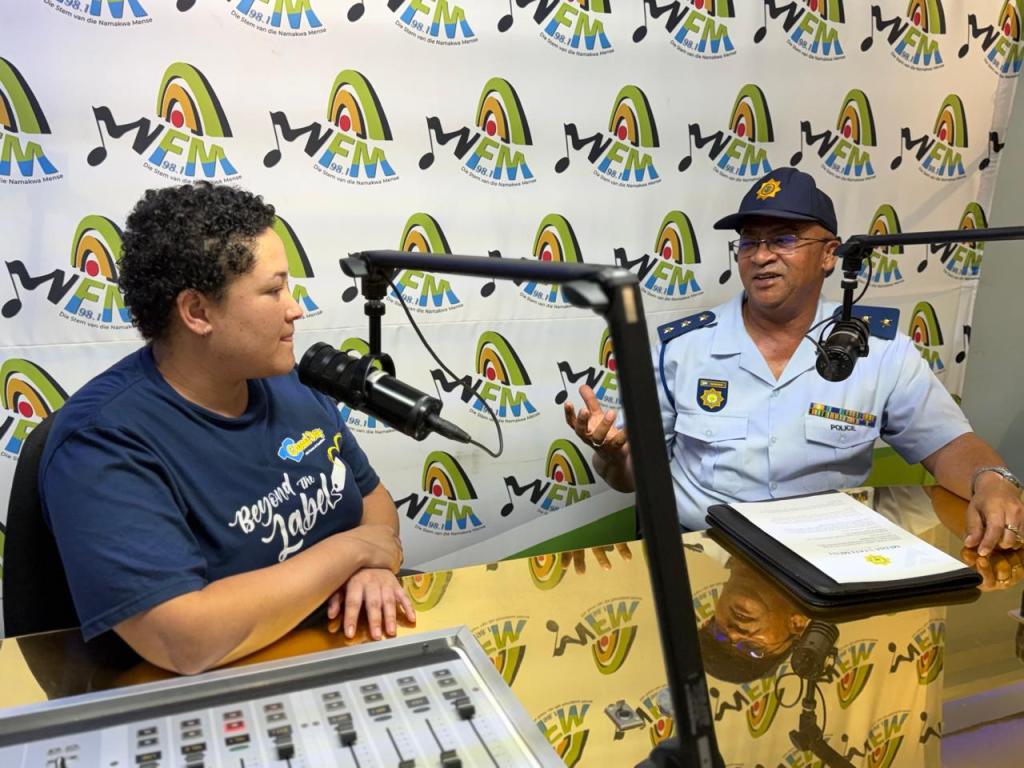
10 February 2026 – The Namakwa District Police Commissioner, Brigadier Schalk Andrews has expressed his concern regarding the number of road accidents which occurred in the district recently. Andrews said three accidents this weekend on the N7 road, claimed the lives of five individuals and injured others.
He further said against this backdrop, he is urgently appealing to all road users, including motorists and pedestrians to implement the following safety measures. Andrews cited that the roads have become scenes of tragedy due to reckless driving behaviour.
“We are witnessing an alarming trend of road users racing and speeding on the N7, especially during weekends, showing complete disregard for traffic laws and the safety of others. We further emphasize that reckless driving and lawlessness on our roads will not be tolerated.
“Investigations have also revealed that intoxicated passengers are a common factor in these incidents, contributing to dangerous conditions on the N7. We urge all road users to obey speed limits and traffic regulations. We urge them to avoid reckless and racing behaviour,” he said.
Andrews said motorists should never drive under the influence of alcohol. He added that they should ensure passengers are sober and responsible.
“Respect the rules of the road. The police in the Namakwa District in conjunction with other law enforcement agencies will prioritize road safety and enforce the law on all roads leading into and out of the district. A zero tolerance approach will be adopted and no person will be treated preferentially and will be subjected to the full might of the law.
“We call on the community to work with us in making our roads safer. Due to the recent tragic deaths on the Namakwa roads, stakeholders will have prayer services at the entrances of all towns on the N7 road on 12 February 2026 at 9am,” said Andrews.
He said stakeholders who will form part of the prayer sessions include SAPS, Radio NFM, Traffic, CPF structures, schools, religious fraternities and truck drivers. Andrews said all participants are kindly requested to wear black.
“Anyone with information about reckless driving or road incidents can contact Crime Stop at 08600 10111 or use the MySAPS app. All information will be treated confidentially,” he said.
10 February 2026- The Namakwa District Management welcomed the sentence handed down by the Port Nolloth Regional Court to Khwezilomso Godfrey Gebuza (31) on 6 February 2026. The court heard that on 19 February 2023, at approximately 00:45, the accused fatally stabbed a man (20) in Motlomelo Street, Sizamele in Port Nolloth.
The Namakwa District police spokesperson, Captain Ivan Magerman said Gebuza made his first court appearance on 27 February 2023, facing a charge of murder. Magerman said following the conclusion of the trial, he was convicted and sentenced to 15 years imprisonment.
“In addition to the prison sentence, he was declared unfit to possess a firearm. The successful prosecution was a collective effort by the investigating officer, Detective Constable Denver Van Den Heever and Basil Kock from the NPA.
“The collaboration between SAPS and the NPA is a clear indication that justice will be served to victims of crime,” he said.