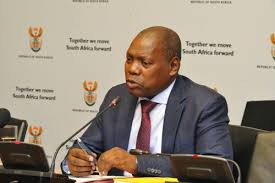
Picture: The Chairperson of the Portfolio Committee, Dr Zweli Mkhize
By STAFF REPORTER
8 April 2026 – The Portfolio Committee on Cooperative Governance and Traditional Affairs recently raised serious concerns about the continued deterioration of basic services, particularly water and sanitation, in several municipalities in the Free State. The Free State was the first leg of the countrywide joint parliamentary oversight initiative in August last year, which revealed deep-seated governance failures, including billions owed to creditors, irregular tenders and over R7 billion in unauthorised, irregular, fruitless and wasteful expenditure in some municipalities.
The Chairperson of the Portfolio Committee, Dr Zweli Mkhize said in many areas, service delivery had collapsed entirely. Mkhize said on 1 April 2026, the committee met to follow up on commitments made during the oversight visit by the Provincial Treasury, the Free State Department of Cooperative Governance and Traditional Affairs (COGTA) and the leadership of several municipalities in the province.
“In the engagement with the Mangaung Metropolitan Municipality, committee members were concerned about the limited evidence of consequences for those implicated in wrongdoing or who were found in breach of legal prescripts.
“In particular, they noted delays in finalising investigations into unauthorised, irregular, fruitless and wasteful expenditure. The leadership of Mangaung assured them that investigations are under way,” he said.
Mkhize further said the committee noted that in municipalities such as Letsemeng, Kopanong and Moqhaka, recurring challenges related to failed infrastructure projects, unfunded budgets and Eskom debt persist. He added that the committee members questioned the leadership of Letsemeng Local Municipality about the collapse of the Koffiefontein Water Treatment Works project and persistent water shortages in several towns, such as Petrusburg.
“Concern was also raised that the municipality does not have a formal payment arrangement with Eskom, despite ballooning debt. Members were also concerned that audit outcomes have not improved, with municipalities such as Masilonyana and Tswelopele still receiving disclaimers on their audit opinions.
“Concerns were also raised about the continued reliance on consultants. Another significant concern raised was the financial sustainability of several municipalities. Committee members were particularly concerned that Lejweleputswa District Municipality continues to spend the bulk of its budget on salaries, leaving very little for service delivery,” said Mkhize.
He said the committee heard that the municipality spends approximately R141 million of its total budget of R156 million on salaries, with only about R7 million left for service delivery. Mkhize said the members also questioned the municipality regarding a reported overpayment of approximately R50 million to senior managers and asked how much of that amount has been recovered to date.
“The committee directed the municipality to submit a breakdown of its budget, programmes and human resource structure within 10 days. The committee notes that there has been progress and acknowledges those efforts.
“However, we remain concerned about the persistence of negative outcomes and the continuing dysfunctionality within municipalities. The committee also noted the additional support provided by the provincial government,” he said.
Mkhize said the involvement and interventions from the provincial departments are beginning to recognise that accountability binds both the municipal and provincial spheres, especially when there is wrongdoing and lapses in service delivery to local communities. He said the provincial government has to account for recurrent disclaimers in the Free State despite the undertakings made to eliminate all disclaimers, and the province has to intervene early to stop any future disclaimers.
“The committee has directed all municipalities to submit detailed written reports on key issues, including financial recovery plans, audit action plans and plans to address infrastructure challenges, within 10 days.
“Municipalities must prioritise their service delivery functions, such as water provision. Communities cannot continue to bear the consequences of weak governance, poor planning and a lack of accountability. We require clear timelines, decisive action and tangible improvements on the ground,” said Mkhize.
 The Guardian