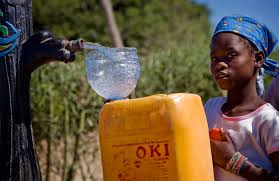
Picture: A woman drawing water from the tap/Generic
By KEDIBONE MOLAETSI
1 April 2026 – The Portfolio Committee on Cooperative Governance and Traditional Affairs (COGTA) raised alarm over failures in water quality and warned that non-compliance with drinking water and wastewater standards may harm communities. The committee received a briefing from the Office of the Auditor-General (AG) on its audits of the water sector.
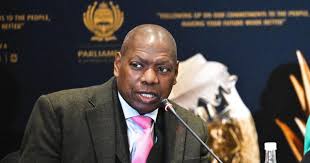
The Chairperson of Portfolio Committee on Cooperative Governance and Traditional Affairs, Dr Zweli Mkhize said the findings show, among other things, critical weaknesses, particularly in infrastructure maintenance. Mkhize said the committee heard that municipalities are spending far below required benchmarks on maintenance, with the vast majority failing to meet minimum standards.
He further said as a result, water losses remain extremely high, water quality continues to deteriorate and wastewater treatment systems are failing at scale. Mkhize added that the AG’s findings are very concerning, particularly findings on the deteriorating quality of water services in many municipalities.
“The health risks of poor water treatment and contamination. This has a direct impact on the health of communities. In urban settings, failures in water treatment systems heighten the risk of outbreaks such as cholera and pollution, as well as diseases such as dysentery.
“The committee also raised concerns about huge water losses. The statistics provided by the AG indicate a loss of approximately 56% of treated water. This, the committee noted, reflects deep systemic inefficiencies,” he said.
Mkhize said literally, of the water that has been treated, they lose more than they actually use and that is a matter of serious concern. He said the committee flagged the growing reliance on water tankers amid persistent water disruptions.
“The committee noted that expenditure on this is estimated at R2.3 billion and cautioned that water tankers, intended as a short-term emergency intervention, are increasingly being used as a substitute for reliable infrastructure.
“Some members noted allegations of tampering with water systems to create demand for tankers. These allegations require focused attention, they noted. The committee will focus its oversight on three critical areas, including poor accountability, inadequate institutional capacity and inadequate maintenance of water infrastructure,” said Mkhize.
He said these are the underlying drivers of the failures observed across the water value chain. Mkhize said the committee noted that the AG’s report contains a clear call to action.
“The AG highlights the need for stronger oversight, better coordination across all spheres of government, increased investment in maintenance and stronger consequence management.
“The committee also noted that this call comes as the current trajectory will continue to undermine reliable access to safe water. This will place increasing pressure on communities and the economy,” he said.
Mkhize said in this context, the committee indicated that its oversight work will include engagements with the Department of Water and Sanitation and specific municipalities with challenges. He said, however, noted that more preparatory work is required.
“This will help ensure discussions in the planned meeting with the Portfolio Committee on Water and Sanitation are focused and address concrete problem areas.
“We need to do a bit more work before we can have such a meeting, so that we can focus on specific municipalities and avoid having a discussion that is all over the show,” said Mkhize.
He said the committee further reaffirmed its commitment to working with stakeholders across all spheres of government to strengthen accountability and improve water service delivery.


 The Guardian