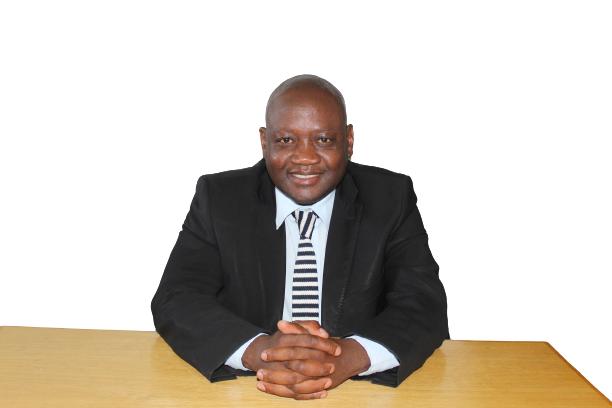
Picture: The North West Social Development spokesperson, Petrus Siko/Supplied
By PETRUS SIKO
19 March 2026- Our beloved country, South Africa is experiencing a troubling new pandemic. The mushrooming of bystanders who devote their energy and time to shooting videos and photographs of injured people of all ages at accident scenes and sharing them on social media platforms.
These platforms are flooded with accident footage, generating views and shares. This phenomenon extends beyond road accidents.
Victims of Gender-Based Violence (GBV), abandoned children, school pupils and even people caught in moments of personal crisis are often filmed and circulated online. In some cases, individuals engaged in sexual misconduct are also recorded and exposed.
The situation is amplified by the rapid spread of mobile phones equipped with high-definition cameras and instant sharing capabilities. We know for a fact that accidents are moments of crisis where help is needed immediately, not later.
Yet in our time, many bystanders seem to be there for one thing only: content creation. Instead of stepping forward to assist, they rush to their cell phones to capture footage, eager to be the first to post or break the story.
In doing so, they overlook their responsibility as potential helpers who could assist the injured or call emergency service. As I write this piece, I am reminded of a horrific accident that occurred along the R34 between Bloemhof and Schweizer Reneke In 2022.
In that tragedy, one family lost 15 members in a head-on collision that claimed 19 lives. The grieving families were later confronted with heart-rending videos circulating on social media, depicting the bodies of their loved ones.
Watching those viral videos made an already painful grieving process even more difficult, leaving many family members feeling helpless and traumatised. At the time, one family member was quoted as saying: “We were very much disturbed about the video that was shared on social media. We were disturbed by the pictures that we saw. People do not have mercy. Children are traumatised now at home. Instead of healing, we keep on bleeding because of the videos that we saw.”
In another accident earlier this year, 14 pupils were killed in a devastating scholar transport crash in Vanderbijlpark. Families were shattered, particularly after seeing viral videos of the accident circulating online.
Shortly after that tragedy, another scholar transport vehicle was involved in a road accident in the North West. Residents and commuters were left shocked, although fortunately, there were no major injuries. Yet, without hesitation, bystanders captured the scene and shared it on social media.
The impact of these videos and pictures shared in the name of content creation can be severe. Imagine a viral video of the deceased reaching every corner of the world before families and relatives are formally informed.
Imagine watching a critically injured person crying for help until their final breath, while someone stands nearby filming. Social media is at our beck and call.
Whether we like it or not, it is here to stay. Its immense influence has led many bystanders to prioritise capturing incidents rather than intervening in the plight of those in danger. This phenomenon raises serious ethical questions for our society.
Are we slowly losing our moral fibre? Are we not, in some ways, mocking or disgracing grieving families?
Does content creation now extend to exposing the most painful and vulnerable moments of others, including critical injuries and death? And where is our collective sense of responsibility as a people, particularly as Africans who are raised with the values of ubuntu from a young age?
In some instances, social media can serve as a powerful tool for sharing information and drawing authorities’ attention to emergencies. However, publicising accident scenes can also lead to serious privacy violations. The Protection of Personal Information Act (POPIA) exists to regulate how we handle and share other people’s personal information, particularly without their consent.
The best thing bystanders can do when confronted with an accident or crisis is to alert the relevant authorities and emergency services, rather than filming victims and spreading such images on social media.
(Note: Petrus Siko is the Head of Communication at the North West Department of Social Development and he is writing in his own capacity as an observant resident. His views do not necessarily represent those of the department he works for or the media houses that publish his opinion.)
 The Guardian