By REGINALD KANYANE
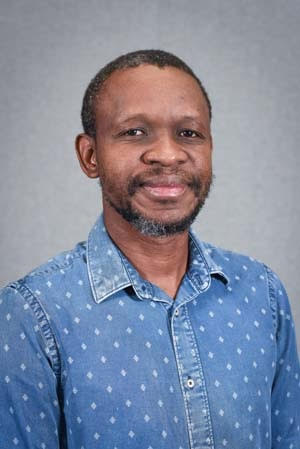
2 September 2025- The Director of the School of Government Studies at North West University (NWU), Professor Kedibone Phago said South Africa is preparing the most sweeping reconfiguration of local government since 1996. Phago said the Minister of Co-operative Governance and Traditional Affairs (CoGTA), Velenkosini Hlabisa, has unveiled a plan to reduce dysfunction, shore up finances and restore public trust in the country’s 257 municipalities.
“At least 35 of these are now deemed dysfunctional, crippled by empty coffers and chronic failures in basic service delivery. The reform is bold in scope.
“Dysfunctional municipalities may be disbanded. Leadership requirements will be professionalised, ending politically motivated appointments that have hollowed out administrative competence,” he said.
Phago further said a new framework of minimum skills for senior managers is being developed. He added that a comprehensive review of the 1998 White Paper on Local Government, launched in May, will underpin both legislative reforms and the drafting of a new funding model.
“Several bills are in the pipeline. Amendments to general local-government law, stricter rules for unstable coalitions, and a legal framework for interventions in failing municipalities.
“I believe the scale of the intervention is overdue but warns against cosmetic fixes. We need to ask ourselves how the local government can respond more effectively to residents’ needs,” said Phago.
He said the main problem is that this process focuses on the political process as a means to fix systemic rot. Phago said yet it is the political process that has brought the country to a point where most municipalities are not only dysfunctional, but have become highly toxic places to work and do business.
“This points to the chilling climate professionals face. Most would rather seek employment elsewhere than work in local government.
“Sadly, it is not only municipalities in rural areas that are marred by grand corruption. Even in metropolitan areas we have witnessed killings of professionals investigating corruption,” he said.
Phago said cases in Ekurhuleni and Johannesburg abound, with no end in sight. He said unless individuals with “material interests” are removed, reform will merely resurface old problems under new laws.
“The dysfunction is not monolithic, but bifurcated. Rural municipalities often lack economic activity, making them entirely dependent on transfers from the national fiscus.
“Places lacking basic municipal services can neither create nor attract middle-class families who would pay for services,” said Phago.
He said urban and metropolitan areas, by contrast, have stronger revenue bases but are plagued by procurement capture. Phago said the political elite and their cronies have hijacked Supply Chain Management (SCM) processes.
“Resources are diverted from serving residents to serving providers. This has become chronic and requires institutional capacity and leadership to fix.
“Most striking is a call for technocratic rigour. Why don’t we use a scientific process to inform the shake-up, Minister?” he asked.
Phago proposes that no municipality should exist without substantial economic activity proportional to its population. He said moreover, councils that consistently underperform – as flagged by the Auditor-General or forensic investigations – should be stripped of their financial powers and placed under a centralised CoGTA agency until the end of their term.
“It is such drastic reconfiguration steps,” he argues, “that would help reduce dysfunctionality within the local-government system and restore public trust.
“For now, CoGTA has named a handful of municipalities for immediate intervention: Ditsobotla in the North West, Kopanong and Mafube in the Free State, Emfuleni in Gauteng, Thabazimbi in Limpopo, and even the eThekwini metro,” said Phago.
He said the ambition is commendable. But as Phago cautions, only reforms anchored in professional standards, enforceable oversight and economic viability will succeed.
“Anything less risks replicating the hollow politics of the past three decades. South Africa’s great municipal experiment may finally be under way.
“Its success will depend not on the fanfare of announcements, but on whether the government dares to enforce the very discipline it preaches,” he said.
 The Guardian