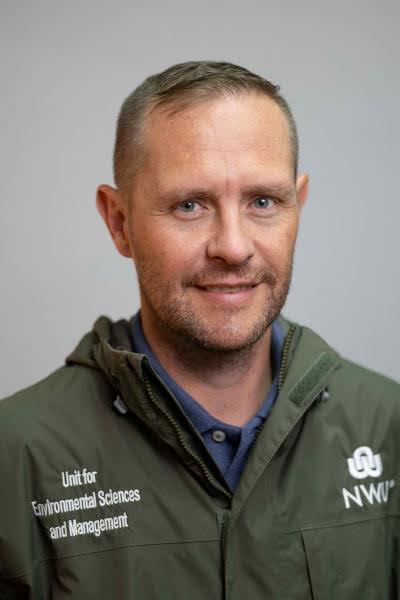
Picture: Professor Wynand Malherbe from the North West University’s (NWU’s) Water Research Group in the Unit for Environmental Sciences and Management/Supplied
By REGINALD KANYANE
24 April 2025- While the release of weevils into the hyacinth-infested waters of the Hartbeespoort Dam is a welcome development, these insects alone cannot be expected to permanently solve the dam’s pollution problem. Professor Wynand Malherbe from the North West University’s (NWU’s) Water Research Group in the Unit for Environmental Sciences and Management said the use of weevils must be part of an integrated plan to resolve the issue.
“They can help treat the symptoms of the problem, but they won’t address the root cause – which is nutrient-rich inflows and poor water quality in the catchments of Hartbeespoort Dam.
“Weevils can help combat the rapid spread of water hyacinth, but that reinvasion will reoccur if the underlying causes are not addressed,” said Malherbe.
He further said on the one hand, the use of weevils is part of a scientifically backed method of restoring ecological balance without the use of chemicals. Malherbe added that research from the Centre for Biological Control at Rhodes University has shown limited risk to the ecosystem.
“On the other hand, biological control of this kind is not without its challenges. These weevils are unable to survive the region’s cold winters, which naturally limits their population and prevents uncontrolled spread.
“They also take time to become effective and their performance is affected by environmental conditions such as water quality, temperature and pollution, making outcomes difficult to predict from year to year,” said Malherbe.
He said biological control works best when combined with mechanical removal and in some cases, the use of selective herbicides. Malherbe said it is a very effective method to control water hyacinth in the long run, but it will never fully eradicate the problem.
“Ongoing management and coordination are essential. Water hyacinth will return in the new season, so continuous efforts and monitoring are essential.
“Without proper oversight, there’s also a small risk that the biological agents could impact indigenous systems, especially if mismanaged,” said Malherbe.
 The Guardian