By BAKANG MOKOTO
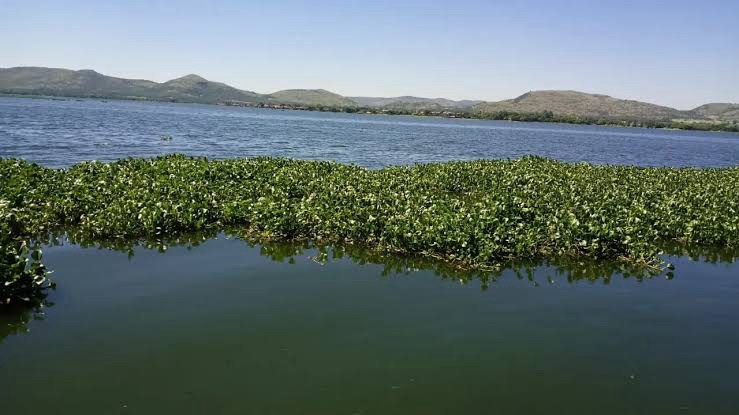
15 April 2025- Water as an Implementing Agent (IA) on behalf of the Department of Water and Sanitation (DWS) for the Water Resource Management Plan in the upper Crocodile West River Catchment and the Hartbeespoort Dam, continues to make strides in addressing the long-standing challenges of poor raw water quality and increased hyacinth growth in the catchment. To achieve these objectives, Magalies Water said it has registered substantial progress in improving the quality of raw water and curbing the growth rate of Hyacinth by meticulously implementing its ten-point strategic plan announced at the beginning of the project.
Magalies Water spokesperson, David Magae said the primary goal of this initiative is to develop an adaptive integrated Water Resource Management Plan that aims to safeguard and improve water access and quality for all users, review and implement the Hartbeespoort Dam integrated biological remediation programme, implement the local Hartbeespoort Dam Resource Management plan in terms of Section 116 of the National Water Act, as enshrined in the National Environmental Management Act 107 of 1998, as amended in 2014.
Magae said the guiding objectives comprise of management of alien invasive species, water quality status quo determination, mapping, water quality monitoring, profiling of the dam and pollution tracking.
“This includes implementation of hyacinths and algae remediation, modelling contaminants attenuation rates by hyacinth, algae, and sediments, revamping controls in the dam inlet, stakeholder engagement, research and innovation to remove contaminants.
“Curbing the nutrient loading at the source and integrated water resource management plan. The eradication of water hyacinth is the primary objective for Magalies Water, driven by a commitment to mitigating the proliferation of this invasive species,” he said.
Magae further said in the past four months, water hyacinth coverage has surpassed 25%, prompting focused efforts from Magalies Water to manage and reduce this encroachment. He added that the significant increase in water hyacinth biomass can be attributed to the extreme meteorological conditions experienced from September to December 2024.
“Prolonged high temperatures, decreased dam levels, and facilitated enhanced light penetration into the aquatic environment, thus activating the germination processes within the hyacinth seed bank at the bottom of the dam.
“Subsequently, substantial rainfall contributed to the upstream transfer of nutrients into the Hartbeespoort Dam, further exacerbating the favourable conditions for water hyacinth growth,” said Magae.
He said comprehensive contingency plans were enacted to enhance removal capacity in response to the situation. Magae said this involved mobilizing extra machinery alongside the augmentation of manual labour resources.
“Furthermore, advanced biological removal methods were deployed, incorporating nanobubble technology within the dam. This technique facilitates the introduction of oxygen-infused nanobubbles at the dam’s inlet, effectively promoting the reduction of contaminants through mechanisms such as oxidation (targeting ammonia), precipitation (for metal removal), and oxidative stress exerted on algal species and cyanobacteria.
“We significantly reduced hyacinth coverage by implementing a comprehensive and aggressive multifaceted strategy, lowering it to a remarkable 10.48%,” he said.
Magae said this outcome is a testament to the effective integration of various methodologies over the past several months. He said Magalies Water performs systematic water quality profiling and assessments at the dam and multiple upstream locations, aggregating data from over fifty-three (53) monitoring points monthly and quarterly.
“Analysis of the data collected over the past two years confirms that the dam remains hypereutrophic, characterized by elevated nutrient concentrations alongside significant levels of chlorophyll and algal proliferation.
“These findings indicate persistent contamination from upstream activities, which remains the foremost challenge to water quality management in the area,” said Magae.
He said Magalies Water, in collaboration with the Department of Water and Sanitation (DWS), will continuously strive to keep hyacinth levels below acceptable limits.
 The Guardian