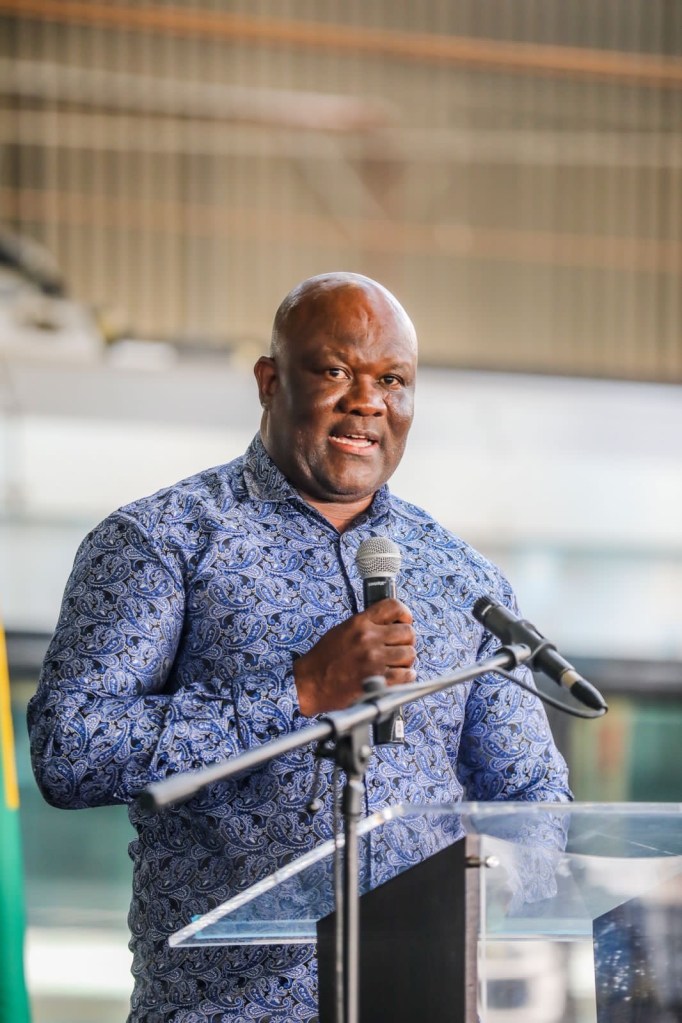
Picture: The North West MEC for COGHSTA, Oageng Molapisi/Supplied
By BAKANG MOKOTO
10 April 2025- Speaking recently at the National Council of Provinces (NCOP) on the occasion of the debate on housing inadequacy in South Africa and the prevalence of informal settlements, North West MEC for Cooperative Governance, Human Settlements and Traditional Affairs (COGHSTA), Oageng Molapisi, has acknowledged that his department is currently facing housing backlogs due to amongst others the non effective operational municipal system and thus hinders and delays the department to provide adequate housing to the people.
Molapisi said the department is aware of the municipal infrastructure units’ shortcomings such as the deterioration of the infrastructure and therefore having significant effect in housing delivery is compromised.
He further highlighted budget cuts and increase in population as other factors impacting the delivery of houses in the province. He added that, for instance, the province used to get R2 billion in grant funding nearly ten years ago, but like many provinces, that has since changed.
“The targeted delivery of homes and serviced sites decreased as a result of budget cuts that cut off R400 million just two fiscal years ago. With regards to the increasing number of informal settlements in the province, the department continues to observe the expansion of informal settlements, especially at the mining towns due to potential employment opportunities.
“Municipalities are also inundated with constant land invasions putting pressure to the department to respond expeditiously to provide basic services thereby disrupting normal planning cycle and processes,” said Molapisi.
He said they cannot shy away from the fact that informal settlements are increasing. Molapisi said is for this reason that the National Department of Human Settlements has adopted the White Paper for Human Settlements (2024), which provides for a tacit approach to address challenges arising from informal settlements.
“To align and play our part, the North West Department of Human Settlements has just completed an informal settlement upgrading strategy after which it will commence with informal settlements upgrading projects”.
“In addition, the Department of Human Settlements is working closely with the Department of Cooperative Governance and Traditional Affairs in the province to resolve challenges of bulk infrastructure at affected municipalities,” he said.
Molapisi said through the COGTA Bulk Infrastructure Committee (BIC), they have taken advantage of the Infrastructure South Africa (ISA) bid window to apply for bulk infrastructure projects. He said they are working around the clock to try source available funding to alleviate the situation.
“We remain committed to creating sustainable human settlements. It is our considered view that the restoration of our people’s dignity rests in housing them in habitable homes with basic amenities. The Department of Human Settlements is putting a spotlight on issues of lack of bulk infrastructure for human settlements projects, as well as promoting integration of social and economic aspects thereby yielding dividends in terms of spatial planning, community services and broader quality of life for our citizens.
“Through the District Development Model (DDM), we are encouraging our municipalities to consider using bylaws to address land invasions coupled with planning to formalise old settlements on available vacant state land,” said Molapisi.
9 April 2025- “Workers of the world unite, you have nothing to lose but the chains of oppression, and you have the world to gain.”
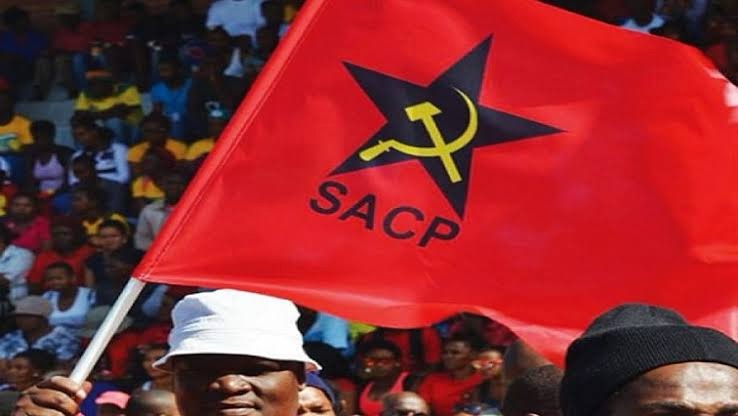
During the SACP Special National Congress the SACP took the decision to contest the 2026 local elections independently from ANC. However, the issue of the SACP and the state power has been a hotly contested debate since the relaunch of the YCL in 2006, culminating in a situation whereby some in the SACP has been talking about contesting the election under the so-called reconfigured alliance that includes ANC/SACP/COSATU and SANCO.
We can actually characterise this tendency as a rupture. The decision must not be interpreted as a war between the ANC and the left axis within the
country led by SACP and COSATU, but as advancing the Special National Congress resolution that talks about rejecting some nationalist and bourgeoisie reformist agenda.
One can cite the ANC-DA led GNU as a classic example of the bourgeoisie reformist agenda. Neither is this about bolshevism versus menshivsm. Recently, the former National Secretary of the YCL, Comrade Buti Manamela in his article entitled: “An army of Generals? Reflections on the SACP’s political Capacity and the crisis of hegemony”, raised a very crucial debate on the matters, some which warrant us as Marxist to apply our dialectical tools of analysis.
However, the issue which I think needs us to reflect is the state of the party and its organs, as well as resources and if indeed we are ready to contest the election in a toxic capitalist environment? Although in South Africa it will be the first time that the SACP is contesting elections outside the boundaries of the alliance, it will not necessarily be the first time that the leftist party is contesting the elections.
Previously we have seen parties like SOPA (Socialist party of Azania) WOSA and the latest in 2019, was the party formed by NUMSA and led by Irvin Jim called SRWP (Socialist Revolutionary Workers party), which only got 0.15% in the 2019 elections and did not contest the 2024 elections. But at the same
time, the party must avoid falling into the trap of ultra-leftists’ formation like the Spartacist formation in the US that have been calling for the SACP and COSATU, to break away from what they called deformed bourgeoisie state, which basically serves to create schism within the tripartite alliance.
Previously the SACP contested the elections in Metsimaholo and won 3 seats. Some might ask if the party is trying to resuscitate the old and failed debate over the two-stage theory in which the first stage of NDR will be led by the ANC and the second stage that will ultimately led us to socialism will be led by SACP, although some deny this debate within our ranks.
But history is littered with left parties and communist parties leading governments globally,
particularly in Latin America. The question is whether SACP will survive the turbulent election turf learning lessons from other left parties globally and locally, also bearing in mind contesting elections is costly in
nature and character.
Beyond the issue of turbulent environment, elections need lot of money and resources
something which might cripple the party especially in a capitalist environment whereby the
bourgeoisie are not willing to fund working class formations like SACP that advance the
agenda for socialism and ultimately communism, unless we will have to rely on our allies
within the trade union movement. However, we must welcome the gesture of NUM,
NEHAWU and POPCRU among other COSATU affiliates to back the decision of the SACP
special National congress to contest the elections.
The question remains what to be done, if I have to paraphrase Lenin? Especially in the era
whereby the SACP finds itself at the crossroad. On the 27 March – 2 April 2025, Financial Mail
posed a question that, if the decision of the SACP to contest the election will result in death
or glory?
Something that we can’t simply dismiss as another headline by the bourgeoisie media, but that warrants us communist to deeply reflect on the matter.
GLOBAL LEFTIST FORMATIONS IN POWER
Across the globe, we have some communist and workers parties leading governments across
the globe inter-alia: The CPC (Communist Party of CUBA) leading the CUBAN government,
the CPC (Communist Party of China) leading China, the Communist Party of Vietnam in
Vietnam, the Workers Party of Korea leading the DPRK (Democratic Republic of Korea) aka
North Korea, the Communist Party of NEPAL (Maoist) leading NEPAL, AKEL in Cyprus the
Sandinista movement in Nicaragua that previously lost power and later regain it, when it
won power again.
In India, we have seen the Communist party of India Marxist (CPI-M) leading the Kerala state,
we have seen the workers party PT led by Inancio Lula Da Silva leading Brazil and
having massive success among Brazilians. This led to a scenario whereby COSATU was
calling for the Lula moment in SA, later Lula power and he recently regained power again in
October 2023.
The same year in June 2023, another leftist candidate Gustavo Petro won
elections in Colombia. The same applies to PSUV led by the late Hugo Chavez and later Nicolas Maduro leading the Bolivarian Republic of Venezuela named after the struggle Icon Simon Bolivar and having massive success in Venezuela.
We have seen Chile under Michelle Ballet and Bolivia under MAS (Movement for advancement of Socialism) led by Evo Morales winning massive
success in Bolivia. In Mexico, the candidate of the Left Claudia Sheinbann has been leading
Mexico as a successor to Andres Manuel Lopez.
IS THE LEFT UNDER CRUCIFICATION GLOBALLY
We have seen the arrest of Lula Inancio Da Silva and Rouseff Dilma in Brazil, the
victimization of Evo Morales in Bolivia, as well as Hugo Chavez in Venezuela, the
assassination of Allende in Chile, the imperialist sanction and attack on the sovereign state
of CUBA, the destabilisation of Honduras among others.
The question is whether the SACP
will also not be victimised by the capitalist and the imperialist forces like another global leftist
formations. During May 2024 elections, we have seen the increasing capitalist offensive
campaign against the ANC that seeks to instigate the regime change agenda in SA, including
funding some reactionary opposition parties that seek to topple the ANC-led government.
Within the alliance, the SACP has been complaining about some of the posture that have
been undertaken by its alliance partner dating back from the era of the 1996 class project
until now under GNU. Something that pushed the party to contest the 2026 elections.
Cde Sifiso Gwala succinctly characterises this tendency as the crisis of hegemony. there is NDR (National Democratic Revolution), which its mission is the emancipation of
blacks in general and Africans in particular from political and economic bondage, the alliance
remain intact towards advancing this vision.
As we debate this thorny issue, let us not reduce it to labelling or to revisit the ghost of Ultra left debate, bearing in mind Marxism is not a dogmatic orthodoxy.
One can recall that the same debate once took place in Russia during the Perestroika and the Glasnost debate. As the former SASCO SG Cde Lazola Ndamase said in this critique to the document of Cde Buti Manamela “Let us rebuild the party’s hegemony not by retreating from the fray, but by charging into it, by rooting ourselves in the struggle of the informalised, casualised and discarded”.
As we continue to critique each other we must at all costs avoid labelling and victimization of other comrades, but bear in mind as Lenin said the task of the Youth League is to learn, learn and learn.
(Note: The article is the view of the writer, Malefo Mosimanyane, a former YCL NWC and National committee member, who wrote it in his personal capacity. The Guardian newspaper and its associates neither agree nor disagree with the content of the article as the views remain of the writer.)
10 April 2025- The North West Department of Health said it is on high alert following confirmation of one cholera case in Rustenburg on 7 April 2025. This comes after the said patient was admitted at Life Peglerae Hospital in Rustenburg on 5 April 2025, and the medical tests were confirmed by National Institution of Communicable Disease (NICD) on 7 April 2024.
The North West MEC for Health, Sello Lehari said cholera is a category 1 of notifiable medical conditions with 1 case declared as an outbreak. Lehari said cholera symptoms can range from mild to severe and include sudden, watery diarrhoea (sometimes described as rice-water stools), vomiting, and dehydration, which can lead to complications like shock and even death if left untreated.
“The patient presented himself with symptoms at the hospital following consumption of a fish allegedly caught in a river, while on vacation a week ago in Limpopo.
“The patient was isolated immediately after confirmation of results and contact tracing was conducted immediately and Northam Platinum mine where the patient is working was alerted of the case to commence tracing and screening,” he said.
He further said cholera symptoms are watery diarrhoea, which is a hallmark symptom, often described as “rice-water stools” due to its pale, milky appearance. Lehari added that this includes vomiting.
“Vomiting can occur especially in the early stages and can worsen dehydration. Other symptoms include leg cramps, muscle cramps, particularly in the legs, are common.
“The individual might feel restlessness or irritability. The Bojanala Outbreak Task Team has been to conduct environmental investigation in collaboration with Municipal Health Services,” said Lehari.
He said health education by Outbreak Response Team to for accelerated community health education and awareness, enhance surveillance and monitoring. Lehari said the causative bacterium is found in food and water sources that have been contaminated by the faeces of an infected person, hence, transmission of the disease is high in places with poor water supply and improper sanitary conditions.
“Water sources like ponds, rivers, streams, lakes and tap water are known to harbour the bacteria and can be transmitted to various persons through food and drinks gotten from these water sources, vegetables grown with infected human waste as fertilizer, as well as the consumption of raw or undercooked fish and other marine foods gotten from polluted water bodies.
“As the province experiences high levels of rainfall, we urge our communities to apply extra care when handling food and consuming water from various sources to protect themselves by ensuring that water source is safe for human consumption or to boil them if in doubt,” he said.
Lehari said cholera is an avoidable disease, if proper care is applied. He said his department and NICD are in high alert and monitoring the situation at the current moment.
10 April 2025- The North West MEC for Health, Sello Lehari said the communities of Taung in Sekhing and Manthe villages are left with optimism and joy following his visit. Lehari graced the areas to deliver on the health delivery commitments made to the communities of the sub-district.
He further said among the commitments made by the department to the communities of Taung is the completion of the Baga-Mothibi Community Health Centre (CHC). Lehari added that this project, which has become a lifeline for the communities scattered in over 16 villages falling under Kgosi Mothibi, was first constructed with a R140m budget estimate.
“The Baga-Mothibi Community Health Centre (CHC) was officially opened by the Deputy President, Paul Mashatile in September 2023. The facility offers 24-hour increased access to healthcare facilities to members of the surrounding communities.
“The latest work to be carried out on this project is for a budget estimate of R56m, which will cover the general building work which include brick and mortar where it is outstanding,” he said.
Lehari said the budget also covers electrical and ICT networks, mechanical, air conditioning, civil works inclusive of water and sewerage reticulation and pavements. He said this will be done in all 16 units of the facilities, which include maternity, Outpatient Department (OPD), staff residence, dental, radiology, medical gas areas and all the areas.
“We caution all stakeholders against delaying the project. We are here to handover to the contractor and the principal consultants. The contractor will begin and complete the remaining scope.
“The project must have the beginning and end. Therefore, project managers and consultants must be held accountable to ensure completion of the project,” said Lehari.
He said the handover, which was also attended by the Baga-Mothibi Traditional Council, the Speaker of the Local Municipality, municipal councillors, the acting DDG for Health Services and the
the District Chief Director, also deliberated on the roles of key stakeholders to make the project a success.
“I expect the contractor to work together with the project manager. The Community Liaison Officer must serve the role of being a link of the project with the community. A project steering committee which receives a sitting allowance should also assist completion of the project by playing its role.
“If we work together and there are no disruptions like rain, we can expect this project to be completed around April 2026,” he said.
In other exciting news, Lehari took time to meet with the Chief of Batlhaping Ba Ga-Maidi, Kgosi Nyoko Motlhabane. The meeting was to reflect on much-anticipated plans to build a Community Health Centre for Batlhaping Ba Ga-Maidi.
“I briefed Motlhabane that Manthe CHC was on the B5 project list, but was not allocated a budget. However, we assured him and his tribal council that following a meeting with the National Department of Health, the CHC will now be allocated a budget for the 2026/27 financial year.
“We were requested at the meeting with National to first make sure that all current projects are completed before the new ones are accommodated. I have been hard at work conducting oversight through my “Re Bona Ka Matlho” programme to make sure that these projects are completed on time,” he said.
Lehari said this will enable them to start new projects, including the new Manthe CHC for Batlhaping Ba Ga-Maidi communities. He said while the Batlhaping Ba Ga-Maidi CHC is earmarked for the 2026/27 financial year, the Ba Ga-Mothibi CHC is a 12 month project estimated to be completed by April 2026.
Meanwhile, the excited Motlhabane, thanked Lehari and the department for the commitment to deliver the CHC. He assured the department for cooperation and alluded to the fact that the tribal council has already identified land for the project.
Picture: Some of lodges are flooded in Bloemhof/Supplied
By KEDIBONE MOLAETSI
10 April 2025- The Minister of Department of Water and Sanitation, Pemmy Majodina, will visit Bloemhof Dam to assess the infrastructure amidst evacuations due to flooding at downstream areas. Following the visit to the Vaal Dam on Wednesday, Majodina, will proceed to Bloemhof Dam on 11 April 2025, to assess the water resource infrastructure amid heavy inflows into the dam, as well as the high-water releases from the dam that have resulted in flooding in some areas downstream from the dam.
The Department of Water and Sanitation spokesperson, Wisani Mabasa said, over the past few days, Bloemhof Dam had to increase water releases to manage high inflows coming into the dam from the upper catchment. Mabasa said as at this morning, the dam is at 111.07%and water is being released at 2502 cubic metres per second (mᵌ/s) through five radial gates.
“The controlled water releases are necessary to manage the rapidly rising dam levels and to also manage the sustained high inflows and ensure safe operation of the dam.
“The high-water level at Bloemhof Dam is due to the discharge of water from the upstream Vaal Dam, which is also over its full water supply capacity with 115.57%,” he said.
Mabasa further said the discharge of water is currently at 813.380 mᵌ/s and five sluice gates at Vaal Dam remain opened. He added that due to the water release, areas downstream the Vaal and the Bloemhof Dams are experiencing flooding and settlements built along the floodline of the Vaal River System have begun evacuating.
Picture: Residents receive services during Thuntsha Lerole Reloaded Program/Facebook
By BAKANG MOKOTO
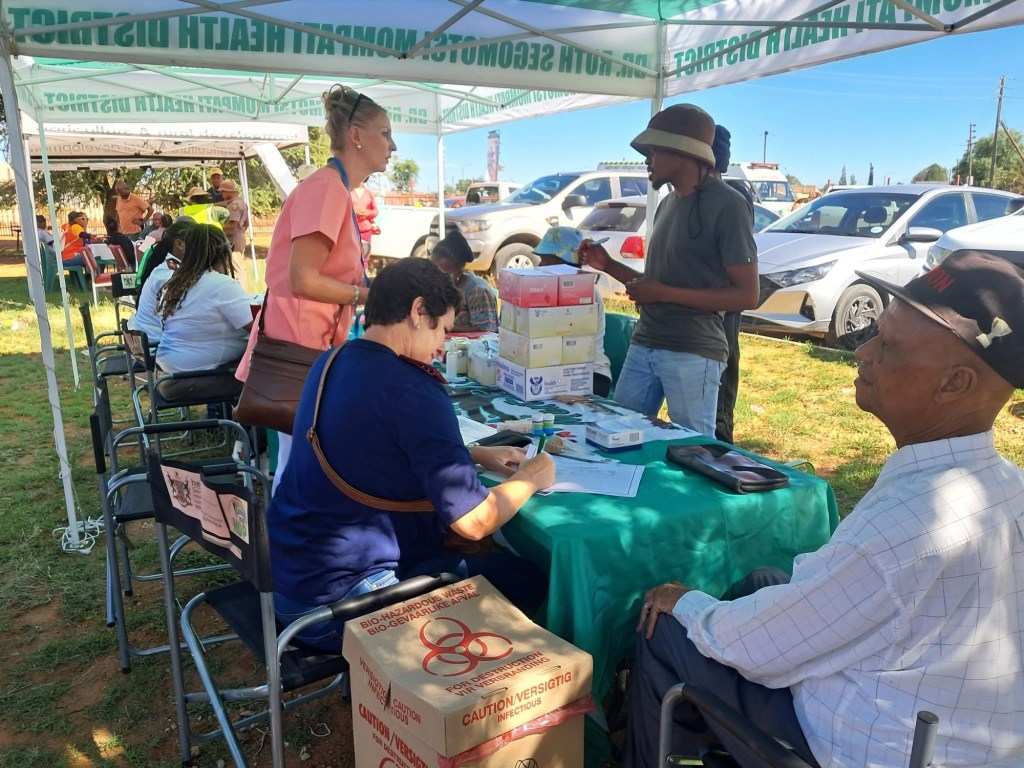
10 April 2025- The residents of Siberia, Mooipan and Weltevrede villages are amongst those that are this week witnessing the provision of public services as the North West Provincial Government (NWPG) is rolling out the Accelerated Service Delivery Programme – Thuntsha Lerole Reloaded in Mahikeng.
The week-long service delivery programme targeting the municipality’s rural areas, will reach its peak on 11 April 2025, as the North West Premier, Lazarus Mokgosi, will be leading the collaboration of various provincial departments, State-Owned Entities (SOEs) and municipalities in rendering a broad range of essential services to the community. Communities will receive on-site services at Weltevrede Sports Ground, where a community feedback session will be held.
Mokgosi spokesperson, Sello Tatai said to support agricultural education and improve local farming practices, a donation of mini vegetable tunnels, alongside a demonstration of planting of seedlings will be held at Renalerona Secondary School and Obakeng Primary School in Weltevrede. Tatai said in addition, a livestock handling facility will be handed over for use by 86 farmers in Siberia, aimed at improving livestock management and promoting sustainable farming practices within the community.
“As part of the government’s commitment to improved maternal and child health, baby nappies and sanitary towels will be distributed to nursing mothers at the Weltevrede clinic.
“Along with these donations, comprehensive services including health screenings, eye care, mental health support, physiotherapy, and nutrition and dietetics services, will be provided onsite to address a variety of health needs,” he said.
Tatai further said in an attempt to ease accessibility to public facilities such as clinics and schools, the blading of internal access roads will be amplified. He added that efforts to increase access to free basic services will also include the registration of indigent individuals and the distribution of energy-saving bulbs to local communities.
“The Centralised Supplier Database (CSD) team will also be present to assist local SMMEs with registration, updating, and amendment of their registered companies,” said Tatai.
Picture: Police in Northern Cape hosting Easter Prayer Day/Supplied
By OBAKENG MAJE
10 April 2025- The Northern Cape Deputy Provincial Commissioner for Corporate Services, Major General, Dr Thabo Mphuthi, accompanied by the Northern Cape MEC for Transport, Safety and Liaison, Limakatso Koloi and the Sol Plaatje Local Municipality councillor, Jahn Pietesen, led the Provincial Easter Prayer Day Service held at the CRC Church in Kimberley today.
The event was attended by representatives from various government departments, including Correctional Services, South African National Defence Force (SANDF), Northern Cape Department of Transport, Safety and Liaison, Traffic Department, and senior officers and members of the South African Police Service (SAPS), who gathered in unity to observe this sacred period through worship and spiritual reflection.
The SAPS Provincial Band inspired the congregation with uplifting music, while devotions and messages were delivered by SAPS Chaplains under the leadership of Colonel IJ Pudule. Religious leaders from multiple faith-based organizations also participated, delivering powerful reflections on the Seven Utterances of the Cross, enriching the spiritual significance of the day.
In her address, Mphuthi acknowledged and appreciated the prayers offered for the protection as they confront the inherent dangers of the profession.
“This service stands as a powerful testament to the enduring strength of faith, centred around the theme: “The Power of the Cross.” In the midst of challenges, it is essential that we safeguard our physical, mental, and spiritual well-being.
“As we remain committed to delivering a professional and dedicated service, let us also strive to build bridges of hope and trust within the communities we serve,” she said.
During her keynote address, Koloi emphasized the importance of reflecting on the true meaning of Easter. She urged communities to celebrate responsibly and to prioritize safety at all times.
“We reaffirm the commitment of the government and law enforcement agencies to ensuring the safety and security of all communities and visitors to the province. We also commend the law enforcement officials for their exemplary service in maintaining public safety and order.
“The government will apply a zero-tolerance stance on Gender-Based Violence (GBV), particularly during this period. We call on men to take a collective stand against such heinous acts and to promote a culture of respect and accountability,” she said.
Meanwhile, the SANDF Commanding Officer, Colonel B Motlhabakwe, delivered the vote of thanks, and the prayer service concluded with benediction.
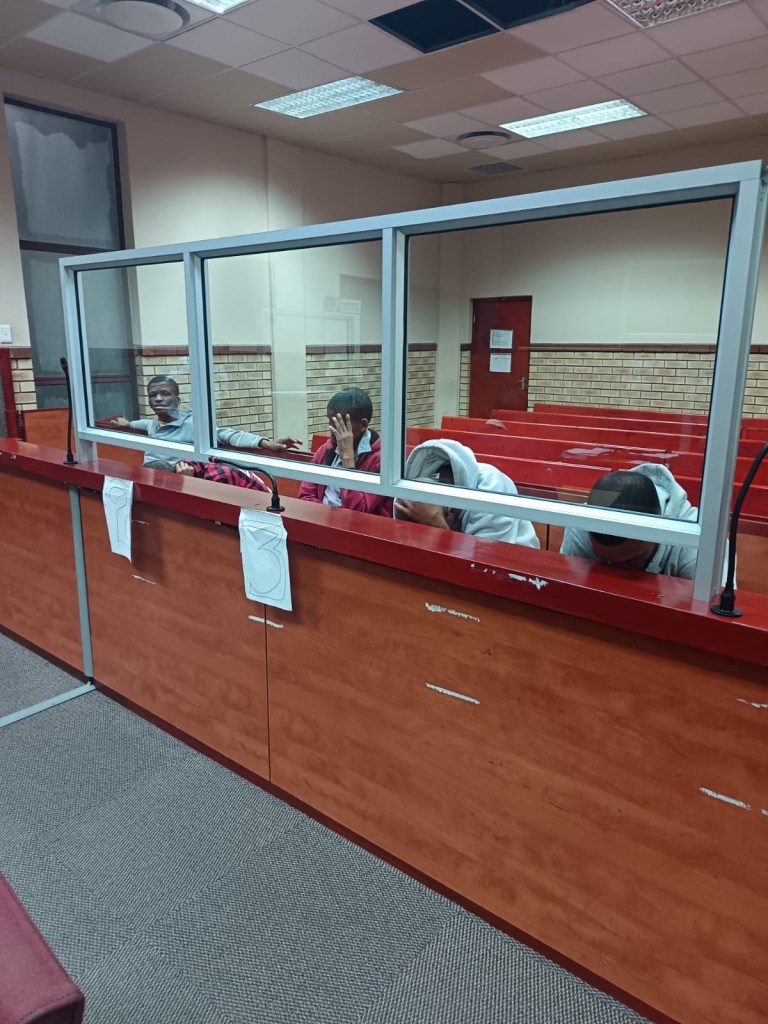
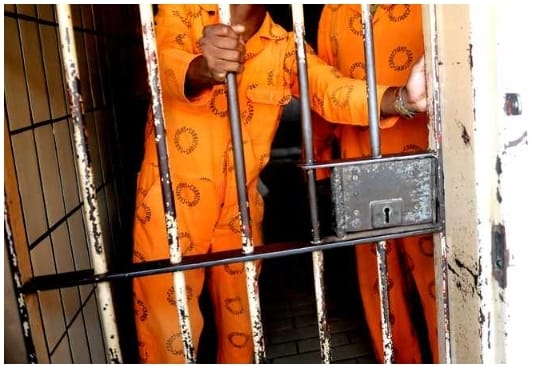
10 April 2025- Five men from Pofadder were sentenced to life imprisonment by the Northern Cape High Court sitting in Upington for rape. The accused, Waybril Gertse (41), Graham Gertse (31), Virnit Priega (40), Alfonsus Visagie (55) and Andre Magerman (34) rape a girl (9), who is an orphan.
The Northern Cape police spokesperson, Lieutenant Colonel Sergio Kock said the young child was orphaned after the passing of her mother and grandmother. Kock said the accused was sadly raped by five accused between 2017 and 2020.
“She was placed in the care of her aunt, who reported the incidents to the Northern Cape Department of Social Development in Pofadder. Subsequently, an investigation was launched by the police.
“All the accused were arrested during September 2020, and bail was successfully opposed. The Northern Cape High Court sitting in Upington delivered a guilty verdict on 20 December 2024, and sentenced the accused on 10 April 2025,” he said.
Kock further said accused 1, Waybril Gertse was sentenced to life imprisonment, accused 2, Graham Gertse was sentenced to life imprisonment, accused 3, Virnit Priega was sentenced to 25 years imprisonment, accused 4, Alfonsus Visagie was sentenced to 18 years imprisonment, while accused 5, Andre Magerman was sentenced to life imprisonment.
He added that their names will be registered in the National Register for Sex Offenders and were declared unfit to possess firearms.
Meanwhile, the Northern Cape Police Commissioner, Lieutenant General Koliswa Otola, commended Detective Sergeant John Nortje from Pofadder FCS for his unwavering dedication and meticulous investigation that led to these outstanding GBVF convictions. Otola reiterated that SAPS in collaboration with prosecutors, will continue to fight the scourge of GBVF and commended the National Prosecuting Authority (NPA) for their role in ensuring that no impunity is granted to the perpetrators of these heinous crimes.
10 April 2025- A 24-YEAR-OLD man was sentenced to 16 years imprisonment by the Springbok Regional Court for contravention of National Environmental Management Act (NEMBA) and contravention of the Northern Cape Nature Conservation Act. In December 2022, The Hawks Serious Organised Crime Investigation team based in Springbok, received intelligence-driven information on illegal transportation and trading of the Conophytum plant (protected plant) in the Garies area.
The Hawks spokesperson in Northern Cape, Lieutenant Colonel Tebogo Thebe said as per information, the accused, Hanro Owies, was supposed to meet with the buyer next to a private farm on N7 route. Thebe said the investigation team proceeded to pick a spot next to the same route on N7 to Garies for observation duties.
“The accused came straight to the law enforcement motor vehicle under the impression that it’s the buyer and he was immediately placed under arrest with 2863 Conophytum protected plants, which were also seized.
“On count one of Contravention of Sec 50(d), transportation of 2863 protected plants without permit, the accused was sentenced to 8 years imprisonment. On count two for Contravention of Sec 50(f), trade of 2863 protected plants without a permit, he was sentenced to 8 years imprisonment.
“The sentence shall run concurrently. The court saw fit to declare Owies unfit to possess a firearm in terms of Section 103 (1) of the Firearm Control Act 60 of 2000,” he said.
Meanwhile, the Directorate for Priority Crime Investigation (DPCI) Provincial Head in the Northern Cape, Major General Steven Mabuela, commended the team for their timeous response in dealing with intelligence driven information received.
Picture: The Secretary to Parliament, Xolile George
By BAKANG MOKOTO
10 April 2025 – The Secretary to Parliament, Xolile George, has been elected to the executive committee of the Association of Secretaries General to Parliaments (ASGP) at the 150th Inter-Parliamentary Union (IPU) Assembly. The Association is an organ of the IPU and has a 9-member executive committee.
The Association held its meeting on the sidelines of the 150th IPU Assembly in Tashkent, Uzbekistan, where the South African Parliament is represented by a multi-party delegation led by the Speaker of the National Assembly, Thoko Didiza. The Assembly, which started on 5 April 2025, came to an end on Wednesday.
The ASGP was founded in 1939 as a consultative body of the IPU and seeks to facilitate personal contact between holders of the office of Secretary-General in any Parliamentary Assembly, whether such Assembly is a Member of the Union or not. Its task is to study the law, procedure, practice, and working methods of different parliaments and propose measures for improving those methods and securing cooperation between the services of different parliaments.
When asked to do so, the Association also assists the Inter-Parliamentary Union on subjects within the scope of the Association.
George said his election is a testament to the confidence the world and members of the IPU have in South Africa. He said this indicates that the country has much to offer to the world regarding leadership, governance, peace and security, mediation of conflicts, and climate change.
“South Africa is a global player, and the world recognises that. The role of the administrative leadership of parliaments is imperative. The administrative arm of parliaments needed to complement the oversight arm to ensure the delivery and welfare of our people,” said George.
He further said the ASGP as an administrative arm needs to ensure that the IPU achieves its goals. George added that they still have a long way to go on the African continent when it comes to attaining democracy in the true sense and resolving conflicts.
“There are good flashes, but governance and parliamentary oversight still need some attention.” The conference heard, for example, that in some countries, members of parliaments got persecuted for executing their function of monitoring the executive.
“The IPU’s work is concerned with building strong democratic parliaments, advancing gender equality and respect for women’s rights, protecting and promoting human rights, contributing to peace-building, conflict resolution and security, fostering inter-parliamentary dialogue and cooperation and promoting youth empowerment,” he said.
George said this includes mobilising parliaments around the global development agenda and bridging the democracy gap in global governance. He said the administrative arm of parliaments needed to complement the oversight arm to ensure the delivery and welfare of our people.
“The ASGP as an administrative arm needs to ensure that the IPU achieves its goals. He highlighted the role of the administrative leadership of parliaments.
“We still have a long way to go on the African continent when it comes to attaining democracy in the true sense and resolving conflicts. There are good flashes, but governance and parliamentary oversight still need some attention,” said George.
His election coincides with Didiza’s election to Chair the Africa Group (a lobby caucus with the biggest membership within the IPU).
Meanwhile, the conference heard, for example, that in some countries, members of parliaments got persecuted for executing their function of monitoring the executive. The IPU comprises 182 member Parliaments, with the acceptance at this Assembly of the parliaments of Kazakhstan and Belize. Its headquarters are in Geneva, Switzerland.





 The Guardian