By OBAKENG MAJE
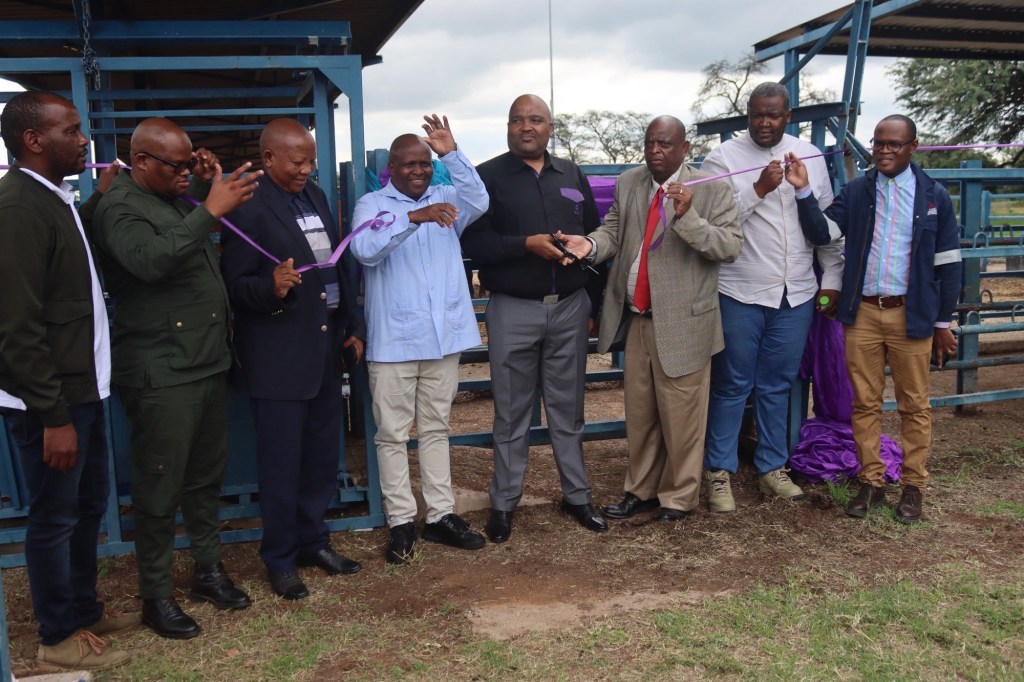
4 March 2025- The Department of Agriculture and Rural Development (DARD), in strategic partnership with the North West University (Mahikeng campus), officially launched the Agri-Hub at the North West University’s Molelwane Farm on Monday. The North West Premier, Lazarus Mokgosi said this is a ground-breaking initiative aimed to address food security challenges, while strengthening agricultural resilience within North West communities.
Mokgosi said the Agri-Hub will serve as a key platform for emerging farmers, equipping them with the technical expertise and business acumen needed to establish sustainable and competitive agricultural enterprises. He further said through hands-on training and exposure to modern farming techniques, young agri-preneurs will be better positioned to integrate into the broader agricultural value chain.
“I am indeed privileged and honoured to be part of this important initiative, which forms part and parcel of our ongoing efforts to give much specialised attention to the agricultural industry and fight the scourge of unemployment and poverty afflicting our communities.
“The North West Agricultural contribution to the province’s GDP is at 3,0%, with African and black farmers playing a minimal role in this regard. It is further indicated that North West ranks between 1 and 5 on production of soya beans, beef, chevon, sorghum, lucerne and groundnuts,” said Mokgosi.
He added that these statistics are important in the planning and development of an improved agricultural sector within the province. Mokgosi said it is therefore upon the Agri-Hub to turnaround this scenario.
“The execution of this initiative correlates with the Provincial Growth and Development Strategy (PGDS), which has placed a stronger focus on agriculture, to drive economic growth, alleviate poverty and create jobs. The launch of this Agri-Hub is primarily centred on the second priority of the Medium-Term Development Plan (MTDP-2025-2030), which is to fight poverty and high costs of living.
“As I indicated in our policy statement, the launch of this flagship programme further seeks to contribute to the province’s sustainable economic growth, and today marks the beginning of the realization of that promise. This Agri-hub will serve as a centre of excellence in the enhancement of livestock and crop value chains, support to our farmers through research, technology development, skills development and capacity building,” he said.
Meanwhile, the NWU principal and vice chancellor, Professor Bismark Tyobeka said: “Today marks a historic moment, as we gather to witness the realization of a transformative initiative aimed at addressing food security, economic development, and agricultural sustainability in our province. We must ensure that this noble initiative succeeds and contributes to our country’s economic development growth and job creation while simultaneously contributing to the United Nations Development Goals.
“The agricultural sector remains one of the crucial sectors that have the potential to grow our country’s economy, create more employment opportunities, and improve the living conditions of South Africans, especially rural communities. According to the latest available data, the South African agricultural sector contributes approximately 2.5% to the country’s GDP. We can all agree that the sector can contribute more than this.”
Tyobeka said recently Stats SA announced that the official unemployment rate decreased by 0,2% point to 31,9% in Q4:2024 compared to Q3:2024. He said regrettably, employment increased in all sectors between Q3:2024 and Q4:2024, except in agriculture which decreased by 11 000 jobs.
“The North West Agricultural Hub is more than just a facility. It is a dynamic ecosystem designed to integrate research, capacity building, and commercialization.
“Through strategic collaboration between the government, North-West University, and private enterprises such as EKIM Wildlife, we are pioneering an innovative model that will transform agricultural production, processing, and market accessibility,” said Tyobeka.
He said, therefore, this initiative must be seen as a contribution to the Agriculture and Agro-Processing Master Plan which is a social compact between labour, government, civil society, and industry, and seeks to promote inclusive growth, competitiveness, transformation, employment, and food security. Tyobeka said at its core, the Hub is about adding value to farmers, to students, to researchers, and to the broader economy.
“The focus on crop production, beef and dairy beneficiation, and goat commercialization will unlock immense economic potential. In March 2020, Statistics South Africa released the Census of Commercial Agriculture 2017 report, which indicated that the total income for the commercial agriculture industry in 2017 was R332,8 billion, which was higher than the R85,9 billion recorded for 2007.
“In 2017, the major contributor to total income was livestock farming (R120,8 billion or 36,2%), followed by mixed farming (R95,0 billion or 28,6%). In terms of employment, the provinces with the lowest number of commercial agriculture employees were Gauteng (36 517 or 4,8%) and North West (57 758 or 7,6%),” he said.

 The Guardian