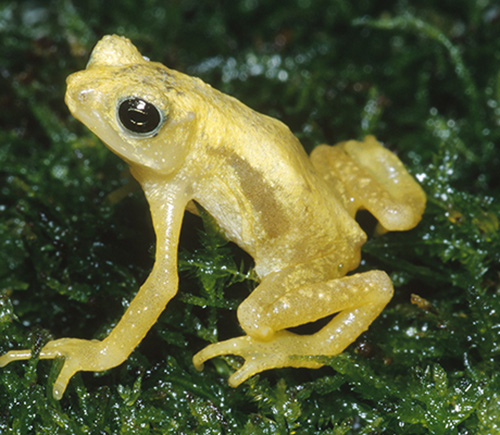
Picture: Tanzanian spray toad extinction highlights the need to protect biodiversity/Supplied
By PHENYO MOKGOTHU
4 September 2024- When a species becomes extinct in the wild, the loss is permanent. For Africa, a serious loss is the extinction of the Tanzanian Kihansi spray toad (Nectophrynoides asperginis) due to habitat change and infectious disease.
This should serve as a wakeup call for policy makers to prioritise and implement conservation measures for endangered species. Found only in the Udzungwa Mountains, the species experienced a population decline after the construction of the Lower Kihansi Hydropower project and an outbreak of a fungal disease.
This is according to a study co-authored by Prof Ché Weldon of the North West University’s (NWU’s) subject group Zoology.
Weldon said the hydropower project reduced water flow in the toads’ habitat tenfold, and by March 2001, the population had dropped to fewer than 2000 toads. He further said although restoration efforts increased the population to nearly 18 000 by June 2003, this recovery did not last.

“The final blow was an outbreak of chytridiomycosis, caused by the chytrid fungus Batrachochytrium dendrobatidis. This infection affects the outermost layers of amphibians’ skin, impairing their ability to breathe or thermoregulate correctly.
“This led to the toad population’s rapid decline. By 2009, the Kihansi spray toad was declared extinct in the wild. The NWU study used spatiotemporal surveillance and mitogenome assembly of the fungus from archived toad specimens,” said Weldon.
He added that it showed that the outbreak was caused by the BdCAPE lineage of the fungus which, according to molecular dating, appeared in Southern Africa around the time of the extinction of the spray toads.
“Further surveillance of other amphibian species in the Udzungwa Mountains, showed BdCAPE infection without noticeable health impacts, suggesting that these species can tolerate the fungus under stable conditions.
“However, the spray toad’s vulnerability increased due to habitat change. The findings show that despite habitat restoration efforts, the BdCAPE fungus led to the Kihansi spray toad’s extinction,” said Weldon.
He said this is the first documented instance in Africa of a host species being driven to extinction by this specific pathogen. Weldon said the study highlighted the use of molecular techniques, such as shotgun sequencing, to analyse archived specimens and understand disease outbreaks and their impacts.
“It calls for comprehensive efforts to assess the risks posed by habitat modification, climate change and emerging diseases on vulnerable species.
“The extinction of the Kihansi spray toad shows the need for integrated conservation strategies that consider environmental changes and disease dynamics,” he said.
Weldon said policymakers must recognise the threats posed by habitat alteration and emerging infectious diseases to prioritise and implement conservation actions for endangered species.
(Edited by Obakeng Maje)
 The Guardian