A woman (29) was sentenced to 12 years imprisonment for murder. Nadia Schwartz from Currieskamp killed her boyfriend, Floors Nell (28).
The ZF Mgcawu District police spokesperson, Sergeant Omphile Masegela said on 30 December 2023, the Keimoes police attended a murder scene, where the deceased was stabbed in the chest, following an altercation with his girlfriend over alcohol and money.
“Schwartz fatally stabbed her boyfriend, Nell, who succumbed due to the injuries he sustained. She was arrested on the scene and was released on bail until her sentencing to 12 years imprisonment, of which two years is suspended for five years.
“The Management of the South African Police Service in the Northern Cape welcomed the sentence that was handed down to the woman for the murder of her boyfriend. This follows a meticulous investigation by the investigating officer, Sergeant Piet Eiman attached to the Keimoes Detectives,” she said.
Masegela further said the sentence is a clear indication that detectives in the province remain focused and intentional in ensuring that perpetrators of Gender-Based Violence and Femicide (GBVF) are brought to justice.
Picture: Some of learners affected by lack of scholar transport
By OBAKENG MAJE
Lack of scholar transport continues to have a negative impact in rural areas across the North West. Learners from Mokassa 1 village, near Taung, said it has been two months without scholar transport and they are now forced to walk long distances to go to school.
Recently, the affected learners marched to the North West Department of Education (Taung Sub-District office), demanding scholar transport. They alleged that lack of scholar transport leads to missed classes and potential educational setbacks.
A Grade 12 learner from Batlhaping High School, Reaobaka Goshupelwang (18), said they do not feel safe as they walk through the bushes to get to school.
“The situation is so grim and no one is willing to listen to our plea. We are now forced to bear the brunt and put our lives at risk in the process. Some of the learners are females and we are afraid that they might be raped one day.
“In most cases, we arrive late at school and some teachers will bar us from attending their classes due to coming late. This has a huge impact in our teaching and learning,” he said.
Another Grade 11 learner from Mankuroane Technical School, Tshepng Sesinyi, shared the same sentiments. Sesinyi said they have written a few letters to the principals, complaining about the same issue, but their plea fell in deaf ears.
“No one is taking us seriously and willing to listen to our plea. We urge the department to come up with a lasting solution in addressing this challenge because this is our future that we are talking about,” he said.
The North West Department of Education spokesperson, Mphata Molokwane said they are aware that some parents and a few learners arrived at the Greater Taung Local Education Department offices in taxis to voice their displeasure. Molokwane further said the parents were granted a hearing by the appropriate authorities, who oversee learner transport matters through the North West Community Safety and Transport Management.
“To address the concerns highlighted, the department promptly sent the learners a scholar bus. We may emphasise that service providers failing to uphold their end of the bargain, they are letting the Departments of Education and COSATMA down.
“Since learners’ transportation fails, we have asked principals not to lock gates for them. Punishing learners for tardiness when it is not intentional would be unfair. Again, we will speak with the principals,” he said. Plans for recuperation are implemented to account for the time lost in teaching and learning,” he said.
Molokwane added that the Department of Community Safety and Transport Management has received their entreaties to terminate the contracts of non-compliant service providers.
Meanwhile, the North West Department of Community Safety and Transport Management spokesperson, Charles Matlou said: “The department is aware of the matter through our monitoring process. There has been inconsistent provision of service on the route in question.
“The department has been in constant communication with the service provider. As an interim measure, we have requested one of the service providers with extra capacity to transport learners’ whilst a permanent solution is found.”
Matlou said the department regretted the inconvenience caused by this and urged the parents, as well as school principals to be proactive and make them aware of any challenges as early as they can. He said this will assist the learners not lose more hours of learning.
Over the last few months, we have seen a growing confidence among investors, businesses and citizens about the prospects for our economy. The latest Business Confidence Index published by the South African Chamber of Commerce and Industry (SACCI) points to an increase in business confidence since the elections in May. This sentiment is evident in the Johannesburg Stock Exchange’s All-Share Price Index, which increased by about 8% from the end of May to the end of July 2024.
This is welcome news, particularly in light of the most recent employment figures released by Statistics South Africa, which show that unemployment remains extremely high at 33.5%. Business confidence is so important to our efforts to create jobs because it signals an improved business environment and encourages new investment. Greater investment in the economy enables faster growth and more job opportunities.
For several years, the country has experienced low levels of business confidence. Business confidence was negatively affected by the prolonged electricity crisis, state capture, concerns about corruption, the decline of state-owned enterprises and the manner in which law enforcement agencies had been compromised.
Investors have also been concerned about obstacles to growth, such as delays in the release of broadband spectrum, inefficiencies in ports and rail operations, and regulations that have slowed down licencing processes.
The successful holding of our national and provincial elections in May and the formation of the Government of National Unity have had a positive effect on business confidence. The progress we have recorded in our reform process thus far has also contributed to the improved sentiment.
We have shown our determination to tackle corruption. Bodies like the National Prosecuting Authority (NPA), Special Investigating Unit (SIU) and the Hawks are reinvigorated and have brought several high-profile cases to trial. The permanent establishment of the NPA’s Investigating Directorate has given further impetus to the fight against corruption.
Crime is being tackled. Across the country initiatives such as Operation Shanela have upped the war on crime. We are clamping down on illicit mining operations. Criminal syndicates involved in cable theft and extortion at construction sites are being dealt with.
Through a concerted effort from all stakeholders, we have confronted the electricity crisis. We have now had more than 140 consecutive days without load shedding. There has been a huge increase in new power generation capacity.
Investors have seen the growth opportunities in the far-reaching energy reforms we are undertaking. Just last week, I signed into law the Electricity Regulation Amendment Act, which will enable the establishment of a competitive electricity market.
The progress we have made in electricity gives us confidence that we can overcome the problems on our freight rail lines and in our ports. Transnet’s recovery plan is showing progress. The private sector is providing significant technical support and resources to Transnet Freight Rail and Port Terminals.
In Gauteng, the Western Cape and KwaZulu-Natal, new state-of-the-art passenger trains are ferrying commuters along refurbished and newly reopened rail corridors. This saves users considerably in terms of commuting time and transportation costs.
We have made changes to immigration regulations that make it easier to attract skills, investment and tourists into the country. We have also significantly speeded up approval processes for water use licences and energy projects, and released broadband spectrum to unleash the potential of our telecommunications industry.
We are also making progress on infrastructure investment. According to Nedbank’s Capital Expenditure Project Listing, the value of fixed investment project announcements in the first half of this year rose to approximately R800 billion. This was up sharply from just over R190 billion in 2023. The public sector accounts for most of these projects, in areas such as energy, transportation, health facility upgrades, roads and housing.
As Government, we held a meeting with business leaders last week. Business expressed optimism about the recovery and growth of our economy. They committed themselves to a new era of partnership with government. We agreed on key actions we must now take to build on the progress that has already been made.
We cannot rebuild our country unless all South Africans work together. We will continue to work with business, labour and other social partners to drive the structural reform process that will boost inclusive economic growth and jobs.
There is indeed an air of optimism in our country. Let us harness this confidence and goodwill to increase the momentum of our shared efforts to build and strengthen our economy.
Picture: Situation at Brits Forensic Pathology Mortuary in Brits
By OBAKENG MAJE
The North West MEC for Health, Sello Lehari said he will visit various healthcare centres across four districts as part of his Re Bona Ka Matlhoprogramme. Recently, Lehari conducted an oversight visit to the embattled Brits Forensic Pathology Mortuary in Brits.
This comes after the National Education, Health and Allied Union (NEHAWU) raised concerns regarding a dire situation the mortuary found itself in. NEHAWU called on Lehari’s department to shut down the mortuary immediately and address the calamitous situation.
Lehari said the union alleged that the mortuary is non-compliance to Occupational Health and Safety Act and lack of Personal Protective Equipment (PPE). He further said the workers also complained about the stench that is coming out of the refrigerator of the mortuary and over capacity of bodies, amongst others.
“They demanded that a medical check-up should be arranged for workers working at the mortuary. Among those who were part of this oversight visit and a briefing on the status of the mortuary were the MMCs for Health Services from both the Bojanala District Municipality and the Madibeng Local Municipality, as well as senior managers of the department and the leadership of the labour union, NEHAWU both at provincial and local level.
“Part of the already implemented interventions, is to immediately transfer some of the bodies to other private mortuaries, to relieve the current overflow, due to the fact that the Brits mortuary only has a capacitance of 120. Currently, deep-cleaning is taking place to resolve bad odour coming out of the unit,” said Lehari.
He added that the oversight team noted that the overflow is mainly caused by the fact that Phokeng Mortuary is currently under renovation. Mothibedi said the other challenge is shortage of staff.
“Unclaimed bodies also add to the overflow. There is also a tendency for families to not claim bodies which leads to the mortuaries having to conduct a large amount of paupers’ burials. Compounding this challenge is the fact that Bojanala is a mining area, hence many unknown bodies because of workers who come from far places.
“The department has made a request to the South African Police (SAPS) for the burial of 88 unidentified bodies. Currently the department is being restricted by SAPS from burying as it awaits letters of permission for burial,” he said.
Lehari noted a report and provided a way-forward as part of further strengthening of the intervention plans. He said he knows about the complaints which NEHAWU has raised.
“I take all these complaints seriously and we are here to provide solutions. We would like to assure every one of my commitment to finding a lasting solution. Therefore, we immediately called for a meeting with the departmental management, to close any gap in the intervention plan.
“We considered the proposals made by NEHAWU and provide any further information for decision making. I promise to return to the mortuary within 8 days as part of his unannounced visits to health delivery sites,” he said.
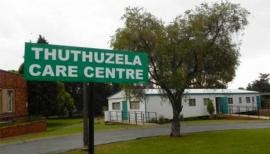
Picture: One of the Thuthuzela Care Centre across the country/Supplied
By BAKANG MOKOTO
The Thuthuzela Care Centres are a one stop-facility for survivors of Gender-Based Violence (GBV), says The National Director of Public Prosecutions, Advocate Shamila Batohi. She said victims are able to receive psycho-social support, medical treatment and legal services at these centres.
Batohi, who delivered an address at the launch of a Thuthuzela Care Centre in Mitchell’s Plain in the Western Cape on Monday said, the TCCs are crucial to the fight against GBV.
“By providing better quality of services, we do find that there is improved reporting. In 2020/21, when we had 60 TCCs, there were just short of 30 000 cases that were reported. In 22/23, there were 36 800 cases or so and this figure represents an increase of 24.3% in a two-year period.
“In the past eight years combined, the TCCs have dealt with 266 593 matters at all of its sites. These are only reported cases and we have noted improvements in the conviction rates. Since 2010, the conviction rate has improved from 60% to the current 77.5% as at the end of December 2023,” she said.
Batohi further said it’s all about the services that are being rendered that help victims to be able to go through the court processes. She added that they have also noted an increase in long term sentences that are imposed by the courts.
“For the past two years, up to December 2023, the courts imposed 337 life imprisonment sentences, 236 sentences of between 20 to 25 years and 624 sentences of 10 to 15 years imprisonment. Despite the upward progress, Batohi emphasised that the courts merely deal with crimes that have been committed and that dealing with the roots of GBV is crucial.
“When victims come into these facilities, the offences are already committed and we try to help them on their journey towards healing but it’s not going to solve the problem. That is why the importance of our councillors, community based persons, and civil society in really trying to deal with the scourge,” she said.
According to Batohi, that is why they all need to help to instil the right values, particularly in men. She said unless they actually deal with [GBV] in a holistic way, they are not going to be able to deal with the scourge.
“Notwithstanding that, we continue to try to make sure that we help the victims on their journey towards becoming survivors,” she said.
Two South African journalists have won awards in the Southern African Development Community (SADC) Media Awards. Fikile Necter Marakalla was the second prize winner in the Photo Category with her pictures that were published in SA News and Diplomatic Informer.
Marakalla’s winning entry highlighted the strong fraternal, historical as well as social relations between South Africa and the United Republic of Tanzania during the state visit of Dr Samia Suluhu Hassan.
Tshimologo Benjamin Moshatama from Channel Africa Radio was the second prize winner in the Radio Category with his entry on the importance of shared water resources in the SADC regional integration and development, as well as the contribution of the Kingdom of Lesotho in the management of shared water resources.
Meanwhile, the government has congratulated the two South African journalists. The Government Communications and Information System (GCIS) acting Director-General, Nomonde Mnukwa said the SADC Media Awards present a unique opportunity for the SADC region’s journalists to be celebrated and recognised by their peers.
“The media plays a critical role in promoting regional integration in the region. We encourage more South African journalists to cover stories that promote regional integration. Government has called on media practitioners in South Africa and the region to share their stories that focus on economic well-being, improvement of the standard of living and quality of life, freedom and social justice, peace and security for the people of Southern Africa.
“Media practitioners are encouraged to continually ensure that we popularise projects that are underway in the SADC region. Africa and the region must tell her own stories. It is important that we hear from a range of voices from our diverse nations. By telling our own stories, we will bridge divisions between SADC nations,” said Mnukwa.
She further said the SADC Media Awards are aimed at promoting excellence in the fields of Print Journalism, Radio Journalism, Television Journalism and Photojournalism. Mnukwa added that the SADC Media Awards serve as a link for coordination and synchronization between formal structures of SADC member states and media.
“They further seek to bring and enhance partnership between media and government institutions. South Africa’s participation at SADC is guided by the SADC Treaty. The SADC Treaty guides all Member States within the regional bloc.
“The Treaty encourages the people of the region and their institutions to take initiatives to develop economic, social and cultural ties. GCIS is responsible for the implementation of the SADC Media Awards on behalf of South Africa,” she said.
Mnukwa said GCIS would also like to acknowledge the excellent work done by the judges who make up South Africa’s chapter of the SADC Media Awards in the National Adjudication Committee (NAC). She said these members are drawn from seasoned and experienced media professionals, who give freely of their time and expertise to ensure that they can confidently submit entries of the highest standard to the regional competition.
Picture: The CFO of City of Matlosana, Mercy Phetla
By REGINALD KANYANE
The Chief Financial Officer (CFO) of the City of Matlosana, Mercy Phetla (38), the acting Store Controller, Mmatebesi Josephine Sekhejane (42), and the Director of Variegated Pty (Ltd) company, Tiisetso Sebetlele (33), briefly appeared in the Klerksdorp Magistrate’s Court on 19 August 2024, facing charges of fraud.
The National Prosecuting Authority (NPA) regional spokesperson in North West, Sivenathi Gunya said the trio was arrested on Monday morning by members of the Hawks’ Serious Corruption Investigation Unit, following an investigation into allegations of procurement irregularities.
“It is alleged that in January 2024, the municipality paid a service provider an amount of R2.9 million for electrical materials, which were never delivered. The accused have appeared in court on a charge of fraud and were granted bail.
“Phetla was granted a R35 000 bail, Sekhejane R5000 and Sebetlele was granted R20 000 bail. The court has ordered that the accused report at their nearest police stations once a week and that they must not be in contact with the State’s witnesses. Their case was postponed to 12 November 2024, for further investigation,” he said.
Meanwhile, the Provincial Head of the Directorate for Priority Crime Investigation, Major General Patrick Mbotho and the Director of Public Prosecutions in North West, Dr Rachel Makhari have welcomed the arrest and subsequent court appearance of the accused. They have vowed that the Hawks and NPA will continue working together to fight malfeasance in public institutions.
The Portfolio Committee on Public Service and Administration commands and applauds the Minister of Public Service and Administration, Inkosi Mzamo Buthelezi and his department for granting the Minister of Home Affairs, Dr Leon Schreiber and his department additional overtime hours for the next three months to meet targets and reduce the home affairs services backlog.
The Chairperson of the Committee, Jan De Villers said the committee understands and supports the interim measure of granting the Department of Home Affairs a three-month period of overtime to the officials to reduce the VISA backlog. He further said these interventions will assist in ensuring the country attracts critical skills that businesses need to grow the economy and reduce rising unemployment rate.
De Villers added that the collaboration by the two departments clearly demonstrates the spirit of commitment to a joint national effort to reconcile the nation and improve its well-being, as mentioned by President Cyril Ramaphosa in his opening of the 7th Parliament.
“Ramaphosa said that, as the Government of National Unity (GNU), we are resolved to intensify our investment drive, encouraging and enabling businesses to invest in productive capacity. We believe home affairs efforts fit within this above mentioned government commitment.
“Buthelezi’s support to Minister Schreiber will directly contribute towards the building of improved professional state capacity in Home Affairs, which will have a positive effect on job creation and economic growth. We, as the committee, look forward to also playing our part towards supporting Buthelezi and his department towards the goal of realising a professional, capable, ethical and developmental state,” he said.
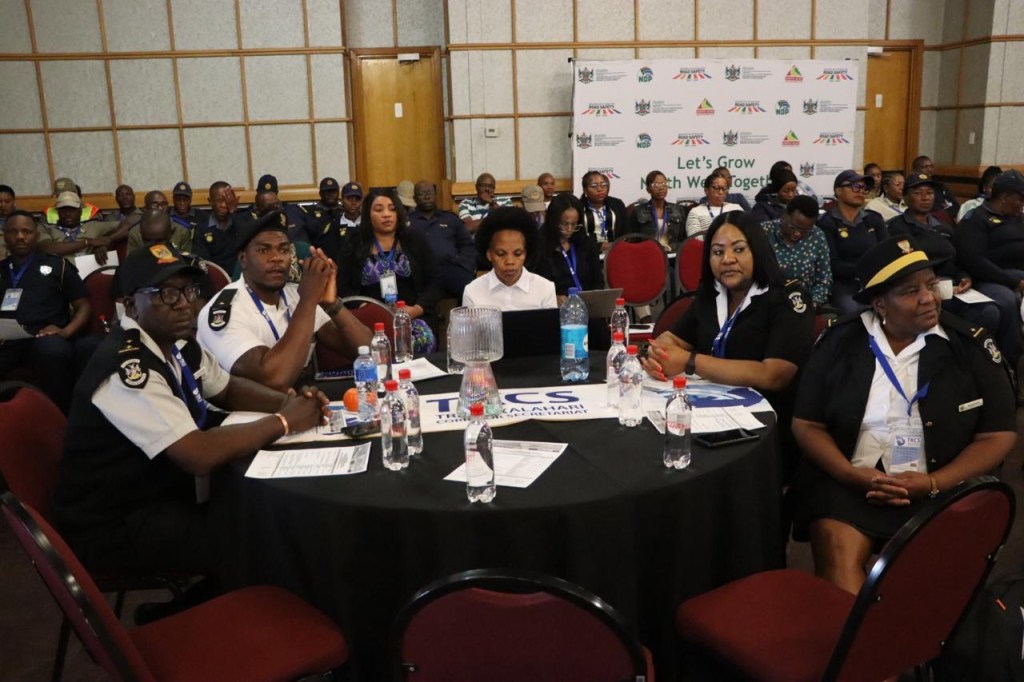
Picture: Some of delegates attending Trans Kalahari Corridor Three Member Statesevent/Supplied
By KEDIBONE MOLAETSI
A clarion call has been made for the Trans Kalahari Corridor Three Member States to strengthen its initiatives on supporting the economic growth of the three countries by supporting spatial development initiatives along the corridor.
The Executive Director for the Trans Kalahari Corridor Secretariat, Leslie Mlungisi Mpofu said a lot has been achieved since the signing of the Memorandum of Understanding (MoU) in 2003, however, more strategic issues still need to be attended to.
Mpofu said the 14th Joint Law Enforcement Operation is critical and a strategic proof that the MoU objectives have been given attention and it is now important to advance measures so that communities along the corridor can benefit.
“The corridor connects intra and inter regional economic areas in a defined geographical sphere. There are a number of perceived socio-economic development opportunities and benefits promoted by corridor development.
“These include, but not limited to diversification of the region’s industrial base, regional approach in mobilizing for Foreign Direct Investment (FDI), corridors are direct ways to bring about regional integration,” he said.
Mpofu further said corridors promote regional integration and this is key in promoting growth prospects to developing countries. He added that corridors help to prioritize development of infrastructure to plug out the missing links in developing regions.
“Corridors provide an important connection between economic nodes or hubs therefore it is high time the Three Member States support regional economic growth, increase the rate of economic growth and create employment, both formal and informal.
“There is a need to identify policies and strategies, which will provide a sustainable basis for empowering local communities,” said Mpofu.
On behalf of the Republic of South Africa, Co-Chair Segodi Mogotsi said: “We remain committed as a country to the vision of our forebears to connect and integrate the region. Trans Kalahari Corridor remains one of our torchbearers in the continent with its success seen in the growth of traffic volumes, and infrastructure investment along the corridor in the Three Member States.”
In her speech representing Botswana, Masego Gertz said the 14th JLEO presents a platform for reaffirmation and recommitment to the enhancement of trade and also deepen socio economic integration. She said the Three Member States have committed and pledged to eradicate poverty and place their countries on a path of sustainable growth.
“We have not done enough in the past 20 years as our communities are still not benefiting economically, particularly SMMEs. We call on the member states to ensure that communities along the TKC are the first to enjoy the benefits through business opportunities and employment. People should be able to find a living through the corridor,” said Gertz.
From Namibia, Dr Cedric Limbo said the MoU is an important initiative as it is a step towards eliminating non-tariff barriers.
Setshwantsho: Sepodisi se tshotse nama ya kgomo kwa phitlhong e go belaelwang ele ya bogodu/Setshwantsho-papiso
Ka OBAKENG MAJE
Monna o latofadiwang ka go utswa kgomo, mme a e rekisetsa lelapa lengwe le le neng le tshwerwe phitlho, o neetswe beile ya R1000 ke kgotlha-tshekelo ya Taung mo letsatsing la Mosupulogo. Andries McCarthy, o latofadiwa ka go utswa kgomo, mme a e rekisetsa ba lelapa la ga Louw le le neng le tshwere tirelo ya phitlho kwa Maganeng, gaufi le Pudimoe ka Lamatlhatso.
Go begwa fa ba lelapa ba rekile kgomo eo ka R8000 go tswa go molatofadiwa.
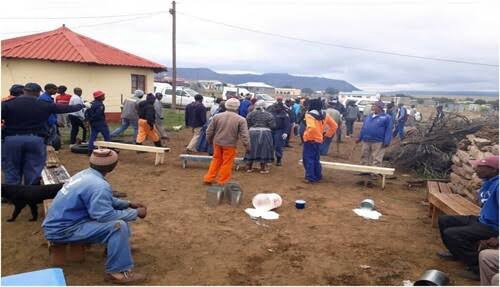
Mongwe wa lelapa la ga Louw yo o sa batleng leina la gagwe le itsiwe are, ba ile ba kgakgamadiwa ke go bona sepodisi se itatlhela kwa lelapeng la bone, ura pele phitlho e ka simolola ka Lamatlhatso. Are mapodisi ao, ba ile ba ba begela fa kgomo e tlhabilweng kwa phitlhong, go belaelwa fa ele ya bogodu.
“Re ne re tshwere tirelo phitlho ya ga Kedumetse Bosman, mme re ile ra gamarega fa re bona mapodisi ba ikaba ka dipitsa tsa nama. Ba ile ba tlhalosa fa kgomo e tlhabilweng mo phitlhong, go belaelwa fa e ka tswa e utswitswe.
“Go ile ga tsoga tlhatlharuane magareng ga mapodisi le banna ba baneng ba kgoba nama kwa sakeng. Banna ba, ba ne ba ipelaetsa kgatlhanong le sepodisi gore se se tseye pitsa ya bone ya diretlo, gonne kgale ba semeletse go utlwala,” mongwe wa lelapa wa tlhalosa.
Fela kwa bofelong, go begwa fa sepodisi se ile sa amoga banna ba pitsa eo ya diretlo, ga mmogo le dipitsa tsotlhe tse di neng di apeile nama. Go begwa fa batla-phitlhong, ba ile ba jela fela ka cabbage, ntle le moronyana, gonne sepodisi se sa tlogela le ha ele setoki kwa morago.
Kgetsi ya go fitlhelwa ka setoto sa kgomo kgatlhanong le McCarthy, e buseditswe morago go fitlhelela di 11 Lwetse 2024.
Kgabagare, McCarthy o tlhaloseditse lekgotlha fa a tlile go ka ithapela mmueledi o o ikemetseng go ka mo emela mo kgetsing e.







 The Guardian