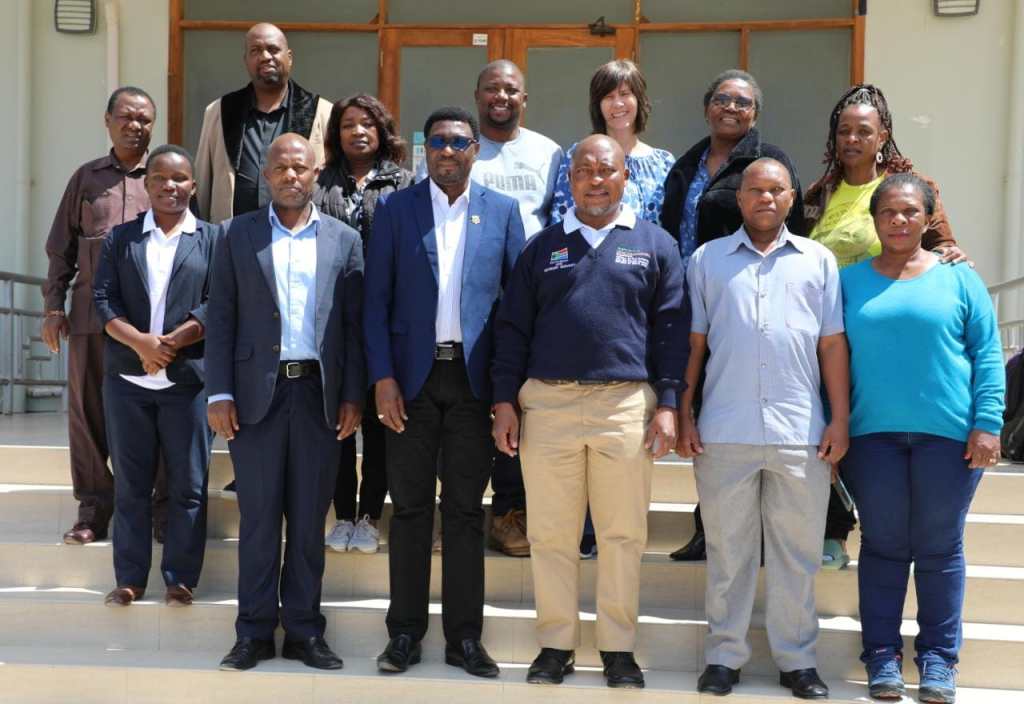
Picture: Ministry of Natural Resources and Tourism, Tanzanian Forestry Research Institute (TAFORI) and the North West Province of South Africa delegation at the Dodoma Government Precincts in Tanzania/Supplied
By OBAKENG MAJE
The Head of Department at North West Department of Agriculture and Rural Development (DARD), Thupi Mokhatla said their benchmarking excursion on beekeeping in Tanzania will be significant. This comes after delegations from the North West Department of Agriculture and Rural Development (DARD) and North West Department of Economic Development, Environment, Conservation and Tourism (DEDECT) visited Tanzania.
Mokhatla said the 10 members’ delegation seeks to gather essential information that will assist them in making informed decisions on the development and growth of the North West Beekeeping industry.
“During this four-day visit to Dodoma and Tabora Region, the South African delegation will engage with the Tanzanian Ministry of Natural Resources and Tourism (MNRT), apiculture technical experts and visit numerous beekeeping groups including the Nsimbo Training Apiary Site, Nyandakame Bee Farm and Aghondi Bee Reserve.
“The aim is to explore various aspects including agricultural development, environmental management and economic development relating to the apiculture sector in Tanzania, as well as the country’s legislation on beekeeping and how it legally regulates the industry,” he said.
Mokhatla further said on the first day of the visit, they focused on analysing the Tanzanian country paper on beekeeping and visitations to various reserves in Manyoni District. He added that, the DARD recognises the significance of this benchmarking exercise in informing the decision-making process regarding apiculture in the province.
“The insights gained from the visit to Tanzania will provide valuable information to assist the department in making knowledgeable and effective decisions that will ensure improved techniques in beekeeping. It will also assist us in identifying gaps within the South African industry and finding means to achieve maximum competitive advantages according to the World Beekeeping standards.
“The department remains committed to addressing the challenges faced by beekeepers in the province and enhancing effective beekeeping methods to accelerate the establishment of a regulated industry. The expedition comes after the African Regional Apimondia Symposium, which was held in Durban in March, where Apiculture best practices were shared by various countries across the world,” said Mokhatla.
He said Tanzania demonstrated leading and advanced beekeeping practices in forest reserves, bee reserves, game reserves, game-controlled areas, and public land. Mokhatla said the African country has successfully enhanced environmental conservation and sustained its socio-economic development with bees.
 The Guardian