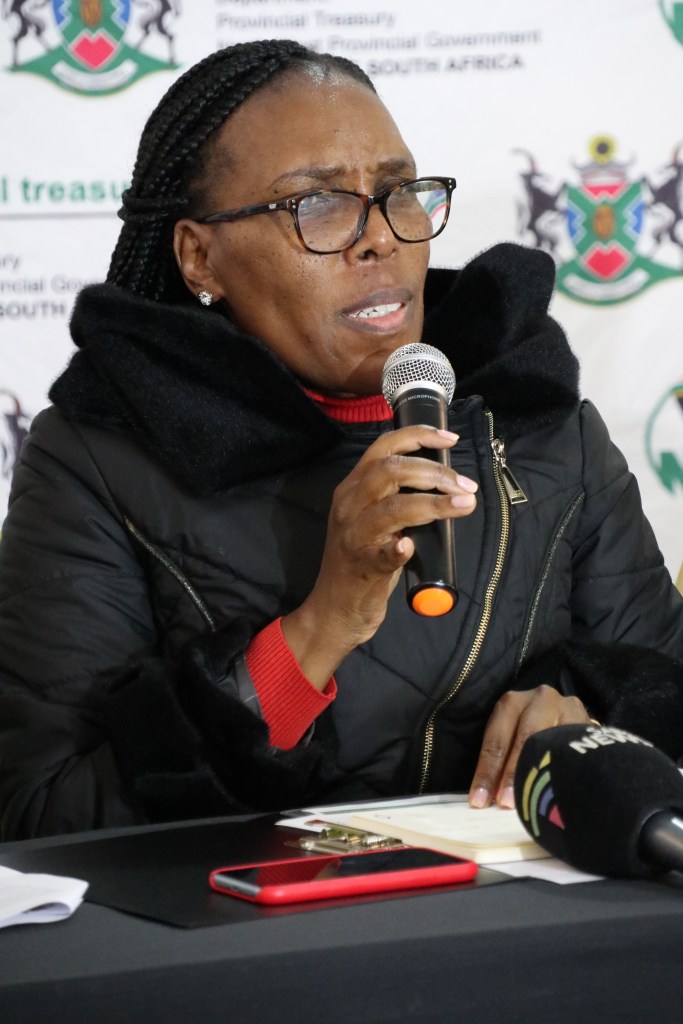
Picture: North West MEC for Treasury, Motlalepula Rosho/Supplied
By OBAKENG MAJE
Most municipalities across South Africa are in a dire state and rely heavily on consultants. This grim picture was painted by the Auditor-General (AG), Tsakani Maluleke during her report last week. Maluleke said out of 257 local municipalities, 38 received unqualified audit outcomes with no findings, 104 received unqualified outcomes with findings, 78 received qualified outcomes with findings, 6 received adverse outcomes with findings, 15 received disclaimers with findings, and 16 were outstanding audits.
The North West MEC for Treasury, Motlalepula Rosho said, in a quest to improve the situation in the province, they will have a consultative engagement with the North West MEC for Cooperative Governance, Human Settlements and Traditional Affairs (COGHSTA), Nono Maloyi.
“We will convene a joint session with municipalities in the province on 8 June 2023 at King Gate Hotel in Rustenburg. The aim of the session is to assess the state of affairs in municipalities with regard to issues of governance, financial management, service delivery, infrastructure and local economic development. The session will be attended by the Executive Mayors, Mayors, Municipal Managers and Chief Financial Officers.
“Various municipal support programmes have been implemented. These include the deployment of Provincial Executive Representatives (PER) and Provincial Municipalities Financial Recovery Services teams to assist with the implementation of interim rescue plans and development of the financial recovery plans,” she said.
Rosho further said, the PERs act on behalf of the Executive Council and were placed at Naledi, Tswaing, Madibeng, Ramotshere Moiloa, Ditsobotla, Kgetlengrivier Local Municipalities as well as the Dr Ruth Segomotsi District Municipality to provide strategic leadership and guidance for the implementation Financial Recovery Plans. She added that the PERs have been appointed for a period of three years.
“The technical financial management support to all departments and entities the initiatives targeted to improve the number of departments achieving clean audits in the province is making steady progress and that it has been expanded to include an additional department whilst also targeting public entities.
“Through the Office of the Provincial Accountant General, we shall continue to provide financial management oversight and support to all departments and public entities on accounting, audit, risk management, reviewing of financial statements, and monitoring of the post-audit action plans for improved audit outcomes,” said Rosho.
She said plans are also afoot to establish a call centre, which deals with 30-day payments queries and supply chain management practices complaints. Rosho said the call centre is expected to be operational in the 2024/2025 financial year.
“Notwithstanding the fact that the call centre is not yet operational, provincial treasury continues to monitor the performance of departments on 30-day payments through quarterly reports that are processed through the executive council,” she said.
Meanwhile, the Chairperson of the Select Committee on Cooperative Governance, Human Settlements, Water and Sanitation, China Dodovu said: “The briefing by the Auditor General (AG) on municipal audit outcomes presented an opportunity to the members of the committees on cooperative governance to have a deeper and broadened understanding about the financial administration at the municipalities to intensify their oversight role over local government.
“We call on members of the committees to intensify their role to ensure that stability and excellence in municipalities are achieved. The AG told the joint meeting that the timely submission of financial statements and other information for auditing improved from 81% in the previous financial audit cycle to 91% in the 2021/22 financial audit cycle.”
He said Maluleke highlighted that, without proper financial planning, controls, and reporting, municipalities cannot deliver services to the people and account for tax-payers money. Dodovu said the committees also heard that some municipalities use a lot of money to pay consultants, even though little value is derived from their services.
“Consultants are asked to complete daily financial administrative work, which is supposed to be done by municipal officials. According to the AG, municipalities that use consultants are generally those who receive bad audit outcomes, the AG pointed out.
“The AG also blamed poor financial management and a lack of consequences for poor management on the fact that municipal infrastructure grants are spent on salaries. She said the municipal council and the accounting officers are responsible for the lack of accountability in municipalities,” said Dodovu.
 The Guardian