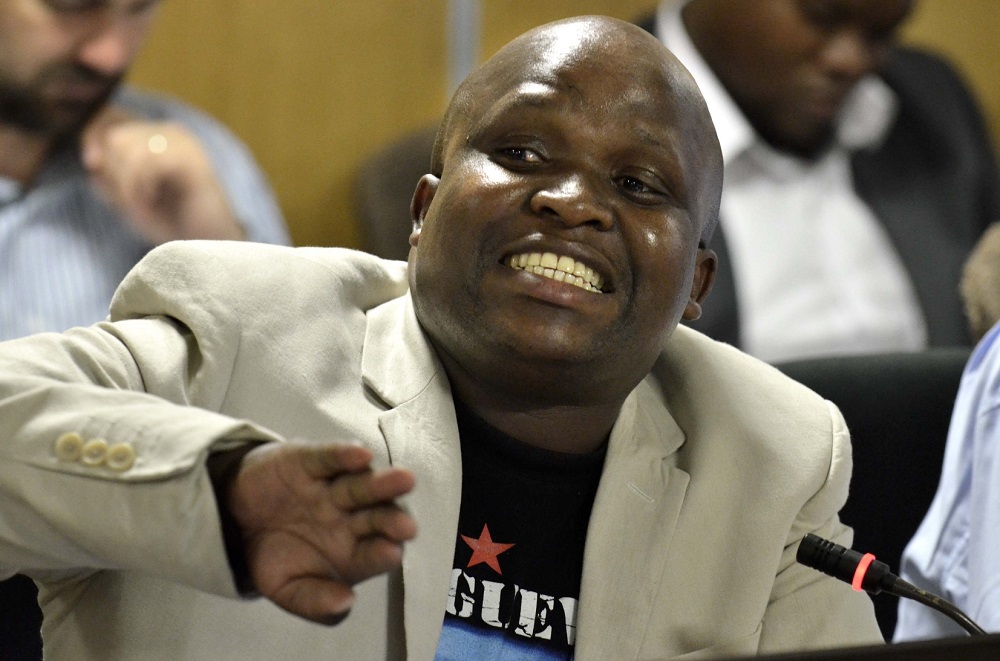
Picture: North West MEC for Health, Madoda Sambatha/Google

By KEDIBONE MOLAETSI
The North West Department of Health has refuted allegations that it has spent R1.5 million on a borehole at Joe Morolong Memorial Hospital in Vryburg. The North West Department spokesperson, Tebogo Lekgethwane said, even though the department has spent R1.5 million, it includes addressing water challenges at the hospital, not only for a borehole.
“The article on Taung DailyNews, which stated that the North West Health MEC Madoda Sambatha said that the department spent R1.5 million on a borehole was incorrectly captured.
“What Sambatha said is that, the department spent R1.5 million on a number of interventions on water tinkering and to improve capacity for water storage, including for the drilling of a borehole.
“The amount was therefore not solely spent on a borehole as per the impression created by the article,” Lekgethwane said.
Sabatha said, they have done this in quest of addressing water shortage at the hospital He said this comes after the Naledi Local Municipality’s failure to provide water.
“Water is a challenge across the province and just last year, we decided to drill boreholes for each facility. So, we can rely on these boreholes when the municipal supply cannot provide us with water.
“The problem is, we are unable to complain, yet we have patients to attend to. So, that is the reason we use our own money, yet it is not our responsibility. We are doing this because patients and staff cannot be in a facility that does not have water,” he said.
Sambatha further said, they do not want to rely on water tankers. He added, they want a reliable water supply, so boreholes will be on the basis of their own budget.
“We are already providing ourselves with water tankers, because the municipality’s water tanks intervention is failing. There is a suspicion of water infrastructure sabotage.
“There is a problematic element of tempering with the supply of water deliberately. Sometimes, the ones that are responsible for water tanks are also involved because when there is no water supply, water tank intervention kicks in,” said Sambatha.
He said in some instances, one finds out that even those employed in the same water departments are part of the sabotage.
In the past, the hospital was forced to turn away new patients because of a water shortage.
Meanwhile, the Minister of Water and Sanitation, Senzo Mchunu said: “We will prioritise communities with critical water shortages in the North West through interventions. As the steering committee, we have already received an assessment report on the state of water and sanitation service provision in the province.
“So, we have instructed the Committee’s Technical Task Team to start prioritising critical projects that will ensure immediate restoration of water in areas with existing infrastructure in the province. The report has painted a clear picture that the province has enough sources of water, both on the surface and groundwater to support domestic and other users. However, huge infrastructural challenges in various parts of the province impeded the resources to be transferred to the users.”
Mchunu said, most of the challenges identified stemmed from a lack of capacity, skills, and budget to carry out operations and maintenance, illegal connections, incomplete projects, and infrastructure vandalism in the Water Service Authorities (WSAs) and municipalities’ reticulation systems.
He said the task team will now start the process of prioritising projects for immediate interventions and get commitments from all role-players to enable the work to go ahead as we need to pump water to the people and put this water crisis in the North West behind them.
“There is extensive work lies ahead, and this collaborative process will enable our plans to take off with speed to restore water and sanitation services in the province. The roadmap emanating from the assessment report will now be developed outlining immediate and long-term plans with clear sources of funds to finance the projects, timelines, and roles that all stakeholders will play to ensure the work on the plan is fully executed.
“The roadmap will focus on prioritising refurbishment of the current existing infrastructure including resuscitation of non-functioning boreholes and temporary supply through water tankering for immediate supply in communities where the situation is dire, while the long-term plans will involve the development of bulk water services infrastructure, Water Treatment Works, Reservoirs, Waste Water Treatment Works, pump stations, reticulation, as well as operations and maintenance of the whole water value chain systems in the province.
 The Guardian