Ramaphosa makes slight changes to his cabinet


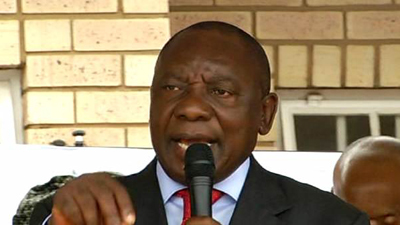
Picture: The SA president, Cyril Ramaphosa/Google

By OBAKENG MAJE

The South African president, Cyril Ramaphosa has made a few changes to the National Executive. Ramaphosa has appointed Paul Mashatile as the deputy president.

This comes after the former deputy president, David Mabuza’s resignation. Ramaphosa also appointed the former mayor of City of Tshwane, Dr Kgosientsho Ramokgopa as the minister electricity.

“The purpose of these changes is to ensure that government is properly capacitated and directed to give effect to the commitments made in the State of the Nation Address (SONA) and the budget speech.

“We have said that, the people of South Africa want action. They want solutions and the government to work for them. All members of the executive, have been directed to focus on those agreed actions that will make a meaningful difference now,” he said.

Ramaphosa further said, this will enable real progress within the next year and that will lay a foundation for a sustained recovery into the future. He added that, all parts of government are focused on addressing those issues that concern South Africans such as load shedding, unemployment, corruption, poverty and the rising cost of living and crime.

“There has been some concern expressed by South Africans about the amount of time it has taken to finalise these changes to the executive.

“This delay is the result of a number of processes that needed to be followed. Some of which relate to the requirements of the constitution relating to the appointment of members of the national executive,” said Ramphosa.

He said, understanding that just over one year remains in the term of this 6th administration, these changes are not about overhauling the national executive.

Ramaphosa said the changes that he announced, are intended to fill vacancies that have occurred in the executive and to direct government more effectively towards the areas that require urgent and decisive action.

“I have sought to balance the need for new skills and capabilities to drive the agenda that we outlined in the SONA with the important task of ensuring stability and continuity in the work of government.

“In the course of attending to current challenges, we are establishing two new ministries. The first of these is the minister for electricity to deal with the immediate crisis of load shedding,” he said.

Ramaphosa said the second ministry will be the minister with specific responsibility for Planning, Monitoring and Evaluation to focus greater attention on the performance of government.

“While this will result in an increase in the number of ministries in the short term, as indicated in SONA, I have instructed the presidency and national treasury to develop a proposal to rationalise government departments, entities and programmes to ensure greater efficiency.

“This work, which will result in the reduction of the number of ministries, will inform the configuration of government going into the next administration,” said Ramaphosa.

Khumbudzo Ntshavheni has been appointed as minister in the presidency, Dr Nkosazana Dlamini Zuma appointed as minister in the presidency responsible for women, youth and persons with disabilities.

Maropene Ramokgopa has been appointed as minister in the presidency responsible for planning, monitoring and evaluation and Mondli Gungubele will head communications and digital technologies portfolio.

Ramaphosa appointed Thembi Nkadimeng as minister of cooperative governance and traditional affairs, Noxolo Kiviet has been appointed as minister of public service and administration.

He also appointed Sihle Zikalala as minister of public works and infrastructure, while Zizi Kodwa will head the sports, arts and culture portfolio.

“Patricia de Lille has been appointed as minister of tourism, Sindisiwe Chikunga has been appointed as minister of transport. With respect to deputy ministers, I announce Nomasonto Motaung and Kenneth Morolong as deputy ministers in the presidency.

“I appoint Sisisi Tolashe as the deputy minister in the presidency responsible for women, youth and persons with disabilities, Pinky Kekana as deputy minister in the presidency responsible for planning, monitoring and evaluation,” said Ramaphosa.

He said, there will be two deputy ministers for cooperative governance and traditional affairs, which is Parks Tau and Zolile Burns-Ncamashe. Ramaphosa said, there will also be two deputy ministers for water and sanitation, which is David Mahlobo and Judith Tshabalala.

Bernice Swarts has been appointed as deputy minister of public works, while Dipuo Peters being appointed as deputy minister of small business development.

Obed Bapela has been appointed as deputy minister of public enterprises, while Lisa Mangcu appointed as deputy minister of transport.

taungdailynews@gmail.com

A man stabbed to death in Rooiwal!


By OBAKENG MAJE

A MAN (44) was stabbed to death at Rooiwal village, near Taung on Saturday. The North West police said a man (22) has been arrested for allegedly stabbing Phanuel Kgosiebonya.

The North West police spokesperson, Capt Sam Tselanyane said: “According to the information received, a fight ensued between Kgoebonya and the suspect, while they were seating at a local tavern.

“The deceased allegedly ran away, but the suspect pursued him. He ended up stabbing Kgosiebonya, who succumbed to the injuries.”

Tselanyane said a murder case was opened and under investigation. He said the suspect was arrested at the crime scene and was due to appear before the Taung Magistrate’s Court on 6 March 2023.

taungdailynews@gmail.com

Gloves are off as NEHAWU members continue to strike


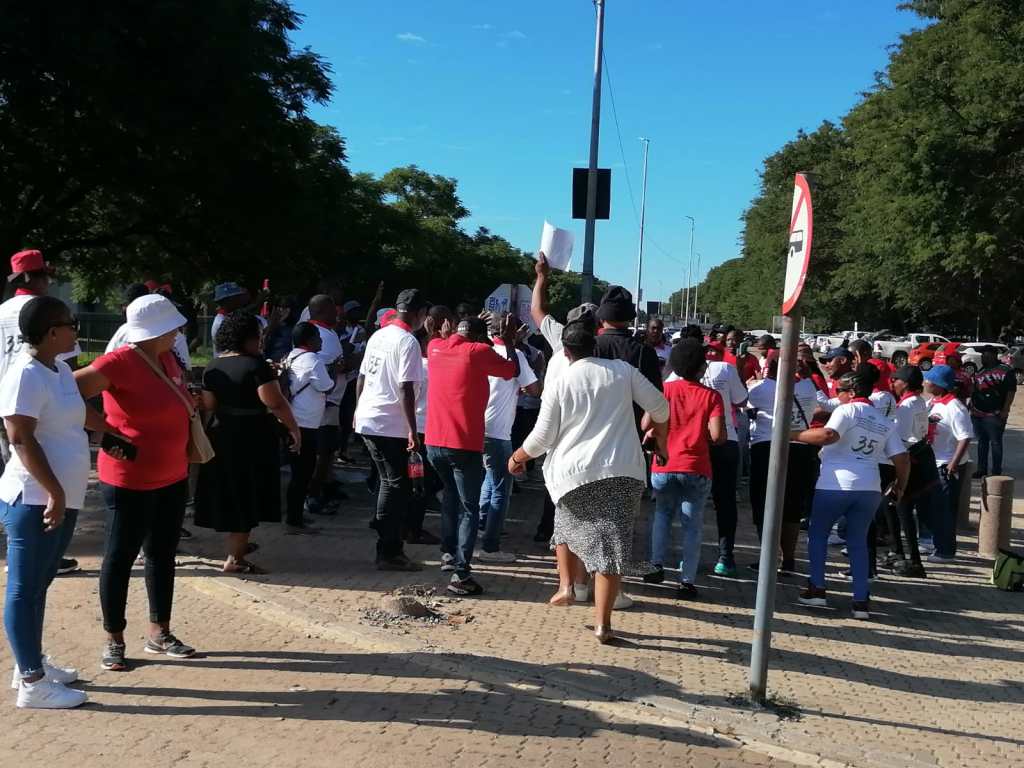
Picture: NEHAWU-affiliated members embarking on strike

By OBAKENG MAJE

The National Education, Health and Allied Workers Union (NEHAWU) said, they will continue with the strike until the government comes to the table.

The NEHAWU-affiliated members across the country embarked on a national shutdown demanding 10% salary increments.  

The NEHAWU national treasurer, Kgomotso Mokhupola, who was in Mahikeng, North West on Monday addressing NEHAWU members said, the purpose of today’s strike was mainly on collective bargaining issues.

“We have tabled demands at the Public Service Co-ordinating Bargaining Council (PSCBC), however, those demands have not been attended to.

“Instead, what the government is doing, is applying the same tactics they did all these years. They are unilaterally implementing what they think is correct for the workers,” she said.

Mokhupola further said, they are not going to take what the government is going to give them, which is 3%. She added that the government is actually misleading the public that, in the previous years, they have given them 7.5%, which is not true.

“In fact, what the government gave us was a mere 4.5% including a gratuity allowance of R8000. The gratuity allowance was a non-pensionable allowance and the government will take it away in the coming salary negotiations.

“This means the salary brackets of the workers will actually go down. So, we do not want the 3% the government wants to impose on us, but instead, we want a 10% increase,” said Mokhupola.

She said they have appealed the interdict from the Department of Service and Administration. Makhupola said it is absurd for the government to expect the same disgruntled workers to render services to the public diligently.

“It started in 2018 when government reignite on a particular resolution. The same government expects the same workers to render service to the public. 

“So, it must come to the party, even if that means we meet each other halfway, not us being shown the middle finger by it,” said Makhupola.      

Meanwhile, the North West police spokesperson, Captain Sam Tselanyane said: “We can confirm that three NEHAWU members aged 32, 40, and 56 respectively, were arrested for public violence by the police.

“They will appear in court once they have been charged. So, for now, I cannot tell when will they appear in court.”

taungdailynews@gmail.com

There is nothing small about nanotechnology at the North West University


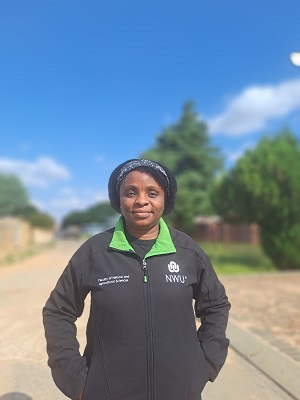
Picture: Professor Omolola Fayemi/Supplied

By BERTIE JACOBS

One thousand millionth of a metre. Or, to put it differently: one billionth of a metre. This unfathomably small number is called a nanometre and the world of nanotechnology operates at between 1 and 100 nanometres. This is also where the North-West University (NWU) is unearthing new ways to combat disease, to help protect the environment and to develop materials that will promote sustainability.

The focus area Material Science Innovation and Modelling (MaSIM) at the NWU has endeavoured to become a leading research and development centre in the area of materials, metal initiatives and nanotechnology initiatives to solve industry-related problems on a regional, provincial and national level. In addition, research at the NWU investigating solutions to long-term food security questions extensively incorporates the use of nanotechnology, such as the development of less toxic agricultural inputs, which include fertilisation approaches. But that is hardly where the NWU’s exploits into the field of nanotechnology stop.

Professor Omolola Fayemi and her team from the School of Physical and Chemical Sciences at the Faculty of Natural and Agricultural Sciences are focused on nano sensors. Here, they fabricate electrochemical-based sensors with different nanocomposites such as green-based synthetics, chemical-based synthetics and electrospun nanofibres to sense biological molecules such as environmental pollutants, adulterants in food and contaminants in waste water.

“Basically,” says Fayemi, “we are dealing with nanomaterial for sensing applications.”

The applications of nanotechnology are nigh on endless.

“When you look at neurotransmitters like dopamine and serotonin in the body, we can use nano sensors to detect abnormal levels of these neurotransmitters, which in turn can help us to determine the psychological well-being of a person.” Nanotechnology also has huge implications for illnesses such as Parkinson’s disease and cancer.

“We can also use nano sensors to pre-emptively warn people not to use water that has been adversely affected by pollutants such as industrial waste. The same applies to food, which is sometimes laced with adulterants that can be detrimental to your health. Too many food suppliers are neglecting to uphold the requisite standards and nano sensors can help detect this,” says Fayemi, who was born and raised in Lagos, Nigeria, roughly 6 487,5 km from her office at the NWU’s campus in Mahikeng. Incidentally, that translates to 6 487 000 000 000 002 nanometres.

“I am a long way from where I was born, but the NWU is my home. It is an institution that strives for excellence in all its endeavours and one that encourages academic freedom. It is also an institution that cares. We have had great outputs in the field of nanotechnology and this helps us to spread our ethic of care to our wider community, both locally and abroad. I cannot recommend the NWU highly enough, especially if you want to pursue a career in nanotechnology.”

If ever there was a slogan for the exciting uses of nanotechnology, then it is perfectly encapsulated by Fayemi when she says: “Nanotechnology might be small, but it is mighty.” Now that is no secret.

taungdailynews@gmail.com

North West govt pays back R445m to treasury


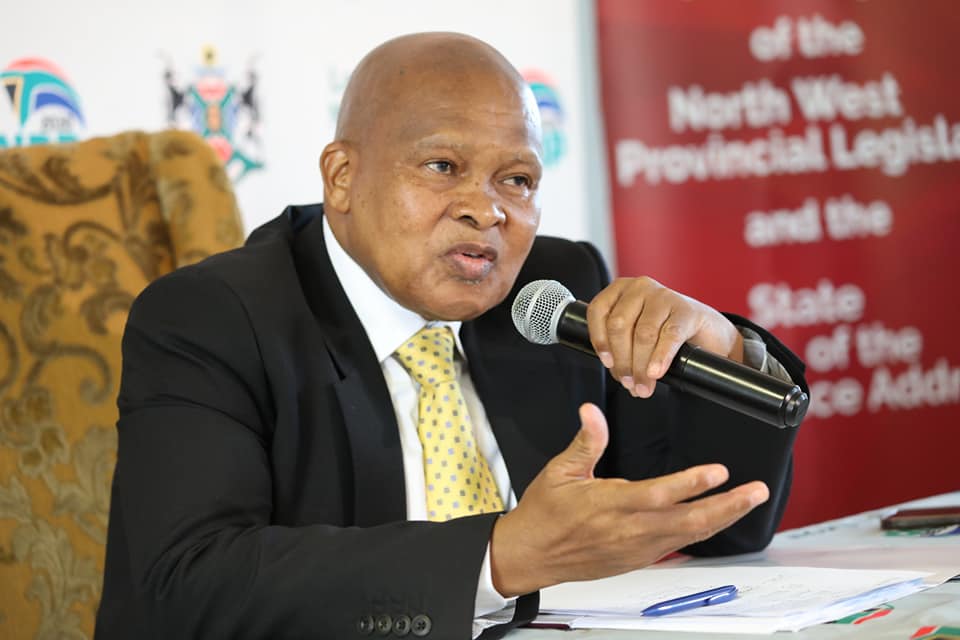
Picture: North West Premier, Bushy Maape/ Facebook

By OBAKENG MAJE

The North West Provincial Government (NWPG) has allegedly returned the R445 million budget allocated for a conditional grant to the national treasury.

This was part of R1,063 billion during the 2021/22 financial year.

According to the Member of Provincial Legislature (MPL) and Democratic Alliance (DA) North West Cooperative Governance, Human Settlements and Traditional Affairs (COGHSTA) spokesperson, Freddy Sonakile, these conditional grant funds were intended to improve bulk infrastructure, ensure provincial roads maintenance, establish early childhood development centres and expand the National School Nutrition Programme in North West.  

“It is shameful that the provincial government neglects to improve infrastructure, while the North West residents continue to experience one of the worst service delivery failures in the country.

“In response to the DA written questions, the North West MEC for Finance, Motlalepula Rosho indicated that the provincial government departments failed to spend over R1,063 billion during the 2021/22 financial year,” he said.

Sonakile said, the North West Department of Health failed to utilise over R256 million, while the North West Department of Public Works and Roads failed to utilise nearly R380 million. He said the North West Department of Agriculture and Rural Development forfeited over R85 million to National Treasury.

“The failure of these departments to spend the conditional grants will have a devastating impact on residents of the province. This will also impact the conditional grant funding allocation to the province over the next financial year, resulting in less development in North West.

“The North West is in an advanced state of general decay due to the inability of the ANC-led provincial government to ensure improved service delivery and infrastructure development,” he said.

Sonakile said the residents of North West cannot afford provincial departments losing 41% of their conditional grant funding. He said the DA demanded a detailed consequence management plan from the embattled North West Premier Bushy Maape over the conditional grant funding under expenditure.

“It is Maape’s job to monitor the spending patterns of his departments. While we note that R619 million was approved by National Treasury to roll over into the next financial year, the provincial government’s track record in effective spending of conditional grant funding leaves little confidence that it would be able to spend allocated funding in the next financial year.

“Action must be taken and during the SOPA debate on Tuesday last week, we asked Maape to resign in the interest of the residents of North West,” said Sonakile.

He said Maape’s government’s poor performance justifies this call and should he fail to resign, the least he could do is to remove and replace his incompetent MECs with competent individuals.

Meanwhile, the North West MEC for Finance, Motlalepula Rosho said, the current challenges experienced by departments are largely on the basis of capacity including slow implementation of their procurement plans that contribute to the slow spending by the departments.

Rosho said, her department is working with those affected departments continuously to improve spending and ensure value for money. 

“All risk factors that hinder spending and provision of service delivery are currently being addressed by the accounting officers of different departments and it is anticipated that the previous years’ performance would be improved.

“We assess monthly Section 40 reports of departments and provide these reports monthly to Broader Extech and Quarterly to EXCO, Provincial Legislature, and Audit Committee,” she said.

Rosho said the feedback reports to the oversight structures constitute the commitment by the provincial treasury and NWPG to improve expenditure performance through robust monitoring, evaluation, and tracking budget implementation by departments.

She said the feedback also provides an opportunity for the accounting officers to account for expenditure performance including service delivery targets.

taungdailynews@gmail.com