By KEDIBONE MOLAETSI
More than 40 farmers will benefit from a partnership between the North West Department of Agriculture and Rural Development and the University of Michigan from the United State of America.
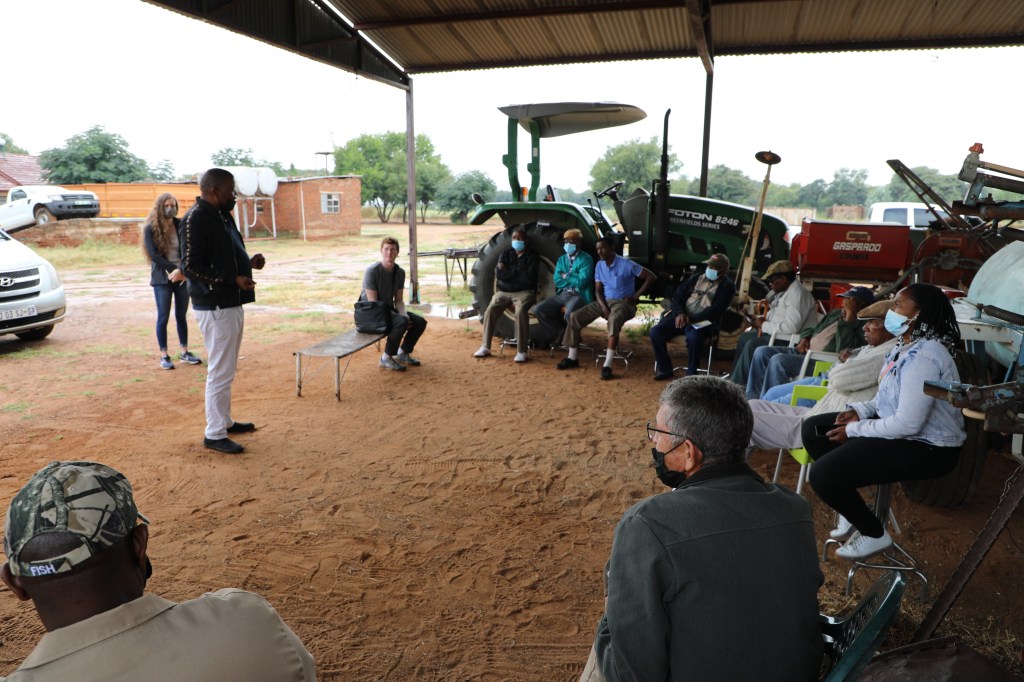
The North West Department of Agriculture and Rural Development MEC, Desbo Mohono said the university is working on a project to integrate renewable energy practices into the operations at Kgora Farmer Training Centre in Mahikeng.

Mohono said she is adamant that the partnership will assist the farming community to solve current electricity challenges.
She said the partnership is in line with the mandate and purpose of Kgora Farmer Training Centre, which is derived from the skills development Act 1998 (Act No. 97 of 1998).
“So, I am glad that we have started the work already with our partners from the University of Michigan. Beside the fact that we will not be polluting the environment with this technology, I am glad that the people whom I serve are farmers and will benefit the most once this project is up and running.
“The project will not only save them money, but will help them to become more competitive in South Africa’s very competitive food market. This partnership will see the University of Michigan through its Sustainability without Borders (SWB) program, which is housed within the School of Environment and Sustainability (SEAS) and the College of Engineering, establishing a demonstration and research centre for renewable energy at the centre to empower emerging farmers, particularly black female farmers in the province” she said.
Mohono further said she is optimistic that the project will help solve the current electricity challenges faced by local farming community. She also committed to allocate the needed resources and to provide support to ensure that the project will be successful.
“It is a fact that, like seeds and fertilizers, electricity is a critically important input to successful farming. So, I am glad that we have started the work already with our partners from the university.
“Unemployed agricultural college graduates will also be trained on the technologies to provide energy related extension services and learn how to install, maintain and repair the various technologies that will be deployed on the farm,” said Mohono.
She said identified farmers will learn skills to generate enough green electricity to cover their own use and perhaps sell surplus. Mohono said those farmers will also be encouraged to develop energy cooperatives, where they can cluster technologies and share the expenses of establishing the renewable energy systems.
“A hybrid gasification-solar PV powered micro grid will be established at the centre for mutual research on the varied uses of renewable energy on farms and it will also be used for demonstration and vocational training.
“Among other things, the university will also develop training curricula, support the building and installation of renewable energy prototypes and ideally work with students and faculty from the North West University (NWU) and other agricultural colleges in the province to deliver the curriculum to our local farmers,” she said.
Farmers who will mostly benefit are those in horticulture, dairy, poultry and livestock, grains, and agro-processing where power is such an important and expensive input cost.
Meanwhile, the University of Michigan alumnus, Michael Sudarkasa who is a long-time resident of South Africa and former project director of the South Africa Solar Energy Technology Road mapping exercise conducted by the Department of Mining and Energy and the Department of Science and Innovation in 2014-2015, will also assist in the local coordination and resource mobilization effort.
 The Guardian