North West Department of Health hits by R1.1 billion accruals!


By KEDIBONE MOLAETSI

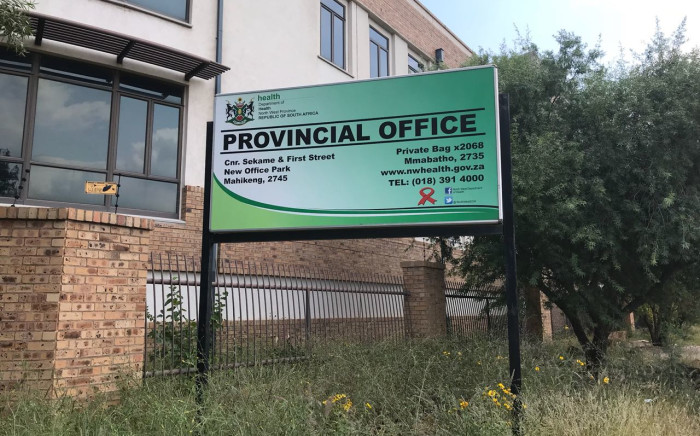
The accruals at the North West Department of Health hamper the provision of effective services, says the provincial treasury. North West MEC for Finance, Motlalepula Rosho, who tabled the provincial budget for 2022/2023 financial year in Mahikeng said the department is projecting accruals of R1.1 billion by the end of the current financial year.

“An amount of R350 million is set aside for health accruals in the 2022/23 financial year. In addition, the department reprioritised R150 million from the baseline towards accruals. We want to ensure that the creditors receive their payments within the prescribed 30 day period.

“So, to address this, the department will be implementing a three-year funding strategy that will also facilitate the provision of medicine and medical consumables, while mitigating against cash flow challenges within the department,” Rosho said.

The department has received a whopping R15.186 billion budget allocation for 2022/23 financial year, which is the second largest Medium Term Expenditure Framework (MTEF) budget allocation in the province.

“This budget accumulated to R28.973 billion in the last two years of the MTEF. Inclusive in this allocation is an amount of R652 million for health facility revitalization, R811 million for both medical supplies and medicine, and R1.525 billion for the fight against HIV and AIDS.

“In recent years, the department faced pressure in covering the costs associated with the placement of the growing number of medical graduates. So to support the department in responding to the placement of medical graduates, an additional R79 million is allocated to the Statutory Human Resource Grant in the 2022/23 financial year accumulating to R152 million in the two outer years of the MTEF,” she said.

Rosho further said to this end, an amount of R200 million is added to the departmental budget. She added that other programmes funded within this budget are for community health workers, emergency transport and planned patient transport.

“Included in the budget for the department, is an amount of R522.847 million for the COVID-19 pandemic and essential medical supplies.  We need to be mindful that our economy has been reeling from the negative impact that the COVID-19 pandemic unleashed over the past two years,” said Rosho.

Meanwhile, the Democratic Alliance (DA) MPL in the North West Provincial Legislature (NWPL), Freedy Sonakile said: “The budget allocated to the Department of Health exposes many gaps. There is no mention of any additions to the ambulance fleet, no new hospitals, and no new clinics.

“Instead, it only speaks to maintenance in a province with failing infrastructure and degraded buildings. The budget also fails to address the current out-dated medical record-keeping system, which fails to serve its purpose.”
However, Sonakile said they welcome the additional allocation to deal with the accruals, although it does not fix the problem. He said they expected Rosho to provide a strengthened monitoring and evaluation system under the Provincial Treasury and the Office of the Premier towards monitoring the utilisation of the allocated funds.


taungdailynews@gmail.com

The Department of Education receives the biggest chunk of the provincial budget


By KEDIBONE MOLAETSI

North West MEC for Finance, Motlalepula Rosho, who tabled the total budget for the province amounting to R49.712 billion at the North West Provincial Legislature (NWPL) in Mahikeng, said they need all hands on the deck.

Rosho said fiscal discipline, good governance and accountability will take the province to the new economic growth trajectory.   

“Consistent with the above principles, we commit to use the limited fiscal resources in order to achieve value for money and create a conducive environment for job creation. The total budget for the province amounts to R49.712 billion in the 2022/23 financial year and R97.880 billion in the last two years of the Medium Term Expenditure Framework (MTEF).

“The 2022/23 budget allocation is made up of provincial equitable share amounting to R39.540 billion, R8.568 billion for the Conditional Grants and R1.6 billion from Own Provincial funding,” she said.

According to Rosho, the provincial budget incorporates the restructuring of some of the conditional grants and changes to accommodate the planned function shifts in the agricultural sector as well as the social development and education sectors.

On social cluster, Rosho said the province has ensured that the budget of social sector departments is protected over the MTEF. She said this was done in alignment with national priority outcomes.

“This is to ensure that the province continues to provide and expand services provided by the Departments of Education, Health, Social Development, Human Settlements and Arts, Culture, Sports and Recreation.

“These departments collectively receive a lion’s share of the provincial budget estimated at 80%. This translates into a budget allocation of R39.852 billion in the 2022/23 financial year and cumulatively amounts to R77.708 billion in the last two years of the MTEF,” said Rosho.

She further said, to ensure that effective teaching and learning takes place in the schools, the Department of Education was allocated R20.346 billion in 2022/23 and R39.834 billion for the two outer years of the MTEF period. 

Rosho added that this translates into the largest share of 40.9% of the provincial budget.

“The total allocation is inclusive of R1.237 billion in the 2022/23 financial year and R2.411 billion over the MTEF for education infrastructure provision. Other key programmes to be funded include Early Childhood Development (ECD) at the Grade R and Pre-Grade R levels and the Sanitary Dignity Project.

“This will ensure that young girls remain in school and access sanitary dignity products in public schools. The National School Nutrition Programme Grant, which provides more than 191 000 learners with a hot meal at school every day, will be included,” she said.

Rosho said included in the budget allocation for 2022/23, is an amount of R633.794 million to cater for budget pressures created by the increasing number of educators and other shortfalls within the sector. She said education will continue to implement the Presidential Youth Employment Initiative, which will benefit more than 800 unemployed youth.

“Resultantly, an amount of R815 million is allocated in the first two years of the MTEF. The function for Early Childhood Development has been transferred from Social Development to Education resulting in an amount of R90.453 million being shifted in 2022/23 and R179.361 million in the outer years of the MTEF.

A murder case against the most wanted suspect postponed!


By REGINALD KANYANE

The Directorate for Priority Crime Investigation Unit, the Hawks in Northern Cape said a murder case against the most wanted suspect has been postponed until 17 March 2022 for formal bail application by Prieska Magistrate’s Court on Monday.   

The Hawks provincial spokesperson, Capt Tebogo Thebe said: “Serious Organised Crime Investigation team together with Kimberley TRT and Kimberley Crime Intelligence followed up on information about a wanted suspect, who was wanted on murder and attempted murder charges committed in January 2022 and February 2022 in Roodepan.

“The team pounced on the suspect on 5 March 2022 at Prieska. A search and seizure operation was conducted at the suspect’s house, where the team found a black 9mm pistol, magazine and 33 ammunition,” Thebe said.

He said the suspect was also charged for possession of unlicensed firearm and ammunition. Thebe further said a vehicle worth an estimated amount of R50 000 was also seized during the arrest.

taungdailynews@gmail.com

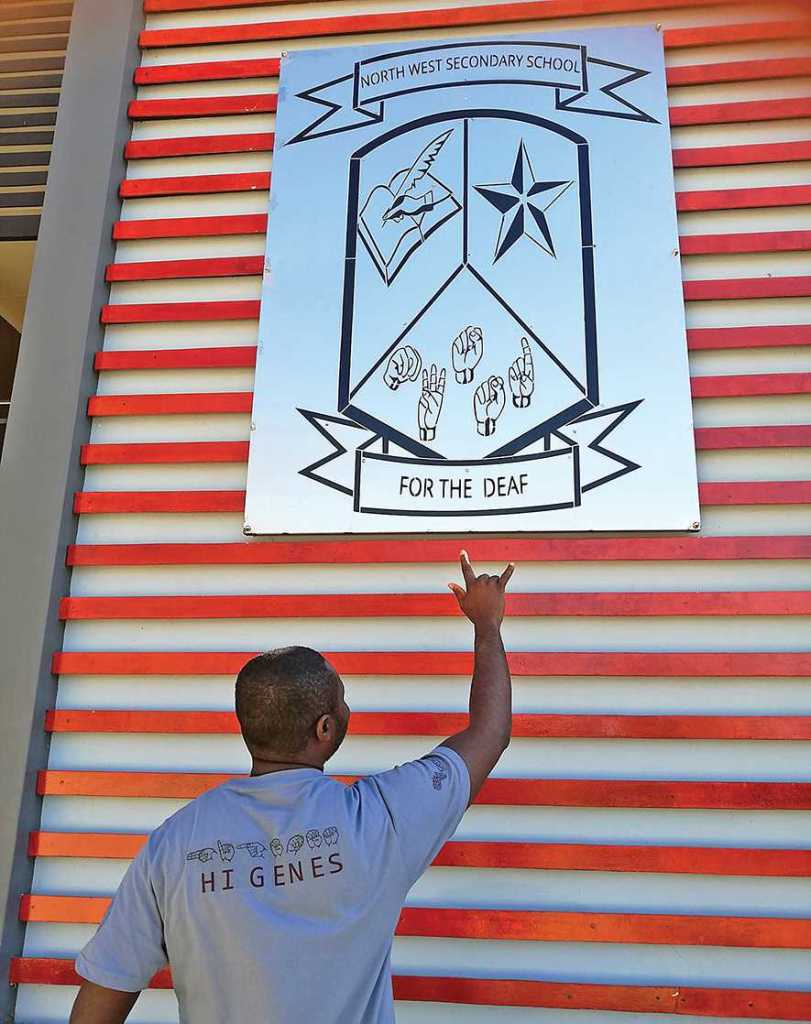
Deaf school teachers ‘don’t know sign language’


The Pan South African Language Board chairperson in North West, Goitsemodimo Seleka, said they will write to North West MEC for education, Wendy Matsemela about the challenges at the North West School for the Deaf in Leeudoringstad, near Wolmaransstad.

Seleka said they recently visited the school and were shocked to find out its teachers do not know sign language. “What is happening there undermines the rights of these learners that are enshrined in the constitution.

These learners expect to be taught in the language they understand.

“There are languages that are used as a medium of instruction in various schools. If the language that is used as a medium of instruction is English or Setswana, we expect the teachers to use it to communicate,” he said.

Seleka said it was difficult if teachers who were supposed to use sign language at the school did not know the language. He said this affected pupils and it was in evidence when one looked at the 2021 Grade 12 results at the school.

“The school had six Grade 12 learners last year and only one passed. Even when you look at the results of that learner, they are not impressive. This happened because of the quality of education these learners received. It becomes difficult for these learners to further their studies. When you look at the statistics, we have almost one million people using sign language in the province, but only a few have junior degrees.”

Seleka added that the communities that these pupils come from make it difficult to accommodate them. He said in the process, the deaf community felt excluded.

“We are going to have consultative engagements with North West MEC for education Wendy Matsemela and MEC for arts and culture Virginia Tlhapi to address this matter. “We believe that teaching and learning should not be a challenge for learners who are using sign language.

“As the board, our understanding of multilingualism and language development in the context of language legislation is embodied in the constitution and no one should be left out,” he said.

Seleka said they will urge the department of education to also ensure that the teacher assistant who is appointed at the school understood sign language. Meanwhile, North West education department spokesperson Elias Malindi said five of the teachers were trained and 10 were attending in-service training with North-West University.

“Training should have started and concluded in 2020, but the delay was caused by the Covid-19 pandemic. However, teacher training in our department has over the years been the cornerstone to effective quality teaching and learning to date.

“Special schools, which include but are not limited to the North West School for the Deaf, are also beneficiaries of training through the North-West University [NWU]. We can confirm that we have trained teachers at the school and some are undergoing training,” he said.

Malindi said the school currently has 140 pupils with a Grade 12 enrolment of six pupils in 2021 and one pass, while the teacher component comprised 15 sign, language teachers. He said the school also had three teacher assistants who had hearing impairments.

In 2015, three teenage girls were burnt to death while 23 pupils suffered injuries when trying to escape a fire at the school by jumping from the building. It was alleged that the pupils were locked up in their rooms without being monitored by the teachers. The cause of the fire is unknown.

Source: Sunday World

Locals want Taung Skull returned home


The residents of Taung in the North West, where the fossilised skull of a child was discovered by unsuspecting workers in a limestone quarry in Buxton village in 1924, are calling for the return of the skull.

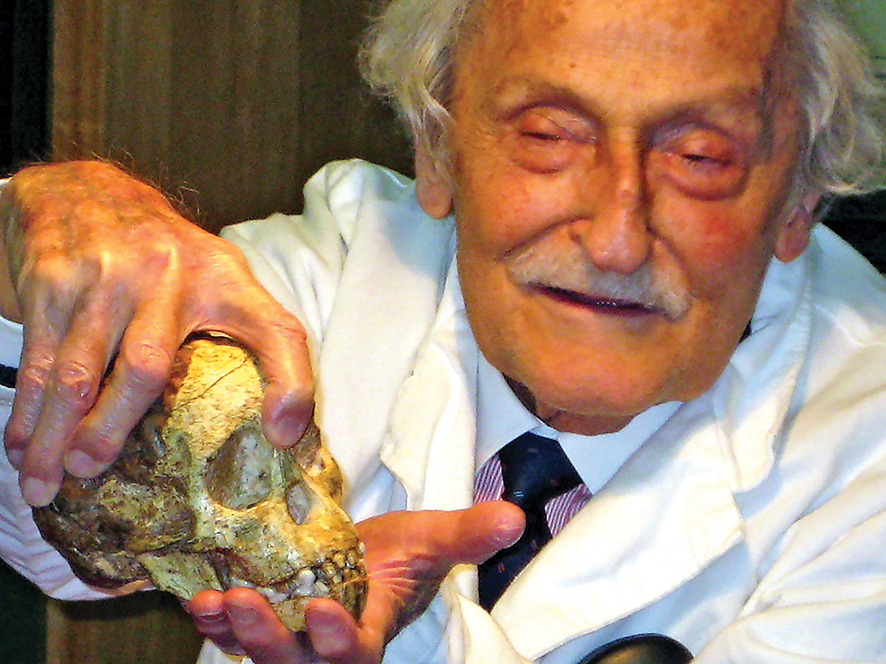
The Taung Skull or Taung Child, which was later named Australopithecus africanus, was the first hominid fossil to be discovered on the African continent.

The Taung Skull was formally discovered and studied by Raymond Dart. The skull was taken to the University of the Witwatersrand in Johannesburg for research purposes, where it is currently located. One of the residents, Lucas Raito, said the Taung Heritage Site was an area of enormous archaeological importance and the return of the fossil would boost the economy of Taung.

“This area is a fascinating place for tourists to explore and learn about the ancient history of Taung. Remember, many anthropologists and other scientists believe this to be the site of the first human being, confirming the notion that Africa is the origin of humankind.

“We are living beyond the poverty line, whereas having the area with a massive historical background. We urge the North West provincial government to put pressure on the Witwatersrand University to return the skull to its origins,” Raito said. Fellow resident Orabile Jim, who is also a local artist, shared the sentiment. Jim said even though he had mixed feelings, he still believed the skull should be returned.

“I have mixed reactions on the matter because the Taung Skull Site that was declared as the World Heritage Site has been abandoned. We have seen the provincial government trying to revamp the area but the project has been delayed. “So, currently, there is no secured place to accommodate the skull.

I believe that the Witwatersrand University continues to benefit financially through the research conducted on the skull, whereas we are left out.” He said the least the university could do was to identify a few youths and offer them annual bursaries as part of its community responsibilities.

North West Premier Bushy Maape, who identified tourism as one of the key tools to boost the economy, said: “The issue of Taung Skull has been discussed with the Witwatersrand University over a long time, and we are hoping that the matter will be resolved and finally the skull will be returned to Taung.

“Our government has initiated the process of revamping that site and I can assure you that it is in the plans of the department of tourism.

They have also planned to investigate whether they cannot assist people who want to put stalls there. So, I’m sure this year they will start doing something about it.” Meanwhile, the Greater Taung local municipality mayor Tumisang Gaoraelwe said two weeks ago they had a meeting with all stakeholders involved in the revamping of the project in the area.

“We discussed issues that are delaying the project and the project manager highlighted that community members are boycotting the project because they alleged that some of the decisions were taken without their consent.

“So, we have resolved there must be a fully-fledged steering committee on site. Some community members are building shacks in a buffer zone for opportunistic purposes.”

Source: Sunday World