Journalists assaulted, tortured and detained in Eswatini as situation flare up


By OBAKENG MAJE

Situation continues to be volatile in Eswatini as some residents were shot and killed by security forces during protests. According to www.swazilandnews.co.za, King Mswati issued a decree banning protests and delivery of petitions after citizens organised series of protests in demand for democratic reforms.

The news site said, protestors subsequently defied the King who later unleashed the army to shoot and kill dozens of civilians.

Now, the South African National Editors’ Forum (SANEF) came out guns blazing after it was reported that some journalists were assaulted, tortured and detained in the country.

SANEF Secretary-General, Mahlatshe Mahlase said: “The South African National Editors’ Forum calls on President Cyril Ramaphosa and his regional counterparts to urgently demand that the government of Eswatini adhere to SADC media Freedom protocols.

“SANEF is extremely concerned that on 4 July 2021, two New Frame journalists, Magnificent Mndebele and Cebelihle Mbuyisa, who were on assignment in Eswatini were detained, assaulted, and tortured by security forces. Mndebele and Mbuyisa were in Eswatini to report on the pro-democracy protests with a specific focus on the alleged state murders of citizens.”

She said while in the country, they were stopped at roadblocks on several occasions, threatened and forced to delete material from their phones and camera. Mahlase said they condemn the detention, assault and torture of both journalists in the strongest terms and calls for international solidarity with all journalists and activists facing repression in Eswatini.

“We call for the immediate restoration of democratic freedoms in that country, including the right to a free press. For decades, Eswatini’s security forces have been notorious for their brutality against journalists, trade unionists, students and other pro-democracy activists.

“The attempts to silence journalists and activists are aimed, among other things, at trying to prevent the scale of the suffering of the people of Eswatini from being conveyed to people outside the country,” said Mahlase.

She further said as SANEF, they have also noted the blackout of the internet, which they equally condemn as a stringent measure meant to silence the voices of the citizenry, and inconvenience all. Mahlase further said SANEF is concerned about the safety of journalists and media workers which continues to be a huge challenge with increasing reports of attacks such as arbitrary arrest and detention, jailing, physical assault, which are used as weapons to silence critical journalism covering unrests in Eswatini.

“We believe that SADC governments should show a stronger political will to protect journalists and independent journalism to put a stop to the deterioration of media freedom in the region.

“Media freedom is an essential pillar of our democracies in the region which is too often taken for granted. Respect for freedom of the media in Eswatini has disappeared overnight due to the lack of the government conscience to defend human rights,” she said.

Mahlase added that in the last years, they have witnessed an increase in the number of cases of violence and intimidation against journalists. She said SANEF wishes to remind the government of Eswatini of its commitment to media-friendly policies based on the August 1995 SADC declaration on Information and Communication.

“Eswatini undertook to remove systems and procedures that restrict the free movement of journalists, the exchange of news and information and the circulation of media products within the countries and across national boundaries of the countries of the SADC Community.

“It also recognises accreditation documents issued by any SADC Member State to media personnel to cover events and news in the other Member States, of the Community,” she said.

Mahlase said they call on SADC leaders to embrace the principles of free access to information. She said SANEF points the leaders to the letter they co-signed with key media partners including the Media Institute of Southern Africa (MISA), the Committee to Protect Journalists (CPJ) and the International Federation of Journalists (IFJ), calling for media freedom to be upheld and journalists to be protected.

Meanwhile, key South African news organisations including the public broadcaster (SABC), as well as Newzroom Afrika have had to pull their journalists out of the country due to the ongoing attacks and intimidation on their journalists.

According to www.swazilandnews.co.za, the Senator Manqoba Khumalo, the Minister of Commerce, Industry and Trade has told Channel Africa that protesters who were looting from businesses were armed with guns and government had to shut down the internet to control foreign insurgents who were leading the protests for democratic reforms.
taungdailynews@gmail.com

Zeerust Solar Farm to provide agri entrepreneurs with funding, mentoring


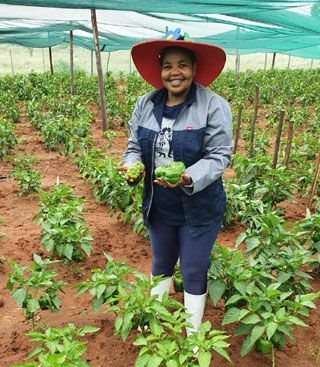
Zeerust Solar Farm’s recent business acceleration programme has nominated five principally women-led agriculture SMMEs as its key beneficiaries of its enterprise development initiative. Based in the Ramotshere Moiloa local communities, the five agricultural micro-entrepreneurs are to receive business funding and services support, following a stringent selection process.Of the five entrepreneurs, four are women and at least three are youth, demonstrating a shift in the perception that agriculture is male dominant.
“Additionally, these beneficiaries will further address our obligation to ensure that women and youth are empowered through our various Economic Development programmes,” explains Nomzamo Landingwe, chief community operations officer for Zeerust Solar.

The five overall winners will enter an Agri4Change accelerator programme and will also receive access to income-generating assets through allocation, which extends over 12 months; and an accredited certificate in mixed farming practices aligned with AgriSETA.

For more details visit: https://www.bizcommunity.com/Article/196/358/217471.html

Sambatha expresses ‘grave concern’ over COVID-19 cases increase


By STAFF REPORTER

North West MEC for Health, Madoda Sambatha expressed grave concern as the COVID-19 pandemic continues to ravage the province. The cumulative number of cases reported thus far is 101 736 with 82 620 people have recovered from the coronavirus with an 81.2% recovery rate and 2 475 deaths.

“We are gravely concerned by the steady increase of COVID-19 cases in the province, the average cases reported since last week hovers around 1000 on average. This is a serious cause for concern for our province, given the status quo unfolding in Gauteng Province.

“The province has 16 001 active cases to date with Bojanala District accounting for 9801 cases, followed by Dr Kenneth Kaunda with 2981 and Ngaka Modiri Molema district with 2350 cases, while Dr Ruth Segomotsi Mompati has the least cases with only 614 cases,” he said.

Sambatha further said Bojanala and Dr Kenneth Kaunda districts remain the major concern for the province as they continue to register more positive daily cases and as the main economic zones of the province. He added that special attention must be paid to these districts.

“The early signs indicate that these districts might become serious hotspots once the Delta variant starts to pound our province. The province has administered 159 272 vaccines to date and we plead to all eligible persons to continue to register on the EVDS for vaccination.

“The process to register persons 50 years and above for vaccination has open on 1 July 2021. We still plead with our communities to adhere to basic preventative measures to curb the spread of COVID-19 infections, it is up to us to stop this deadly virus,” said Sambatha.

Therefore, he urged communities to take responsibility and not wait for the government to police them for compliance.

Meanwhile, a registered counsellor, Sumari Nel who works closely with the North West University’s Centre for Health and Human Performance (CHHP) said the pandemic could have dreadful effects on many people’s mental health.

Nel said: “People have lost their loved ones, financial stability, some of the freedom, social interaction and a “normal” people were used to. We have also learned a lot during this time, but a lot of uncertainty remains. This has a significant impact on our mental health.

“When the outbreak started, most of us thought or hoped that this would be temporary, but as weeks became months, a sense of hopelessness set in about the prevailing circumstances, and also about new challenges that are arising.” 

She further said it is during these times that people must ground themselves in hope too. Nel said the American psychologist Charles Snyder describes hope as the perceived ability and motivation to walk certain paths that ultimately lead to the desired outcome.

“Hope is seen as the fuel that keeps people going through action. Snyder’s hope theory states that hope consists of both cognitive (process and content of thinking) and affective (emotions) components that ultimately lead to action.

“Therefore, you need to have focused thoughts, set goals and strategies to achieve them, and be motivated in pursuit of these goals. If, we perceive our current circumstances as hopeless, we may not be aware of the impact of our negative automatic thoughts on our experience of negative emotions and a change in functional behaviour,” said Nel.

She said it is important to be aware of and vigilant regarding thoughts, especially during this pandemic and to evaluate the rationale of our thinking. 

Nel said this increased awareness makes way for a greater probability of experiencing an increase in positive emotions and of behaving in a more functional way, which ultimately improves mental health and allows you to live each day with hope.

“All around us we see individuals making an extra effort to take care of their physical health, but it is important that we also make an extra effort to nurture and protect our mental health.

“There is a lot of uncertainty and circumstances that are to a great extent out of our control, but people must embark on this journey with hope, focusing on what control they still have, nurturing the chances and opportunities they still have,” she said.  

Nel also encouraged people to celebrate the “small” victories of each day with a grateful heart. She said at the end of the day, people should write down at least one thing for which they can be thankful.

“Set realistic, clear and achievable goals while recognising the potential barriers or roadblocks along the path. Spend time with people, even if it is virtually, who make you feel good and make you smile.

“Focus your attention on the facts from trusted resources to stay up to date regarding the news, but limit exposure to untrustworthy media resources. Constantly checking various websites for news and new comments can have an adverse effect on your mental health, as it may increase feelings of hopelessness and fear. Make time to also read about positive outcomes.

taungdailynews@gmail.com