By KEDIBONE MOLAETSI
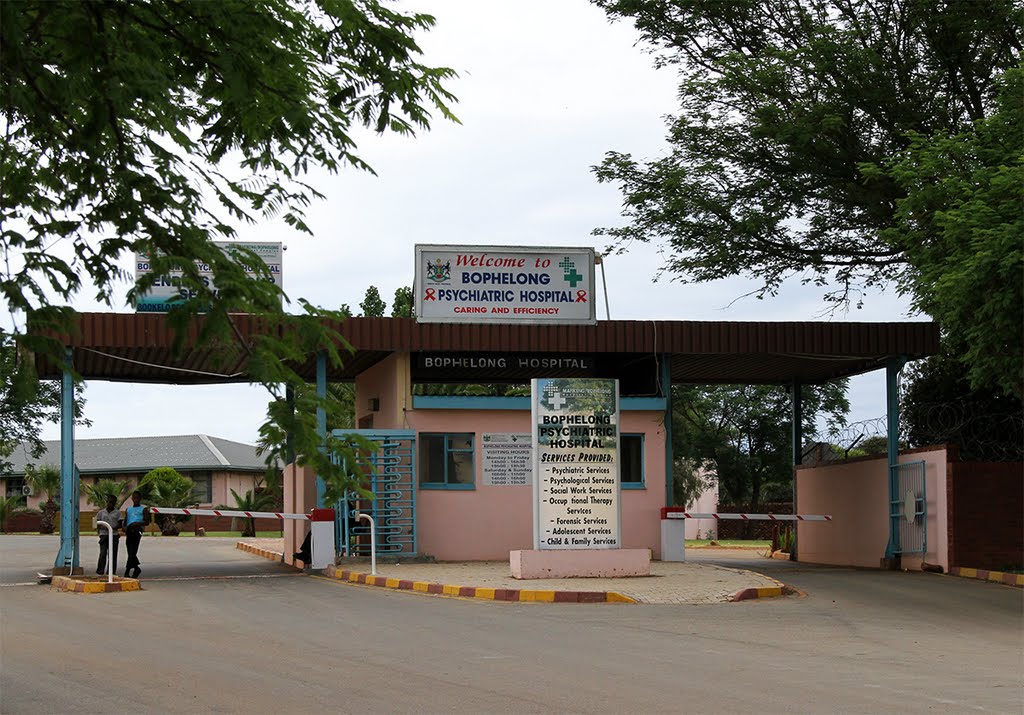
The Ad Hoc Committee on Section 100 Intervention in the North West said even though there is steady progress at the Bophelong Provincial Hospital in Mahikeng, it has raised persistent challenges.
Ad Hoc Committee chairperson, China Dodovu said while they are cognisant that the eradication of entrenched and systematic challenges within the health department will take time, it is nonetheless alarmed that some of the low-hanging fruits have not been addressed.
“We welcome steady headway in resolving some challenges within the health portfolio, but remain concerned that some challenges that led to the intervention remains a reality. At the Mahikeng Provincial Hospital, the committee welcomes the information that 633 positions have been filled, including the appointment of 23 specialists.
“Despite the marginal gains, the committee is concerned about reports of eight fridges that are not functioning at the mortuary at the hospital, which serves almost a million people in the district,” Dodovu said.
He further said, while they welcomed the appointment of three mortuary attendants and the extension of operating hours, the committee is concerned by the limited capacity and old infrastructure at the hospital’s mortuary and the reported continuous breakdown of fridges.
Meanwhile, the hospital hackled headlines after a decomposed body of a 60-year-old patient was discovered in a malfunctioning drawer in the hospital’s mortuary a few months ago.
Dodovu added that they also welcome that the hospital board at Mahikeng is functional and the relationship between the employer and labour has improved. He said the committee considers the relationship important to engendering a conducive working relationship.
“The committee is also concerned by the inability to fill critical positions, including that of the chief executive officer, a position that has been vacant since 2015, as well as the finance and maintenance manager. All these positions are critical in the effective operation of the hospital to ensure effectively service delivery to the people.
“Also of concern is the non-functionality of the laundry services at the Mahikeng Provincial Hospital, a problem that was highlighted by the previous Ad Hoc Committee. The infrastructure challenges that continue to besiege the department give an impression that they are insurmountable,” said Dodovu.
Furthermore, he said the committee is concerned that the hospital continues to struggle to spend its budget and grants, with only 72% spent for the current financial year. Dodovu said the inability of the hospital to spend its budget has a direct impact on small businesses contracted to the hospital, as payments continue to be late.
“Of a major concern is that, while the bid adjudication committees have been appointed, no training has taken place to date. This is concerning in the context of the critical role these committees play in ensuring judicious appointment of service providers, which will ensure quality service and value for money.
“The committee is content with the full picture painted by all the stakeholders within the health sector and will, following the conclusion of its visit, consider the reports and submissions it received from role-players,” he said.
North West health department spokesperson, Tebogo Lekgethwane said: “The above-mentioned fridges were fixed and there is a contractor on-site daily to ensure that broken fridges are attended to as soon they are reported to be dysfunctional.
“Also, the hospital laundry is functional with few domestic machines used to wash linen for specific units. Indeed, bigger machines are currently not functional and we are alternatively washing our laundry at Klerksdorp/Tshepong Hospital Complex and Joe Morolong, while plans to fix our laundry machines are unfolding through the help of the provincial office.”
Lekgethwane said the CEO has been appointed and the successful candidate resumed duties on 1 April 2021. He refuted allegations that the hospital has spent only 70% of its budget too.
“The hospital has spent its equity budget up to 101% while its grants at 100% of its budget and not 70% as purported. There will always be strategies that are put in place in order to ensure that the budget is spent accordingly.
“Those strategies include monthly cash flow meetings for the purpose of detecting over and under expenditure. There is also a detailed business plan on how the budget will be spent. Service providers are appointed in accordance with Supply Chain Management processes,” said Dodovu.
 The Guardian