DA concerned about safety of GBV victims at Khuseleka centre


By BAKANG MOKOTO

Democratic Alliance in the North West said it is concerned about the safety of the victims of Gender-Based Violence (GBV) at Khuseleka One Stop Centre in Vryburg. This comes after the DA spokesperson on Health and Social Development, Gavin Edwards, Member of Parliament, Sello Seitlholo and Councillor Hendriette van Huyssteen visited the centre on an oversight inspection recently.

Edwards said the purpose of the centre is to house victims of violence and crime that is referred for shelter by the South African Police Services (SAPS). He further said these women and children’s lives are often endangered and therefore optimum security is a non-negotiable necessity.

“It is concerning that the centre has no empowerment programmes in place to assist victims to develop skills or find jobs to rebuild their lives after leaving the centre. The recreational activities available are limited to a TV room, gym equipment and library consisting of a few books and computers.

“There are currently no tutors to assist with computer classes or other skills development programmes. Due to the Covid-19 regulations, the children staying at the centre are unable to attend Early Learning Centres,” said Edwards.

He added that the centre has a playground, but there are no other resources to ensure learning activities. Edwards said this concerning especially for children housed for an extended period of time.

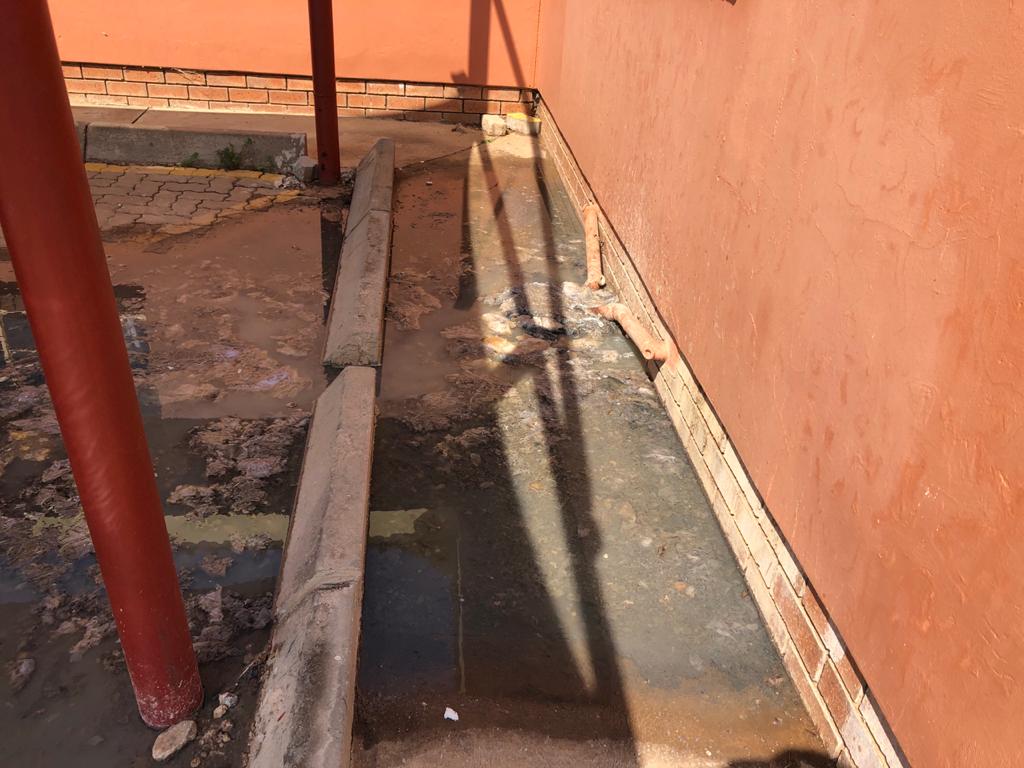
“The centre management has, on several occasions, contacted the Naledi Local Municipality to unblock the overflowing drain, but to no avail. There is also a broken water pipe on the premises that has not yet been repaired by the Department of Public Works. The area is not cordoned off, posing a safety hazard to residents and staff.

“We will also write to the MEC for the Department of Public Works and Roads, Oageng Molapisi to request urgent attention to all maintenance challenges. We will also continue to apply pressure on the Department of Social Development to fulfil its constitutional obligations towards the vulnerable in society,” he said.

Meanwhile, the North West Social Development spokesperson, Petrus Siko said the centre is receiving support from the department. Siko said in 2019/20 financial year, the centre received an additional budget of R500 000 from the department to address all the identified needs including general maintenance of the centre.

“Currently, the centre has been allocated R6 000 000 for operational costs for the 2020/21 financial year. Our support service officials would do an assessment and ensure that the CCTV cameras are functional. Our work inspector has been engaged to assess the damage on the gate and developed specification for repairs. 

“The gate is not functional but it does open and close manually. The interim structure for the institution was approved in 2017 and due to pressure on Compensation of Employees, not all the posts were filled. Social workers are currently providing Life Skills in order to make clients self-reliant,” said Siko.

He further said the department would prioritise the appointment of a Child and Youth care workers to provide services to children at the centre. Siko said there is a septic tank at the premises of the centre that needs to be regularly drained and at times the municipality takes time to respond to the call. 

“The drain has been sucked and currently dried out, but District Works Inspector has assessed it and identified areas for repairs. Specifications for repairs were developed and submitted to Provincial Infrastructure sub-directorate for a briefing of Service Providers,” he said.

taungdailynews@gmail.com

Picture: Broken pipe at the centre 

Minister Didiza engages with farmers in Taung


By OBAKENG MAJE

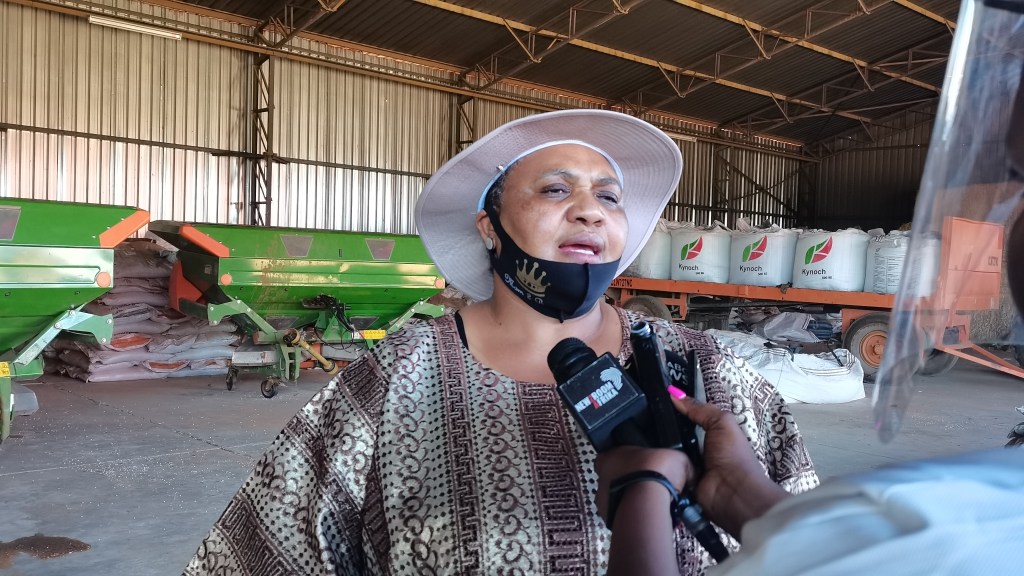
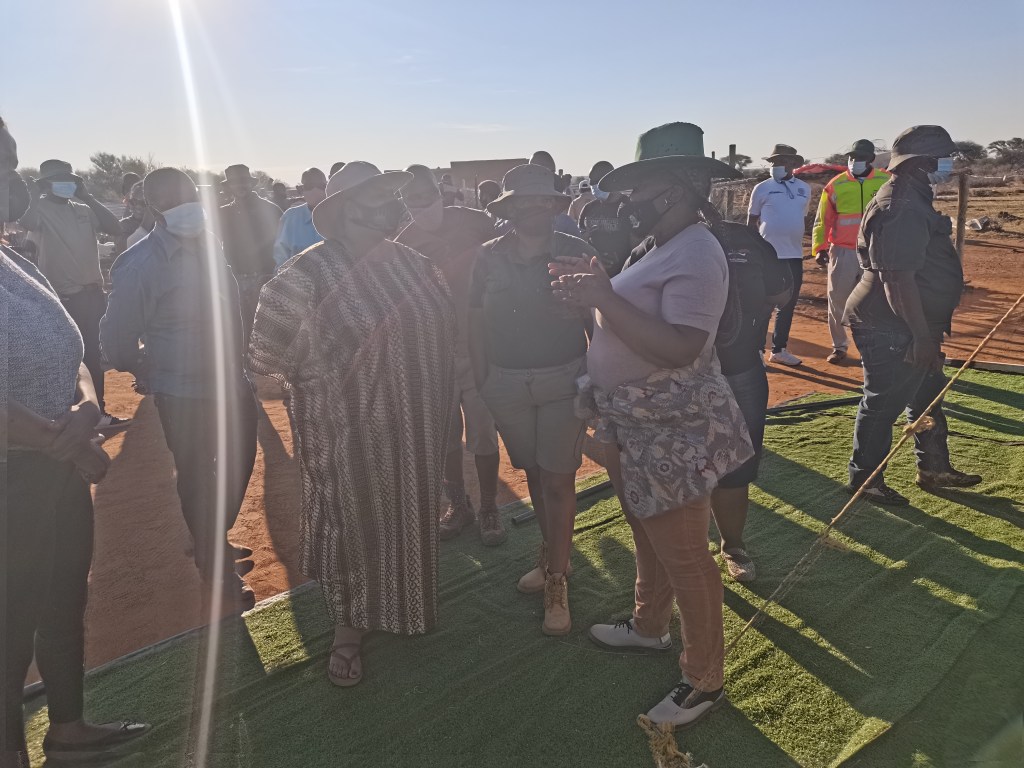
Minister of Agriculture, Land Reform and Rural Development, Thoko Didiza said the government will continue to work together with farmers to ensure that food security is preserved. Didiza engaged with commercial, subsistence and smallholders farmers around Taung to assess the conditions of their farms.

“One of the issues that the farmers have raised which they requested the government to work on it is the expansion of the irrigation scheme. Clearly, when you look at this area, there is a lot of lands that can still be irrigated. 

“Secondly, they also requested the government to assist them in the area of the revitalization of the scheme. They need us to deal with issues of the canals which are very old and some of them need to be repaired,” she said.

Didiza further said irrigation infrastructure is a key area where farmers need assistance. She added that farmers urged the government to give them support so that they can reach their goals.

“They say even though government gives them support, sometimes it comes too late for the agricultural calendar. What do I mean about that is for instance, if it is the summer season where people are planting grains like maize or sunflower, when the government gives some inputs to them, sometimes the assistance comes in the middle of the calendar or even at the end of the season.

“So, those inputs are normally not going to be of use to the farmers. This has propelled some of the farmers to get into contracts with some of the commodity organizations, or in some of the individuals of the members of the commercial farmers. What we are concerned about is the times of contracts they tight themselves to because are not working in their favour.  

“Farmers enter into these contracts and my guess is that sometimes they do not examine the conditions of the contracts. This happens because most farmers do not have the implements to farm the land. Contractors come, plant the land and harvest it and at the end, farmers get nothing out of their own land,” said Didiza.

She added that one of the things they have agreed on is coming back here and work with farmers. Didiza said they will look at how they can resolve some of those issues and ensure that they come up with mechanisms to assist these farmers.

One of the farmers, Keitumetse Kgosiemang (27) who has six years in farming said they are faced with a mammoth tasks. Kgosiemang said she is now sitting on top of R80 000 worth of debts after she engaged in a contract with a white commercial farmer.

“I am a farmer at Tshidiso South and I cannot see any progress in farming because of a lack of support from the government. This forced us to resort to seeking assistance from white commercial farmers. They buy planting seeds for us and pay water and electricity bills including the mechanism.

“However, this is not financially viable because we come out of this with nothing at the end of the cropping season. We are forced to seek assistance from these white commercial farmers because we do not have the financial backing to cover all our costs,” she said.

Kgosiemang urged government to provide them with the financial muscle and assist them with machinery and fertilizers.

Another disgruntled farmer, Aobakwe Gaobuse from Bosele Cooperative shared the same sentiments. Gaobuse said they have serious challenges as farmers in Taung.

“Firstly, we have a serious problem in Taung with machinery and even what the government is helping us with is not coming on time. That is why our people go to white commercial farmers for assistance. We also have a challenge regarding our extension officers who supposed to lead us, but they are not helping us at all.

Oratile Segosapelo who is one of the 176 people whom their land was taken by force back in 1992 said they want to be compensated. Segosapelo said even though their land was restituted back to them in 2017, it has turned into a ‘white elephant’ because of a lack of support from the government.

“We are not happy with how the department has handled our matter. We are 176 farmers and our land was forcefully taken away from us back in 1992. The government distributed back the land to us, but it has done little in giving us any support. What is happening is that white commercial farmers have been utilizing that land without compensating us.

“We have even written to the Office of the Public Protector for intervention. We would like at least to get compensated by those who have been benefiting from our land. Government bought a pivot irrigation system for us, but white commercial farmers strapped it and used those parts to fix theirs,” said Segosapelo.

taungdailynews@gmail.com