By REGINALD KANYANE
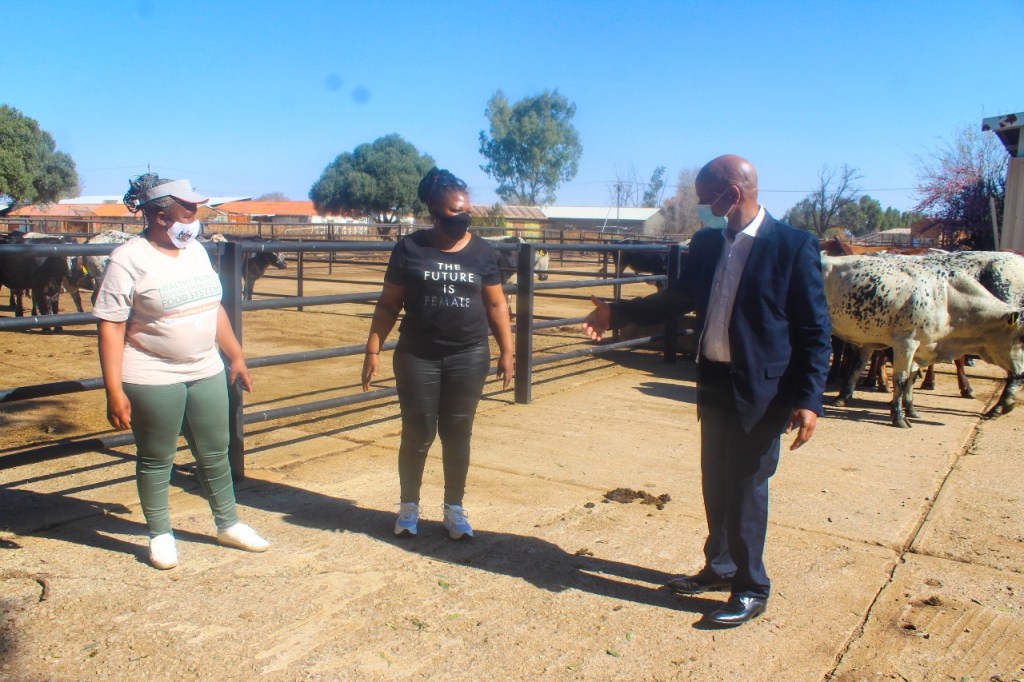
North West MEC for Agriculture and Rural Development, Desbo Mohono said they donated 30 culled cattle to the deprived communities in order to advance government efforts to reduce poverty and hunger.
Mohono outlined that the donation was done through the North West Social Development. The event was held at the Potchefstroom Agricultural College recently.
“We have handed over 30 culled cattle to the North West Department of Social Development (NWDSD) for them to donate meat to the needy communities in the province. The cattle, which formed part of the NWDARD’s livestock research and the development programme was mainly of Nguni and Afrikaner breed.
“The cattle will be slaughtered for final exploration before being handed over to the NWDSD. The NWDSD has identified centres such as orphanages, old age homes and homes hosting people with disabilities as well as those who care for vulnerable groups as beneficiaries of this good act,” she said.
Mohono said the meat will be handed over immediately after final data collection by the NWDARD in order to avoid risks associated with contamination. She further said her department’s food security programme is proud to have advanced efforts by donating meat to communities.
“We have undertaken some robust efforts in ensuring our people that they do not go to bed hungry. We did this, through our food security programme. I have led a departmental team to go to communities to plant vegetable gardens and fruit trees, gave chicken eggs, indigenous chickens, goats and many other inputs.
“This time, we are delighted as the department to donate meat. It says to us, we are advancing in our quest to ensure that we alleviate hunger. Our department’s research unit has confirmed that the cattle are fit and will also verify after slaughtering them that the meat is indeed fit for consumption,” said Mohono.
She added that her department realised its mandate of right to food and freedom charter clause which advocates for food to be plentiful for all. Mohono said the department is also seeking to enhance nutrition and quality of its life to the most vulnerable communities and endorse independence.
“As the impacts of COVID-19 take its toll on many people, it was imperative for government to strengthen its efforts to empower communities. The demand for food has gone higher now and it is a challenge because we have seen that many people have lost jobs.
“Agriculture now needs to be productive by bringing new and efficient methods to ensure that people have food. Research is one critical component as it supports the department’s contribution to the development of animal agriculture. This includes the exploration of improving livestock production systems, management practices, animal health, and welfare as well as food quality and safety amongst others,” Mohono said.
 The Guardian