14 Learners in a Taxi Accident in Taung


school-children.jpg

Taung- Fourteen learners were rushed to Taung hospital after their transport collided with another taxi early this morning.

The learners are from Taung and were heading to Voorspoed Primary school in Magogong in the Northern Cape.


All fourteen learners are reported to be in a stable condition.


MEC Wendy Matsemela sends her heartfelt regards to the families of the learners and wishes a speedy recovery to the learners. Matsemela also sends a word of caution to the taxi drivers to adhere to the speed limits.


Although it is a parent’s prerogative to send their children to schools of their choice in the country, parents are also advised to register learners at neighbouring schools within the provincial demarcation so that learner transport can be regulated.

Follow us on Twitter@Taung_DailyNews or @IceT_

Dewani family want inquest into Anni’s death reopened


LONDON – Anni Dewani’s family says Shrien’s lawyers have delayed the discussions about reopening an inquest into her death.

Shrien Dewani was accused of orchestrating his wife’s murder on their honeymoon in Cape Town in 2010.

His trial was thrown out of the Western Cape High Court before he was called as a witness.

The parties involved are hoping to meet later this month to discuss the matter.

For a detailed report, watch the video in the gallery above. 


– eNCA

Woman killed by tractor


Police-tape.jpg

Johannesburg – A woman died after she was driven over by a tractor on the R102 in Tongaat, KwaZulu-Natal, paramedics said on Tuesday.

“Reports from the scene indicate that the female was sitting on the wheel arch while getting a lift on the tractor when she fell off and landed under the rear wheel,” said Netcare 911 spokesperson Chris Botha.

Paramedics worked to stabilise the woman, in her 50s, who had multiple injuries and was in a critical condition before transporting her to hospital.

“Tragically the patient died soon after arriving at the emergency room.”

– SAPA

Witness saw ‘heart-eater’ attack victim


court1.jpg

Cape Town – A Gugulethu resident who peeked through a window of a home saw a man being stabbed repeatedly and his heart being removed, the Western Cape High Court heard on Tuesday.

State witness Lelethu Femela said he and his friend were called to the house around 23:00 last June because there was “trouble”.

He was testifying against Zimbabwean citizen Andrew Chimboza, 35, in aggravation of sentence.

Chimboza on Monday pleaded guilty to killing 62-year-old Mbuyiselo Manona, as part of a plea agreement.

Femela said he and his friend looked through the window and saw Chimboza on top of Manona.

“He was stabbing him in the heart and he removed it. He took it out and he put it down,” he told Judge Ashley Binns-Ward.

“He then cut it, using a knife as well as a fork, and he was eating it as he was cutting it.”

The witness said Chimboza apparently put the cutlery down and then repeatedly bit into Manona’s neck.

Earlier, a forensic pathologist testified that Manona died due to deep incisions to the neck, chest and abdomen, and blunt force injuries.

A deep incision had been made in the chest, exposing the chest cavity and ribs.

“The heart was not present in the chest cavity… the heart was presented to me in a plastic bag separately in numerous pieces,” said Dr Lekram Alli.

“Those pieces were not torn pieces. They were cleanly blocked, incised pieces.”

Binns-Ward, a seasoned judge, sometimes grimaced at the testimony or when presented with photos of the scene and post mortem.

Chimboza, who had a window-tinting business, stated in his plea explanation that he stabbed Manona to death at the home of a former client last year after a disagreement. He said he was sorry for what he had done.

He alleged Manona attacked him with a knife. He retaliated by kicking him in the groin, stabbing him in the neck with a fork and then repeatedly stabbing him in the neck, chest, and abdomen with a knife.

Chimboza’s lawyer Yasmine Rajap on Tuesday denied he had eaten pieces of the heart.

She put it to Femela that he could not have seen through the window as her client had previously tinted it.

Femela stuck to his version of seeing the murder.

– SAPA
Read

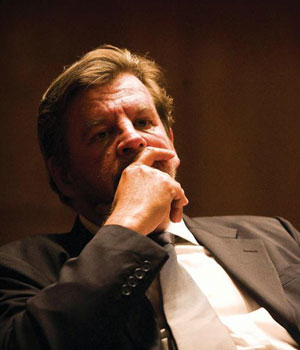
Race is dividing SA – Rupert


1e05986e483344ddbed06efca69f8b24

Cape Town – Race is dividing South Africa and robust freedom of speech should be promoted for the sake of a freer public discourse in search of mutual understanding, two former presidents and business tycoon Johann Rupert said in Cape Town on Tuesday.

“Freedom of speech is totally under attack. I mean Zelda la Grange is not a racist, she may have made a faux pas but she is not a racist,” Johann Rupert told a conference held by the FW de Klerk Foundation to mark the former president’s unbanning of the liberation movements 25 years ago.

“If we disagree with somebody in this country he is a racist,” Rupert said, adding that it was the ready response of the government to criticism, in the same way the apartheid regime labelled those who opposed it communists and enemies of the state.

“So nothing is new, it started then.

“The biggest concern I have is this tendency to focus on who said something instead of what is being said,” Rupert added at the end of a speech that bleakly stated that the rule of law, farmers and food security and the prerequisites for economic growth were all at risk.

Joking that his words would be viewed through the prism of his wealth, he added: “Why can’t we have free debates? I am prepared to sit with [Economic Freedom Front leader] Mr [Julius] Malema. If he is right then I’ve got to change. But we should, in an atypical way, have an open debate, a totally open debate.”

Former president Kgalema Motlanthe deplored that South Africans criticised the country’s “black government”, saying it was both a political misnomer because the government was democratically elected and an indicator of division.

“Labelling the government black may say more about their thinking than anything they are trying to express. The result is a misinformed and misleading discourse which often entrenches social stereotypes, fuelling feelings of alienation.”

Motlanthe said this was evidenced in the race rows that raged on social media in recent weeks.

“If there is one space that provides a useful index racial relations in the country it is social media. In the recent past the social media space has seen torrential racial abuses across the social spectrum openly advocating the biological, historical, economic and social utility of the construct of race as the organising principle in human affairs.

“Most disheartening about this open manifestation of racial hostilities is the debilitating effects on what we are trying to build, a nation united in diversity.”

Greater inequality

Motlanthe said the only comfort he found in the discourse was that it served as a barometer for the state of social cohesion, and went on to blame it on social inequality.

He said 25 years after FW de Klerk announced the unbanning of the liberation movement, inequality was greater than it was on 2 February 1990 and this was polarising the nation and undermining Nelson Mandela‘s ideal of non-racialism.

“People are more amenable to the discourse of high ideals such as non-racialism and national unity when their stomachs are full. They are likely to agree that we have a shared future if they have gainful employment.”

Motlanthe said the divide was coloured and compounded by the fact that South Africa was “a society with deep roots of racial and ethnic self-consciousness”.

The conference comes less than a month after President Jacob Zuma told an ANC fundraiser “all the trouble began” in 1652 when Dutch coloniser Jan van Riebeeck landed in the Cape, sparking an outburst from La Grange for which she was branded a racist and apologised.

Motlanthe, however, defended Zuma’s right to speak about apartheid, telling the largely white audience: “To speak of apartheid and colonialism is effectively to speak of an unfair system in the production, distribution and consumption of resources,” Motlanthe said.

“Unity and social cohesion are like trees, they need roots to grow and be strong. They are embedded in social justice.”

Similarly he said he disagreed with Cosatu provincial secretary Tony Ehrenreich‘s opposition to renaming Table Bay Boulevard after De Klerk because styming free speech would put the country on the “slippery slope” to censorship.

“People like Tony Ehrenreich must be granted the space to express themselves,” he said.

“If they are wrong, they are wrong.”

Rupert, in a subsequent discussion, said he found it troubling that those who had traded racial abuse on Twitter were educated enough to read and wealthy enough to own technology. He also dismissed the notion of wealth redistribution as the panacea for inequality, saying the issue was rather to create the conditions to create wealth.

De Klerk told the forum he was convinced that “what we have now is much better than what we had in the past” but that worry about the future had always been a central characteristic of being South African.

He warned that the country was at risk of betraying the Constitution by applying justice selectively, undermining the ideal of non-discrimination.

“All of us should work to ensure that those who are committed to loving will prevail over those on all sides who are retrogressing into the old patterns of hate,” he concluded.

On 2 February 1990 De Klerk unbanned the ANC, SACP and the PAC and announced the liberation of Mandela and other political prisoners.

– SAPA

Police to intervene in Malamulele


crime-tape.jpg

Johannesburg – Police will move to clamp down on unrest in Malamulele, Limpopo, so that schooling and services can resume, Police Minister Nkosinathi Nhleko‘s office said on Tuesday evening.

“The minister has directed that police move in to open the township and remove barricades; the criminal element behind protests be arrested, and that learners be allowed to resume classes,” spokesperson Musa Zondi said in a statement.

Protesters have shut the town down in their demand for a separate municipality after complaints about poor service from Thulamela municipality.

The Municipal Demarcation Board has already dismissed a proposal for a separate municipality.

Nhleko said an abnormal situation such as that at Malamulele could not be allowed to become normal.

“Those who are stopping pupils from going to school are not only anti-development, but they are also committing crimes in terms of the Schools Act.

“The anarchy and the wanton destruction of schools and other buildings cannot be allowed to go on and police will have to arrest anyone who breaks the law,” he said.

A joint operations centre had been established in Malamulele and Nhleko would stay there for the rest of the week to monitor progress.

Zondi said: “The minister noted that while peaceful protest was a right all South Africans enjoyed, this right cannot be exercised at the expense of the people who want their children to continue with their education or who need their grants to feed their families and to meet other needs.”

– SAPA