A man in court for drugs,bribery


Image

Durban – A KwaZulu-Natal man appeared in the Phoenix Magistrate’s Court on Monday on charges of bribery and possession of illegal substances, provincial police said.


Monogran Julian Chetty, 30, was released on R500 bail and the matter was postponed to May 27 for further investigation, Captain Thulani Zwane said.


Chetty was arrested on Sunday evening after police searched him and allegedly found cocaine in his possession.


“Whilst the suspect was being charged by the arresting officers he requested to speak to them. The suspect allegedly wanted the members to drop the charges against him and offered to pay cash to them.”


Zwane said Chetty offered the officers R200. The officers added a charge of bribery to the charge sheet and the money was seized as an exhibit.


KwaZulu-Natal provincial commissioner Lt-Gen Mmamonnye Ngobeni praised the members for being alert and vigilant.


“I am pleased with the high rate of drug-related arrests and urge the members in this province to continue with their excellent work and rid our streets of this scourge.” – Sapa


Department brought smile to thirsty residents


Image

Water and Environmental Affairs Minister Edna Molewa has brought relief to residents in five informal settlements in the Madibeng local municipality by reopening seven resuscitated boreholes at the weekend.


Until recently, residents in the areas were forced to wait for water deliveries, which were made once weekly by the municipality. The identified communities have a population of more than 7000 residents who have been relying on the unreliable service.


The municipality is notorious for its water woes, which have been pinned on an aging infrastructure that can no longer sustain the volumes required by the communities.


Last week the community of Latlhabile ran amok, barricading roads and throwing stones in protest over poor service delivery. Other communities have threatened to do the same.


However, Molewa could have well averted similar riots when she handed over the seven boreholes on Saturday.


Chika murder case continues


Image

By Obakeng Maje

Klerksdorp-A bail application by the eight men accused of murdering ANC North West official Obuti Chika was opposed by the state in the Klerksdorp Magistrate’s Court on Monday.


Prosecutor Riekie Krause submitted that if the men were released, local residents would be shocked and outraged.


Several of the men had also failed to disclose previous criminal convictions or pending cases, she told the court.


Chika, 33, was shot at point-blank range in the driveway of his Klerksdorp home on December 14 last year. 

The court heard how the suspects were allegedly planning to kill Chika.

According to information presented before court,eight suspects were conspiring to blow up Chika by using explosives.

“The suspects hired a hitman and demanded R50 000,but it couldn’t be raised and that’s where Sikhakhane was hired for R15 000” witness.

However Sikhakhane’s legal team argue that their client participated in a murder simply because he was tortured.

Chika was shot in a point-blank at his house in Alabama,near Klerksdorp. 

He was rushed to hospital,but died minutes after his arrival.

The case continues.

Four teenagers arrested for murder in Noupoort


Image

Noupoort-Police are investigating a case of murder after a 24 year old man, Brendon Tarentaal. 

Police arrested four teenagers aged 16 and 17 respectively in connection of muder.

“The deceased’s body was discovered lying in the open field by a woman who was passing by on Vrede Street and alerted the police” Lieutenant Olebogeng Tawana said. 

“The police reacted to the call and their preliminary investigations revealed that the deceased could have been pelted with stones, stabbed and beaten to death” police said. 

The incident happened in the early hours of Saturday morning.

It is alleged that the four suspects were having some drinks at a local tavern in Eurekaville, and while they were busy drinking,an argument flared up between the deceased and the suspects. 

One of the bouncers from the local tavern tried to intervene by separating the two parties.

“Apparently Tarentaal ran away,but the suspects chased after him” police said.

“The suspects were arrested shortly after the investigations” Tawana adds. 

The autopsy will be conducted by the forensics to determine the cause of the death.

Police said four suspects are due to appear before the Noupoort Magistrate’s Court tomorrow on charges of murder. 

Follow us on Twitter@Taung_DailyNews

Offside rule is changed


Image

EDINBURGH – Football’s rule-makers have sought to clarify one of the game’s most
misinterpreted laws – offside – in a bid to reduce widespread uncertainty for
referees, players and fans.

In a change to take effect from July 1, the International Football Association Board decided on Saturday to clear up when exactly attackers are influencing play.

The change states that an attacker should be considered offside when “gaining an advantage by being in that position” in situations that will now include receiving the ball from a rebound or deflection from the goal frame or a player in the defending team attempting a tackle, block or save.

IFAB, which comprises officials from Fifa and the four British football associations, also attempted to safeguard its future by opening up its decision-making process.

With the organisation of world football undergoing an overhaul under the wake of a series of corruption scandals, there were calls for the British to cede their influence on IFAB, which has been meeting since 1886.

But at the annual IFAB meeting in Edinburgh, Fifa President Sepp Blatter said “this institution will go on.”

Fifa is looking to take greater control of IFAB by establishing a new unit to run the body while stressing that the “composition will remain unchanged”.

IFAB has agreed, however, to consult more by establishing a technical panel featuring refereeing experts and a football panel containing around 20 former players and coaches as well as current coaches.

IFAB meetings had previously been bitterly divided by the issue of goal-line technology, but the issue has been settled in the last year after Blatter ended his opposition to high-tech aids being given to referees.

Fifa announced on Friday that a fourth system had been licensed.

GoalControl-4D, which uses seven high-speed cameras aimed at each goalmouth, joins another camera-based system, Hawk-Eye, and two other projects – GoalRef and Cairos – which use magnetic field technology to judge if the ball crossed the line.

Fifa is yet to disclose the costs of the technology, but Fifa general secretary Jerome Valcke said the cheapest costs about $100000 (about R906000) to install in a stadium and maintain.

IFAB also decided that competition organisers can allow the technology to be used in competitions, such as World Cup qualifiers, even if not all countries have systems in place. -Sapa


First baby in the world ‘cured’ from HIV


Image

A baby girl in Mississippi who was born with HIV has been cured after very early
treatment with standard HIV drugs, U.S. researchers reported on Sunday, in a
potentially ground-breaking case that could offer insights on how to eradicate
HIV infection in its youngest victims.

The child’s story is the first account of an infant achieving a so-called functional cure, a rare event in which a person achieves remission without the need for drugs and standard blood tests show no signs that the virus is making copies of itself.

More testing needs to be done to see if the treatment would have the same effect on other children, but the results could change the way high-risk babies are treated and possibly lead to a cure for children with HIV, the virus that causes AIDS.

“This is a proof of concept that HIV can be potentially curable in infants,” said Dr. Deborah Persaud, a virologist at Johns Hopkins University in Baltimore, who presented the findings at the Conference on Retroviruses and Opportunistic Infections in Atlanta.

The child’s story is different from the now famous case of Timothy Ray Brown, the so-called “Berlin patient,” whose HIV infection was completely eradicated through an elaborate treatment for leukemia in 2007 that involved the destruction of his immune system and a stem cell transplant from a donor with a rare genetic mutation that resists HIV infection.

“We believe this is our Timothy Brown case to spur research interest toward a cure for HIV infection in children,” Persaud said at a news conference.

Instead of Brown’s costly treatment, however, the case of the Mississippi baby, who was not identified, involved the use of a cocktail of widely available drugs already used to treat HIV infection in infants.

When the baby girl was born in a rural hospital in July 2010, her mother had just tested positive for HIV infection. Because her mother had not received any prenatal HIV treatment, doctors knew the child was at high risk of infection. They transferred her to the University of Mississippi Medical Center in Jackson, where she came under the care of Dr. Hannah Gay, a pediatric HIV specialist.

Because of her risk, Dr. Gay put the infant on a cocktail of three HIV-fighting drugs – zidovudine (also known as AZT), lamivudine, and nevirapine – when she was just 30 hours old. Two blood tests done within the first 48 hours of the child’s life confirmed her infection and she was kept on the full treatment regimen, Persaud told reporters at the conference.

In more typical pregnancies, when an HIV-infected mother has been given drugs to reduce the risk of transmission to her child, the baby would only have been given a single drug, nevirapine.

Researchers believe use of the more aggressive antiretroviral treatment when the child was just days old likely resulted in her cure by keeping the virus from forming hard-to-treat pools of cells known as viral reservoirs, which lie dormant and out of the reach of standard medications. These reservoirs rekindle HIV infection in patients who stop therapy, and they are the reason most HIV-infected individuals need lifelong treatment to keep the infection at bay.

10-MONTH GAP

After starting on treatment, the baby’s immune system responded and tests showed diminishing levels of the virus until it was undetectable 29 days after birth. The baby received regular treatment for 18 months, but then stopped coming to appointments for a period of about 10 months, when her mother said she was not given any treatment. The doctors did not say why the mother stopped coming.

When the child came back under the care of Dr. Gay, she ordered standard blood tests to see how the child was faring before resuming antiviral therapy.

What she found was surprising. The first blood test did not turn up any detectible levels of HIV. Neither did the second. And tests for HIV-specific antibodies, the standard clinical indicator of HIV infection, also remained negative.

“At that point, I knew I was dealing with a very unusual case,” Dr. Gay said.

Baffled, Dr. Gay turned to her friend and longtime colleague, Dr. Katherine Luzuriaga of the University of Massachusetts, and she and Persaud did a series of sophisticated lab tests on the child’s blood.

The first looked for silent reservoirs of the virus where it remains dormant but can replicate if activated. That is detected in a type of immune cell known as a CD4 T-cell. After culturing the child’s cells, they found no sign of the virus.

Then, the team looked for HIV DNA, which indicates that the virus has integrated itself into the genetic material of the infected person. This test turned up such low levels that it was just above the limit of the test’s ability to detect it.

The third test looked for bits of genetic material known as viral RNA. They only found a single copy of viral RNA in one of the two tests they ran.

Because there is no detectible virus in the child’s blood, the team has advised that she not be given antiretroviral therapy, whose goal is to block the virus from replicating in the blood. Instead, she will be monitored closely.

There are no samples that can be used by other researchers to confirm the findings, which may lead skeptics to challenge how the doctors know for sure that the child was infected.

Persaud said the team is trying to use the tiny scraps of viral genetic material they have been able to gather from the child to compare with the mother’s infection, to confirm that the child’s infection came from her mother. But, she stressed, the baby had tested positive in two separate blood tests, and there had been evidence of the virus replicating in her blood, which are standard methods of confirming HIV infection.

ADDITIONAL RESEARCH

Dr. Anthony Fauci, director of the National Institutes of Allergy and Infectious Diseases, said although tools to prevent transmission of HIV to infants are available, many children are born infected. “With this case, it appears we may have not only a positive outcome for the particular child, but also a promising lead for additional research toward curing other children,” he said.

Dr. Rowena Johnston, vice president and director of research for amfAR, The Foundation for AIDS Research, which helped fund the study, said the fact that the cure was achieved by antiretroviral therapy alone makes it “imperative that we learn more about a newborn’s immune system, how it differs from an adult’s and what factors made it possible for the child to be cured.”

Because the child’s treatment was stopped, the doctors were able to determine that this child had been cured, raising questions about whether other children who received early treatment and have undetectable viral loads may also be cured without their doctors knowing it.

But the doctors warned parents not to be tempted to take their children off treatment to see if the virus comes back. Normally, when patients stop taking their medications, the virus comes roaring back, and treatment interruptions increase the risk that the virus will develop drug resistance.

“We don’t want that,” Dr. Gay said. “Patients who are on successful therapy need to stay on their successful therapy until we figure out a whole lot more about what was going on with this child and what we can do for others in the future.”

The researchers are trying to find biomarkers that would offer a rationale to consider stopping therapy within the context of a clinical trial. If they can learn what caused the child to clear her virus, they hope to replicate that in other babies, and eventually learn to routinely cure infections.

(Editing by Jilian Mincer, Sandra Malerand Mohammad Zargham)

Motsepe helping Mmakau: reports


Image

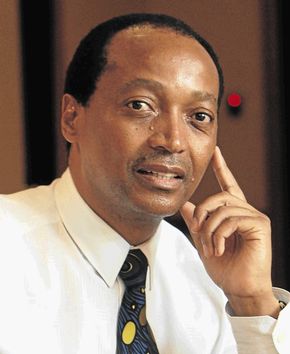
Billionaire businessman Patrice Motsepe has denied reports that he is neglecting his pledge to help residents of Mmakau, North West, the Sunday Sun reported.
Motsepe Foundation spokesman Peter Ledwaba told the newspaper that Motsepe had pledged millions towards the development of the area a long time ago.

“People mustn’t think we say this for publicity. It has always been there, but he didn’t want to confine it only to Mmakau but to the Madibeng municipality as a whole,” he was quoted as saying.
“Motsepe started the pledge in Tshwane, where he made a pledge of R2 million.”
The foundation was responding to a report in the Sunday Sun a week earlier, according to which Mmakau residents had accused Motsepe of making promises, but not keeping them. The newspaper reported that residents were angry because Motsepe was neglecting his home village, where Motsepe family businesses were standing empty and jobs had been lost.
Ledwaba said the allegations were aimed at harming Motsepe’s reputation. He said the foundation had further pledged R5m over five years to the people of Madibeng. The money was for education. Half of it went to teacher development and the rest was used on the pupils.      -Sapa

Protester did not threaten cops: witness


Image

Rustenburg – A protester was not threatening police when he said they would “finish each other” before the fatal shooting at Marikana, a survivor told the Farlam Commission on Monday.

Workers’ representative Mgcineni Noki apparently told police: “… You are going to die here, we are going to finish each other… Let us sign a paper so that the whole world can see how we will kill each other today.”

Testifying before the commission on Monday, Mzoxolo Magidiwana, 24, who was wounded in the shooting on August 16 last year, said he had not heard Noki, also known as Mambush.

Advocate Vuyani Ngalwana, representing police, asked Magidiwana whether, if these words were addressed to him, he would consider this a challenge.

Magidiwana replied: “No, that is not so.”

He had also not believed Association of Mineworkers and Construction Union (Amcu) president Joseph Mthunjwa when he went to the hill where the strikers had gathered and warned them they should leave to avoid “bloodshed”.

Magidiwana said the striking mineworkers had been waiting for Lonmin management to go to the hill and address their concerns.

Commission chairman Ian Farlam asked whether Magidiwana had believed Mthunjwa when he said a decision had been made that the protesters would be killed.

Magidiwana replied: “I never believed that. I never thought about that.”

Mthunjwa was not believed because no unions were involved in the workers’ demands for a monthly wage of R12,500.

However, when police nyalas began rolling out barbed wire, he realised that what Mthunjwa had said was true, Magidiwana said.

Farlam asked why a group of protesters had run towards police, “making it easier for them to kill you”.

“(We) never went towards the police,” Magidiwana said.

Farlam said: “You went towards them, you were reducing the distance between them and you.”

“No, it was not like that,” Magidiwana said.

The commission is holding hearings in Rustenburg, North West, as part of its inquiry into the deaths of 44 people during an unprotected strike in Marikana last year.

On August 16, 34 striking mineworkers were shot dead and 78 were injured when police opened fire while trying to disperse a group which had gathered on a hill near the mine.

Ten people, including two police officers and two security guards, were killed near the mine in the preceding week.

Magidiwana previously told the commission he was repeatedly shot and beaten by police on August 16.

He said police approached him, asking him where he had put the firearm.

Police have alleged that Magidiwana was shot in an attempt to disarm him.

He was allegedly found with a Z88 pistol bearing the SA Police Service emblem.

Police said he was charged with illegal possession of a firearm and ammunition.

He was arrested, but could not be detained because of the severity of his wounds.

Magidiwana was hospitalised at various institutions, under police guard.

He was charged as accused number 273 of the protesting mineworkers.

A policeman has testified that Magidiwana conceded being in possession of the police firearm.

Another police officer submitted that he saw Magidiwana shoot at a nyala.

The 24-year-old has dismissed the police allegations as “nonsense”. – Sapa

Tatane cops’ case postponed


Image

Bloemfontein – The trial of seven policemen charged with killing protester Andries Tatane was postponed by the Ficksburg Regional Court on Monday.

The court postponed the matter to March 18, because the policemen’s defence lawyer Johann Nel is in hospital.

Tatane was killed on April 13, 2011, allegedly by police using rubber bullets, during a service delivery protest in Ficksburg.

Sapa

Kimberley police are looking for Katota


Image

By Obakeng Maje

Kimberley-SAPS request assistance with the tracing of a male named Martin Katota , aged 39 years who went missing on 03 January 2013 at approximately 01:00pm. 

“The male resides in Platfontein and was last seen at the municipal dump on the Griekwastad Road in Kimberley” Lieutenant sergio Kock said. 

“He has black hair, black moustache, brown eyes and is an ex-soldier from the SANDF” Kock said. 

Police said Katota speaks Khwe and Afrikaans. 

All information regarding the missing person can be forwarded to Detective Warrant Officer Riaan Lamprecht on 082 548 0254 or 10 111. 

The investigation continues.

Follow us on Twitter@Taung_DailyNews