2012 the year of uprisings by inmates – report


82486b2b4f4748fe8705fa83f7f7c711
Cape Town – Conditions in South African prisons remain poor, with inmates becoming increasingly frustrated with their treatment, the 2012/13 annual report of the Judicial Inspectorate for Correctional Centres (JICS) has found.

The report was tabled in Parliament last week.

“The inspecting judge [of prisons] characterised 2012 as a year of uprisings by inmates in correctional centres,” the report said.

“While gangsterism in correctional centres can be seen as a major contributing factor, amongst others, we cannot ignore that inmates have become frustrated with their conditions and treatment in correctional centres.”

More unnatural deaths

There was a decline in the overall number of deaths in prisons from 852 to 709, but the decrease only applied to natural deaths.

“The number of unnatural deaths reported has increased from 48 to 57, which is of great concern to the Inspectorate.”

Most unnatural deaths are as a result of suicide, followed by incidents where the cause of death has not yet been determined.

Nineteen inmates hung themselves, nine were murdered by fellow inmates, six overdosed on drugs and three committed suicide by setting their cells alight.

The Inspectorate conducted 39 investigations, of which 21 were probes into allegations of serious human rights violations.

Modderbee in Gauteng came under investigation five times for assaults, gang-related violence and suicides.

Gang violence at Groenpunt in the Free State, St Albans Prison in Port Elizabeth and Pollsmoor in the Western Cape – where dozens of inmates were injured in January this year – was also investigated.

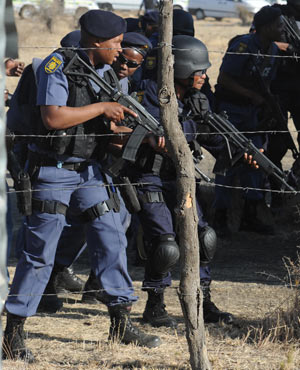
“In respect of the allegations of violence we have found that officials acted beyond the scope of their authority and lacked the necessary judgement and characteristics when trying to quell the inmate uprising and gang-related activity,” the report said.

Inmates complain of assaults

In addition, Independent Correctional Centre Visitors (ICCVs) received thousands of complaints from inmates.

The number of complaints of officials assaulting inmates grew by 73%, while complaints of inmate-on-inmate assaults went up by 56% from the previous year.

“This occurrence can be attributed to the ill-discipline of officials and/or inmates which militate against the safe custody to which inmates are entitled,” the Inspectorate found.

“It furthermore infringes upon the spirit of rehabilitation which is one of the core functions of the DCS.”

Overcrowding remains a huge concern, despite the prison population decreasing from 158 165 to 153 049 between March last year and this year.

“We note that the sentenced offender population decreased by 7 144. By contrast the number of remand detainees increased by 2 082.”

‘Reduce inmate numbers by 25%’

The country’s prison infrastructure was still not adequate to accommodate the number of inmates housed in jails.

“The ideal number of inmates in relation to our current accommodation should be reduced by at least 25%…”

Inmate health care was also a major concern.

A survey conducted during the 2011/12 financial year revealed 38% of inmates were not examined within 24 hours of admission, 29% were not informed of their right to health care, and 54% did not receive immediate treatment.

“It is the view of the Inspectorate that the department [of correctional services] has not taken the findings and recommendations of the said report into account.”

Democratic Alliance MP James Selfe said the report showed that “all is not well in South Africa’s prisons”.

DA wants minister to appear before committee

“It also shows the urgent need for the immediate implementation of Section 49G of the Correctional Services Act which limits the period of incarceration for remand detainees to a maximum of two years,” Selfe said.

“The effective enforcement of this section could successfully address the concerning upward trend in the number of remand detainees held in our prisons.”

Selfe said inspecting judge Vuka Tshabalala should explain the report to Parliament’s portfolio committee on correctional services.

The DA would also call for Correctional Services Minister Sibusiso Ndebele to appear before the committee to explain what his department was doing to improve the situation inside the country’s jails.

“Although prisoners have committed offences, they are still guaranteed basic human rights that need to be protected. What is needed now is a clear analysis of the JICS’s findings, and a definite strategy by the minister to turn the situation around.”

– SAPA
Hlophe hearing postponed


2013_9$thumbimg130_Sep_2013_070148847-ll
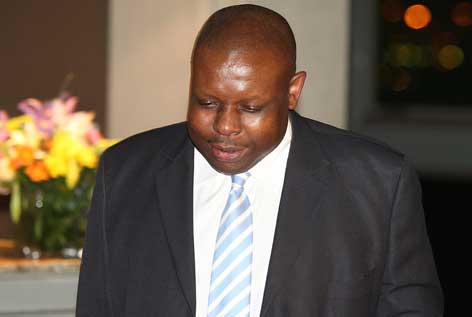
Johannesburg – The Judicial Service Commission (JSC) tribunal hearing into a complaint of misconduct against Cape Judge President John Hlophe was postponed on Tuesday.

“Older age has taught me not to make a decision too quickly. We [the tribunal] are going to need some time,” tribunal president, retired judge Joop Labuschagne said.

“We will get together this afternoon and during the course of tomorrow [Wednesday] and we will do our best to make a decision on Thursday morning at 10:00.”

The tribunal heard earlier on Tuesday that it was an invalid proceeding.

Selby Mbenenge, SC, for Constitutional Court judges Chris Jafta and Bess Nkabinde, said the tribunal’s legitimacy was at stake because the rules governing it were invalid.

“This tribunal is not a properly appointed structure as the rules applicable to these proceedings make no provision for its creation,” he said.

Rules not published

He said the rules of the tribunal were also invalid since they were not published in the government gazette by the minister of justice, in terms of the unamended JSC Act.

“In our view the failure to publish the rules in question is fatal and the rules cannot be relied on,” Mbenenge said.

“The entire proceedings become a nullity. There was in the first instance no complaint to investigate – there was no inquiry to conduct.”

Mbenenge said Jafta and Nkabinde were entitled to raise the defence that they were not obliged to subject themselves to the proceedings.

He said that “strictly speaking” the two were not party to the proceedings. However they had made submissions in the anticipation that they be called to testify.

“They have a right not to testify before an illegitimate structure,” Mbenenge said.

In 2008, Jafta and Nkabinde alleged Hlophe approached them while they were considering a corruption case involving President Jacob Zuma and arms company Thint in the multi-billion rand arms deal.

The justices regarded discussing the case with them as an attempt to improperly influence its outcome and a complaint was lodged.

Court decision

Evidence leader Xoliswa Khanyile said on Tuesday the issue surrounding the legality of the proceedings was beyond her.

“All I can say is the issues that are raised here are issues that really should be decided by the court. I don’t think this tribunal can really invalidate itself and say ‘we are part of an illegal structure’.”

Gilbert Marcus, SC, for the Constitutional Court judges excluding Jafta and Nkabinde, said on Tuesday that “everybody” had accepted since July 2008 that these proceedings were conducted in accordance with a set of rules that were made in terms of relevant legislation.

“We submit that on the acceptance that there has not been publication of those rules, it really cannot have the effect of invalidating everything that follows,” he said.

“What we are concerned about is whether or not the initiating complaint in May and June 2008 is valid or not. We submit… that there is no basis upon which section 14 of the act, which only came into force on the first of June 2010, can be held to apply retrospectively to completed transactions.”

– SAPA

Man held for double murder in Soweto


ab52fc29da134b32bee8c4a30979f793
Johannesburg – A 33-year-old man accused of a double murder was arrested in Merafe, Soweto, on Tuesday, Gauteng police said.

The man was caught after he instructed his lawyer to call the police, Warrant Officer Kay Makhubela said.

He allegedly shot dead two men at the Merafe hostel on 23 September, and had been on the run since.

Spent R-5 rifle and 9mm pistol cartridges were found on the scene of the crime.

He would appear in the Protea Magistrate’s Court soon, Makhubela said.

– SAPA

DA’s Maimane: ANC’s Mbeki recall desperate


Democratic_Alliance_(South_Africa)_logo_2008
Johannesburg – The ANC asking former president Thabo Mbeki to assist in capturing Gauteng’s middle class votes in next year’s election was a sign of desperation, DA national spokesperson Mmusi Maimane said on Tuesday.

“When President Mbeki proclaimed that he was an African, born of the people of this continent, we shared his pride,” Maimane told residents in Soshanguve.

“President Mbeki wasn’t perfect. Nobody is. But during his presidency we saw progress. He got the economy on track. Houses were built and electricity and sanitation were delivered.”

The Sunday Times reported that the strategy arose out of fears of President Jacob Zuma’s unpopularity with the middle class. Zuma would instead be used to woo the poor and working class voters in the province.

“We are pulling out all the stops and using all the resources of the ANC,” the party’s Gauteng provincial secretary David Makhura reportedly said.

Once an ANC supporter – Maimane

On Monday, the ANC in Gauteng queried the report, stating that it suggested without any basis that Zuma was unpopular with the middle class.

The ANC’s campaign in the suburbs was also different in every election and the report made no reference to provincial secretary David Makhura’s extensive criticism of the opposition campaign in Gauteng, the ruling party said.

Maimane said Mbeki introduced Black Economic Empowerment, and while there may have been problems with its implementation, it signalled the injustices of apartheid were being redressed.

During this time, he was an ANC voter and an Mbeki supporter.

“Things have now changed. The economy is sliding and people are battling to put bread on the table. Jobs are being lost,” he said.

“The best opportunities always seem to go to the same connected insiders. And communities across Gauteng are taking to the streets to protest against corruption.”

This was why the ANC was talking about bringing Mbeki back to campaign in Gauteng, so people forget what has happened since he left office.

‘People deserve to know candidates’

“He was recalled once and now the ANC want to recall him back,” Maimane said.

“It amazes me that you can kick a president out of office and then expect him to come back and campaign for you.”

Maimane, the DA’s candidate for Gauteng premier in next year’s elections, said people deserved to know who their candidates were.

“If [Gauteng Premier] Nomvula Mokonyane is going be the premier candidate, then she must come out and campaign,” he said.

“She must come out and defend her record in government.”

– SAPA

Gravel roads a concern – Peters


llGGyt-lfIowlpP7sCBjNneaW6D4vjY2yfnDnIgKosIfvVRwa7GFYjXd8UFZsF8_ExlYSFlt_nM
Johannesburg – The transport department was concerned that many South Africans were still having to use untarred roads, Transport Minister Dipuo Peters said on Tuesday.

While a lot had been achieved in transport in cities, many rural transport networks were still struggling, she said in a speech prepared for delivery at the launch of transport month in Pretoria.

Rural transport development had become one of the country’s main problems.

“Some in the rural areas have to walk long distances to access public transport. It is important for all of us to focus on the improvement of mobility and access in rural areas.”

A national travel survey had highlighted that a high percentage of the population could not afford transport costs. This in turn affected their access to social and economic services, she said.

Peters acknowledged that much had been achieved in transport. In centres such as Johannesburg, Cape Town, Port Elizabeth, and Rustenburg there were investments in projects such as the Bus Rapid Transit system.

“The system is a catalyst for urban regeneration, reconnecting isolated nodes and bringing disconnected communities closer to economic opportunities.”

She said the country had more tarred roads than the rest of sub-Saharan Africa combined.

“They are worth over R1 trillion, which is equal to the national budget for a year. We need to spend R30 billion a year on just maintaining them, but at the moment we can only spend R30bn on both maintenance and new construction.”

Hundreds of billions were being invested to expand and upgrade rail networks, harbours, and airports, she said. The aim was to enable easy access to goods which the country’s economic growth depended on.

– SAPA

DA wants debate on Zuma’s handling of economy


Democratic_Alliance_(South_Africa)_logo_2008
Johannesburg – The Afrobarometer poverty survey released on Tuesday showed President Jacob Zuma’s handling of the economy needed to be debated in Parliament, the DA said.

According to the survey, South Africans were experiencing increased levels of poverty, Democratic Alliance economic development spokesperson Kenneth Mubu said in a statement.

“In terms of Afrobarometer’s Lived Poverty Index (LPI), South Africa now ranks sixth in Africa, down from third in 2009 when President Jacob Zuma and Minister of Economic Development Ebrahim Patel took office.”

South Africa’s score on the LPI for 2012 was 0.81 on a scale from zero to four. Four reflects a constant absence of all basic necessities, while zero reflects no poverty.

In 2002, South Africa scored 0.71, 0.82 in 2005, and 0.89 in 2008 on the LPI.

“The Democratic Alliance believes that job creation should be the number one priority to reduce poverty,” Mubu said.

If the party were elected to national government, it would implement job-creating economic policies such as the youth wage subsidy.

“The DA has repeatedly requested a debate in Parliament on President Jacob Zuma’s handling of the economy,” said Mubu.

“Our requests have been denied by the Speaker [Max Sisulu] on the basis that he did not believe that the subject was of ‘immediate concern’.”

With the survey’s findings showing South Africans getting poorer, and young people struggling to find jobs, the DA reiterated its call for an urgent parliamentary debate.

“We trust that the Speaker of Parliament will wake up to the realities of ordinary South Africans and allow for this crucial debate to take place.”

The survey indicated that poverty in South Africa increased despite reported average economic growth of 3.6% between 2002 and 2012.

Between 2011 and 2013, 60% of South Africans never experienced water shortages, while 29% did so once, twice or several times. Eleven percent experienced water shortages many times or always.

Medical shortages were always experienced, or many times, by eight percent of South Africans, while 31% experienced the same shortages once, twice, or several times.

Most South Africans – 60% – never experienced medical shortages, according to the survey.

Regarding cooking fuel shortages, eight percent of South Africans always or many times experienced such shortages, 30% once, twice, or several times, and 62% never.

Nearly a quarter – 22% – of South Africans experienced cash income shortages many times or always.

Thirty-four percent experienced the same shortage once, twice, or several times while 44% of South Africans never experienced cash shortages.

When South Africans were asked what they thought of the current condition of the national economy, 47% said it was fairly or very bad, 17%said neither good or bad, and 34%said very or fairly good.

Compared to the condition of the country’s economy a year ago, 33% of South Africans said the economy had become worse or much worse, while 36 said it was the same.

The survey was conducted in 35 countries across Africa (though Ethiopia’s data was yet to be released).

– SAPA

Assault at Cape Town ANC meeting


anc-logo
Cape Town – People wielding knobkerries and pangas disrupted an ANC meeting in Cape Town at the weekend, a Dullah Omar region official said on Monday.

The African National Congress was tipped-off that a group had been given alcohol and planned to disrupt the proceedings in Gugulethu on Saturday night, said regional secretary Vuyiso Tyhalisisu.

As a precaution, members were asked to stay inside the Baptist Church Hall in the Barcelona informal settlement, where registration was done.

“A bakkie full of drunk people arrived and stopped in front of the venue and jumped out. They started hitting people who had not heard the call to move inside,” Tyhalisisu said.

Four people were injured and were taken to a nearby hospital.

The meeting, which had to be cancelled, was part of the nomination process for next year’s provincial and national elections.

“Our suspicion is that there is a high level of desperation as this process is concluding,” Tyhalisisu said.

“The branch secretary indicated that those people are not from the ANC. Clearly, they are linked to some characters of the ANC. If they wanted to beat any people, why would they choose the ANC meeting?”

He said the provincial executive committee had agreed to investigate the attack.

Colonel Tembinkosi Kinana said a case of assault with intent to do grievous bodily harm had been opened.

He said the group fled in a white bakkie and no arrests had been made.

“The police can also not confirm at this stage if the incident was linked to the alleged ANC meeting which was taking place inside at the time,” he said.

– SAPA

Cops need more training – IFP


SAPS
Johannesburg – Police need more training to avoid the use of live ammunition when dispersing crowds, the Inkatha Freedom Party said on Tuesday.

“It is always said that police should not use live ammunition when they intervene in protests because they are likely to kill people,” IFP human settlements spokesperson Petros Sithole said in a statement.

“All police officers require more training in crowd dispersion techniques in order to avoid unnecessary deaths of innocent people.”

He was responding to the death of a 17-year-old woman during a service delivery protest in Cato Crest, near Durban, on Monday.

Colonel Jay Naicker said police were called to disperse protesting residents who were blocking a road.

The police could not get their vehicle through and used an alternative side road.

“About 500 people surrounded the vehicle. They started stoning the vehicle and broke all the windows. The suspects then tried to pull the police out of the vehicle,” Naicker said.

“They heard gunshots among the crowd. They fired shots into the crowd and the crowd dispersed… they used lived rounds. They definitely would have been killed by the crowd [otherwise].”

The police left the area and when they returned a while later they found a young woman had been shot. She died on the scene.

Mnikelo Ndabankulu, spokesperson for shack dweller movement Abahlali baseMjondolo, identified the woman as Nqobile Nzuzua, 17, from Maphumulo.

The Independent Police Investigative Directorate (Ipid) had opened a docket of public violence and one of murder.

Sithole said that the situation would not have arisen if the municipality had responded to residents requests for housing. “These people have been living in shacks for years with no development in their areas.

“The municipality should not wait for residents to lose their patience before they attend to their grievances.”

The IFP extended its condolences to Nzuzua’s family.

Sithole asked residents to remain calm and allow the Ipid to deal with the matter.

– SAPA

Breakdown battle lines drawn


Sam-Tomkins
Johannesburg – The breakdown will be a key area when the Springboks take on the All Blacks in their Rugby Championship title decider at Ellis Park on Saturday, Springbok forward coach Johann van Graan said.

While the Springboks had improved tremendously in this area, the possible return of the All Blacks’ breakdown specialist and captain Richie McCaw would add another dimension to the battle.

“Both teams are very good at the breakdowns on attack and defence.

“After scrums, it is where the most penalties are conceded,” Van Graan said in Johannesburg on Tuesday.

“Any team in the world would like quick ball and, as we’ve shown this weekend, if we get quick ball we are a very dangerous team.”

Van Graan said the Boks’ improvements were down to a change in the way they approached the breakdown.

“We’ve made a change in mentality that all 23 players must be able to make the right decision at the breakdown,” he said.

“Even if you look at the weekend, when a guy like Gurthro (Steenkamp) and Jean (De Villiers) start stealing ball, that is where you want to be.”

He said the Boks managed to win eight turnovers in defence against the All Blacks in their previous Test in Auckland, and had also been good on their own ball.

“Attack-wise we had exactly 100 breakdowns on our ball and we managed to win 96 of those, so that is quite good but we want to aim for 100%,” Van Graan added.

He also emphasised the importance of discipline after their two previous matches had been severely affected by referees who dished out yellow cards.

The previous match between the two traditional foes was marred by controversial refereeing from Frenchman Romain Poite when he brandished two yellow cards to Springbok hooker Bismarck du Plessis.

Effectively, they played 50 minutes with only 14 men when Du Plessis was shown a red card in the 42nd minute.

Last weekend, Flip van der Merwe and Duane Vermeulen were also shown yellow cards, which had an adverse effect on their momentum against the Wallabies in Cape Town.

“The message is always the same.

“We want to keep improving on our discipline and as few penalties as possible.

“In the last three Tests, we conceded fewer penalties than our opposition.

“There were some incidents where we were unfortunate and some where we have got to take a hard look at ourselves.”

While Saturday’s Welsh referee Nigel Owens was a familiar face, Van Graan said they would still need to adapt to the way he controlled the game.

“We had Nigel for two matches last year – in Perth against Australia and England at Twickenham – so we know what he is about.

“He is one of the world’s best referees.

“Once you get onto the field, you can’t control anything.

“You just have to adapt and we have every confidence in him.”

He said the referee’s performance was also dependent on the way the teams approached the game.

“Both teams have shown that we like playing open, attacking rugby… it is easier for the referee, but I can assure you Saturday will be a dogfight.”
For more http://www.news24.com

Pistorius flies in US forensic experts- report


Image

Johannesburg – Forensic investigators from America will assist murder-accused paralympian Oscar Pistorius’s defence team with his trial, his spokesperson said on Tuesday.


“I can confirm that a team of forensic investigators from America will be working with the defence team,” spokesperson Anneliese Burgess said.


“It’s very standard practice to work with experts during the preparation of any trial.”


She said that the team arrived at Pistorius’s Pretoria home with his lawyers on Monday.


Burgess said they would not go into the details of the investigators’ work, and that she could not say any more.


Pistorius appeared briefly in the Pretoria Magistrate’s Court on 19 August for shooting his girlfriend Reeva Steenkamp in his Pretoria home on 14 February.

At his bail hearing, Pistorius submitted that he thought Steenkamp was an intruder.


Along with murder, Pistorius was also charged with contravening the Firearms Control Act.


The trial was moved to the North Gauteng High Court and will run from 3 to 20 March. The indictment lists 107 witnesses to testify for the State.


SAPA