Khenyeza’s Case Postponed Again


6db068df0fcd93ea6e748b5ea8e12763110
News reaching the Siya crew is that the appeal case against Mpumalanga Black Aces striker Mabhudi Khenyeza has been postponed again after the arbitrator failed to show up.

As reported by the crew earlier Khenyeza was expected to appear before arbitrator today to hear the PSL’s appeal on his sentencing.
Read more here http://www.soccerladuma.co.za/news/article/south-africa/khenyeza-s-case-postponed-again/140522

Arms inquiry adjourned until 2014


8c48c96104a949e5b7b4f5e1d8f0a1a0
Johannesburg – The Seriti Commission of Inquiry has been adjourned until January next year, the commission said on Monday.

“The chairperson, Judge [Willie] Seriti, adjourned the hearings after the evidence leaders indicated that consultations with witnesses are still ongoing and the next witness from Armscor will be ready and available in the new year,” spokesperson William Baloyi said in a statement.

The commission would issue a revised schedule of witnesses within 10 days.

The commission is investigating allegations of corruption in South Africa’s multi-billion rand arms deal.

Former president Thabo Mbeki and Minister in the Presidency Trevor Manuel were set to testify in the second half of January.

The first phase of the commission was dealing with the rationale for the Strategic Defence Procurement Package, and whether the arms and equipment acquired were under-utilised or not utilised at all.

The first witnesses were navy and air force officials and Armscor witnesses. These had been the only witnesses to date.

In July, the commission said former intelligence minister Ronnie Kasrils and Cope president Mosiuoa Lekota would be called as witnesses between 30 September and 4 October, followed by department of trade and industry officials until 11 November.

Former public enterprises minister Alec Erwin was also expected to testify for three days in November.

Delays

The commission, which started in August, has had a number of delays. Earlier this month, the commission was adjourned following a request by Lawyers for Human Rights.

The organisation wanted time to study documents for the cross-examination of Armscor manager Johan Odendaal.

In October, there were delays because of a power cut, and to allow for the declassification of certain documents.

The commission was again postponed after a request from legal representatives of some of the witnesses, namely Paul Holden, Andrew Feinstein, and Hennie van Vuuren, to prepare to cross-examine witnesses from Armscor.

In September, the commission was postponed because of burst water pipes at the Sammy Marks Conference Centre in Pretoria.

That month it was again postponed for two days because Seriti had fallen ill, and then postponed for a week to allow for further investigations and consultations.

– SAPA

I was misquoted – Marikana cop


c4989050a96c4770804f3b5e1c4f872f
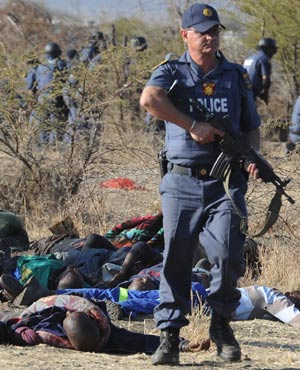
Pretoria – A senior policeman has denied praising subordinates for the “perfect massacre” after the Marikana shooting in North West last year.

Brigadier Adriaan Calitz told the Farlam Commission of Inquiry in Centurion on Monday he merely commended policemen for adhering to a police plan for dispersing striking miners.

He was replying to questions by Advocate Ishmael Semenya, for the police, regarding his congratulatory remarks in a video taken two days after the 16 August shooting.

In the video, Calitz is seen addressing uniformed officers at the police base at Lonmin’s Marikana mine in Rustenburg in the North West.

“At this stage we did nothing wrong. From the planning to the execution [it] was 110%… I have to congratulate you,” Calitz reportedly said in the controversial video.

“Exactly how we planned it and we briefed the commanders, exactly we executed in that line.”

On Monday, Calitz was given the opportunity to explain his “110%” remarks.

“I was talking about the plan when I mentioned those words. I was quoted in the Sowetan as having said [it was] the perfect massacre. I only talked about the members’ co-operation,” he said.

“I never spoke of any shooting, I never spoke of how people were killed.”

His subordinates did exactly as they had been told – “the encirclement, the disarming, and even the arrest of the people [protesters] had taken place”.

Motivation

Semenya asked Calitz why he felt the need to congratulate his charges.

“I felt it was my duty to let them know that they had not done anything wrong. If someone speaks of 110%, it is used as a motivation to the people,” he said.

“The members did not know what to expect, they had been told that some of them would be suspended and expelled. I talked about the 110% regarding the manner in which they had taken instructions [during the Marikana intervention].”

Earlier, Calitz told the commission he was unaware that mineworkers “lying around” after the encounter with police were dead.

In a sworn statement submitted to the commission, Calitz testified that due to the noise around the koppie, he had not heard the police tactical response team (TRT) firing live ammunition at the strikers.

“I contacted Lieutenant Colonel [Solomon] Vermaak on radio and inquired from him why the TRT was not following our dispersal action. He said he would go and check and later reported that the TRT were at the kraal and there were bodies lying around,” said Calitz.

“I thought, given my experience and the absence of such a report to me, that the bodies referred to people who were injured by the dispersion action or lying down to be arrested.”

Instructions

Calitz detailed how he instructed officers to pursue protesters who were escaping in the northern and western directions. He urged the officers to arrest the fleeing protesters.

“I gave clear instructions over the radio to the dispersion group [police officers] ‘do not shoot unless the target engages you’. I repeated the instruction to ensure that members understood me clearly,” said Calitz.

“The shooting I was referring to [meant the use of] rubber rounds and not sharp ammunition. They were to use rubber only as a last resort if the armed strikers approached them with dangerous weapons.”

Calitz was one of the police commanders assigned to the operation during the labour unrest at Lonmin’s platinum mining operations at Marikana.

The three-member commission led by retired Judge Ian Farlam is holding public hearings. The other commissioners are senior advocates Bantubonke Tokota and Pingla Hemraj.

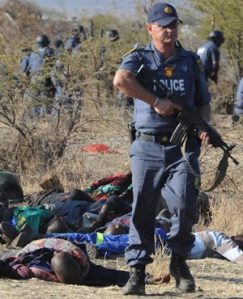
Thirty-four people, mostly striking miners, were shot dead on 16 August 2012, and 78 were wounded when the police fired on them while trying to disperse and disarm a group which had gathered on a hill near Lonmin’s platinum mining operations.

In the preceding week, 10 people, including two policeman and two security guards, were killed near the mine.

President Jacob Zuma appointed the commission in August last year.

The public hearings will resume on Tuesday.

– SAPA

Bail blunder costs man 3 years behind bars


CrimeTapeSmall
Pietermaritzburg – Failure by a high court judge’s registrar to record that a man had been granted bail cost him three years in jail, the KwaZulu-Natal High Court in Pietermaritzburg heard on Monday.

This mistake prompted Sivion Mkhize, 28, who was later set free after an appeal, to launch a R16m claim, plus loss of earnings, against the minister of justice and constitutional development.

The minister’s counsel was opposing the claim on the basis that it was no longer valid as it was more than three years old.

Acting Judge Piet Bezuidenhout will decide on the claims and defence.

Mkhize, from Ladysmith, was convicted of murder and aggravated robbery in the Dundee Circuit Court by Judge Leona Theron in February 2001.

She sentenced him to jail for life for murder, plus 15 years for aggravated robbery at a garage near Ladysmith.

Two of his co-accused absconded, leaving Mkhize as the sole accused.

Theron granted him leave to appeal because part of the evidence against him rested on voice identification.

She also granted him R5 000 bail.

Mkhize’s leave to appeal was recorded but not his access to bail.

He was sent to Waterfall Prison in Utrecht where officials refused to release him on bail.

Eventually Mkhize wrote to the then Judge President of KwaZulu-Natal, Judge Vuka Tshabalala, who wrote back to him informing him that he had been granted leave to appeal, but not bail.

Despite efforts by Mkhize and his family to have the record set straight he stayed in jail until February 2004 when a full Bench set aside his conviction and freed him.

An emotional Mkhize told the court that he started doubting his mental condition while in prison as both he and his family knew he had been granted bail, but he was still in prison.

The matter continues.

– SAPA

Minister has seen SABC report


2237015158
Cape Town – Communications Minister Yunus Carrim said on Monday he had seen the public protector’s provisional report into alleged maladministration at the SABC.

“Yes, I did receive the report, obviously. It was given as a courtesy to the department of communications,” he told the Cape Town Press Club.

“As I understand it, there’s nothing for a minister to do at this stage because each of the parties referred to has to be given seven days [to respond].”

Public Protector Thuli Madonsela was expected to get feedback by Friday.

Carrim said he would not comment until the final report was released.

The City Press newspaper reported on Sunday that it had seen the provisional report, which highlighted abuse of power and maladministration by senior executives and former SABC board members.

According to the newspaper, the report made recommendations in terms of the conduct of the SABC’s acting chief operating officer Hlaudi Motsoeneng, group chief executive officer Lulama Mokhobo, former board chair Ben Ngubane, and former communications minister Dina Pule.

Carrim said that should there be allegations against officials in his department in the final report, he would consult with his legal team for direction.

He said the SABC board had to ultimately decide what to do with the final recommendations.

The future of the SABC

Once the board had come to a decision, it would report to the communications department and a deadline would be set for resolution.

Carrim said it was absolutely clear that his department needed to have more strategic oversight of the SABC in the future.

Carrim replaced Pule as communications minister in July after she was sacked in a Cabinet reshuffle.

In August, Parliament’s ethics committee found Pule had “wilfully misled” Parliament by denying her romantic relationship with a man, who allegedly made millions from sponsorship deals with her former department.

Carrim remained neutral when asked for comment about Pule’s conduct and repairing the reputation of his portfolio.

“In respect of my predecessor, I am not a judge but part of the same collective executive.”

He said he was certainly not a “knight in shining armour”.

– SAPA

Uranium seized in SA likely from abroad


e41b4646f5b141858c7fe86f6db0c355
Johannesburg – A kilogramme of uranium seized in South Africa as it was allegedly being sold, likely originated from a nuclear enrichment plant outside Africa, the country’s nuclear energy agency said on Monday.

The South African Nuclear Energy Corporation (NECSA), which tested the material, confirmed that the substance was unenriched uranium, adding that it likely came from somewhere where enrichment is taking place.

“Yes, it is uranium, and the tests suggest that it must have come from a country that is dealing with some uranium enrichment at the moment, very, very unlikely [in] Africa,” NECSA spokesperson Elliot Mulane told AFP.

Mulane said at this stage there was no firm indication of where the uranium could have come from, simply suggesting investigations will now move “across international borders”.

China, Iran, Japan, North Korea and the United States are among more than a dozen countries involved in uranium enrichment.

Two men in their early 20s were arrested in possession of the 1kg of uranium while allegedly trying to sell it in Durban on 14 November, officials said.

Dirty bombs

The seizure, which also included 90 ecstasy tablets, has heightened fears over the illicit trade in enriched materials that could be used in dirty bombs.

International atomic bodies have been informed of the matter.

According to test results seen by AFP the uranium is 0.38% made up of the U-235 isotope, which is split in a fission reaction.

That level is well below the average 0.7% U-235 found in natural uranium and the 90% level needed to be considered weapons grade.

Mulane said the level of uranium found in the sample is harmless and similar to that found in material used to build hulls of ships and in the construction of aircraft.

Uranium trafficking is rare.

South Africa has the continent’s only nuclear power plant, but several countries have significant uranium deposits and mining activities.

The arrested suspects appeared in court last week and were remanded in custody until 3 December for a bail application.

– AFP

Police search for gunman at locked-down Yale


88748106
Connecticut – An anonymous caller warned authorities on Monday that his roommate was on his way to Yale University to shoot people, leading officials to lock down the Ivy League campus as police searched for a gunman.

The hunt, which came as the school was on November break, was stymied by students who had stayed behind and were afraid to open their doors, police said.

An emergency call was received around 09:30 local time from a man at a pay phone about a mile from the campus, said Officer David Hartman, a New Haven Police spokesperson.

“All he really said was that his roommate was on his way to the university, to Yale University, to shoot people,” he said.

Police later received reports from witnesses who reported seeing someone with a gun, Hartman said. But he said it was possible they had simply seen officers responding to the initial call.

There was nothing specific about the threat, he said, and the call lasted only seconds. There were no reports of shots fired or anyone injured.

Police blocked off several streets near the university’s Old Campus, in the heart of New Haven, where they were concentrating their search.

Several local schools were also placed in lockdown. Police in tactical gear entered several campus buildings, and a helicopter hovered over the area.

Pedestrian traffic in the normally bustling area was sparse, with cold and windy weather keeping many people inside.

Room-by-room searches

The response included several police departments, the FBI and other federal agencies, Hartman said. Authorities were conducting a room-by-room search of buildings “out of an abundance of caution”, he said.

Yale advised students and staff members to shelter in place. The school also issued an advisory asking people off campus to stay away from the area.

The school is on November break, with undergraduate classes to resume on 2 December.

Many students and staff members had already left campus for Thursday’s Thanksgiving holiday.

But many others were still in their dorm rooms, Hartman said. Police were having difficulty gaining access to some rooms because those locked inside were not convinced they were dealing with law enforcement, he said. Most rooms don’t have peepholes.

“One of the challenges that the police department is having is how to check those rooms,” he said.

Yale sent out an email telling community members that officers would be slipping a Yale ID under the door or using keys to gain access.

Yale has been the target of violence in the past. In May 2003, a bomb damaged an empty classroom and adjacent reading room at the law school.

A Yale professor, David J Gelernter, was seriously injured in 1993, when a mail bomb mailed by Theodore Kaczynski, the man known as the Unabomber, exploded in his campus office.

Friday’s search came several weeks after a scare on another Connecticut campus.

Central Connecticut State University was in lockdown for several hours on 4 November after reports by witnesses of a masked man carrying a gun or sword.

Police arrested a student, David Kyem, who said he had been wearing a ninja-like Halloween costume and meant no harm. He faces charges including breach of peace.

– AP

IEC announces final voter registration weekend date


iec-logo
The Independent Electoral Commission (IEC) on Monday announced that the second and final voter registration weekend will be on February 8 and 9, 2014. The announcement comes after the IEC met on Friday to review the outcome of the recent registration drive.

The last registration weekend, held on November 9 and 10, was noted by the commission as having had a significant increase in registrations in which just over 1 million new voters were added to the voters roll.
For more http://www.sabc.co.za

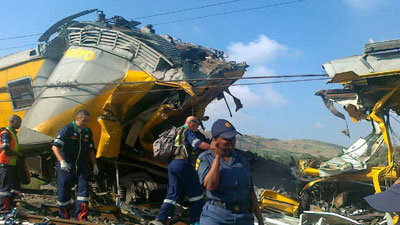
18 people injured in train, minibus crash


pretoria-train-accident
Two people have been killed and 18 others seriously injured after a train hit a minibus on the N2 north bound near Shaka’s Rock on the north coast of Durban.

It is believed a minibus veered off the road and plunged down an embarkment, landing on a railway track where it was struck by the train.
For more http://www.sabc.co.za

Lusikisiki is one of the country’s women abuse hotspots: Minister


xingwana
Women, Children and People with Disabilities Minister, Lulu Xingwana, says Lusikisiki in the Eastern Cape is one of the country’s women abuse hotspots. Xingwana has been speaking at the launch of 16 Days of No Violence Against Women and Children campaign at Lusikisiki.

The Eastern Cape coastal region, where Lusikisiki is located, has seen scores of elderly women killed for alleged witchcraft between 2009 and 2013. The Minister says she is happy that incidents of abduction of young girls by the custom of ‘ukuthwala’ or “forced marriages” have decreased.
For more http://www.sabc.co.za