Premier Modise lauds Police amid arrest of NUM member alleged killers


Image

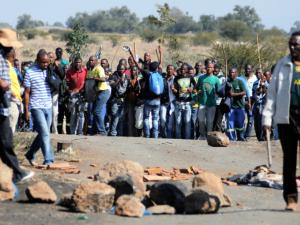
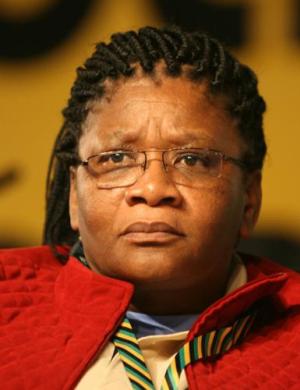
North West Premier Thandi Modise says that the arrest of three suspects in connection with the murder of the Chairperson of the National Union Mineworkers (NUM) of Marikana is encouraging and gives hope that peace and stability will be restored in Marikana and mining communities around Rustenburg.


“We welcome this breakthrough and commend police for the speedy arrest and call on the community to support police in their on-going investigations to ensure that those responsible for the recent spate of violence and killings are unmasked and brought to book soonest,” said  Premier Modise.


The Premier called on unions in the mining sector to respect the Framework for Peace and Stability in the Mining Industry they had signed earlier this year on the 25th of February and to desist from provocation, violence, intimidation and murder and to actively discourage their members from taking the law into their own hands.


According to police, the trio are expected to appear in the Rustenburg Magistrates Court later today. Their arrest follows an intensive investigation after the NUM leader was shot eight times and killed at the Marikana hill, near Lonmin’s platinum mine, last Thursday. 


He was reportedly shot once while driving. When he got out of his car another seven bullets were fired at him. He died on the scene.-TDN

Follow us on Twitter@Taung_DailyNews or @IceT_


Tutu speaks out against violent crimes meted out to minors


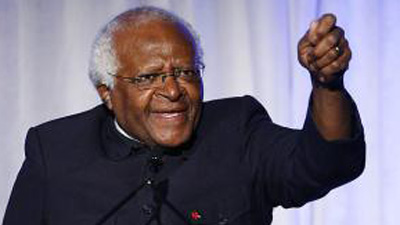
tutu(P)Archbishop Emeritus Desmond Tutu says communities should also take responsibility for raising children, to ensure that they become law-abiding citizens. He has been referring to recent violent crimes against youngsters, including the rape and murder of Bredasdorp teenager, Anene Booysen.
For more http://www.sabc.co.za

Boeremag sentencing to begin


5aa60b8574274dd19b53f3b45dd474c9
Pretoria – The sentencing of 20 Boeremag members convicted of treason will take place in the North Gauteng High Court in Pretoria next week.

Judge Eben Jordaan said on Wednesday he would start delivering sentence on Monday and would end on Tuesday.

Senior prosecutor Paul Fick argued last month that the accused had planned a coup for “selfish political reasons” and wanted to enforce their views on South Africa’s population through violence.

He said they had planned a violent takeover, which would have involved annihilating or driving millions of people out of the country.

The State asked the court to sentence the Boeremag bomb squad and three of its leaders to life imprisonment for their crimes.

Herman van Rooyen, Rudi Gouws and brothers Johan, Kobus and Wilhelm Pretorius had acted as the bomb squad, blowing up numerous targets and attempting to kill former president Nelson Mandela with a homemade bomb to create chaos in the country.

Sentence

A Soweto woman, Claudia Mokone, was killed by a piece of steel dislodged by a Boeremag bomb.

The State wanted the bomb squad, Pretorius family patriarch Dr Lets Pretorius and Boeremag leaders Tom Vorster and Dirk Hanekom to spend at least the next 25 years of their lives behind bars.

Fick argued that the rest of the accused, except the ailing Fritz Naude, should be sent to prison for periods ranging from five to 15 years.

Many of the Boeremag accused have already spent over a decade in prison, but Jordaan found that they were solely responsible for dragging out the trial.

Hercules Booysen, for Johan and Wilhelm Pretorius, argued that the accused had subjectively believed they were the victims of discriminatory legislation by a racist government and that they were involved in an armed struggle.

He said it was a state’s duty to treat minorities with respect and to regard their grievances with sympathy.

Creating a feeling of oppression

The present political dispensation in the country was doing the opposite, which created a feeling of oppression and resulted in deeds the court deemed as high treason, he said.

Booysen argued that none of the accused were ordinary criminals.

They ranged from farmers to highly qualified engineers, theologians, medical doctors, academics and military officers with no history of violence.

The government could have avoided the attempted rebellion if it had not degraded the Afrikaner male to “fifth class citizens”, he submitted.

No normal person would leave a thriving medical practice or stop his studies to start committing violent crimes for no personal benefit without good, subjective reasons.

“High treason is a political crime par excellence. Remove the circumstances and the crime disappears,” he said.

He argued that the state could have stopped the conspiracy much earlier and should be held equally responsible for the damage to state property, because police informers were instrumental in supplying the recipe for explosives to the accused.

– SAPA

DA calls for MDB chair’s resignation


Democratic_Alliance_(South_Africa)_logo_2008
Johannesburg – The Municipal Demarcation Board (MDB) chairperson must resign because he has a conflict of interest in municipal mergers in the Vaal, the DA said on Wednesday.

“We believe that this conflict could have had a serious impact on the outcome of the MDB’s decision to merge Midvaal municipality and Emfuleni municipality into a metro,” DA spokesperson Mmusi Maimane said in a statement.

The DA claimed Landiwe Mahlangu was a non-executive member of the company Sea Kay Holdings, which was contracted by the department of housing in 2008 to build 1 500 houses in Emfuleni.

It also claimed that he was a non-executive member of a waste management company called Interwaste.

MDB spokesperson Jabu Mthembu could not be reached for comment.

“According to Emfuleni’s 2012/13 annual report, Interwaste operates the Waldrift landfill site in Emfuleni municipality,” Maimane said.

“The DA believes that this is a serious conflict of interest on behalf of the MDB chair and that his decision-making process is questionable by virtue of these two positions.”

Unethical decisions

He charged that it was unethical for Mahlangu to make decisions about the merging of municipalities in which he had business interests.

“Mr Mahlangu should at the very least have recused himself from the decision to merge these municipalities due to the lucrative business interests he holds,” Maimane said.

“We believe that a fundamental lack of integrity has been demonstrated by Mr Mahlangu that undermines the credibility of the MDB in general, and that he should resign to preserve the standing of this important constitutional body.”

The announcement of the merger of Emfuleni, Midvaal and Sedibeng into a metro was made last Tuesday.

The Emfuleni municipality incorporates Vanderbijlpark and Sebokeng. Midvaal includes Meyerton and Randvaal. Sedibeng covers Heidelberg and Ratanda.

Maimane said the DA was seeking a legal opinion on reviewing the decision to merge the municipalities.

The Freedom Front Plus (FF Plus) said the merger should be scrapped following the allegations about Mahlangu.

– SAPA

WSU administrator tenure extended


a0fede4df4af49ed8c47b7ff1cf7c3dc
Johannesburg – The tenure of the administrator of the Walter Sisulu University (WSU) has been extended for another six months.

Higher Education Minister Blade Nzimande extended Prof Lourens van Staden’s tenure until 30 April, according to a notice published in the Government Gazette on Wednesday.

“This will include the strengthening of structures, systems and policies that will ensure good governance and the restoration of the culture of teaching and learning and academic integrity at the university,” Nzimande said in the notice.

The terms of reference for the position included taking over the university’s management and restoring it to operational and financial sustainability.

The university shut down on 30 July, a week after the National Education, Health and Allied Workers’ Union and the National Tertiary Education Union declared a strike.

The lockout, which caused student protests, was lifted on 8 September.

Higher education director general Gwebs Qonde said in August that the university was technically and commercially bankrupt.

President Jacob Zuma assigned Minister in the Presidency Collins Chabane to investigate the problems that led to the closure and to ensure education continued.

Van Staden was also tasked with assessing the impact of the 2005 merger of Border Technikon, Eastern Cape Technikon, and the University of Transkei into WSU, and whether this had led to a financial shortfall.

Other responsibilities set out in the gazette were the appointment of senior executive management and the introduction of measures to reduce WSU’s overdraft.

Van Staden would also be responsible for instituting a forensic audit to identify corruption.

– SAPA

Pampered pooch loses 25kg on doggie diet


5fc02bb1d6cd4bb5b23525e510a4911f
Johannesburg – Forced diets and hours of exercise are not a joy for everyone and it proved no different for Hector, a once chubby Pretoria Rottweiler which was forced to cut down on its portions.

Heavyweight Hector, who become known as the Gentle Giant, weighed 83kg before the vet put it on a supervised weight management programme. So far, the dog has lost 25kg.

The 4-year-old’s weight loss earned it the title of South Africa’s 2013 Hill’s Pet Slimmer of the Year and its owner a R5 000 prize.

Hector’s owner Fanie van Schalkwyk said he and his wife Elize were to blame for the dog piling on the weight over the years.

“We are guilty of spoiling him… We would give him a lot of food,” said Van Schalkwyk.

“We thought we were giving him the best… Just like you would do for your child.” Hector became the Van Schalkwyk’s “baby” when their children moved out of home.

The animal would be fed all day, without consideration for calories and portions. The pampered pet would also lie around all day.

“He was just lazy,” said Van Schalkwyk.

The dog’s slimmer waistline was accompanied by a personality change.

“Now he is just active. He can even jump into the car on his own while before he couldn’t even get into the car. I had to pick him up. He is now a dog with life.”

Adjusting to the diet

But how exactly did Hector adjust to the new diet?

“We were advised to give him a specific time for meals and he was only fed twice a day. If he hadn’t eaten after an hour we were told to take away the food because it meant he wasn’t hungry,” Van Schalkwyk said.

When Hector did clear the plate, the dog would sometimes grovel for seconds.

“We would distract him by playing with him so he could forget about getting more food,” said Van Schalkwyk.

Games proved to be a suitable treadmill replacement.

While Hector may get a doggy biscuit every now and then, Van Schalkwyk is keen to keep the animal in shape.

He says the proof of Hector’s weight loss success is not in the pudding, but comes from plenty of exercise and eating well.

– SAPA

Johannesburg – Delegates at a good governance conference in Pretoria will seek harsher punishments for organs of state that commit wrongdoing, the public protector’s office said on Wednesday


76eafb5b30314896985bd05b7319bd8d
Johannesburg – Delegates at a good governance conference in Pretoria will seek harsher punishments for organs of state that commit wrongdoing, the public protector’s office said on Wednesday.

The conference, which ended on Tuesday, was attended by MPs, national, provincial and local government officials, and representatives of civil society, the public sector and Chapter Nine, 10 and 11 institutions.

They decided on Tuesday to approach the National Treasury to consider reducing the budgets of organs of state involved in misconduct, such as wasting public funds, said the protector’s spokesperson Kgalalelo Masibi.

“They also committed themselves to localised anti-poverty initiatives and to be more active in rural areas to address poverty in the most vulnerable pockets of society, noting the different needs of communities,” she said.

Masibi said the delegates decided to consider a code of ethics for all South Africans and pledged support for a national ethics conference to be held next year.
For more http://www.news24.com

University transformation far from ideal – researchers


a0fede4df4af49ed8c47b7ff1cf7c3dc
Johannesburg – An equity index has been devised to measure transformation at universities in South Africa, researchers said on Wednesday.

“For the first time, a new and innovative quantitative measure of transformation has been devised to complement the many qualitative, descriptive measures,” the University of KwaZulu-Natal (UKZN) and the public universities transformation oversight committee (Putoc) said in a statement.

The results of a study on transformation at the country’s universities would be presented to Parliament’s university oversight committee on Wednesday.

Research showed the pace of transformation in universities was “far from ideal”.

“The landmark study has significant contributions to guide, monitor and drive the overall transformation in this sector,” UKZN and Putoc said.

Researchers said the index should play an important role in the new education white paper, six-year enrolment plan, a new equity-weighted research productivity funding framework, monitoring graduate throughput rates, and staff and student profiles.

“The advantage of this formula is that it is a simple and objective means of determining the equity profile of an organisation.”

It punished over-representation and under-representation of any group, thus forcing organisations to properly plan their equity targets.

The study examined the race and gender profiles of the 23 universities in South Africa.

The equity index measured organisational and national demographics, and how long it would take for each institution to transform.

Universities divided into four groups

Researchers analysed the demographic profiles of students and staff based on the audited 2011 higher education management information system data.

Researchers came up with four groups of universities: Those with good equity indices and poor research productivity, poor equity indices and poor research productivity, poor equity indices and good research productivity, and good equity indices and good research productivity.

“The study shows that the previously advantaged institutions in South Africa, like Stellenbosch and UCT [University of Cape Town] have poor equity indices,” the two groups said.

“However, these universities score well as high-level knowledge producers.”

On the other hand, technology universities and some former disadvantaged institutions produced little research, but had good equity profiles.

It was argued such institutions should be set different knowledge production targets, or be advised to pursue different missions which added value to students and the sector so they could contribute to knowledge production nationally.

The researchers noted: “It does not help that these institutions take in the ‘disadvantaged’ and then do not add value to their skills and certification.”

– SAPA

Political pressure before Marikana shooting


2948738012
Pretoria – ANC deputy president and businessman Cyril Ramaphosa, EFF leader Julius Malema and Scopa chairman Themba Godi’s roles and influence were raised in evidence at the Farlam Commission of Inquiry on Wednesday.

Evidence leader Matthew Chaskalson SC touched on a transcript of a meeting between North West police chief Lt-Gen Zukiswa Mbombo and Lonmin mine executives, including Barnard Mokwena and Jomo Kwadi, on 14 August, two days before the shooting.

Mbombo was recorded as saying: “When I was speaking to [Police Minister Nathi Mthethwa], he mentioned to me a name that is calling him, that is pressurising him, unfortunately it is a politically high [individual].”

Mokwena interjected: “It is Cyril?”

Mbombo replied: “Cyril Ramaphosa. Yes. When I was talking to national commissioner [Riah Phiyega] last night she said to me: ‘Who are the shareholders here?’ and I said I do not know the shareholders, but I know that the minister mentioned Cyril.

“And then she said: ‘Now I got it.’ You know why she says she got it? Remember, Cyril was in the [African National Congress] appeals committee of Malema, remember?” Mokwena agreed.

Mbombo continued: “At Impala [mine], Malema came with our [North West] premier and spoke to those people, and ourselves, as the police, we managed to manage the situation after Malema came.

“Our discussion with the national commissioner was around this thing now happening, to say again, Malema come and defuse this thing. It becomes as if Malema has taken charge of the mining, the mine.”

Mokwena agreed again.

Amcu behind it

The police chief highlighted Malema’s campaign to nationalise South Africa’s mines. She said the Marikana stand-off had to be defused by “moving in to kill it”.

Mokwena cut in: “Amongst the 1000 calls I got yesterday, I got a call from Godi [the chair of Parliament’s Standing Committee on Public Accounts and leader of the African People’s Convention party].”

Mbombo said: “Themba Godi. He is operating in this area, Moruleng and all that. So I know, he was phoning me now.”

The document detailed Mokwena’s intention to end the strike. He was quoted as saying to Mbombo: “Our priority is we want people arrested, okay. It is very clear Amcu [the Association of Mineworkers and Construction Union] is behind it [the strike].

“One of them made a clear statement on television last night.”

Last year, Ramaphosa’s name featured prominently in the early stages of the inquiry.

Dali Mpofu, representing the miners wounded and arrested after the shooting on 16 August, said there was an e-mail in which Ramaphosa condemned the protests, describing them as criminal acts and suggesting “concomitant action”.

“This [e-mail] was on 15 August at 14:58, exactly 24 hours before the people were mowed down on that mountain,” Mpofu said at the time.

“We have e-mails that were being exchanged between Lonmin management, government ministers [of mineral resources and the police] and at the centre is a gentleman called Cyril Ramaphosa,” he said.

Concomitant action

“He advanced that what was taking place were criminal acts and must be characterised as such. In line with this characterisation [Ramaphosa said] there needs to be concomitant action to address the situation,” said Mpofu.

He said the e-mail was addressed to a certain “Dear Albert of Lonmin”.

Mpofu said Ramaphosa had called for action to deal with the “criminals, whose crime was to seek a wage increase”.

The inquiry, chaired by retired judge Ian Farlam, is investigating the deaths of 44 people during strike-related unrest at Lonmin platinum’s operations at Marikana, near Rustenburg, last year.

The police shot dead 34 people, mostly striking mineworkers, wounded 70, and arrested 250 on 16 August 2012. In the preceding week, 10 people including two policemen and two security guards, were killed.

The commission resumes on Thursday.

– SAPA
Malawi summons SA’s envoy over Zuma remarks


zuma
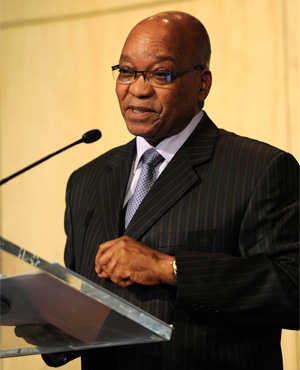
Blantyre – Malawi on Wednesday summoned South Africa’s High Commissioner over President Jacob Zuma’s disparaging remarks about the country.

Ntombile Mabude was asked to explain a Zuma statement seen as suggesting that Malawi was backward, when discussing South Africa’s road infrastructure.

On Monday, Zuma sparked controversy when he tried to convince motorists to accept the country’s plan to toll highways around Johannesburg.

He said “we are in Johannesburg, this is Johannesburg. It’s not some national road in Malawi.”

Foreign ministry spokesperson Quent Kalichero told AFP that Mabude was “summoned to discuss the issue”.

The envoy held a meeting with the Secretary of Foreign Affairs, George Mkondiwa, in the capital Lilongwe.

Kalichero declined to provide details of the meeting.

On Tuesday, Zuma’s spokesperson Mac Maharaj defended the statement, saying it was reported out of context.

He said Zuma was trying to justify the sophisticated road system in the country’s economic hub. During an interview with a local radio, Power FM, Maharaj apologised on Wednesday for the comments, saying he had received numerous angry call from Malawians.

“Let me apologise for that and withdraw it,” he said.

– AFP