DA visits robbery victims in hospital


Image

By Obakeng Maje

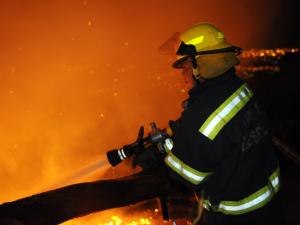
Mahikeng-Democratic Alliance in North West will visit the fire victims on Monday at Tshepong Hospital, DA said in a statement.

The Chinese shop-owner and two other employees were allegedly burnt by robbers at their fruit & vegetable shop in Mahikeng.

“I would like to express my heartfelt sympathy to the family of the 3 victims who was robbed and then set alight in Mahikeng on the 1st of September” DA Theologo said. 

“We will be visiting the family at Tshepong Hospital today” she said.

Police said three men stormed at the shop and allegedly ordered owner to hand over cash. 

“They were allegedly set three victims alight after they demanded more money” sergeant Kelebogile Moiloa said.

“The DA strongly condemns these heinous crimes against members of the public. I believe the SAPS should be put on full alert to combat crime in the Mahikeng area and to be on the lookout for possible xenophobic attacks” Theologo said. 

According bystanders, three men set the shop alight before fleeing the crime scene with a white Jeep.

 “I hope that the people responsible for this attack would be brought to justice and face the full might of the law. Crime not only damages the fibres of the community but also the economic confidence in Mahikeng and South Africa as a whole” said DA NW spokesperson Tiaan Kotze. 

The DA in Mahikeng urges any members of the public with information with regards to this heinous crime to contact the SAPS. 

No one has been arrested thus far and police investigations continue.-TDN

Follow us on Twitter@Taung_DailyNews or @IceT_


Griekwastad murder case postponed


Image

Kimberley – The trial of a 17-year-old boy accused of murdering a Griekwastad farmer and his family was postponed in the Northern Cape High Court on Monday.


Northern Cape farmer Deon Steenkamp, 44, his wife Christel, 43, and daughter Marthella, 14, were killed on their farm Naauwhoek on 6 April 2012.


Northern Cape Judge President Frans Kgomo postponed the matter to 21 October without disclosing reasons.


The legal teams of the State and the youth met the judge in chambers before the hearing started.


In court the boy’s defence counsel Willem Coetzee asked for the postponement as agreed in chambers.


He told Kgomo that the court would be kept up to date with developments so that everything possible would be done for the case to continue in October.


Kgomo postponed the matter with additional dates set in November and December this year.


SAPA


Zuma shocked, saddened by KZN crash


Image

Durban – President Jacob Zuma has offered his condolences after 10 people died in a bus crash, after the annual reed dance festival in Nongoma, KwaZulu-Natal, at the weekend.

“We are shocked and saddened by this tragic and horrific loss of life in this manner following a successful cultural event that promotes self-confidence among young women,” Zuma said in a statement on Monday.


The ceremony had taken place at the Nyokeni Royal Palace.


Seven young women, who had participated at the reed dance, two women who had accompanied them as guardians, and the driver of the bus died on Sunday when it overturned on the R66 near Nkwalini between Melmoth and Eshowe.


“Our hearts go out to His Majesty King [Goodwill] Zwelithini, the families, relatives and the community as a whole,” he said.


According to Netcare 911 officials, 62 others had been injured when the bus overturned, slid down the road and smashed into steel barriers.


“Paramedics… arrived at the scene and found that the barriers had pierced through the front of the bus,” said Netcare spokesman Chris Botha.


KwaZulu-Natal Transport MEC Willies Mchunu would visit the accident scene on Monday to get an update on the investigations.


Spokesperson Kwanele Ncalane said he would also go to the Eshowe mortuary to meet with the families of the deceased to convey his condolences, and to begin a process of identifying how government could assist the families who had lost their children.


Probe welcomed


Provincial DA leader Sizwe Mchunu welcomed the announcement that the transport department was committed to a full investigation.


“This tragedy must be fully probed and the outcome made available to the family members of the deceased in a bid to help them find closure in the difficult weeks that lie ahead,” Mchunu said.


IFP leader Mangosuthu Buthelezi said his thoughts were with the families who had lost their loved ones.


“Our thoughts are with the young maidens, and with our faithful women who died while travelling as their companions and guardians.


“We think also of the bus driver, who lost his life, and of the many that were injured in this accident,” Buthelezi said.


United Democratic Movement (UDM) Secretary General Bongani Msomi conveyed the party’s condolences to King Zwelithini and the families of the deceased.


“Their deaths cannot be in vain since they were promoting moral values in this generation which faces many negative challenges.


“They also took pride in their culture and they will always be remembered,” he said.


National Freedom Party (NFP) Youth Movement Secretary General Maria Tshabalala said the young women who died were role models for the youth.


“They were a living proof that we as the nation can fight the high rate of teenage pregnancy and HIV/Aids,” Tshabalala said.


SAPA

Media at Mandela’s house told to stand at the corner


Image

Johannesburg – The growing media contingent outside former president Nelson Mandela’s Johannesburg home was instructed to keep well away from the house’s entry points on Monday.


“The media must stay 50m away from entrances, you have been confined to that corner,” said an official, who did not give his name, while pointing to an area opposite the house.


Mandela’s Houghton home was a national key point and was under constant surveillance, the official said, while manning the house’s smaller gate.


Entry to the house and parking within nine meters of its vicinity was restricted to vehicles and people with official clearance.


Johannesburg metro police officers patrolled the streets, ensuring the media and their equipment did not obstruct traffic.


On Sunday the presidency said Mandela had been discharged from hospital.


A large media contingent gathered outside to watch his return, and police were present.


Presidency spokesperson Mac Maharaj said Mandela’s condition remained critical and “at times unstable”.


His home had been reconfigured to ensure he received the correct care. Some staff who had been at the hospital would care for him at home.


Mandela was admitted to the Medi-Clinic Heart Hospital in Pretoria on 8 June this year with a recurring lung infection.

SAPA

Gold bosses, unions in war of words as strike looms


Image

Johannesburg – Union leaders warned on Monday, a day before a strike in the gold sector, that mine owners’ handling of pay talks could provoke violence, and bosses said wage hikes would force mine closures and cost thousands of jobs.

The National Union of Mineworkers (NUM), which represents about two-thirds of more than 120 000 unionised gold miners in South Africa, is set to strike from Tuesday.

With stoppages in the auto industry and the construction sector already sapping the struggling economy, shutting gold mines could cripple an industry that has produced a third of the world’s bullion but is now in rapid decline.

Labour and management are poles apart on the issue of wages, with the NUM seeking 60% pay hikes for entry-level miners and its more hardline rival, the Association of Mineworkers and Construction Union (Amcu) pushing for 150%t raises.

Companies say they cannot afford this in the face of soaring costs and depressed prices. The president of the Chamber of Mines warned unions against stoking workers’ hopes.

Mark Cutifani, who is also chief executive of mining giant Anglo American, said: “Promoting expectations above the capacity of the industry to pay is a dangerous road that may have tragic consequences for employees who do not understand how close we are to economic devastation in certain sectors.

“If we lose each other in the present discussions, we will count the costs in mines closed and tens of thousands of jobs lost,” he wrote in a commentary in the Business Day newspaper.

South Africa’s gold and platinum sectors are still recovering from a wave of violent, wildcat strikes last year. Stemming from a turf war between the NUM and Amcu, it cost billions of dollars in lost output and triggered damaging sovereign credit downgrades. More than 50 people were killed.

Business Day said gold producers are considering a pre-emptive lockout at the mines. The Chamber of Mines, which negotiates on behalf of firms, told Reuters a lockout was an option but it would be taken as a “last resort”.

Amcu president Joseph Mathunjwa, whose union has not yet called a strike, said a mines lockout would provoke trouble.

“I have informed the minister of police that the manner in which the gold CEOs want to approach this wage negotiation, through an offensive lockout, will result in violence,” he said.

“A strike is not what we are after, we are being pushed into a corner,” Mathunjwa said.

Fallen gold giant

Critics say President Jacob Zuma and his  African National Congress have paid more attention to a small and wealthy business elite, including mine bosses, and ignored the needs of South Africa’s working class, poor and unemployed.

The government is anxious to keep a lid on labour unrest and potential job losses before elections next year.

A gold industry shutdown could cost South Africa more than $35m a day in lost output, according to calculations based on the spot gold price and a Chamber of Mines estimate that the sector would stop producing about 760 kg a day.

South Africa’s gold industry, which once accounted for almost 80% of global bullion output, now produces just 6% of the world total.

It has been laid low by a combination of geological and economic setbacks. After more than a century of mining, the remaining ore lies deep underground and is costly and dangerous to extract. Labour and power costs have also soared.

Monday brought some relief however from the strike pressure, when workers at petrol stations and car dealerships postponed for a week a stoppage which was scheduled to start on Monday.

But striking car manufacturing workers stayed away from work after rejecting a double-digit wage increase offer on Thursday. The auto industry strike is costing the economy an estimated $60m a day.

Labour worries pushed the rand to four-year lows last month.

Companies which will be hit by Tuesday’s strike include main gold producers AngloGold Ashanti, Gold Fields, Harmony Gold and Sibanye Gold.

None

A man killed in argument over sleep


Image

Durban – A man has been arrested for allegedly shooting dead another man in Pietermaritzburg, KwaZulu-Natal police said on Monday.


The body of Philani Mdlangathi, 22, was found lying on the floor inside a house in Caluza on Saturday night, Captain Thulani Zwane said.


Mdlangathi was drinking with two men at his house when he got into an argument with one of the men about where to sleep.


During the argument Mdlangathi was shot in the neck.


Mdlangathi’s friend called police and a 40-year-old man was arrested at the scene. He was found in possession of a firearm. 


SAPA

Cope will not back-off on Block


Image

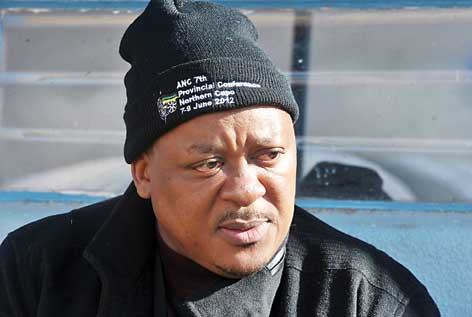
The Northern Cape High Court has postponed the case brought by Cope against MEC for finance John Block, who is also ANC provincial chairperson.


Cope filed an application last week seeking an order directing Block to disclose all his interests since he took office in government.


The matter had been scheduled to be heard yesterday but had to be postponed because of the late submission of replying affidavits from the Northern Cape legislature’s ethics committee.


The case was postponed to September. The committee’s replying affidavit was only submitted on Monday morning, less than an hour before the case was to start. The papers were apparently due to be submitted last week Friday.


Cope MPL Pakes Dikgetsi said it was clear that ANC members in the legislature were scared to hold Block to account.


“We have been asking since March 2013 that the ethics committee must investigate complaints laid by Cope. Until last week they have been refusing to meet,” Dikgetsi said.


He said the deputy speaker was trying to “quash” the complaint.


“It was only by serving them with court papers that they are coming to see that they have been in the wrong.”


He said for the past six months the ANC had used its majority to “undermine and to break the law”.


“We have been patient with them but no more. We know our complaints have merit.”


Asked if Cope was trying to score political points by taking the matter to court Dikgetsi disagreed.


“We are simply asking the court for an order that will compel the speaker and deputy speaker to stop dragging their feet and to start being serious about their jobs.”

Team to probe unions demands


Image

Kimberley-A task team has been established to look into the demands of workers at the Sol Plaatje municipality in the Frances Baard region over the take up of contract workers.


This came after the intervention of the ANC on Monday who tried to break the stalemate between the South African Municipal Workers Union (Samwu) and the municipality over the matter.


MEC for corporate governance, human settlement and traditional affairs Alvin Botes has welcomed the intervention of the ANC.


The ANC intervention came in the wake of a strike by Samwu members who demanded that more than 300 casual workers be employed permanently by the municipality.


Workers threatened to embark on a full-blown strike over the matter.


Yesterday Botes confirmed that a task team would be established and its terms of reference would be finalised on September 3, “whereupon the execution of their mandate will start”.


“The task team will, as reported, have one month in which to finalise its work and report back to the collective. I am of the opinion that there is not as yet a crisis as portrayed by the media but should no amicable solution be found soon, I will use all powers entrusted in me to intervene and resolve the matter within the legal framework provided,” he said.


Botes said he supported the initiative and recognised the progress made by the municipality with regard to the recent audit outcomes.


He also applauded the municipality for having moved from a series of disclaimers to a qualified audit.


“If we are to deliver services of high quality to the people, we need to ensure that the municipality is fully functional and that all parties involved fulfil their contractual obligations.”

Source: http://www.thenewage.co.za

Salt trial to be settled out of court


Image

A case against against the ANC Northern Cape chairperson, John Block’s company, Suid Afrikaanse Soutwerke, and the Department of Minerals and Energy is set to be resolved after the parties opted to settle the matter out of court.


Saamwerke Soutwerke succesfully sued the respondents after claiming they had colluded to exclude their company from benefitting from a salt mine in the Kalahari.


Saamwerke salt mine sued Block’s company, his partners in the venture and as the Department of Minerals and Energy for R35m.


The matter which was postponed on Monday due to a dysfunctional air conditioner, was heard in the Northern Cape High Court yesterday. In 2011 the Supreme Court of Appeal in Bloemfontein upheld a high court decision which ruled that Block’s company had been mining salt illegally in Upington with forged permits for five years. The company sued for damages incurred during that period.


After two days of cross examination the applicants and the respondents are now set to reconvene on Friday after agreeing to settle the matter out of court.


The applicants submitted that they only started mining in 2011 after they were given mineral rights in 2005. Their action followed a high court ruling in 2011 which found Block guilty of hijacking a salt mine in Upington.


The provincial ANC chairperson, who was a director of the company, operated the mine for five years with a fake permit. Saamwerke Soutwerke co-director Mongile Gubula said the matter had dragged for far too long.

Source: http://www.thenewage.co.za

Turmoil clouds City’s prospect


Image

Mining unrest has rattled South Africa, but ongoing turmoil has been a hammer blow to the country’s platinum belt, calling into question the future of an entire city.


First was the violence and then came the job cuts.


After months of labour unrest and years of high costs, two top firms around the northern city of Rustenburg are rolling out plans to shut shafts and cut thousands of jobs.


Anglo American Platinum will close three operations here and cut 4,800 jobs from September, a year after the Marikana massacre at neighbouring Lonmin mine.


Lonmin — where 34 miners were shot dead a year ago by police — had already mothballed a shaft last year.


For the city of Rustenburg, where mining officially makes up 77 percent of the economy, the impact could be devastating.


Local businessmen, from utilities consultants like Ben Roothman to street vendors like Tomaz Utui, fear the loss of jobs means the loss of customers.


For every person laid off, a whole household loses its income, so many more thousands are affected, according to Roothman.


“It’s a foregone conclusion that it will have a definite impact on Rustenburg,” he told AFP.


Utui, who hawks snacks, clothes and cigarettes outside Amplats’s soon-to-be-shut Khomanani shaft, sees a dire future if the miners disappear.


“There’s nothing here. We’re not selling if these guys aren’t working.” Already, he said, “These guys don’t have any money.”


According to local Chamber of Commerce head Pieter Malan “at a micro-level the impact is huge.”


“For medium-sized companies who deliver services direct to the mine it’s painful,” he added.


Rustenburg was founded 162-years ago after Dutch settlers trekked inland from Cape Town and started farming.


Since the 1920s platinum — now used predominantly in catalytic converters and jewellery — has been mined in the area, known by geologists as the Bushveld Igneous Complex.


Rustenburg was a host city for the 2010 football World Cup and was the country’s fastest growing metropolitan area in that year, according to government figures.


For the moment the city is still growing at a clip.


Modern housing complexes are springing up around the city and the region’s luxury resorts and game reserves attract tourists in their droves.


With around 70 percent of the world’s platinum production coming from the area, up to now the city has bounced back with the ebb and flow of mine activities.


But the scale of this latest turbulence has left many bracing for tough times ahead.


Last year’s stoppages squeezed global production by 13 percent, the lowest in 12 years, according to London-based precious metals firm Johnson Matthey.


Stalled production cost South Africa as a whole $1.15 billion, but in Rustenburg it hit contractors — who provide jobs to at least 30,000 people — particularly hard.


Last year already engineering and construction firm Murray & Roberts ended contracts with nearby Aquarius Platinum and Lonmin.


As ever-increasing running costs and labour turmoil make investors wary of South Africa, fears exist that Rustenburg might collapse with its mines, as happened to other “ghost towns”.


Three hundred kilometres (186 miles) away there is a warning of what could happen.


Welkom — optimistically named “welcome” in the Afrikaans language –once produced a quarter of the world’s gold and employed around 170,000 people in mining.


But its heyday has long gone. The waning industry today employs 30,000 people, while battling with high costs and low gold content.


To prevent a similar demise, Rustenburg’s Chamber of Commerce wants the city economy to adapt so it will survive mining’s eventual decline.


“We have to be more concerned about what to do 30 years from now,” said Malan.


“How do we become less dependent on the mining industry — that’s the important question.”


-Sapa-AFP