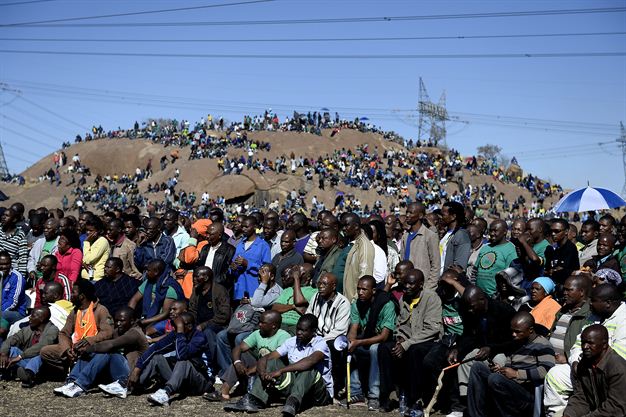
Marikana – Political parties have to put aside their differences and support residents of Marikana, Inkatha Freedom Party (IFP) leader Mangosuthu Buthelezi said on Friday.
“IFP stands with you. We remember with you,” he said.
He was speaking at the commemoration marking the first year after 44 people were killed at the Nkaneng informal settlement near Marikana.
They were killed during a wage-related strike at Lonmin’s Marikana operation in August last year.
Thirty four mineworkers were killed when police fired them on August 16, while trying to disperse and disarm them.
The workers had gathered on top of a hill armed with knobkerries, pangas, iron rod and sticks, vowing not to leave unless the mine agreed to pay them a monthly salary of R12 500.
Ten others, including policemen Hendrick Tsietsie Monene and Sello Ronnie Lepaaku, two security guards Hassan Fundi and Frans Matlhomola Mabelane, were killed in the preceding week.
“The Marikana mine massacre was a watershed moment in the history of our young democracy. No one thought it could happen. No one believed it could be true. When we saw the images and heard the news, SA stood still.”
He said political leaders had done all they could do to hold the government accountable.
“We have sought answers on your behalf… How could this happen and how could we stop it from happening again?”
United Democratic Movement (UDM) leader Bantu Holomisa called for an economic indaba that would address the skewed distribution of resources which had benefited “a selected few and only some regions”.
“If we had strong civil society, after government’s botched handling of this situation, we would have had a plan of action in place, with specified deadlines, that insured that this community received the care and services they need to have an acceptable standard of living, and the disputed funding of legal representatives would not be an issue.”
He said a year had passed and residents still had a long way to find healing.
“You still have much heartache, frustration and disappointment to process, because of not only what happened on that fateful day, but also what happened thereafter.”
Buthelezi said the tragedy of Marikana could not be forgotten.
“We will never forget what happened here, but I am sure we can all agree that some good must come from this tragedy. Things must change for the better.”
Sapa
 The Guardian