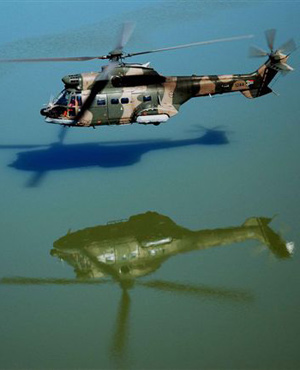
Cape Town – The DA has slammed the spending of R2.6m on holiday breaks for President Jacob Zuma and Deputy President Kgalema Motlanthe, saying that the airforce is in danger of “being reduced to an airborne taxi service for VIPs”.
Democratic Alliance MP David Maynier issued a statement on Thursday saying it was wrong to be spending millions of rands on VIP flights when there were so many poor people in South Africa.
He noted that between 12 June last year and 30 June this year, Defense Minister Nosiviwe Mapisa-Nqakula had spent a total of R13m on 61 flights.
This was at a time when the SA Air Force’s (SAAF) operating budget had been “stripped to the bone”, and 29 of its Gripen fighter jets and 30 Agusta helicopters “have effectively been grounded”.
Maynier said the airforce “seems to be in danger of being reduced to an airborne taxi service for VIPs”.
Mapisa-Nqakula revealed that Zuma’s holiday break in Mozambique earlier this year cost taxpayers over R1.6m.
In a written reply to a parliamentary question, she said the holiday, reportedly taken over a weekend on the Mozambican resort island of Bazaruto, included the use of an SAAF Falcon 900 aircraft and two Oryx helicopters.
According to the reply, the “Falcon 900 [made a] total of eight flights and [the] Oryx helicopters [a] total of 22 flights” with the president.
The Falcon made a further “ferry” flight, and the helicopters a total of five such ferry flights.
“Total costs were R1,623,862.75,” Mapisa-Nqakula said.
Christmas break
The reply also spells out the cost of transporting Motlanthe to and from a Christmas break in the Seychelles at the end of last year.
Motlanthe visited the Indian Ocean archipelago between 23 December 2012 and 4 January 2013.
According to Mapisa-Nqakula, this cost over R1m for two flights on a Falcon 900 aircraft, plus associated costs.
“The total cost was R1,022,939.72,” she said.
In March this year, Motlanthe, responding to a question in the National Assembly by Maynier, defended the spending, saying it was in line with government policy.
He said that in terms of government policy, transport for the deputy president, whether for official or private purposes, was the responsibility of the state.
“The state also has a duty to provide security for the deputy president at all times, whether he is engaged in official duties, or while he is on leave.”
This policy had been re-affirmed by Cabinet on 20 March 2007, Motlanthe said.
– SAPA
 The Guardian