Zille to appeal ombud ruling


zilleP
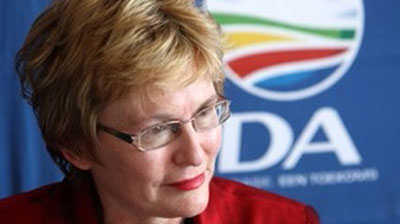
Johannesburg – Western Cape Premier Helen Zille will appeal against a ruling not finding any “substantial fault” with an article The New Age published on employment equity in the province.

The Press Ombudsman had missed a “critical” point in his ruling, her spokesperson Trace Venter said on Thursday.

“[This] is that the source quoted by the newspaper provided incorrect facts on the content of [a Commission for Employment Equity] report, in particular, that our province had regressed when it comes to employment equity, when the exact opposite is true.”

Zille complained that several statements in the story were factually incorrect and distorted, were written with malicious intent, and omitted key facts in order to paint her in a negative light.

The headline and sub-headline were also incorrect, she submitted.

This followed an article headlined “Zille fails race test – White males still dominate top jobs in the DA province”.

The ombudsman ordered that the publication apologise to Zille over the headline. He however did not find malice as Zille had claimed.

The story emanated from a news briefing Zille held before the Commission for Employment Equity (CEE) released its latest report.

The ombudsman dismissed the complaint over the content of the story, saying he was satisfied the reporter had covered the salient points.

Exaggerate

Zille’s complaint also did not specify what TNA omitted in its report.

The ombudsman said the story, written by Siyabonga Mkhwanazi, reported that Zille launched a “pre-emptive attack” on employment equity figures which the CEE was to release the following day.

In the story, published the day the report was released, figures reportedly revealed the province was going “backwards in terms of race and gender equity”.

The complaints were submitted to the ombudsman by Zille’s spokesperson Zakhele Mbhele. He complained that, according to the report, the province had regressed further and scored worse in just about every sector, especially in the province’s civil service.

Mbhele said it was wrong to call the Western Cape “Zille’s province” and that “Zille’s administration” had scored badly.

He argued the CEE report had combined figures for both the public and private sectors, and that Zille and her government were not responsible for the latter.

The publication contended it was fair to conclude that Zille was launching a “pre-emptive strike” to rebut any negative findings in the CEE report.

Neither TNA nor the Democratic Alliance had seen the report at the time of writing and it served the public interest by publishing on the same day the report was released.

Zille was Western Cape premier, so it was justified in calling the province “Zille’s province”, the paper submitted.

The ombudsman accepted TNA’s argument that the story adequately reflected that the CEE report’s scope went beyond the Western Cape government.

Fly in the ointment

The story also “explicitly stated” that the figures referred to the public and private sector, and that it was clear information was from a “source”.

But the word “source” in TNA’s submission was the “fly in the ointment”, the ombudsman said.

The report itself referred to sources, but in its defence to the ombudsman, spoke of only one source.

“Mkhwanazi should have reported that he had one source only (on the CEE report) and that he could not or did not verify his information with another source. He neglected to do so.

“Why did Mkhwanazi exaggerate? The most reasonable response to this is that he wanted to enhance the credibility of his story. This means at the very least that the use of the plural was not an innocent mistake,” Retief said.

The publication was reprimanded for this. The editor Moegsien Williams could not comment on the ombudsman’s ruling by mid-afternoon on Thursday as he had not read it yet.

Either party may appeal within seven working days of receiving the decision.

– SAPA

Lawyers to appeal Marikana funding case


717773493
Johannesburg – Lawyers for the victims of the Marikana shootings said on Thursday that they would appeal the North Gauteng High Court in Pretoria judgment that dismissed an application for the state to fund legal representation.

“We have received the decision and we are going to study it and consult with the other parties that were sympathetic with our cause,” attorney Muzi Msimang said.

“We’re likely to appeal to the Constitutional Court.

“The judgment will not deter us because that is the nature of our legal system…if you’re not happy you approach another court who might rule in your favour.”

The court in Pretoria on Thursday dismissed an application for the state to fund legal representation for the victims of the Marikana shootings.

“I agree with the state that the application cannot succeed,” Judge Joseph Raulinga said on Thursday.

“The application is dismissed. I need to say that nothing prevents the parties from settling this matter outside the courts.”

Dali Mpofu, acting for the wounded and arrested Marikana miners at the hearings of the Farlam Commission of Inquiry, brought the urgent application for the state to fund their legal representation.

Certified

He wanted President Jacob Zuma and Justice Minister Jeff Radebe to approve state payment of the mineworkers’ legal team.

The judge found the application was urgent and “class action” for the case was certified. There was no order as to costs.

Msimang said the judge made a remark after passing judgment that the parties should consider settling the matter out of court.

He said the wounded and arrested miners gave them instructions not to proceed with the Farlam Commission of Inquiry into the shooting.

“We will approach the commission and ask for a postponement, if they say no the commission will have to go on without us,” he said.

“If the commission continues without us – it will be one-sided.”

The commission is investigating the deaths of 34 striking mineworkers, shot by police at Marikana in North West on 16 August last year and the deaths of 10 people in strike-related violence the previous week.

Meanwhile, Legal Aid SA said it accepted the ruling and that if the judge ordered it to provide funding in commissions there would be less funding available for other cases.

“This clarifies the organisation’s mandate in as far as commissions are concerned – that we are not funded to provide legal aid in commissions of inquiry,” CEO Vidhu Vedalankar said in a statement.

“If the court had ruled that we should provide legal aid in this instance, this would have affected the sustainability of the organisation in providing access to justice in criminal and civil legal aid matters for the poor and vulnerable.”

She said Legal Aid opposed the application.

After Raulinga read the judgment into the record, Mpofu asked him to indicate when the typed judgment would be available so that he could launch an urgent application at the Constitutional Court.

The application was urgent as it would have implications for the commission.

– SAPA

Shuttleworth loses in court


a2b268cf1ec247f9b3b621eaa09aa862
Pretoria – Billionaire entrepreneur Mark Shuttleworth’s bid to have South Africa’s entire exchange control system declared unconstitutional has failed.

The North Gauteng High Court on Thursday dismissed Shuttleworth’s application to strike down the whole of Section 9 of the Currency and Exchange Act and all of the Exchange Control Regulations as unconstitutional.

Judge Francis Legodi dismissed Shuttleworth’s application to set aside the imposition of a R250m levy he had to pay to get some of his assets out of the country in 2009 and for the Reserve Bank to return his money.

The court also dismissed his application to declare invalid the Reserve Bank’s policy of not dealing directly with members of the public but insisting that they should communicate through bank dealers.

The judge however granted an order declaring Section 9(3) of the Currency and Exchanges Act as well as certain portions of the Exchange Control Regulations unconstitutional.

Section 9(3) gives the President not only the power to amend or suspend any part of the Currency and Exchanges Act, but also the power to amend or suspend any other Act of Parliament.

Judge Legodi said this was an extraordinary wide power and effectively vested in the President the power to amend or suspend any Act of Parliament irrespective of whether that other piece of legislation dealt with currency, banking or exchange.

“This provision has the potential to unravel the healing wounds of the past when laws were changed at the stroke of a pen by one individual.

“This can never again happen in a constitutional and democratic South Africa.

“…Clearly no President in the living Supreme Law of the land (the Constitution) can ever wish to act as it is envisaged in Section 9(3).

“This does not even need a programme of liberalisation of the system of exchange controls as envisaged by the finance minister, ” he said.

Assets

Shuttleworth, who now lives on the Isle of Man, has blamed the existing system of exchange control in South Africa for “forcing” him to emigrate from South Africa in 2001.

He had assets worth over R4.27bn in South Africa when he emigrated, but transferred the assets out of the country in 2008 and 2009, each time subject to the payment of a 10% “exit charge”.

Government abandoned the levy a year after Shuttleworth moved the remainder of his assets out of the country.

Judge Legodi ruled that Shuttleworth had not proved that his constitutional right to lawful, reasonable and procedurally fair administrative action had been infringed or that the Reserve Bank’s so-called “closed door policy” was unfair.

He said the object of the 10% “exit charge” was to limit the adverse consequences of the outflow of funds on the external balance of payments necessary to maintain South Africa’s macro-economic health and to promote financial growth and stability.

“The idea of such discouragement cannot be said to be bad and an unconstitutional policy.

“…Imagine what will happen to this country if the wealthiest men and women … were allowed to take their wealth out of the country with impunity every time when the country is in economic grief or when there is a change of government or leaders in the government.

“It could have a devastating effect on the country as a whole,” he said.

Currency

He ruled that the decision to charge the levy had been made by the minister of finance and that the Reserve Bank had no discretion to exempt anyone from it.

Shuttleworth had chosen not to attack the minister’s decision and the court could therefore not make a final determination on the issue, he added.

Judge Legodi dismissed Shuttleworth’s contention that the exchange control process was unconstitutional because it lacked fixed guidelines, saying the system required a flexible, speedy and expert approach to ensure that proper financial governance prevailed.

He ruled that certain portions of the Exchange Control Regulations were unconstitutional, including the blanket prohibition on any transactions involving foreign currency, gold or other assets readily convertible into foreign currency, because it prohibited the right to free trade.

Regulation 3(1) C, which prohibits paying a person residing outside the Republic – making most modern-day internet transactions illegal – was also struck down, as was the section forcing one to disclose the nature of the goods one wished to purchase when one obtained permission.

The court gave the government 12 months to amend certain sections of the regulations.

– SAPA

Mandela beat apartheid ‘demon’: Clinton


Nelson%20Mandela
New York – Nelson Mandela feared and hated his apartheid jailers when he left prison but overcoming that “demon” is a sign of his greatness, former US president Bill Clinton said on Thursday.

Clinton, UN leader Ban Ki-moon and Andrew Mlangeni, who was a prisoner alongside Mandela, honoured Mandela in a special ceremony at the UN headquarters as Madiba spent his 95th birthday in hospital.

Clinton said Mandela ended his 27 years in an apartheid jail “a greater man than he went in” but also told how the ordeal had left its mark on the legendary figure.

“Every day was a struggle…I could see it in his eyes even after he became president.

“Some old demon would rise up and somebody or say something stupid, but he fought it every day,” Clinton said at the UN General Assembly.

Clinton told how he had raised with Mandela his walk to freedom from the jail along a dirt road and how he had been a “canny politician” inviting his jailer to his inauguration and bringing white opposition parties into his government.

Embraces

“Tell me the truth: when you were walking down the road that last time didn’t you hate them,” Clinton said he questioned Mandela.

“He said briefly: ‘I did. I am old enough to tell the truth.’ He said: ‘I felt hatred and fear but I said to myself, if you hate them when you get in that car you will still be their prisoner. I wanted to be free and so I let it go.’

“He said: ‘People can take everything from you. I lost my family, the chance to see my children grow up, the best years of my life. They can take everything except your mind and your heart…those things I decided not to give away. He looked at me and smiled and said: neither should you.

That is a lesson that every human being on earth had better learn sooner or later. The grace of it embraces every friend that he had.”

Ban said the world was united in praying for Mandela in hospital.

“We are united in concern.

“We’re also joined in admiration for a towering figure in the worldwide fight for equality and justice,” the UN secretary general told the ceremony.

– AFP

Zuma thought poor whites were doing well


Zuma
Pretoria – President Jacob Zuma appeared touched by the reception he received from residents of Danville, Pretoria West, on Thursday.

He was showing them around their new homes as part of the launch of the new, low-cost housing settlement.

“This is what we want to see… [a situation] where no one feels like they are orphans in a country of their own,” he told residents.

“It is only here that I see a mixed crowd with different races… as one. It is with ordinary people that this feeling of oneness exists.”

The settlement would provide homes for low-income black and white families and was being launched to mark Mandela Day, the presidency said on Wednesday.

‘I thought they were all doing so well’

Zuma said on Thursday he visited the area several years ago to see where “poor whites are staying”.

“I saw conditions I never thought I would ever see. I thought they were all doing well,” he said.

He was also there to honour former president Nelson Mandela on his 95th birthday.

“We have come to do what is being done by everyone. We are here to take some time and do things to honour Madiba.

“I always feel happy with people like you, because you don’t have artificial problems,” he said.

Zuma said one of the new homeowners, who was quite large, had been straightforward with him and asked him whether he expected her to fit in the new home’s bathtub.

“I agreed that I would buy her a new bathtub,” he said.

“I also promised one [resident] that I would come one day for a cup of tea.”

He said one resident had told him the last time he was there that he needed an identity document.

“I delivered the ID to him today. He can now apply for his pension,” Zuma said.

“He was with his sister and brother-in-law and they all started crying.”

‘Bring me my machine gun’

Children from the Siyabonga Early Learning centre, led by their teachers, sang happy birthday to Madiba when Zuma arrived. Some of the children wore the South African flag as capes.

Zuma applauded and waved to them. He then led several of the new owners around their homes, joking and pointing out each of the new rooms.

A group of ANC supporters stood nearby, singing his trademark song Awalethu Mshini Wam (bring me my machine gun).

He was accompanied by Gauteng Premier Nomvula Mokonyane.

Zuma spoke at a large truck parked opposite the newly-built houses and decorated with pictures of him.
A poster on the truck read: “South Africa belongs to all who live in it, black or white”.
For more http://www.news24.com

Zim election not looking good: Zuma envoy


justice-logo
Pretoria – A top South African diplomat said on Thursday that preparations for an election in Zimbabwe at the end of the month were “not looking good”, unusually strong criticism of President Robert Mugabe from his powerful neighbour.

Lindiwe Zulu, President Jacob Zuma’s special adviser on Zimbabwe, said Zuma had called Mugabe to tell him he was not pleased with the run-up to the poll on 31 July, a date fixed by Mugabe after a Constitutional Court ruling.

It had been criticised by Mugabe’s opponents and South Africa’s government as too soon.

“We are concerned because things on the ground are not looking good,” said Zulu.

The election is supposed to end five years of fractious unity government under a deal brokered by South Africa following violent and disputed polls in 2008. With the credibility of the poll already called into question, those hopes are now waning.

South Africa wants to avoid a repeat of the 2008 violence, which brought a flood of refugees into the country and added a further burden on stretched state finances.

Zulu’s comments are likely to infuriate the 89-year-old Mugabe, who labelled Zulu “stupid and idiotic” at a campaign rally this month after she repeated South Africa’s call to delay the polling date by a few weeks to ensure the process runs as smoothly as possible.

Two days of advance voting for 70 000 police officers and soldiers on Sunday and Monday suggested the fears of a chaotic election will be borne out, raising the prospect of a disputed result and civil unrest in a country with a history of election violence.

Transparency

In the special voting, long lines formed at polling stations and some people were unable to vote because ballot papers did not turn up at all – one of several logistical challenges acknowledged by the Election Commission.
In addition to smooth logistics, South Africa wants cast-iron guarantees that the army and police will end their open support of Mugabe’s ZANU-PF party.

The South African government’s verdict as to the quality of the vote has added significance because election observers from the European Union and United States are barred from entering Zimbabwe.

There have been no formal opinion polls but most analysts see ZANU-PF as the favourite given its monopoly of state media and the problems with voter registration encountered by many young, urban Zimbabweans – the support base of Prime Minister Morgan Tsvangirai, Mugabe’s main challenger.

The United States said on Tuesday it was deeply concerned by a lack of transparency in the run-up to the vote, suggesting Washington was in no mood to ease sanctions against a victorious Mugabe and his inner circle even if he wins without violence.

– Reuters